Table of Contents >> Show >> Hide
- Before You Start: What DIY Pruning Should (and Shouldn’t) Include
- Why Pruning Works: A Tiny Bit of Tree Biology (No Lab Coat Required)
- Tools and Safety Gear: The “Please Don’t Freehand This” Checklist
- When to Prune: Timing That Helps (and Timing That Hurts)
- What to Prune: The Priority List That Keeps You from “Overdoing It”
- How Much to Prune: The Most Common DIY Mistake
- The Essential Cutting Techniques
- Step-by-Step: A Smart DIY Pruning Session
- Common Pruning Mistakes (and What to Do Instead)
- Specific Examples: What DIY “Good Pruning” Looks Like
- Aftercare: What to Do (and Not Do) After Pruning
- When to Call a Pro (No ShameJust Good Judgment)
- Quick DIY Pruning Checklist
- DIY Pruning Experiences: What It’s Really Like in the Yard (and What People Learn the Hard Way)
- Conclusion
Pruning is one of those yard tasks that looks easyuntil you’re holding a lopper like a medieval weapon and whispering, “Which branch started this?” Done right, tree pruning improves structure, reduces storm damage risk, boosts airflow and light, and removes dead or diseased wood. Done wrong, it can stress a tree, invite decay, and leave you with a “modern art” silhouette you didn’t order.
This guide is a practical, DIY-friendly walkthrough: what to prune, when to prune, how to make clean cuts, and when to stop and call a pro. You’ll get straightforward steps, real-world examples, and the kind of safety advice that keeps your weekend from becoming a cautionary tale.
Before You Start: What DIY Pruning Should (and Shouldn’t) Include
DIY-friendly pruning
- Small branches you can reach from the ground
- Light cleanup: deadwood, broken limbs, rubbing branches
- Minor shaping on young trees (training for good structure)
Pruning that should be handled by a certified arborist
- Anything near power lines (no exceptions)
- Large limbs that could hit a roof, fence, car, or human
- Work that requires climbing, leaning ladders into a tree, or using a chainsaw overhead
- Hazard trees (cracks, hanging limbs, major decay, lightning damage)
Rule of thumb: If the branch is big enough to make you say “oof” just by looking at it, it’s big enough to hire out.
Why Pruning Works: A Tiny Bit of Tree Biology (No Lab Coat Required)
Trees don’t “heal” like people do. Instead, they compartmentalize damagebasically walling off injured tissue and then covering the wound with new growth. Your job is to make cuts that the tree can close efficiently. That’s why cut placement matters so much: the tree’s natural “boundary zone” at the base of a branch helps defend against decay.
Meet the branch collar (your new best friend)
At the base of most branches there’s a slightly swollen area called the branch collar, and often a raised line of bark above it called the branch bark ridge. A proper cut is made just outside the branch collarclose enough to avoid a stub, but not so close you slice into the trunk tissue. This is the sweet spot where the tree seals a wound best.
Tools and Safety Gear: The “Please Don’t Freehand This” Checklist
Essential tools
- Hand pruners (bypass style): twigs and stems up to about finger-width
- Loppers: branches roughly 1–2 inches thick (depending on tool quality and your upper-body enthusiasm)
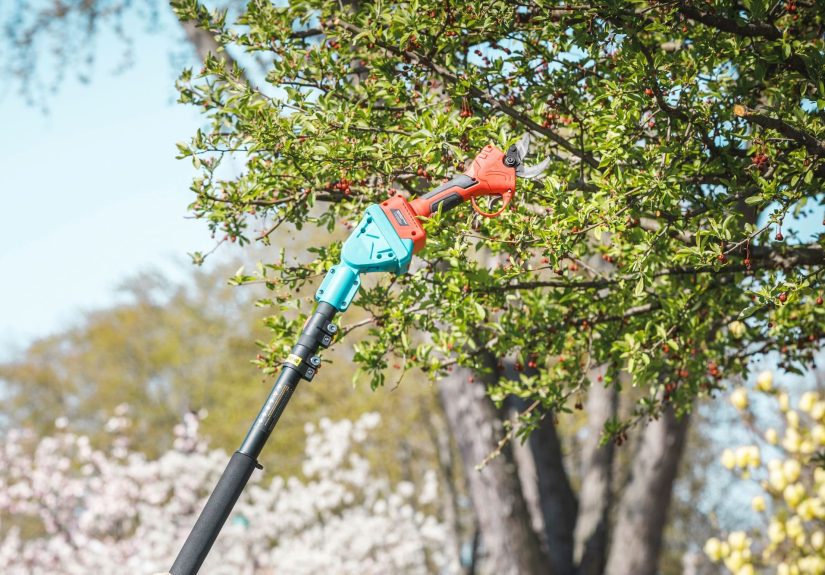
- Pruning saw: thicker branches (still DIY only if safely reachable from the ground)
Safety gear
- Eye protection (wood chips love face-time)
- Work gloves
- Closed-toe shoes with solid traction
Tool hygiene (especially when disease is a concern)
If you’re pruning out diseased wood or moving between plants, disinfect blades. A common approach is wiping or dipping tools with 70% isopropyl alcohol or using a bleach solution diluted with water (and rinsing afterward because bleach can corrode metal). Let tools dry before storing.
When to Prune: Timing That Helps (and Timing That Hurts)
Timing depends on the tree and your goal. The general theme is: prune when it’s easiest for the tree to respond and hardest for pests and diseases to take advantage.
Best general window: late dormant season
For many deciduous trees, late winter (often late dormant season) is ideal: you can see the branch structure clearly, and the tree can begin sealing cuts once growth starts in spring.
Exception: spring-flowering trees
If a tree blooms early in spring (think ornamental cherry, magnolia, redbud), heavy pruning in winter can remove flower buds. For these, prune right after flowering if your goal is to keep blooms.
Special caution: oaks and oak wilt risk
In many regions, pruning oaks during peak beetle activity (often spring into early/mid-summer) increases risk of oak wilt, a serious disease. Avoid pruning oaks during high-risk months unless it’s an emergency. If an oak must be pruned in a high-risk period due to storm damage, some extension guidance recommends promptly sealing the fresh wound to reduce infection risk.
Dead or hazardous limbs
Dead, broken, or dangerous branches can be addressed promptlyjust keep safety front and center.
What to Prune: The Priority List That Keeps You from “Overdoing It”
If you only remember one pruning strategy, make it this: start with health and safety, then move to structure, then do cosmetics last.
1) Dead, diseased, damaged (the “3 D’s”)
- Dead branches
- Broken limbs
- Branches with obvious disease symptoms
2) Rubbing and crossing branches
When branches rub, they create woundsan easy entry point for pests and decay. Choose the better-positioned branch and remove the other.
3) Weak attachments and bad angles
Branches with narrow “V” angles can form weaker unions than wide “U” angles. If a young tree is developing competing leaders, consider corrective pruning early (or call an arborist if it’s already sizable).
4) Suckers and water sprouts (when appropriate)
Suckers (from the base) and water sprouts (fast upright shoots) can appear after stress or heavy pruning. Removing them can help direct energy into better structurebut if a tree is stressed, don’t go wild removing everything at once.
How Much to Prune: The Most Common DIY Mistake
Most DIY disasters aren’t caused by a single bad cutthey’re caused by too many cuts. A widely used guideline is to avoid removing more than about 25% of the live crown in a single season. Less is often better, especially for mature or stressed trees.
Pro tip: If you feel like you’re “finally making progress” after an hour of pruning, that’s your cue to stop and re-evaluate. The tree was fine before you got emotionally invested.
The Essential Cutting Techniques
The #1 rule: Don’t flush cut, don’t leave stubs
A flush cut slices into the trunk tissue and removes the branch collarmaking the wound harder to seal. A stub cut leaves a chunk of branch that can die back and decay. Aim for a cut just outside the branch collar.
The 3-cut method (for larger branches)
If a branch is heavy enough to tear bark as it falls, use the 3-cut method. It prevents the branch from ripping down the trunk like a zipper:
- Undercut: Make a small cut on the underside of the branch a short distance away from the trunk.
- Top cut: Move a few inches outward and cut down through the branch to remove the weight.
- Final cut: Remove the remaining stub with a clean cut just outside the branch collar.
Reduction vs. heading: choose your cuts wisely
- Reduction cut: Shortens a branch back to a lateral branch that’s large enough to take over (often better for structure).
- Heading cut: Cuts a branch back to a bud or small shoot, often stimulating dense regrowth (use carefully).
Step-by-Step: A Smart DIY Pruning Session
Step 1: Walk the tree (yes, like a detective)
Look from multiple angles. Identify:
- Dead/broken branches
- Rubbing branches
- Branches growing toward the trunk or crossing the canopy
- Low limbs blocking walkways (only if removal won’t unbalance the tree)
Step 2: Set a goal (so you don’t “sculpt”)
Pick one main objective: remove deadwood, reduce rubbing, raise clearance slightly, or improve structure. Random pruning is how trees end up looking surprised.
Step 3: Start with small cuts
Remove the obvious “3 D’s” first. These cuts make immediate sense and reduce the temptation to overdo aesthetic trimming.
Step 4: Make clean, correct cuts
For small branches, a single clean cut outside the branch collar is enough. For heavier branches, use the 3-cut method. Avoid tearing bark and avoid leaving ragged edges.
Step 5: Step back every few cuts
Pause, look again, and make sure you’re not creating a lopsided canopy. Trees don’t have “undo.”
Step 6: Clean up properly
Rake debris, dispose of diseased branches appropriately, and disinfect tools if you suspect disease issues. If you’re in an area with specific pest/disease advisories (like oak wilt), follow local extension guidance on disposal and timing.
Common Pruning Mistakes (and What to Do Instead)
Mistake: Topping a tree to “control height”
Why it’s bad: Topping removes major canopy structure, triggers weak regrowth, and can shorten a tree’s lifespan.
Do this instead: Use reduction cuts on select branches (or hire an arborist for structural crown reduction).
Mistake: Painting or sealing every cut
Why it’s usually unnecessary: Many modern recommendations say routine wound dressing provides little benefit and can even slow closure. (Disease-specific exceptions may existoaks in high-risk periods are commonly cited.)
Mistake: Lion-tailing (stripping interior branches)
Why it’s a problem: Removing too much inner canopy can shift weight to the tips, increasing breakage risk and sunscald on previously shaded limbs.
Mistake: Pruning in a hurry
Fast pruning leads to bad angles, torn bark, and too much removed. If you’re rushing, do the deadwood only and stop.
Specific Examples: What DIY “Good Pruning” Looks Like
Example 1: The rubbing-branch problem
Your maple has two mid-canopy branches crossing like swords. Pick the one with the better angle and spacing. Remove the other back to the trunk (outside the branch collar). Result: fewer wounds from rubbing, better airflow, and less future drama.
Example 2: Young tree with two competing leaders
A young shade tree is developing two upright trunks. Early correction can prevent future splitting. If the stems are small and reachable, you may remove the weaker competitor gradually over time. If the stems are already thick or high, hire an arboriststructural pruning is worth doing right.
Example 3: Raising clearance over a walkway
Instead of removing several large lower limbs in one go, raise clearance gradually over seasons. Remove a small number of lower branches, keeping the canopy balanced and avoiding excessive crown removal.
Aftercare: What to Do (and Not Do) After Pruning
- Don’t fertilize as a “sorry I pruned you” apology unless a soil test or local guidance suggests it. Over-fertilizing can cause weak, fast growth.
- Water during drought, especially for recently planted trees, but avoid constant soggy soil.
- Mulch correctly: Keep mulch a few inches away from the trunkno mulch volcanoes.
- Watch for stress: Excessive sprouting, sparse leaves, or dieback can signal over-pruning or underlying issues.
When to Call a Pro (No ShameJust Good Judgment)
Call a certified arborist when:
- Branches are large, high, or close to targets (structures, vehicles, sidewalks)
- There are power lines anywhere near the work zone
- You suspect major decay, cracks, or a leaning tree
- You want crown reduction or structural corrections on a mature tree
Quick DIY Pruning Checklist
- ✅ Prune from the ground only
- ✅ Start with dead/diseased/damaged wood
- ✅ Remove rubbing/crossing branches next
- ✅ Preserve the branch collar; avoid flush cuts and stubs
- ✅ Use the 3-cut method for heavier branches
- ✅ Don’t remove too much live crown in one season
- ✅ Disinfect tools when disease spread is a concern
- ✅ Avoid risky seasons for high-risk species (like oaks in oak wilt season)
DIY Pruning Experiences: What It’s Really Like in the Yard (and What People Learn the Hard Way)
Most DIYers start pruning with the same optimistic energy people bring to assembling “easy” furniture: confidence, a tool in hand, and a belief that the instructions are mostly suggestions. Then reality arrivesusually in the form of a branch that’s thicker than expected or a canopy that looks different from every angle. The first lesson many people learn is that pruning is less like “cutting stuff off” and more like editing. You’re not trying to erase the tree; you’re trying to help it tell a better story.
A common early win is removing deadwood. It’s satisfying because it’s obvious, low-risk, and instantly improves how the tree looks. DIYers often describe it as the “decluttering phase”like cleaning out a closet and discovering you still own three charging cables for a phone you stopped using in 2014. Dead branches practically volunteer to be removed. You cut them, step back, and think, “Wow, I’m basically an arborist.” (You are not. But it’s still a good start.)
Then comes the “rubbing branches” moment. This is where pruning feels less like tidying and more like decision-making. Two branches cross, and you have to pick the one that stays. People who do this well tend to pause and look at the tree from multiple angles, sometimes walking around it like a suspicious art critic. The funny part is how quickly you develop opinions: “This branch is going places. That branch is a bad influence.” Making fewer, more deliberate cuts is usually the difference between a tree that looks naturally improved and a tree that looks like it lost an argument.
Another common experience is learning respect for weight. A branch that looks manageable can feel wildly different once it’s partially cut and starts to sag. That’s why the 3-cut method becomes a “where have you been all my life?” technique. DIYers often say the first time they use it properly, they feel like they’ve discovered a cheat code: the bark doesn’t tear, the final cut is clean, and the trunk doesn’t look like it got scraped by a bear. You also learn that rushing is the enemy. Pruning is the kind of task where going slow is actually fasterbecause it prevents mistakes that take years to outgrow.
Timing lessons show up too. Many people try pruning on a warm fall weekend because it “feels productive,” then hear later that late-season pruning can encourage tender growth at the wrong time. Others discover that late winter pruning is easier simply because you can see what you’re doing without leaves in the way. And if someone has oaks, they often learnsometimes from a neighbor with very strong feelingsthat there are seasons when oak pruning is a hard “no” due to disease risk. These timing details can feel annoying until you realize they’re basically free insurance for your tree’s long-term health.
Finally, DIYers almost always run into the emotional challenge: knowing when to stop. There’s a point where the tree looks better, the pile of branches looks impressive, and your brain says, “One more cut.” That’s when experienced pruners step back, hydrate, and quit while they’re ahead. The best pruning sessions end with a tree that still looks like a treejust healthier, safer, and a little more put-together. If you finish and the canopy looks balanced, the branch collar is intact on your cuts, and you didn’t need a ladder, you’ve done something genuinely valuable. And you’ll still have enough energy left to enjoy your yardrather than spending the afternoon explaining to your family why the tree now resembles a question mark.
Conclusion
DIY tree pruning doesn’t have to be intimidating. Focus on safety, make thoughtful cuts that respect the branch collar, prune at the right time for your species, and remove branches in a way the tree can seal efficiently. Start small, step back often, and avoid the big “don’ts” like topping and over-pruning. When in doubtespecially with height, power lines, or heavy limbsbring in a certified arborist. Your tree (and your roof) will thank you.