Table of Contents >> Show >> Hide
- 1. A wolf pack is usually a family, not a furry street gang
- 2. Gray wolves are not always gray
- 3. Howling is communication, not wolf karaoke
- 4. Wolves use scent like an invisible social network
- 5. Many wolves leave home young and can travel shockingly far
- 6. Wolves are excellent hunters, but they fail a lot
- 7. Wolves are adaptable enough to live in more places than most people think
- 8. Packs can be surprisingly flexible when it comes to raising pups
- 9. Wolves can shape ecosystems, but the story is more complicated than a viral infographic
- 10. In the U.S., there is more than one wolf conservation story
- Experience-Based Reflections: What Wolf Encounters Often Feel Like in Real Life
- Conclusion
Wolves have a branding problem. In fairy tales, they are either villains with dental issues or dramatic moon-yodelers auditioning for a gothic soundtrack. In real life, though, wolves are far more interesting than the old myths give them credit for. They are social, strategic, adaptable, and sometimes surprisingly subtle. They are also one of the most studied predators in North America, which means the best wolf facts are not spooky campfire material at all. They are grounded in ecology, behavior, and some truly wild real-world observations.
If you think you already know wolves, this list might still catch you off guard. These animals are not just “big wild dogs.” They operate in tight family units, communicate with a whole toolkit of signals, and can travel astonishing distances when it is time to leave home and start a new pack. They can influence ecosystems, but not always in the neat, tidy way social media memes suggest. And in the United States, their story is still unfolding, from Yellowstone to Colorado to the fragile future of the red wolf in North Carolina.
Here are 10 little-known facts about wolves that reveal why they continue to fascinate scientists, wildlife watchers, and anyone who has ever heard a howl and immediately stopped talking.
1. A wolf pack is usually a family, not a furry street gang
One of the most common misconceptions about wolves is that a pack is just a bunch of unrelated animals hanging out under a strict “alpha” boss. In reality, a wolf pack is usually a family group. It often includes a breeding pair, their pups from the current year, older offspring from previous years, and sometimes a few other adults.
That matters because it changes how we understand wolf behavior. Much of what looks like dominance is really parenting, cooperation, and routine social order. Older wolves are not running a corporate leadership seminar in the woods. They are feeding pups, defending territory, guiding movement, and teaching younger animals how to survive. In many packs, older siblings even help raise the newest litter, which makes wolf life look less like a hostile takeover and more like a very intense family business.
2. Gray wolves are not always gray
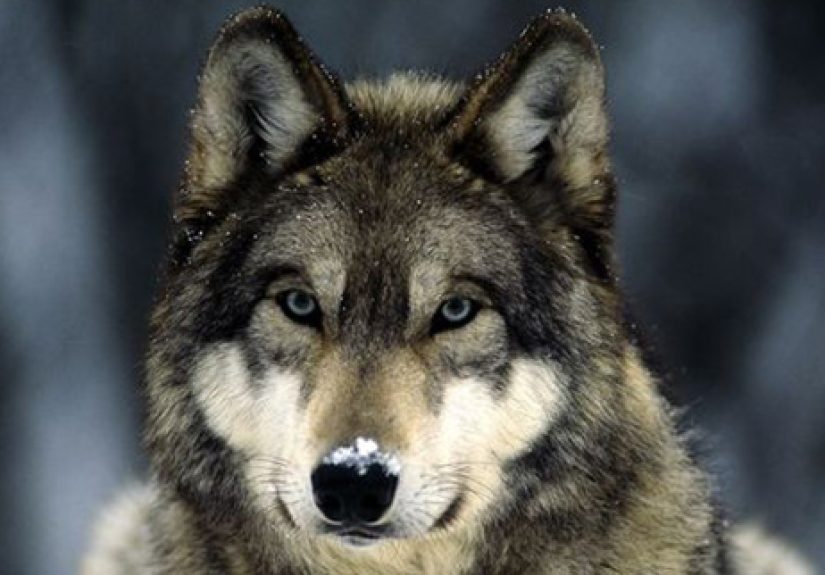
The name “gray wolf” is accurate in the same way calling pizza “bread” is accurate. Technically true, but missing a lot. Gray wolves can be gray, of course, but they can also be black, brown, white, or a mix of shades that make them look as if nature could not decide on one paint sample.
This color variation is not just cosmetic. Coat color can help wolves blend into different landscapes, especially when they are hunting or moving through forest, tundra, or snowy terrain. That is one reason wolves are so visually striking in the wild: two animals in the same pack may look completely different while still being the same species. A black wolf beside a pale gray wolf can look like the casting director got carried away, but that contrast is perfectly normal.
3. Howling is communication, not wolf karaoke
Yes, wolves howl. No, they are not doing it because the moon told them to. Howling is one part of a much larger communication system that helps wolves locate one another, defend territory, reunite separated pack members, and sometimes rally the group before movement or hunting activity.
Even better, individual wolves have distinct howls. Other wolves can recognize those differences over long distances, which means a howl is not just noise floating through the forest. It is information. Think of it as a voice memo sent across valleys and ridgelines, except much cooler and with significantly better acoustics.
Why this matters
People often reduce wolves to the dramatic sound bite, but the truth is more nuanced. Wolves also communicate through growls, whimpers, barks, posture, facial expressions, scent marking, and physical behavior. The howl gets top billing, but it is not a solo act.
4. Wolves use scent like an invisible social network
Humans leave text messages. Wolves leave scent. Urine, scat, gland secretions, and scent rubbing all help wolves mark territory and share information. It may not be glamorous, but it is extremely effective.
Scent marking tells neighboring wolves that an area is occupied, helps pack members track one another, and reinforces boundaries without forcing every disagreement into a direct fight. In the wild, avoiding a fight can be just as important as winning one. A serious injury can make hunting impossible, and a wolf that cannot hunt is in real trouble.
Wolves also have an impressive sense of smell, so this communication system is not random. It is detailed, persistent, and surprisingly efficient. To a wolf, a scent-marked trail is less “gross forest mystery” and more “important neighborhood bulletin board.”
5. Many wolves leave home young and can travel shockingly far
Not every wolf stays with its birth pack for life. In fact, many young wolves disperse when they are around 1 to 2 years old, especially if there is no room for them to establish a role in the family group. Dispersal is one of the most important parts of wolf ecology because it helps wolves find mates, start new packs, and maintain genetic diversity across populations.
And these animals do not do this halfway. Wolves commonly disperse dozens of miles, and some have traveled 500 miles or more in search of territory and opportunity. That is not a casual stroll. That is a full-on wilderness relocation plan.
This is one reason wolves are capable colonizers when habitat and prey are available. A lone dispersing wolf can eventually pair up, establish territory, and create the foundation for a new pack. So when wolves reappear in places where they were absent for decades, the story often begins with one restless young animal deciding it is time to move out and stop living with the parents.
6. Wolves are excellent hunters, but they fail a lot
Pop culture loves to portray wolves as unstoppable hunting machines. Real wolves are skilled, cooperative hunters, but success is far from guaranteed. Many hunts fail. Hunting is risky, exhausting, and often dangerous, especially when the prey is large enough to kick, gore, stomp, or trample a predator that makes one bad decision.
Wolves are cursorial hunters, which means they chase prey rather than ambush it from a hidden perch. That takes stamina, teamwork, and timing. It also explains why wolves often target vulnerable animals, such as the very young, the old, the injured, or the separated. This is not cruelty. It is energy economics. Wild predators do not get medals for making life harder than necessary.
They also eat more variety than many people realize. Depending on place and season, wolves may prey on deer, elk, moose, caribou, bison, beavers, rabbits, fish, and other smaller animals. In some regions, salmon even become an important seasonal food source.
7. Wolves are adaptable enough to live in more places than most people think
Many people imagine wolves as creatures of deep wilderness only, as if they require a permanent backdrop of snow, cliffs, and dramatic violin music. In reality, wolves are habitat generalists. If there is enough prey, enough space, and low enough human-caused mortality, wolves can live in a wide range of landscapes.
That adaptability helps explain both their historical range and their modern return to parts of the United States. Wolves once occupied a huge swath of North America, and today they continue to recolonize areas where conditions support them. They are not limited to one scenic postcard version of the wild. Forests, mountains, tundra, and mixed landscapes can all work.
That said, adaptability does not mean invincibility. Wolves still face pressure from habitat fragmentation, conflict with livestock operations, legal changes, and human intolerance. They are flexible animals, but they are not magic. Give them prey and room, and they can persist. Remove those foundations, and the story changes quickly.
8. Packs can be surprisingly flexible when it comes to raising pups
Wolf pup survival depends on the pack, not just the mother. Pups are usually born in early spring and spend their first weeks in a den. During that vulnerable period, the entire family may help guard, feed, and eventually move or care for the young.
This cooperative structure is one of the most underrated things about wolves. In some packs, more than one female may breed. In others, older siblings help feed pups with regurgitated food and keep watch around the den area. Researchers have also documented cases showing that if pack structure changes, wolves can still be resilient enough to continue rearing young.
In plain English, wolf families are built for teamwork. That flexibility helps explain why wolves have been able to recover in some regions when conditions improve. A pack is not just a hunting unit. It is a childcare system, a defense system, and a training camp all rolled into one shaggy, highly opinionated household.
9. Wolves can shape ecosystems, but the story is more complicated than a viral infographic
Wolves are often described as a keystone predator, and that description is important. As top predators, they can influence prey behavior and population patterns, which can in turn affect plants, scavengers, and other species. Yellowstone is the classic example. Wolf restoration there has been linked to broad ecological changes, including shifts in elk dynamics and ripple effects across the landscape.
But here is the little-known part: scientists also debate how simple that story really is. Some research supports the idea of strong trophic cascades, while other work argues that climate, habitat, other predators, human activity, and landscape conditions also play major roles. So wolves matter ecologically, but they are not a one-animal miracle cure for every environmental problem.
That is actually more interesting than the simplified version. Wolves do not “fix” ecosystems with movie-magic precision. They become one powerful force within a larger, messy, real-world system. That makes wolf ecology fascinating because it is dynamic, not mythical.
10. In the U.S., there is more than one wolf conservation story
When people talk about wolves in America, they often mean gray wolves. But the country also has the red wolf, one of the most endangered wild canids in the world. Red wolves once ranged across a large part of the eastern United States. Today, wild red wolves persist only in eastern North Carolina, and their future remains fragile.
Red wolves live in close-knit family packs, tend to form long-term pair bonds, and usually raise pups in hidden dens. Like gray wolves, older offspring may help rear younger pups before dispersing. But unlike gray wolves, red wolves exist under extraordinary conservation pressure, including habitat challenges, low population numbers, and hybridization concerns with coyotes.
This matters because “wolves” are not one single, tidy American story. They are several overlapping stories about behavior, recovery, controversy, law, ecology, and coexistence. Some populations are more stable. Others remain extremely vulnerable. If you want to understand wolves, you have to understand both the biology and the policy drama that follows them around like a shadow.
Experience-Based Reflections: What Wolf Encounters Often Feel Like in Real Life
For many people, the most memorable thing about wolves is not a statistic. It is the atmosphere around them. Wildlife watchers often describe wolf country as strangely quiet even when it is not actually silent. You notice ravens first, then the cold, then the long wait, and then suddenly everyone with binoculars stops moving at the same time. That is usually a clue that something is happening.
A real wolf encounter rarely looks like a nature documentary highlight reel. There is no dramatic zoom, no narrator whispering, “And now, the apex predator emerges.” More often, it begins with a small moving shape on a distant ridge and the slow realization that the shape is covering ground with almost absurd efficiency. Wolves have a way of turning huge landscapes into manageable spaces. They do not seem hurried, but they also do not waste motion. Watching that kind of movement in the wild helps explain why dispersing wolves can travel such incredible distances.
People who hear wolves howl in places like Yellowstone often describe the sound as both eerie and grounding. It can feel ancient without feeling theatrical. The reaction is immediate. Conversations cut off. Heads turn. For a few seconds, everyone becomes the same person: a human listening very carefully. That may be one reason wolves hold such a powerful place in culture. They do not just occupy the landscape. They change how people pay attention to it.
There is also something unexpectedly domestic about observing a pack for a while. Not tame, of course. Still very much wild, still very much equipped with teeth and opinions. But the social behavior can feel familiar in a strange way. One wolf lingers near younger animals. Another takes the lead. Others hang back, test boundaries, play, or follow along with the kind of low-key sibling energy seen in living rooms across America. Then the pack shifts, regroups, and moves with a unity that reminds you this is not random togetherness. It is structure.
Field observers and guides often note that wolf watching is really an exercise in patience and humility. Sometimes you wait for hours and see almost nothing. Sometimes you catch a brief but unforgettable sequence: a greeting ceremony, a stretch, a chase, a distant howl, a pup fumbling over its own feet, or a pack traveling across snow in a line so clean it looks choreographed. Those moments are powerful precisely because they are not staged. They feel earned.
That experience also tends to rearrange old assumptions. Wolves stop being cartoon villains and start looking like what they are: intelligent, social predators trying to make a living in landscapes shared with prey, rivals, weather, and people. The more time someone spends learning about wolves, the less dramatic the myths become and the more compelling the real animal is. And that may be the best wolf experience of all. You do not leave thinking, “Wow, that monster was impressive.” You leave thinking, “That family was extraordinary.”
Conclusion
Wolves are far more complex than the legends built around them. They are family-oriented predators, sophisticated communicators, long-distance travelers, cooperative hunters, and important ecological players. They are also adaptable enough to survive in a surprising range of habitats, yet vulnerable enough that their future still depends heavily on human choices.
If there is one takeaway from these little-known facts about wolves, it is this: the real wolf is more impressive than the myth. Strip away the folklore, and you find an animal shaped by intelligence, social bonds, conflict, resilience, and constant movement. That is a much better story anyway. The fairy-tale villain never had a chance.