Table of Contents >> Show >> Hide
- First: Do Paintings “Cause” Incidents?
- The Paintings (and the Horrible Incidents) That Followed
- 1) The Crying Boy Prints: The Fire Panic That Went National
- 2) The Hands Resist Him: The “Haunted eBay Painting” That Broke the Internet
- 3) Edvard Munch’s The Scream: When Fear Became a Crime Scene
- 4) The Mona Lisa: The Most Famous Face and the Most Frequent Target
- 5) Rembrandt’s The Night Watch: Repeated Attacks on a National Treasure
- 6) Velázquez’s Rokeby Venus: From Suffragette Slashing to Modern Protest Shockwaves
- 7) Picasso’s Guernica: A Masterpiece That Took a Message (Literally)
- Why “Cursed Painting” Stories Spread So Easily
- How Museums Reduce the “Incident Magnet” Problem
- So… Are These Paintings Actually Haunted?
- Experiences: What It’s Like to Meet a “Cursed” Painting in Real Life (Extra)
- Conclusion
Some paintings make you feel things. Awe. Wonder. The sudden urge to stand three inches from a canvas while whispering,
“Wow.” And then there are paintings that make you feel like you should apologize to the room and leave quietly.
Over the years, a handful of unsettling artworks (and a few not-so-scary ones that became “incident magnets”) have been
blamed for fires, thefts, vandalism, public freak-outs, and internet-wide paranoia. Were these paintings truly cursed?
Or did humans do what humans do bestconnect dots that were never meant to be a constellation?
Let’s explore the frightening paintings linked to real-world chaos, what actually happened, and why “cursed art” stories
stick around like glitterforever, in places you didn’t consent to.
First: Do Paintings “Cause” Incidents?
In most cases, paintings don’t cause anything in the supernatural sense. But they can spark incidents in a few
very real ways:
- They’re famous, which attracts thieves, vandals, and attention-seekers.
- They’re emotionally intense, which can provoke strong reactions (fear, anger, obsession).
- They pick up folklore, and once a “curse” rumor starts, every coincidence becomes “proof.”
- They’re physically present, meaning they become targets during protests, political moments, or publicity stunts.
The result? A painting becomes less “art on a wall” and more “a very expensive lightning rod for human behavior.”
The Paintings (and the Horrible Incidents) That Followed
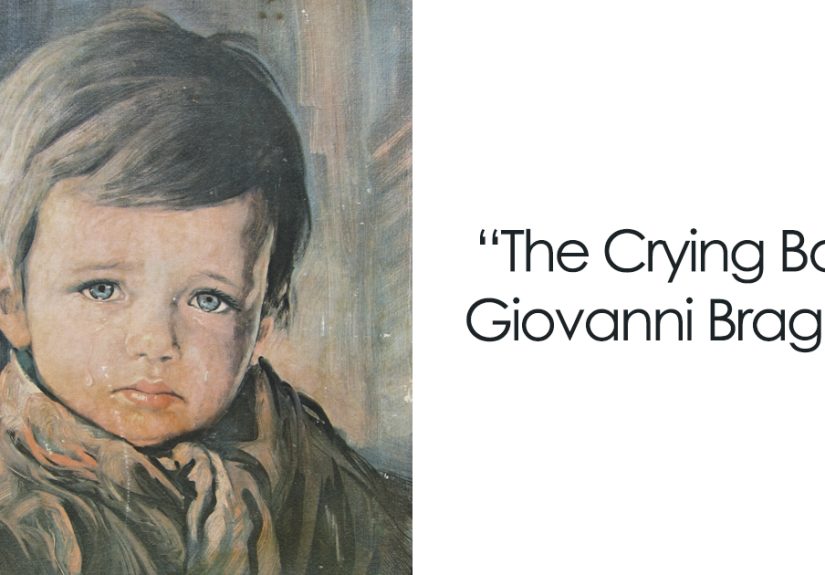
1) The Crying Boy Prints: The Fire Panic That Went National
If you grew up hearing about a “haunted crying child painting,” odds are you’re thinking of The Crying Boy
a mass-produced print based on paintings attributed to the artist name G. Bragolin. The legend exploded in
the 1980s when a tabloid story claimed firefighters kept finding the print undamaged in burned homes. That detail
(the picture surviving) became the headline hook, and the rumor machine did the rest.
Soon, people weren’t just gossipingthey were taking action. Reports of “cursed” prints circulated, and
a sensational crescendo followed: large-scale public bonfires where owners mailed in prints to be burned,
as if the paper itself could file a complaint with the universe.
The most grounded explanation is also the least cinematic: some prints were made on materials that didn’t ignite easily,
and in a typical house fire, a framed print could fall face-down and avoid direct flame exposure. In other words, physics
can look a lot like a curse when everyone’s already spooked.
Still, this incident is a masterclass in how folklore spreads: a scary image + a dramatic coincidence + mass media =
nationwide panic (and a lot of ash).
2) The Hands Resist Him: The “Haunted eBay Painting” That Broke the Internet
Few modern art legends are as perfectly engineered for online chaos as The Hands Resist Him (1972) by
Bill Stoneham. It depicts a boy and a doll-like figure in front of a glass door, with hands pressing from the other side.
It’s unsettling in the way a bad dream is unsettling: you can’t explain it, but your brain wants to file a restraining order.
In 2000, the painting was listed on eBay with a description implying it was hauntedcomplete with claims that the figures
moved, escaped the frame, or otherwise behaved like they’d signed up for an after-hours horror franchise. Viewers reported
feeling uneasy just looking at the listing photo. Some claimed headaches or nausea. Others blamed their electronics.
The story went viral before “viral” was even a daily life requirement.
Here’s what’s especially fascinating: the incident wasn’t a museum attack or a theft. It was a mass psychological event
playing out through screensfear, suggestion, and internet amplification turning one painting into a cultural phenomenon.
Later, the work ended up with a gallery owner who reported nothing paranormaljust a lot of people asking if the painting
was going to crawl out of its frame.
3) Edvard Munch’s The Scream: When Fear Became a Crime Scene
The Scream doesn’t need an urban legend to be scary. It already looks like your soul the moment you remember
you said “I’m free anytime” and your friend replies, “Perfecthelp me move Saturday.”
Its “horrible incidents” are documented and dramatic: versions of The Scream have been stolen in major
art crimes, including a headline-grabbing theft timed with a global spotlight. The sheer audacity of stealing one of the world’s
most recognizable images turned the painting into more than a masterpieceit became a symbol of how vulnerable cultural treasures
can be.
The irony is sharp: a painting about anxiety repeatedly became the center of real public anxiety. Museums tightened security,
and the story of the thefts became part of the artwork’s modern mythproof that fear can live both inside the frame and around it.
4) The Mona Lisa: The Most Famous Face and the Most Frequent Target
If a painting could hire security guards as personal assistants, the Mona Lisa would still want backup.
Over the past century, it has been a magnet for incidentsbecause fame is basically a neon sign that reads,
“Hello, I am the main character of world culture. Please behave normally around me.” And, well, people don’t.
The Mona Lisa was famously stolen in the early 20th century, an event that helped turbocharge its global celebrity.
Later came attacks and stunts: thrown objects, attempts at defacement, and more recently, a widely reported incident involving
cake hitting the protective glass. The painting survived, because it’s now displayed behind strong protective barriers.
What’s the “horrible” part here? Not just the attacks, but the pattern: the painting’s fame invites people to use it as a billboard
for attention, protest, or notoriety. In a strange way, the Mona Lisa isn’t only artit’s a stage where society performs.
5) Rembrandt’s The Night Watch: Repeated Attacks on a National Treasure
Rembrandt’s The Night Watch is massive, iconic, and belovedwhich is exactly why it has faced repeated threats.
Over the decades, it has been attacked more than once, including incidents involving a blade and later a chemical spray.
These weren’t “curse” stories. They were reality: public artworks, accessible to crowds, can become targets for people who want to
make a pointor make headlines. Museums responded with restoration, improved security, and ongoing conservation efforts.
The takeaway is sobering: the bigger the cultural symbol, the bigger the risk it attracts. Fame protects art with attention,
but it also paints a target.
6) Velázquez’s Rokeby Venus: From Suffragette Slashing to Modern Protest Shockwaves
Velázquez’s The Toilet of Venus (often called the Rokeby Venus) is not a “horror painting.”
Yet it has a violent incident attached to its history: in 1914, it was attacked in a dramatic political protest.
The act turned a quiet gallery moment into national news and locked the painting into a story about power, bodies, and public anger.
Fast-forward to modern times, and the artwork again became a focal point during a protest incidentthis time involving damage to
protective glass rather than the painting itself. Different era, similar energy: artworks get targeted not because of what paint
is on canvas, but because of what the image represents in public life.
It’s a reminder that “horrible incidents” around paintings are often about human conflict, not haunted pigments.
7) Picasso’s Guernica: A Masterpiece That Took a Message (Literally)
Picasso’s Guernica is already unsettlingan artistic scream against violence and suffering. And in 1974, it became
the center of a notorious incident when it was spray-painted during a political act. The shocking part wasn’t only
the defacement; it was the symbolism of attacking an anti-war masterpiece to protest violence elsewhere.
Fortunately, conservation choices made years earlier helped protect the surface, and the paint was removed without lasting harm
to the original. Still, the moment lives on as proof that famous paintings can become battlegrounds for public statements.
Why “Cursed Painting” Stories Spread So Easily
A cursed painting is the perfect urban legend because it uses ingredients your brain already loves:
- Pattern-seeking: when something bad happens, we look for a causeeven if it’s just “the creepy picture.”
- Memorable imagery: frightening art sticks in your head longer than a calm bowl of fruit.
- Social proof: once a story is “known,” every retelling feels like evidence.
- Nocebo effect: if you expect a painting to make you feel sick, you might genuinely feel sick.
- Media amplification: one dramatic headline can turn a local coincidence into a global myth.
None of this means people are “making it up.” Fear is real. Anxiety is real. And humans are storytelling machineseven when the
story is, “That painting is absolutely plotting something.”
How Museums Reduce the “Incident Magnet” Problem
Whether the threat is theft, vandalism, or chaos-for-clicks, modern museums have learned to treat certain works like high-risk
assets. Common strategies include:
- Protective glazing (special glass) and increased distance between viewers and artworks
- Improved surveillance and trained gallery staff positioned for clear sightlines
- Controlled visitor flow so crowds don’t become cover for bad behavior
- Rapid-response conservation protocols for spills, sprays, or environmental threats
The funny part is that these measures can also increase a painting’s “mystique.” When something is behind glass with guards,
our brains don’t think, “conservation.” We think, “What happened here?” And suddenly, the folklore grows.
So… Are These Paintings Actually Haunted?
If you’re asking an evidence-based answer: the incidents above have strong human explanationsmedia panic, fame, politics,
crime, and psychology. But if you’re asking the storytelling answer: paintings feel alive because they’re made to hold attention,
emotion, and meaning. And when the meaning is dark, our imaginations move in like they’re paying rent.
The real “curse” might be simpler: once a painting becomes a symbol, it stops being left alone.
Experiences: What It’s Like to Meet a “Cursed” Painting in Real Life (Extra)
Even if you don’t believe in haunted art, walking into a room with a notoriously unsettling painting can mess with your nerves.
People describe it like stepping into a place that already has a moodlike the air got the memo before you did.
A lot of visitors report a strange kind of self-awareness: you’re not just looking at the painting, you’re noticing yourself
looking at it. Your brain starts narrating. Is it colder in here? Why is everyone whispering? Did that security
guard just look at me, or at the painting… or at my soul? That’s not paranormal activityit’s your attention locking onto
a “high-stakes” object.
Then there’s the social effect. If you came with friends, someone will inevitably say, “Okay, don’t stare too long.” Now you’re
thinking about staring too long. Someone else mentions the painting’s “history,” and suddenly every normal sensation becomes a clue:
a small headache from dehydration turns into “a vibe,” and a phone screen glitch becomes “it doesn’t want to be photographed.”
Suggestion is powerful, especially when the artwork is already creepy.
Online stories add another layer. People who’ve heard the legend of The Crying Boy sometimes catch themselves
glancing at old prints differentlylike they’re judging the picture for being too calm. Folks who know the Hands Resist Him
eBay story might feel uneasy even seeing a reproduction on a screen, because the legend trained their brain to expect a reaction.
It’s the same mechanism that makes a scary movie soundtrack raise your heart rate before anything scary happens.
Museums also change how you experience fear. Protective glass, alarms, distance ropesthose aren’t just security measures;
they’re stage lighting. They frame the painting as important, which makes your brain treat it as important. And when the subject
matter is disturbing, “important” can blur into “dangerous” in the emotional part of your mind. That’s why people sometimes describe
feeling “watched” by portraits or unsettled by figures that look almost-human. It’s not that the painting is movingit’s that your
perception is doing what perception does: filling gaps, imagining intent, and reacting to faces as if they’re alive.
If you want the most honest shared experience of all, it’s this: people love a controlled scare. They like stepping close to the edge
of discomfort when they know they can step back. A “cursed painting” story gives you permission to feel something bigfear, curiosity,
suspensewithout real danger. So you lean in, you get goosebumps, you laugh about it, and you leave with a story. In the end, that’s
what these paintings reliably “cause”: a moment where art stops being background decoration and becomes an event.
Conclusion
Frightening paintings don’t need supernatural powers to attract trouble. Sometimes, the “horrible incidents” come from fame,
politics, or the way a scary story spreads faster than common sense. Whether it’s a tabloid-fueled fire panic, a viral haunted
auction listing, or a high-profile museum attack, the pattern is the same: humans give paintings powerand then react to that power.
If you ever find yourself alone in a gallery with an unsettling canvas, remember: the safest interpretation is usually the simplest.
But if your imagination still insists the artwork is judging you… maybe just nod politely and back away like a respectful adult.