Table of Contents >> Show >> Hide
- Why this brick cottage needed more than a cute backsplash
- The “takeoff” moment: lifting a 1929 cottage like it’s no big deal
- Grow the house without picking a fight with history
- Brick: romantic, durable, and weirdly dramatic about water
- Nashville’s mixed-humid reality: moisture, heat, and the dehumidifier’s revenge
- Old-house hazards you don’t want to DIY your way through
- The basement glow-up: from “storage dungeon” to real living space
- Systems upgrades that make the new space feel like a home, not a project
- Resilience thinking: when your neighborhood has tornado stories
- What this Nashville brick cottage renovation teaches the rest of us
- Renovation Takeoff Diaries: of Real-World Experience
- Wrap-Up
There’s “open-concept,” and then there’s “open-concept, but first we’ll temporarily move the entire house like it’s a chess piece.”
In Nashville’s historic Lockeland Springs neighborhood, a 1929 brick cottage owned by Adam Ford and Rachel Modahl didn’t just get renovatedit literally got lifted, rolled, and set back down on a brand-new foundation so it could grow up without growing outward.
This Old House Season 46 captured the project as it shifted from “we’ll update things slowly” to “okay, the foundation is failing and the family is outgrowing the floor plantime to bring in the pros and do it right.”
Why this brick cottage needed more than a cute backsplash
The home checked all the “old-house charm” boxes: vintage character, walkable neighborhood, and that unmistakable feeling that your house has stories.
It also checked some boxes nobody puts on Pinterest boardslike crumbling foundation conditions, sketchy wiring, and the kind of cramped kitchen that makes you learn to love takeout.
Small-house math (also known as “where do we put the toothpaste?”)
When Adam and Rachel moved in during early 2022 with two small kids, the layout was doing the most with the least: the kids shared one bedroom, the “primary bedroom” was a converted porch with no heating or air conditioning, and the whole family shared a single full bath.
They originally planned a gradual renovation. But between the functional squeeze (tiny kitchen, one bath) and the safety/aging-home realities (worn wiring, problem materials common in older houses, and a foundation in rough shape), the project demanded a bigger playbook.
The “takeoff” moment: lifting a 1929 cottage like it’s no big deal
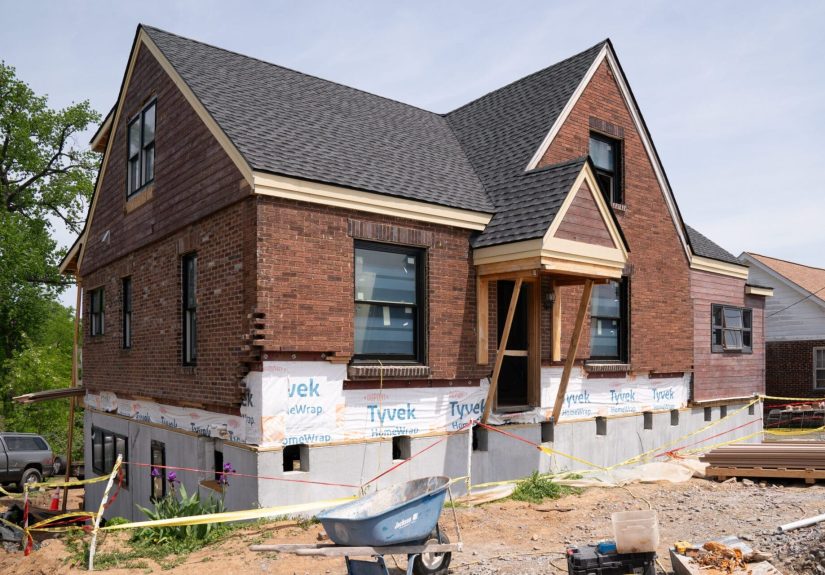
The renovation “takes off” in the most literal way: the house was lifted 42 inches, then rolled temporarily toward the backyard so crews could rebuild what was underneath it.
According to the project coverage, the moving team used massive steel beams, multiple cross beams, cribbing built from stacked timbers, and hydraulic jacks to raise the structure safely before sliding it back. It’s one of those construction sequences that makes your stomach dropunless you’re a structural engineer, in which case it probably makes your heart sing.
Why go through all that trouble?
Because the basement became the secret weapon. A structural engineer determined the original foundation was in such poor condition it needed a rebuild, and the homeowners opted for tall precast foundation wallscreating a basement with serious headroom and future-livable potential. The result: more space without changing the historic street-facing character.
Grow the house without picking a fight with history
In historic neighborhoods, you can’t always add square footage the way you would on a blank suburban lot. Design review processes and district guidelines often prioritize preserving the look and feel of what the street seesespecially the primary façade. Nashville’s historic zoning information and design-guideline framework reflect that kind of preservation-minded review.
This project leaned into that reality: keep the 1929 façade intact while transforming the back and the levels you don’t see from the sidewalk. That approach let the home expand from about 1,900 square feet to about 3,400 square feet by reworking the attic and basement and opening up the back half of the first floor.
The rear dormer: a “second floor” that doesn’t shout from the front yard
A large rear dormer made it possible to turn the attic into real bedroom space while keeping the main façade essentially unchangedan especially practical tactic when guidelines limit how much you can alter the front.
The new rear façade also did the heavy lifting for daily life: more light, better flow, and the kind of indoor-outdoor connection families actually use (not just admire while walking past with a mug of coffee).
Brick: romantic, durable, and weirdly dramatic about water
Brick cottages are beloved for good reason: they feel solid, quiet, and timeless. But brick and moisture have a relationship status best described as “it’s complicated.”
Brick can soak up rain and hold onto it; if the wall assembly can’t dry properly, moisture can migrate to the wrong places and cause damage over time.
Mortar is supposed to “take the hit”
Preservation guidance from the National Park Service emphasizes a core idea: in many historic masonry walls, mortar is meant to be sacrificialhelping the wall manage moisture movement so the brick itself doesn’t get damaged. Using overly hard, less-permeable mortars can trap moisture and contribute to brick deterioration.
Translation: matching mortar isn’t just about color. It’s also about strength and permeabilitychoosing a repair mortar that behaves like the original so the wall can continue doing its quiet, century-long job.
Clean brick gently, unless you enjoy turning “character” into “regret”
The National Park Service’s preservation guidance cautions that abrasive cleaning (think sandblasting) can damage historic building materials and is generally not an acceptable treatment except in limited circumstances. If the goal is to preserve vintage character, aggressive cleaning is the fastest route to “why does my house look… tired?”
Water management details that matter more than paint color
Even when brick looks like a fortress, water still finds ways inespecially at transitions like windows, doors, and the bottom of walls.
Building-science resources emphasize through-wall flashing, proper integration with the weather-resistive barrier, and weep holes so water can drain out instead of lingering behind the veneer.
In plain terms: if you’re renovating a brick cottage, “pretty” is greatbut “drains correctly” is the real flex.
Nashville’s mixed-humid reality: moisture, heat, and the dehumidifier’s revenge
Nashville sits in a climate where humidity matters for comfort and durability, especially in older homes. Air sealing and insulation can make a big differencebut the strategy has to respect ventilation and moisture control, not just energy bills.
Air sealing: do it… but do it like an adult
The U.S. Department of Energy’s guidance points out that the recommended approach is to reduce air leakage as much as practical while providing controlled ventilation as needed.
That means you don’t just “plug drafts”; you also make sure fresh air is delivered intentionally, not by accident.
In a renovation, this often looks like: sealing big bypasses (attic penetrations, rim joists, chases), then verifying performance (often with blower door testing), then making sure bathrooms and kitchens vent properly so moisture doesn’t set up camp in the new drywall.
Vapor control near brick: don’t wing it
Brick is a “reservoir cladding,” meaning it can store and release moisture.
Building-science discussions of vapor control highlight that wall assemblies need to be climate-appropriate so they can dry in the right direction(s) and avoid condensation or moisture trapping.
For many brick cottage remodels, the safest path is a careful, tested wall assemblyoften involving a smart approach to interior insulation, air sealing continuity, and moisture managementrather than copying a detail from a totally different climate zone.
Old-house hazards you don’t want to DIY your way through
Old homes can come with a “mystery box” of materials. The homeowners themselves joked about classic culpritsradon, asbestos, knob-and-tube wiring, and lead paintbecause these issues are common enough in older housing stock to be worth taking seriously.
Lead paint: rules, dust, and why containment isn’t optional
EPA guidance explains that renovation, repair, and painting projects that disturb lead-based paint in pre-1978 housing can create dangerous lead dust, and the agency requires lead-safe practices for covered work. Even when homeowners are allowed to DIY in their own homes, the safety principles (containment, dust control, and thorough cleaning) remain crucial.
Radon: test, then act based on numbers
Radon is odorless and invisible, so “I feel fine” isn’t a measurement tool. EPA states its recommended action level is 4 pCi/L and also encourages considering mitigation between 2 and 4 pCi/L. If you’re rebuilding a foundation or finishing a basement, it’s the perfect time to plan for testing and mitigation pathways.
The basement glow-up: from “storage dungeon” to real living space
This renovation turned the basement into a major asset. With tall precast foundation walls creating generous ceiling height, the lower level could become usable rooms rather than a “duck-and-apologize” crawlspace.
A basement that’s meant for living needs a short list of non-negotiables:
water management on the outside (grading, gutters, downspouts), waterproofing/drainage planning at the foundation, and indoor humidity control once the space is conditioned.
Skip those and you’ll be decorating with a dehumidifier and calling it “industrial chic.”
Systems upgrades that make the new space feel like a home, not a project
Expanding usable square footage only works if the mechanical and electrical systems match the new reality.
That typically means modern wiring, right-sized HVAC, and bathroom/kitchen ventilation that can keep up with a family’s daily moisture load.
Especially in a mixed-humid climate, comfort often comes down to controlling humidity as much as temperaturesomething older homes weren’t designed to do when they relied on leaky envelopes and “breezes” (also known as “unplanned air leakage”).
Resilience thinking: when your neighborhood has tornado stories
This particular home’s front yard had been impacted by a tornado before the owners even bought the housea reminder that Middle Tennessee weather isn’t always polite.
If you’re already investing in a major renovation, it’s worth considering resilience upgrades that fit your budget and risk profile:
impact-rated roof choices, better connections and fastening during framing work, andif you want to go all-inadding a residential safe room designed using FEMA guidance.
What this Nashville brick cottage renovation teaches the rest of us
-
Start with structure, not finishes.
If the foundation is failing, no amount of “warm white paint” will make the house feel stableemotionally or literally. -
Use the spaces you already have.
Converting attic and basement volume can add real function without dramatically changing the house’s street presence. -
Respect historic guidelines early.
If you’re in an overlay district, design review isn’t a late-game surprise; it’s the rulebook. -
Treat brick like a system, not a surface.
Mortar compatibility, gentle cleaning, flashing, and drainage details are what keep brick walls healthy for decades. -
Air sealing needs ventilation to match.
Tightening a house without thinking about fresh air is how “cozy” becomes “musty.” -
Plan for health hazards, not just aesthetics.
Lead-safe practices and radon testing are part of responsible renovation planning in older homes.
Renovation Takeoff Diaries: of Real-World Experience
The moment your renovation “takes off” (sometimes literally) is also the moment your calendar stops belonging to you.
In theory, a whole-house renovation is a neat sequence of boxes you check: demo, framing, rough-ins, insulation, drywall, finishes.
In reality, it’s a long-running improv show where the house keeps introducing surprise characters. Some are lovablelike hidden original brick behind paneling.
Others are… less charming. (If your built-in pantry has a pest problem, you will gain a whole new respect for sealed containers and professional remediation.)
Living through the planning phase is its own sport. You’ll swear you’re making “simple choices” until you’re suddenly comparing five shades of black window trim and debating whether your historic district will side-eye a porch railing.
And yes, that’s a real thing: when guidelines and neighborhood character matter, you learn to design strategicallykeeping the face of the house calm and familiar while letting the back and interior do the modern heavy lifting.
Then comes the emotional roller coaster of “big work.”
There’s a special kind of awe in watching crews lift an entire house, knowing that underneath your hardwood floors are steel beams, cribbing, and hydraulic jacks doing the kind of math you don’t want to do yourself.
It’s terrifying in the way a roller coaster is terrifying: safe when done by experts, but still capable of making you question every life choice that brought you to this line of sight.
Day-to-day life during a renovation becomes a study in micro-victories.
A “win” might be as small as: the new foundation walls are in, and suddenly the basement feels like real space instead of a compromised afterthought.
Or: your future bathroom exhaust fan is finally vented correctly, and you realize moisture control is the unsexy secret behind comfortable houses.
The most useful mindset shift is accepting that good renovations are built on invisible decisions.
People will compliment your tile. But the stuff that changes your daily life is the boring-sounding list: flashing details that drain water, mortar that matches the historic brick, air sealing that doesn’t suffocate the house, ventilation that keeps the air fresh, and radon planning that treats “health” as part of designnot an afterthought.
And when it’s finally done, the payoff is less about “before-and-after photos” and more about how the house behaves.
The kitchen works. Bedrooms make sense. The porch isn’t a seasonal experiment in suffering. The basement feels like a bonus, not a burden.
You still have a 1929 cottagebut now it fits the life you’re living in it, which is the whole point.
Wrap-Up
The Nashville brick cottage renovation “takes off” because it solves a classic old-house puzzle in a smart, respectful way:
preserve what the neighborhood loves, rebuild what the structure needs, and modernize the spaces where real life actually happens.
Whether you’re renovating in Nashville or anywhere with brick walls, humidity, and history in the mix, the lesson is the same:
start with durability and health, then let the charm ride shotgun.