Table of Contents >> Show >> Hide
- The Original Challenge: A Patchwork House With a Million-Dollar View
- What “Modern Classic” Really Means (And Why It Works by the Water)
- The “One Move” That Unifies the Whole House: Timber Cladding Everywhere
- The Kitchen: Bespoke, Practical, and Quietly the Star
- Living Spaces: Linen, Oak, and “Breezy” Without Feeling Bare
- Lighting: When a Lighting Designer Touches a House, You Feel It
- Bedrooms and Baths: Traditional Notes, Modern Restraint
- Coastal Remodel Reality Check: Beauty Has to Survive Salt, Moisture, and Real Life
- Steal These Ideas for Your Own Modern Classic Coastal Remodel
- Final Take: A Boathouse Spirit, Upgraded for Real Life
- Experience Add-On (About ): What It Feels Like to Live Inside a Modern Classic Waterside Remodel
Some houses have “good bones.” This one had good storiesand a few confusing hallways that looked like they were designed by a committee of
well-meaning pirates. Perched right on the waterfront in tiny Polruan, Cornwall, this former dinghy club-turned-restaurant-turned-home didn’t need
a glow-up. It needed a full-on, top-to-bottom re-think.
Enter Millard & Flo (lighting specialist Chris Millard and interior designer Flo Millard), who kept the footprint, untangled the layout, and turned
the place into a bright, breezy “modern classic” that nods to boathouse style without going full nautical theme park. No ship wheels. No netting.
Just calm, clever designand a lot of timber cladding doing the heavy lifting.
The Original Challenge: A Patchwork House With a Million-Dollar View
The building started life as a practical waterside structure and evolved (over multiple renovations) into a patchwork of rooms with a layout that
didn’t always make sense. The best assetthe waterwasn’t consistently treated like the main character. Millard & Flo’s solution was simple in theory
and skillful in execution: preserve what matters, clarify everything else, and orient daily living toward the river views.
Thanks to glazing added in a prior renovation, the back of the structure already had wide-open views of the Fowey Estuary as it runs toward the
English Channel. The remodel capitalized on that gift by opening up the living spaces, improving flow, and relocating functions (like the kitchen)
to the areas that could actually support themrather than forcing modern life into awkward corners.
Bonus difficulty level: “Contractors, but make it cardio.”
The house is accessed by foot only, down steep steps from street level. Which means every sheet of material, every appliance, every “just one more
thing,” has to be carried the old-fashioned way: with effort, planning, and probably a few dramatic pauses to admire the view while catching your breath.
What “Modern Classic” Really Means (And Why It Works by the Water)
“Modern classic” can sound like a contradictionlike “jumbo shrimp” or “quiet group chat.” But in interiors, it’s a very real (and very livable) approach:
classic proportions and familiar materials paired with cleaner lines, calmer palettes, and fewer fussy extras. Think: timeless, not trend-chasing; cozy, not cluttered.
In U.S. design language, this overlaps with what many publications call transitional design: a blend of traditional comfort and modern simplicity,
usually built on layered neutrals, texture, and statement lighting. It’s especially effective in coastal settings because the scenery is already doing the mostyour
interiors just need to support it, not compete with it.
- Classic: tongue-and-groove paneling, cast-iron beds, traditional bath elements, oak floors.
- Modern: simplified forms, restrained styling, airy sightlines, smart spatial edits.
- Coastal (without clichés): natural textures and subtle nautical referencesmore “boathouse” than “gift shop.”
The “One Move” That Unifies the Whole House: Timber Cladding Everywhere
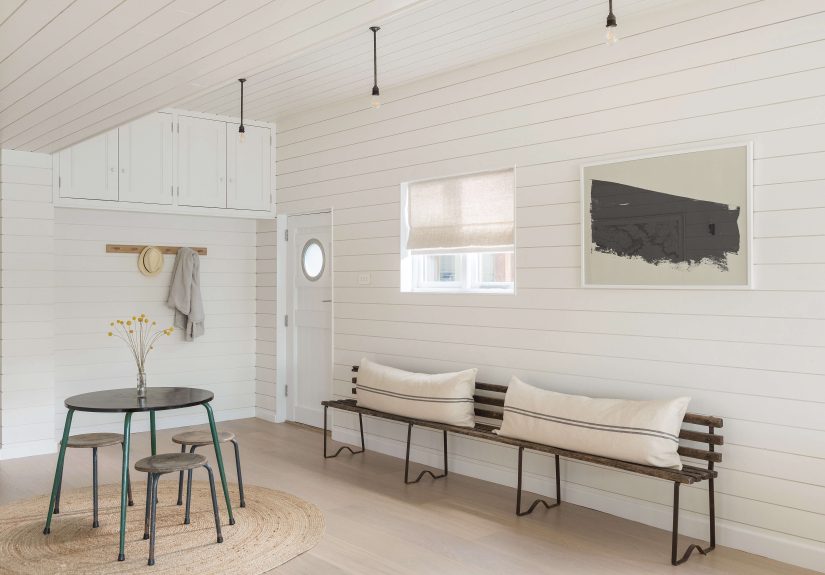
The remodel’s secret sauce is surprisingly straightforward: whitewashed timber cladding used throughouteven on the ceilings. Instead of
trying to make every room special in a different way (a classic remodel trap), the designers tied the whole house together with consistent paneling.
And the paneling isn’t one-note. On the ground floor it runs horizontally (a quiet, boathouse-adjacent move that visually widens the space),
while upstairs it becomes vertical tongue-and-groove, which subtly lifts the rooms and adds a more traditional feel.
Tongue-and-groove vs. shiplap: why the choice matters
In photos, tongue-and-groove and shiplap can look like cousins who borrow each other’s sweaters. But tongue-and-groove interlocks tightly for a more seamless,
sturdy finishgreat for ceilings and areas where you want less gapping and easier maintenance. Shiplap’s overlap can be simpler to install, but tends to show more
shadow lines (and collect more dust in the grooves). In a waterside homewhere salt, moisture, and sandy life happencleanability is not a boring detail. It’s freedom.
The paint choice that keeps “white” from feeling like a hospital
All that paneling could’ve gone icy fast, but the designers used a warm, soft white (Little Greene’s “Slaked Lime”) that reads creamy and calm rather than stark.
Coastal light changes by the hourbright sun, silver fog, stormy grayso a nuanced white is like emotional support for your walls.
The Kitchen: Bespoke, Practical, and Quietly the Star
The kitchen was relocated to an underused part of the ground flooran edit that sounds obvious until you’ve lived in a house where the “kitchen” is basically
a hallway with a kettle. Moving it wasn’t just about cabinetry; it was about making the home function like a home.
Bespoke joinery with real-world logic
The kitchen is a fully bespoke design fabricated by Millard & Flo’s crew, with an oak countertop and a classic apron-front sink
(from Perrin & Rowe). Wood counters can be a hot topic (some people love them; some people fear them like an untamed sourdough starter), but in a boathouse-inspired
scheme, oak adds warmth and authenticity. The key is pairing it with good sealing habits and reasonable expectations: it will patina, and that’s part of the charm.
The antique table trick: instant soul
Instead of forcing a giant island into the room, the designers brought in a Georgian prep table with updated porcelain knobsadding storage and character without
making the kitchen feel like a showroom. It’s also a smart move for a coastal home: freestanding pieces let spaces breathe and evolve over time.
Borrowed light, interior windows, and a pantry with attitude
Interior windows (including a glazed pantry) help light travel through the houseespecially valuable in older structures with quirky footprints. The pantry is painted
a rich blue-black (“Basalt”), creating contrast against the sea-of-white paneling and giving the kitchen a grounded center of gravity. A skylight adds even more daylight,
because nothing says “Cornwall” like the possibility of four seasons in one afternoonand the need to capture sunshine whenever it shows up.
The kitchen flows into a dining area overlooking the river, leaning into one of the most reliable coastal design rules: make gathering easy, make views visible, and
make circulation logical. A waterside house should encourage slow breakfasts, long lunches, and the kind of “we’ll just have one more cup of tea” afternoons that turn
into evening.
Living Spaces: Linen, Oak, and “Breezy” Without Feeling Bare
Next to the kitchen, the living area overlooks the waterbecause if you’re lucky enough to live beside it, you should get to see it while doing very important things,
like reading, napping, or pretending you’re going to fold laundry.
Underfoot: wide-board oak flooring finished with a white oil that lightens the wood while keeping grain visible. It’s a classic coastal move: bright,
forgiving, and warm. Up top and around: paneling everywhere, which adds texture so the palette can stay restrained without going flat.
Slipcovers aren’t a downgradethey’re a lifestyle strategy
The lounge seating includes Conran designs slipcovered in heavy linen. In a waterside home, textiles have a job: they need to handle wet swimsuits, salty hair,
sandy feet, and the occasional visitor who says, “I’m not dirty!” while leaving a perfect footprint trail. Washable, natural fabrics keep the mood relaxed and the
maintenance realistic.
The styling stays minimal but not sterile, mixing vintage finds (like an antique bench near the entry) with a few graphic art momentsenough personality to feel lived-in,
not so much that the room starts arguing with the view.
Lighting: When a Lighting Designer Touches a House, You Feel It
Because Chris Millard specializes in architectural lighting, it’s no surprise that illumination here feels intentional rather than “we bought six matching fixtures and
called it a day.” The home uses classic formslike Original BTC porcelain wall lightsso the lighting reads timeless, not trendy.
In coastal homes, good lighting isn’t just moodit’s practicality. Overcast days happen. Early sunsets happen. People track in water and sand and need bright task light
to find the towel they swear they put “right here.” Layered lighting (ambient + task + accent) keeps spaces flexible across seasons.
Bedrooms and Baths: Traditional Notes, Modern Restraint
There are five bedrooms total, including a guest room with twin cast-iron beds painted a cornflower bluejust enough color to nod to the sea without going full navy-and-anchor.
Upstairs, vertical tongue-and-groove continues the calm architectural rhythm, and details like paneled wood doors maintain the home’s classic backbone.
Bathrooms that balance “period charm” with “I like running water”
In the family bath, tongue-and-groove paneling pairs with an old-fashioned toilet and herringbone cement tilesan old-meets-new mix that feels appropriate for a building
with history. In the primary bath, Carrara marble tops a double sink, while a claw-foot tub adds another classic reference (plus, honestly, a strong case for long soaks
after windblown beach walks).
The primary bedroom has a view and balcony doors that fold openbecause fresh air is basically part of the furnishing plan in Cornwall.
Coastal Remodel Reality Check: Beauty Has to Survive Salt, Moisture, and Real Life
A waterside house isn’t like an inland house with better Instagram lighting. Coastal environments introduce extra wear: salt accelerates corrosion, wind pushes moisture
into tiny gaps, and everything outside (and half the things inside) want to age faster.
Practical upgrades that protect the “pretty”
- Use corrosion-resistant hardware where possible and keep an eye on exterior metal components.
- Maintain sealants and caulk around windows and openingssmall failures become big leaks in wet climates.
- Choose finishes you can live with: oiled wood and painted paneling can be repaired; ultra-delicate surfaces turn into stress.
- Plan storage for wet gear: boots, coats, towels, dog leashesif it’s near the water, it will be damp at some point.
Millard & Flo’s remodel is a reminder that “coastal style” isn’t a color paletteit’s a performance standard. The goal is a house that still looks good after a
windy week, a muddy walk, and a dozen friends popping in with “we were just in the neighborhood.”
Steal These Ideas for Your Own Modern Classic Coastal Remodel
1) Pick one architectural language and speak it everywhere
The paneling strategy is the perfect example. A repeated material creates cohesion faster than any “decor theme” ever could. Bonus: it gives you permission to keep
furniture simple and let the view lead.
2) Let the house be calm; let the landscape be dramatic
Coastal homes already have motion outsidewater, clouds, wind, changing light. A restrained interior isn’t boring; it’s considerate. Texture (oak grain, linen weave,
beadboard detail) becomes the visual interest instead of loud pattern overload.
3) Mix vintage with bespoke for instant depth
Custom joinery can feel crisp (in a good way), but it can also feel too new if everything matches. A single antique table, bench, or dresser brings in softness and
historylike adding a bass line to a song so the chorus hits harder.
4) Make maintenance part of the design brief
Washable slipcovers. Durable floors. Sensible paint. Hardware that can handle the environment. The best coastal houses aren’t the ones that never get usedthey’re the
ones that get used and still look better every year.
Final Take: A Boathouse Spirit, Upgraded for Real Life
The genius of this Cornwall remodel isn’t that it’s flashyit’s that it’s disciplined. Millard & Flo kept the footprint, respected the building’s past, and made
a modern home that feels like it belongs exactly where it sits: right on the water, with salt in the air and light bouncing everywhere.
If you’re chasing “modern classic” for your own coastal project, take the lesson: unify your materials, simplify your layout, choose finishes that can age with grace,
and treat the view like a design partnernot a backdrop.
Experience Add-On (About ): What It Feels Like to Live Inside a Modern Classic Waterside Remodel
A waterside remodel teaches you quickly that design isn’t just visualit’s physical. In a place like Polruan, where the house is reached by steep steps and footpaths,
every decision has a “could I carry this down here?” factor. That sounds dramatic until you realize even a simple sofa delivery turns into a relay race with the kind of
coordination usually reserved for moving a piano. You start appreciating lightweight furniture, modular pieces, and anything that arrives in boxes you can actually lift.
Then there’s the light. Coastal light has moods. Morning might be bright and clear, making your warm white paint look creamy and soft. By afternoon, fog rolls in and the
same paint reads coolerstill lovely, but different. On stormy days, everything outside turns silvery and the interior needs texture to stay cozy. That’s where whitewashed
paneling shines: it catches light gently, adds shadow lines, and keeps the room feeling finished even when the sky is doing its gray-and-gorgeous thing.
You also learn to design for the “wet middle.” Not quite outside, not quite insidethe zone where boots drip, coats steam, dogs shake, and towels appear like they’re
multiplying. A modern classic coastal home works best when it quietly supports this reality: a bench near the entry for pulling off shoes, hooks that don’t wobble, baskets
that look intentional (even if they’re hiding chaos), and floors that forgive you for living.
Kitchens by the water have their own personality. People gather there because the view is near, the tea is there, and the snacks magically appear there. A bespoke kitchen
feels different when it’s designed around real routines: where wet hands land, where mugs live, how you move from sink to prep surface without doing a clumsy sidestep.
An oak countertop, especially, changes the vibewarmer, more humanbecause it doesn’t pretend life is sterile. It will mark a little. It will deepen in tone. And that
becomes a record of summers, dinners, and the occasional “we’ll just slice this lemon right here.”
The modern classic approach is also surprisingly calming emotionally. When your palette is restrained, you stop hunting for “the perfect matching thing” and start enjoying
how the house breathes. You can add a vintage table, a piece of art, a linen throwand it feels like a chapter in an ongoing story, not a disruption. That’s the quiet
power of cohesion: it makes change feel welcome.
Finally, you become a little more respectful of maintenancenot in a scary way, but in a “this is how we keep it lovely” way. Salt air means you wipe down metal more
often. Moisture means you pay attention to seals. Sand means you sweep. But if the remodel is done rightdurable floors, washable textiles, smart ventilation, sensible
finishesthose tasks don’t feel like punishment. They feel like care. And in a house that sits on the edge of water, with views that reset your brain every time you
look up, that care feels completely worth it.