Table of Contents >> Show >> Hide
- Why tick myths stick around (like… well, you know)
- Myth 1: “Ticks fall from trees onto your head.”
- Myth 2: “You’ll definitely feel a tick bite.”
- Myth 3: “Ticks only live deep in the woodsmy yard is safe.”
- Myth 4: “Ticks are insects.”
- Myth 5: “Ticks are only a summer problem.”
- Myth 6: “The best way to remove a tick is to burn it, smother it, or ‘paint’ it off.”
- Myth 7: “If the tick’s mouthparts stay in your skin, you’re doomed.”
- Myth 8: “If a tick crawled on you, it already infected you.”
- Myth 9: “All ticks carry Lyme disease (so every bite = Lyme).”
- Myth 10: “If you remove a tick quickly, you’re 100% safe.”
- Myth 11: “If there’s no bull’s-eye rash, you’re fine.”
- Myth 12: “Natural repellents are automatically saferand just as effective.”
- Myth 13: “Permethrin is just another repellentput it on your skin.”
- Myth 14: “Washing clothes gets rid of ticksdone.”
- Myth 15: “Get the tick tested and you’ll know what to do.”
- What actually works: a simple tick prevention routine
- After a tick bite: when to call a healthcare professional
- Experiences & “Tick Myth Moments” People Run Into (Extra Notes)
- Wrap-up: retire the myths, keep your weekends
Ticks have an incredible PR team. Not because they’re charming (they’re basically tiny, uninvited vampires with
a hiking hobby), but because myths about them spread faster than your group chat after someone spots one on a sock.
The problem is that bad tick advice doesn’t just waste timeit can raise your risk of tick-borne illness, or at least
lead to a backyard “science experiment” involving a lighter and regret.
Let’s retire the rumors and keep the useful stuff: how ticks actually behave, what “works” according to public health
guidance, and what to do after a bitewithout turning your skin into a DIY craft project.
Why tick myths stick around (like… well, you know)
Tick myths usually sound confident, simple, and oddly specific. “Just twist it counterclockwise.” “Smother it with
Vaseline.” “They drop from trees.” These lines get passed down like family recipesexcept the recipe is for panic.
Meanwhile, real tick guidance is more boring: avoid them, use proven repellents, check your body, remove them correctly,
and watch for symptoms. Boring saves the day.
Myth 1: “Ticks fall from trees onto your head.”
Reality: ticks don’t fly, don’t jump, and generally don’t “attack” from above like tiny action-movie villains. Most
ticks wait on grasses and shrubs and grab on when you brush pastbehavior called questing. Translation: your
ankles, calves, and waistband are often the front lines, not the top of your hair.
Yes, you can still find ticks on your scalpbecause once they’re on you, they can crawl to warm, hidden spots. But
the “falling from trees” storyline distracts from the real risk: walking through brush, tall grass, leaf litter, and
the edges of trails where ticks hang out waiting for a ride.
Myth 2: “You’ll definitely feel a tick bite.”
Reality: many people don’t feel it. Ticks can release saliva with anesthetic properties, which helps them feed without
being noticed. That’s why tick checks matterbecause your nerves might not RSVP to the situation.
If you’re waiting for pain as your notification system, you’re using the least reliable app on your phone: “Vibes Only.”
Myth 3: “Ticks only live deep in the woodsmy yard is safe.”
Reality: many people pick up ticks in their own yard or neighborhood. Ticks can be in grassy, brushy, or wooded areas,
and they also ride on animals. That means the “I’m not camping, so I’m fine” logic collapses the moment you garden,
walk a dog, or let the kids play near shrubs and leaf piles.
A yard doesn’t need to look like a wilderness documentary to host ticks. It just needs shade, humidity, and a little
wildlife traffic.
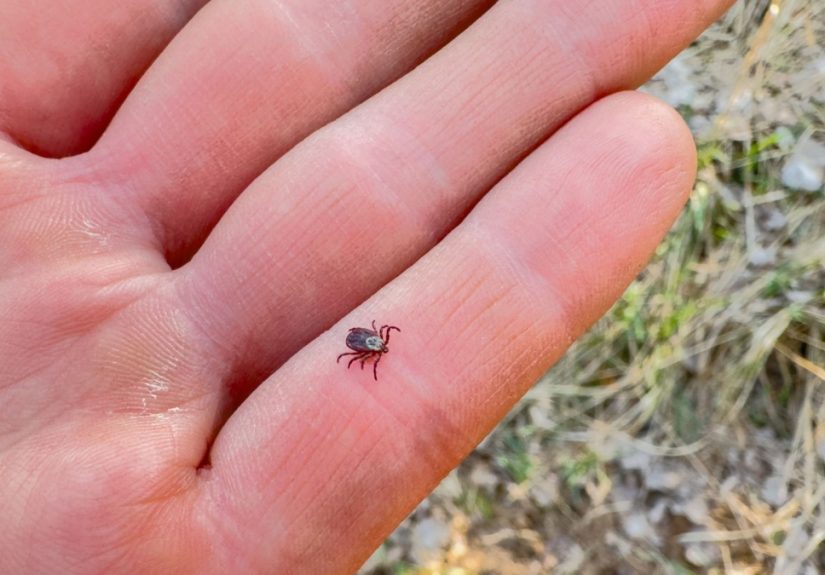
Myth 4: “Ticks are insects.”
Reality: ticks are arachnidsrelatives of spiders and mites. Adult ticks and nymphs have eight legs, not six. This
matters because a lot of “bug” assumptions don’t fit ticks (like expecting them to behave like mosquitoes or fleas).
If it has eight legs and a commitment to ruining your weekend plans, it’s not an insect. It’s something worse: a tick.
Myth 5: “Ticks are only a summer problem.”
Reality: tick exposure can happen year-round, even though many ticks are most active during warmer months (often spring
through early fall). Mild winters and warm spells can keep ticks active when people assume they’re “off duty.”
So yesplan your tick precautions like you plan your password updates: more often than you want to, and earlier than you
think you need to.
Myth 6: “The best way to remove a tick is to burn it, smother it, or ‘paint’ it off.”
Reality: please don’t. Folk remedies like using a hot match, petroleum jelly, or nail polish aren’t recommended. They
can irritate the tick, waste time, and increase the chance you squeeze it or make a mess. The goal is quick, clean
removalno drama.
What to do instead (the actually-boring, actually-good method)
- Use fine-tipped tweezers.
- Grasp the tick as close to the skin’s surface as possible.
- Pull upward with steady, even pressure. Don’t twist or jerk.
- Clean the bite area and your hands with soap and water or rubbing alcohol.
- Dispose of the tick (or save it in a sealed container if your clinician wants identification).
This is one of those times in life where “simple and correct” beats “creative and terrifying.”
Myth 7: “If the tick’s mouthparts stay in your skin, you’re doomed.”
Reality: it’s not ideal, but it’s not an instant disaster. If mouthparts break off, public health guidance commonly
notes that you can leave them aloneyour skin may push them out naturally over time. The bigger risk is digging around
aggressively and turning a small bite into an irritated, infected spot.
Think of it like a tiny splinter situation: clean it, don’t excavate your own leg like you’re searching for buried treasure.
Myth 8: “If a tick crawled on you, it already infected you.”
Reality: a tick must bite and attach to spread germs. A tick crawling on you is still a big warning sign (because there
may be others), but it’s not the same as an attached, feeding tick. The correct response is: remove it, do a thorough
tick check, and consider where you were exposed.
Myth 9: “All ticks carry Lyme disease (so every bite = Lyme).”
Reality: not all ticks are infected, not all tick species spread the same diseases, and geography matters. Lyme disease
in the U.S. is primarily spread by blacklegged ticks in certain regions. In other areas, other tick-borne diseases can
be more common.
Translation: every tick bite deserves attention, but panic isn’t a prevention strategy. A calm, methodical response is.
Myth 10: “If you remove a tick quickly, you’re 100% safe.”
Reality: prompt removal is one of the most important steps you can take, and it can drastically reduce riskespecially
for Lyme disease, where transmission generally requires a longer attachment time. But “zero risk” is too strong, because
different germs can transmit in different time windows.
Some infections may transmit more quickly than Lyme disease, and guidance often notes that transmission time can range
from minutes to days depending on the pathogen and tick. This is why prevention (repellent + clothing + tick checks) is
your best friend, and why symptom monitoring after a bite matters.
Myth 11: “If there’s no bull’s-eye rash, you’re fine.”
Reality: the expanding rash called erythema migrans is common in Lyme disease, but it doesn’t happen in everyone,
and it doesn’t always look like the classic bull’s-eye people expect. Some people have flu-like symptoms without a rash.
The take-home: don’t use “no bull’s-eye” as your all-clear siren. Instead, watch for symptoms like fever, fatigue,
headache, muscle aches, or new rashes in the weeks after a bite, and contact a healthcare professional if they show up.
Myth 12: “Natural repellents are automatically saferand just as effective.”
Reality: “natural” is not a synonym for “proven.” For tick bite prevention, choose products that are evaluated and
registered for effectiveness and safety. In the U.S., EPA-registered repellents commonly use active ingredients like
DEET, picaridin, IR3535, or oil of lemon eucalyptus/PMD (with age restrictions on some ingredients for young children).
If you love essential oils, greatenjoy them in a diffuser while you do a tick check. For repelling ticks on skin,
use what has evidence and follow the label.
Myth 13: “Permethrin is just another repellentput it on your skin.”
Reality: permethrin is for clothing and gear, not skin. Treat boots, socks, pants, and outdoor gear according to the
label (or buy pre-treated items). Used correctly, it can be a powerful layer of protection. Used incorrectly, it’s
a bad time.
Myth 14: “Washing clothes gets rid of ticksdone.”
Reality: cold or medium-temperature washing doesn’t reliably kill ticks. One of the most practical tips is using a
dryer on high heat for a short period to kill ticks on dry clothing after you come indoors. Showering
soon after being outdoors can also help wash off unattached ticks and makes it easier to do a full-body check.
The dryer is underrated in the tick-prevention cinematic universe. It’s basically a tiny dragon that works for you.
Myth 15: “Get the tick tested and you’ll know what to do.”
Reality: public health guidance warns against using commercial tick-testing results to decide whether you need antibiotics.
Tests may be unreliable, a positive result doesn’t prove you were infected, and a negative result doesn’t rule out a
different unnoticed bite. If you’re worried, focus on what matters: how long it might have been attached, what region
you were in, whether symptoms develop, and what your clinician recommends.
What actually works: a simple tick prevention routine
Before you go outside
- Stick to the center of trails; avoid brushing against tall grass and leaf litter.
- Use an EPA-registered repellent on exposed skin, following label instructions.
- Consider permethrin-treated clothing or treat gear as directed (never on skin).
- Wear long pants and socks when possible; light-colored clothing can make ticks easier to spot.
When you come back inside
- Do a full-body tick check (yes, the awkward areas count).
- Shower soon after outdoor time when you can.
- Dry clothes on high heat to kill ticks on dry clothing.
- Check pets and gearticks love a free ride indoors.
After a tick bite: when to call a healthcare professional
Not every tick bite leads to illness, but it’s smart to watch for symptoms for about a month. If you develop fever,
rash, unusual fatigue, headache, muscle aches, or joint pain after a bite, contact a healthcare professional and tell
them when and where the bite likely happened. Early medical evaluation matters, especially because some tick-borne
illnesses can become serious if treatment is delayed.
Experiences & “Tick Myth Moments” People Run Into (Extra Notes)
If you want to understand why tick myths refuse to die, spend one spring weekend around hikers, gardeners, dog owners,
and anyone who has ever said, “It’s probably just dirt.” Here are some real-world style moments people commonly report
(names changed, dignity protected) that show how the myths show upand how to outsmart them.
The Campfire Surgeon. Someone notices a tick and immediately reaches for the nearest flame like they’re
auditioning for a survival show. The logic is always the same: “Fire solves problems.” The outcome is also always the
same: the tick does not politely let go, and now there’s a burn to manage too. The better move is boring tweezers,
steady pull, then clean the area. No theatrics, no scorched skin, no apology texts to your mom.
The Vaseline Optimist. This person truly believes a tick will see petroleum jelly and think, “Welp, guess
I’ll leave.” In reality, suffocating “strategies” mainly add minutes while the tick stays attached. People try it because
it feels gentle and cleverlike a spa treatment for your enemy. But ticks are not spa clients. They are not here for
self-care. They are here for blood.
The “It’s Just My Yard” Gardener. A lot of folks do all the right things on a camping triprepellent,
long socks, a post-hike showerthen skip precautions while pulling weeds at home. But ticks don’t check your calendar.
They’re happy in neighborhood brush, along fences, near leaf piles, and anywhere wildlife passes through. People often
realize this after finding a tick following a “five-minute” yard task that turned into two hours because someone started
“just reorganizing the patio.”
The Laundry Wishful Thinker. Someone tosses clothes into the hamper and assumes the problem is handled.
Then a tick shows up later like, “Hello, I live here now.” The most practical habit is putting outdoor clothes in a hot
dryer cycle (on dry clothing) soon after coming in. People who adopt the “dryer first” routine say it becomes as automatic
as washing handsexcept it feels more heroic because you’re basically using heat to defeat a tiny villain.
The “No Bull’s-Eye, No Problem” Rule-Follower. This myth is popular because it feels like a clear test:
bull’s-eye = bad; no bull’s-eye = relax. But rashes can look different, and some people get symptoms without a rash.
The better “rule” people learn (often after a worried Google spiral) is: watch your body for a few weeks, and if anything
feels offfever, fatigue, aches, a spreading rashget checked out and mention the bite.
The Pet Delivery Service. Dogs and outdoor cats don’t mean to bring ticks inside. They just have a talent
for turning your living room into a surprise nature documentary. People who’ve dealt with this often become extremely
loyal to two habits: checking pets after outdoor time and asking a vet about tick prevention products. They also become
suspicious of any “mysterious speck” on the couch. (This is how tick awareness evolves into full detective mode.)
The good news is that most “tick myth moments” end with a lesson and a better routine, not a disaster. The goal isn’t to
be afraid of the outdoors. It’s to be the person who enjoys the outdoors and knows how to handle ticks with calm,
evidence-based moveslike a grown-up. Or at least like someone who has learned that fire is not a healthcare tool.
Wrap-up: retire the myths, keep your weekends
Ticks thrive on two things: blood and misinformation. You can’t control the first part (because biology is rude), but you
can absolutely control the second. Skip the match, the Vaseline, and the “ticks only live in forests” fantasy. Use proven
repellents, consider treated clothing, do tick checks, remove ticks correctly, and pay attention to symptoms after a bite.
Your future self will thank youand will probably spend more time doing fun things than doom-scrolling rash photos.