Table of Contents >> Show >> Hide
- How These 2010s SFF Books Were Ranked
- The Best 2010s Science Fiction & Fantasy Books, Ranked
- 1. The Fifth Season by N.K. Jemisin (2015)
- 2. Ancillary Justice by Ann Leckie (2013)
- 3. The Martian by Andy Weir (2011)
- 4. The Three-Body Problem by Cixin Liu (English translation 2014)
- 5. Jade City by Fonda Lee (2017)
- 6. Station Eleven by Emily St. John Mandel (2014)
- 7. The Night Circus by Erin Morgenstern (2011)
- 8. The Golem and the Jinni by Helene Wecker (2013)
- 9. This Is How You Lose the Time War by Amal El-Mohtar & Max Gladstone (2019)
- 10. Red Rising by Pierce Brown (2014)
- 11. Leviathan Wakes by James S.A. Corey (2011)
- 12. Children of Time by Adrian Tchaikovsky (2015)
- 13. Spinning Silver by Naomi Novik (2018)
- 14. All Systems Red (The Murderbot Diaries #1) by Martha Wells (2017)
- 15. A Memory Called Empire by Arkady Martine (2019)
- Other Standout 2010s SFF Books to Add to Your List
- How to Start Exploring 2010s Sci-Fi & Fantasy
- Reader Experiences: Living With the 2010s SFF Boom
- Conclusion
If you were a science fiction or fantasy fan in the 2010s, you were spoiled. The decade delivered climate-crisis epics, galaxy-spanning space operas, intimate portal fantasies, literary plague novels, and one very determined potato farmer on Mars. Awards lists were stacked, online debates were loud, and our TBR piles aged like fine, slightly threatening cheese.
This ranked guide pulls together critical “best of the decade” lists, major awards, and reader favorites to spotlight the 2010s science fiction and fantasy books that truly defined the era. Think of it as your curated map through ten very weird, very wonderful years of speculative fiction.
How These 2010s SFF Books Were Ranked
Before we dive into the rankings, here’s the quick-and-nerdy methodology (the only kind SFF fans accept):
- Awards & nominations: Hugo, Nebula, Locus, and major national awards were a huge signal that a book mattered to the field.
- Critical “best of the decade” lists: We cross-referenced decade lists from critics and magazines that specialize in science fiction and fantasy, plus broader culture outlets that highlighted boundary-pushing genre work.
- Reader enthusiasm: Decade-spanning reader polls, Goodreads lists, library and bookstore “essentials” lists, and obsessive blog posts all helped measure staying power.
- Influence & innovation: We gave extra love to books that changed how SFF is written or talked aboutformally, politically, or just in pure trope-breaking swagger.
Is this list definitive? Of course not. It’s SFFalternate timelines are part of the fun. But if you want the books that shaped the conversation in the 2010s, this is a strong place to start.
The Best 2010s Science Fiction & Fantasy Books, Ranked
1. The Fifth Season by N.K. Jemisin (2015)
Jemisin’s The Fifth Season didn’t just kick off the Broken Earth trilogy; it cracked the genre open. Set on a world wracked by apocalyptic “Seasons” and powered by characters who can literally move tectonic plates, this book braids second-person narration, nonlinear timelines, and brutal social commentary into a shockingly cohesive whole.
It went on to win the Hugo Award for Best Novel, with its two sequels winning in subsequent yearsa historic three-in-a-row sweep that made Jemisin the defining SFF voice of the decade. More than any other work, The Fifth Season symbolized how 2010s SFF fused epic worldbuilding with discussions of oppression, environmental collapse, and survival.
Read it if you love: Big, dangerous magic systems; morally complex characters; and fantasy that hits like literary fiction and a disaster movie at the same time.
2. Ancillary Justice by Ann Leckie (2013)
Ancillary Justice is the little space opera that arrived, won every award in sight, and changed how writers talk about pronouns. The story follows Breq, the last surviving fragment of a once-sprawling starship AI, on a revenge mission against the empire it served.
Leckie’s use of a default “she” pronoun for most characters in the imperial language forced readers to confront how much gender we assign in our heads. Add in cool AI consciousness questions, imperial politics, and gunfights in icy alleyways, and you get a modern classic that made “philosophical space opera” sound like the most exciting phrase in the world.
Read it if you love: Character-driven space opera, AI ethics, and grammar experiments that somehow also involve explosions.
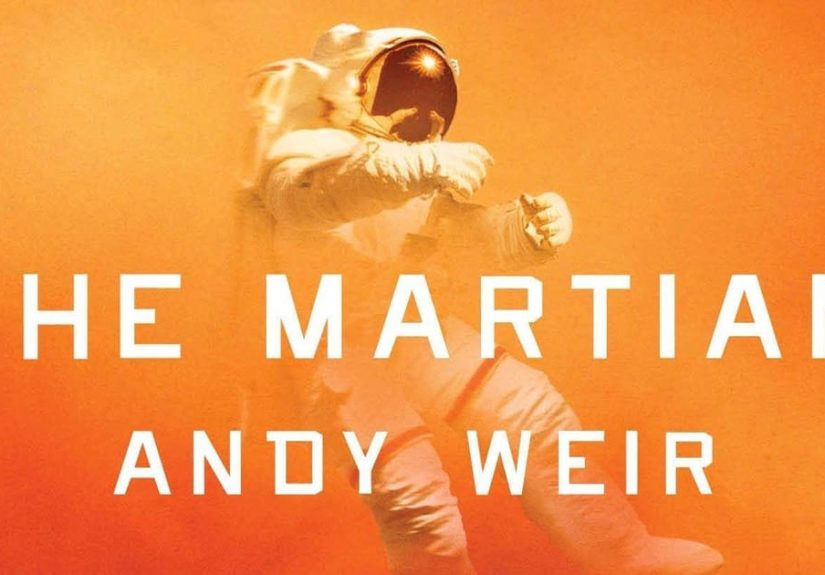
3. The Martian by Andy Weir (2011)
If the 2010s had a breakout “everyone’s suddenly reading science fiction” moment, it was The Martian. Originally self-published and then picked up by a major publisher, this novel follows astronaut Mark Watney as he’s stranded on Mars and survives by doing highly entertaining math, engineering, and potato farming.
Weir’s voice is breezy, snarky, and relentlessly practical. It’s basically “Survivor: Mars Edition,” but with way more duct tape and NASA procedure. The book helped revive enthusiasm for hard science fiction among general readers and showed that extremely accurate orbital mechanics could still be a page-turner.
Read it if you love: Problem-solving, science you can almost understand, and “we’re not dead yet” optimism.
4. The Three-Body Problem by Cixin Liu (English translation 2014)
Cixin Liu’s novel hit English-speaking readers in the mid-2010s like a gravity-assisted slingshot. Blending China’s Cultural Revolution, astrophysics, a mysterious VR game, and first contact with an alien civilization, The Three-Body Problem re-centered global science fiction around non-Western voices.
The book became the first Asian novel to win the Hugo Award for Best Novel and sparked intense discussion about “hard” science fiction, dark-future cosmology, and what humanity looks like from a truly cosmic perspective. Its sequels deepen the sense of scale until the fate of the universe itself is on the table.
Read it if you love: Brain-bending ideas, cosmic horror without the tentacles, and stories where humanity is… not necessarily the main character of the universe.
5. Jade City by Fonda Lee (2017)
Jade City reads like a Hong Kong crime drama crashed into a kung-fu fantasy and then borrowed a bit of superhero origin story energy. On the island of Kekon, jade grants enhanced strength and speedbut only to those trained to use it. Two rival clans struggle for control of the city as foreign interests circle and tradition collides with modernity.
Lee’s Green Bone Saga became one of the standout fantasy series of the decade thanks to its intricate politics, vivid cityscape, and unflinchingly messy family drama. It’s proof that “urban fantasy” doesn’t have to mean vampires in leather pants; it can also mean a magically enhanced mob epic with heartbreaking character arcs.
Read it if you love: Found-family crime sagas, martial-arts vibes, and meticulously built fictional cultures.
6. Station Eleven by Emily St. John Mandel (2014)
More literary fiction than traditional genre in tone, Station Eleven nonetheless became one of the decade’s most talked-about speculative novels. It traces the before-and-after of a devastating flu pandemic, following a traveling Shakespeare troupe, a doomed actor, and the ways art and memory survive when everything else falls apart.
The 2010s loved their apocalypse stories, but Mandel’s quiet, humane approachless about the virus, more about what we choose to carry forwardmade this book stand out. It’s eerie, hopeful, and oddly comforting (yes, even now).
Read it if you love: Beautiful prose, time-hopping narratives, and tearfully hugging your favorite playbill.
7. The Night Circus by Erin Morgenstern (2011)
Is it fantasy? Is it an extended mood board? Why not both. The Night Circus offers a gaslit, dreamlike love story set in a black-and-white traveling circus that appears without warning. Within its tents, two magically trained competitors duel through illusions and wonders, only to realize they might be falling in love.
The 2010s saw a surge of lush, atmospheric fantasy that emphasized vibes as much as plot, and The Night Circus sits at the center of that trend. It became a gateway book for readers who didn’t think they “liked fantasy” but absolutely wanted to live in a slightly haunted Pinterest board.
Read it if you love: Aesthetic overload, slow-burn romance, and worldbuilding that smells faintly of caramel and smoke.
8. The Golem and the Jinni by Helene Wecker (2013)
Set in 1899 New York City, this historical fantasy pairs a golemnewly created, anxious about her own forbidden existencewith a jinni accidentally freed from a bottle after centuries of imprisonment. As they navigate immigrant neighborhoods and magical secrets, their unlikely friendship anchors a rich, slow-burning story.
Wecker’s novel stood out in the 2010s for its blend of folklore, immigration history, and relationship-driven storytelling. It feels expansive and intimate at the same time, exploring questions of identity, freedom, and what it means to belong when you’re literally not human.
Read it if you love: Mythology meets historical realism, character-focused fantasy, and long walks through old New York at midnight.
9. This Is How You Lose the Time War by Amal El-Mohtar & Max Gladstone (2019)
Short, sharp, and devastatingly romantic, this novella closes out the decade with style. Two agentsRed and Bluefight on opposite sides of a war across branching timelines. They begin exchanging taunting messages hidden in tea leaves, lava flows, and bird bones, and those taunts gradually become something far more dangerous: love letters.
The book won major awards and quickly became a beloved favorite for its lyrical language and concept: enemies-to-lovers, but make it multiverse espionage poetry. It’s like someone weaponized fanfic tropes and dropped them into a very serious, very metaphysical war story.
Read it if you love: Epistolary stories, queer romance, and emotionally catastrophic one-liners.
10. Red Rising by Pierce Brown (2014)
Red Rising is what happens when you throw Roman history, brutal class warfare, and YA-adjacent pacing into a blender and then launch it into space. Darrow, a low-born “Red” working in the mines of Mars, infiltrates the elite Gold caste’s military academy to tear the system down from within.
The series caught fire with readers for its relentless action and high emotional stakes. While it leans more toward militaristic, blockbuster-style storytelling than some of the more literary works on this list, its influence on 2010s sci-fiespecially in the “angry revolution in space” nicheis hard to ignore.
Read it if you love: Ruthless plotting, twisty betrayals, and the feeling that absolutely no one is safe.
11. Leviathan Wakes by James S.A. Corey (2011)
This is the book that launched The Expanseboth the long-running novel series and the critically acclaimed TV adaptation. Part noir detective story, part solar-system-wide political thriller, Leviathan Wakes follows a ragtag crew who stumble into a conspiracy involving alien protomolecules and looming war.
Across the 2010s, The Expanse became one of the key “big tent” franchises that drew in readers from across the genre spectrum. It’s crunchy enough for hard SF fans, dramatic enough for space opera lovers, and grounded enough in social and economic tensions to feel disturbingly plausible.
Read it if you love: “Firefly” meets “The West Wing” in space, with extra physics and questionable decision-making.
12. Children of Time by Adrian Tchaikovsky (2015)
A failed terraforming experiment leads to the uplift of a species of spiders, who gradually build a complex, multi-generational civilization on an isolated world. Meanwhile, the last remnants of humanity drift through space in a decaying generation ship, looking for a home.
Children of Time became a word-of-mouth favorite for its audacious structure and strangely moving portrayal of non-human intelligence. The novel spends as much time tracing spider philosophy and social evolution as it does on human drama, and by the end, you may be aggressively pro-arachnid.
Read it if you love: Big-concept SF, evolutionary thought experiments, and yelling “oh no, I care about the spiders” at your book.
13. Spinning Silver by Naomi Novik (2018)
Loosely inspired by “Rumpelstiltskin,” Spinning Silver follows Miryem, the daughter of a moneylender who takes over the family business and becomes frighteningly good at turning silver into goldcatching the attention of an icy, inhuman king. Novik layers in multiple narrators, complicated family ties, and a rich Eastern European–influenced setting.
Coming on the heels of her beloved Uprooted, this novel confirmed Novik as one of the decade’s key voices in dark fairy-tale retellings. It’s a story about power, debt, antisemitism, and the costs of bargainswrapped in lush, wintery atmosphere.
Read it if you love: Folklore, prickly heroines, and fantasy where money, politics, and magic are all intertwined.
14. All Systems Red (The Murderbot Diaries #1) by Martha Wells (2017)
In which a security constructa part-organic, part-machine beinghacks its own governor module, names itself Murderbot, and mostly wants to be left alone to watch serial dramas. Unfortunately, its human clients keep getting in mortal danger, which is very bad for Murderbot’s viewing schedule.
Short, funny, and surprisingly heartfelt, All Systems Red and its sequels became runaway hits. They capture a very 2010s mood: exhausted, cynical, extremely online, but still capable of heroic levels of care when it really counts.
Read it if you love: Deadpan humor, introvert mood, and AI characters with anxiety.
15. A Memory Called Empire by Arkady Martine (2019)
Rounding out the decade, A Memory Called Empire drops a young ambassador from a small mining station into the heart of a massive, poetry-obsessed empire. She arrives to find that her predecessor has died under suspicious circumstances, her own implanted memory backup isn’t working right, and imperial politics are about to explode.
The book won the Hugo and quickly became a critical darling for its examination of colonialism, identity, and cultural assimilation. It’s dense with worldbuildinglanguages, legal codes, aestheticsbut also deeply emotional, exploring what it means to love a culture that might swallow yours whole.
Read it if you love: Space empires, court intrigue, and asking “am I colonized, or just really into their poetry?”
Other Standout 2010s SFF Books to Add to Your List
Fifteen slots can’t contain a whole decade, so here are more 2010s science fiction and fantasy books that nearly elbowed their way into the main ranking:
- Annihilation by Jeff VanderMeer – Surreal eco-horror and weird science in the mysterious Area X.
- The City of Brass by S.A. Chakraborty – Political djinn fantasy with rich historical detail.
- Gideon the Ninth by Tamsyn Muir – “Lesbian necromancers in space” and also a locked-room mystery.
- The Calculating Stars by Mary Robinette Kowal – Alternate-history space race starring women pilots and mathematicians.
- The Broken Earth sequels, The Obelisk Gate and The Stone Sky – Completing Jemisin’s towering trilogy.
- The Obelisk Gate and The Stone Sky – So good they deserve a double shoutout.
- The Bear and the Nightingale by Katherine Arden – Frost-bitten fairy tale set in medieval Russia.
- Uprooted by Naomi Novik – Forest horror meets coming-of-age spellcasting.
Consider these your “bonus level” picks once you’ve cleared the main campaign.
How to Start Exploring 2010s Sci-Fi & Fantasy
Not sure where to begin? Here’s a quick path based on reading mood:
- “Give me the modern classics first”: Start with The Fifth Season, Ancillary Justice, and The Three-Body Problem.
- “I want vibes, not equations”: Try The Night Circus, The Golem and the Jinni, and Spinning Silver.
- “I miss the library but I’m tired”: Pick up All Systems Red or This Is How You Lose the Time Warshort but emotionally dense.
- “I like politics and pain”: Head to Jade City, Leviathan Wakes, and A Memory Called Empire.
- “I want to feel small in a good way”: Go for Children of Time and The Three-Body Problem, and enjoy the cosmic vertigo.
Mix and match, or read straight down the ranking like it’s your personal decade-long reading challenge.
Reader Experiences: Living With the 2010s SFF Boom
Lists and rankings are great, but the real magic of these 2010s science fiction and fantasy books shows up in how readers talk about them years later. Ask aroundonline or in your local bookstoreand you’ll hear the same titles, but the stories about them are different every time.
Someone will tell you that The Martian got them through a rough patch at work. Watching Mark Watney beat impossible odds with spreadsheets and stubbornness can feel strangely empowering when you’re buried under your own to-do list. It’s hard to panic about email when you’ve just read three chapters about solving airlock failures on Mars with spare parts and hope.
Another reader might light up talking about The Fifth Season. For some people, it was the first time they saw a fantasy world that didn’t pretend oppression was just background “flavor,” but instead made it central to the story. They’ll tell you how it changed what they expected from epic fantasy: more complexity, more honesty, more voices that hadn’t been centered before. That kind of emotional shift sticks; once you’ve read it, a lot of older, simpler quest stories feel strangely incomplete.
Fans of Ancillary Justice often describe the small, private thrill of reading a book that casually defaults to “she” for almost everyone. Some readers remember the exact moment they realized their brain had been assigning genders silently the whole time and had to stop and recalibrate. It’s not just a clever pronoun trick; it’s a little live demo of how much baggage we bring to every storyand how fun it can be when an author yanks that rug out from under us.
Then there’s the Three-Body Problem crowd, who usually have a similar arc: confused for a bit, then absolutely obsessed. They talk about staying up late to finish a chapter, closing the book, staring at the ceiling, and wondering if humanity actually stands a chance in a universe that big and that indifferent. Many readers say it was the first time they felt truly “global” science fictionrooted in another country’s history and culture but still speaking to universal fears and fascinations.
In fantasy circles, people who adore The Night Circus or The Golem and the Jinni often describe their reading experience like visiting a place they can’t quite get back to in real life. They remember the imagery: the striped tents, the late-night bakeries, the snow-covered streets and glowing windows. Years later, when they see a black-and-white striped scarf or a wrought-iron gate, some small part of their brain whispers, “The circus is in town,” and they smile for no obvious reason.
Readers of This Is How You Lose the Time War and All Systems Red often talk about how those slim books broke their hearts in an afternoon. They’ll mention reading one in a single sittingon a plane, on a couch, in a coffee shopand having to sit there afterward, emotionally stunned, pretending there’s something in their eye. It’s a very 2010s feeling: limited time, limited attention span, but still craving stories that hit hard enough to leave a mark.
What ties all these experiences together is the sense that the 2010s were a decade when science fiction and fantasy stopped asking for permission. These books stepped out of their old marketing boxes and into the center of cultural conversation. They tackled politics, climate change, identity, colonialism, and the internet’s weirdness without apologizing for also featuring dragons, spaceships, or sentient murderbots.
If you build your own journey through these titles, you’ll probably come away with your own set of memories: the time a book made your commute vanish, the weekend you lost to a trilogy, the line of dialogue you screenshotted and texted to three friends. That’s the real legacy of the 2010s SFF boomnot just a stack of award certificates, but millions of readers carrying around tiny, private universes in their heads.
So use this ranking as a guide, but don’t treat it as a law. The best science fiction and fantasy book of the decade is ultimately the one that rearranged your brain, kept you up too late, or made the real world look a little stranger when you finally looked up.
Conclusion
The 2010s were a decade of experimentation and expansion for science fiction and fantasy. From the brutal geologies of the Stillness to the elegant terror of alien contact and the quiet determination of a lone botanist on Mars, these books widened the boundaries of what the genre could do and who it could speak to.
Whether you come for the intricate politics, the big-idea physics, the lush fairy tales, or the anxious robots, the works on this list are more than hypethey’re touchstones that shaped an entire era of reading. Start anywhere, follow your curiosity, and don’t be surprised if your “just one more chapter” turns into “just one more book.”