Table of Contents >> Show >> Hide
- Why Tragic Villain Origins Hit So Hard
- The 15 Saddest Supervillain Origin Stories
- 1. Mr. Freeze – A Love Story Frozen in Time
- 2. Magneto – A Survivor Who Never Stopped Fighting
- 3. Doctor Doom – Genius, Grief, and a Single Fatal Mistake
- 4. Two-Face – Gotham’s Brightest Hope, Broken in Half
- 5. The Joker (The Killing Joke Version) – One Bad Day
- 6. Green Goblin – Ambition, Madness, and a Broken Family
- 7. Bane – Raised in a Prison, Built for War
- 8. Poison Ivy – When Eco-Activism Turns into Vengeance
- 9. Venom (Eddie Brock) – Failure, Shame, and an Alien Shadow
- 10. Loki – The God of Mischief Who Never Belonged
- 11. Mystique – Survival at the Cost of Everything
- 12. Killmonger – A Child of Wakanda Left Behind
- 13. Red Hood (Jason Todd) – The Robin Batman Couldn’t Save
- 14. Thanos – Twisted Idealism on a Cosmic Scale
- 15. Dark Phoenix – When Power Overwhelms a Hero’s Heart
- What These Sad Supervillain Stories Tell Us About Heroes
- Experiences and Reflections on Tragic Supervillain Origins
Supervillains aren’t just cackling weirdos in capes. The best ones come with backstories so sad
you almost feel bad rooting for the hero. Comic book writers have spent decades perfecting the
“tragic villain origin” – a mix of loss, trauma, bad choices, and just enough free will that you
can’t completely excuse what they become.
From Gotham’s coldest cryonics lab to war-torn countries and doomed alien worlds, these origin
stories show how ordinary people (and a few gods) got pushed past their breaking point. Some
villains were trying to save someone they loved. Others were running from memories they could
never outrun. A few just stared into the abyss a little too long and decided, “Fine, I’ll live
here now.”
Let’s dive into 15 of the saddest supervillain origin stories in comic book history – moments
where even the most die-hard hero fan has to admit, “Yeah… I kind of get why they snapped.”
Why Tragic Villain Origins Hit So Hard
A hero’s origin is usually about inspiration: a call to action, a sense of duty, a drive to do
better. A supervillain’s origin is often the mirror image – the same trauma and injustice,
filtered through bitterness instead of hope. Many of the saddest supervillain origins follow a
pattern:
- Unimaginable loss – a murdered family, a destroyed homeland, a love that can’t be saved.
- Systemic failure – governments, corporations, or heroes themselves fail to protect them.
- One terrible choice – they choose revenge, control, or power over healing.
- No easy way back – once they cross the line, there’s no believable reset button.
These origins stick with us because they feel uncomfortably human. They ask the quiet question:
“If I went through what they went through… how sure am I that I’d stay on the right side?”
The 15 Saddest Supervillain Origin Stories
1. Mr. Freeze – A Love Story Frozen in Time
Victor Fries didn’t start out wanting to rob banks with an ice gun. He was a brilliant
cryonics scientist whose wife, Nora, was dying from a terminal illness. Desperate to save her,
he froze her body in the hope that one day he could cure her and bring her back. When his
corporate bosses decided his work was too expensive and ordered the project shut down, an
accident in the lab left Victor unable to survive outside sub-zero temperatures.
Trapped in a cold suit and stripped of both his humanity and his wife, he becomes Mr. Freeze –
a villain whose crimes are almost always rooted in the same goal: save Nora at any cost. It’s
hard to think of another villain whose “evil plan” is basically “fund medical research” in the
most chaotic, illegal way imaginable.
2. Magneto – A Survivor Who Never Stopped Fighting
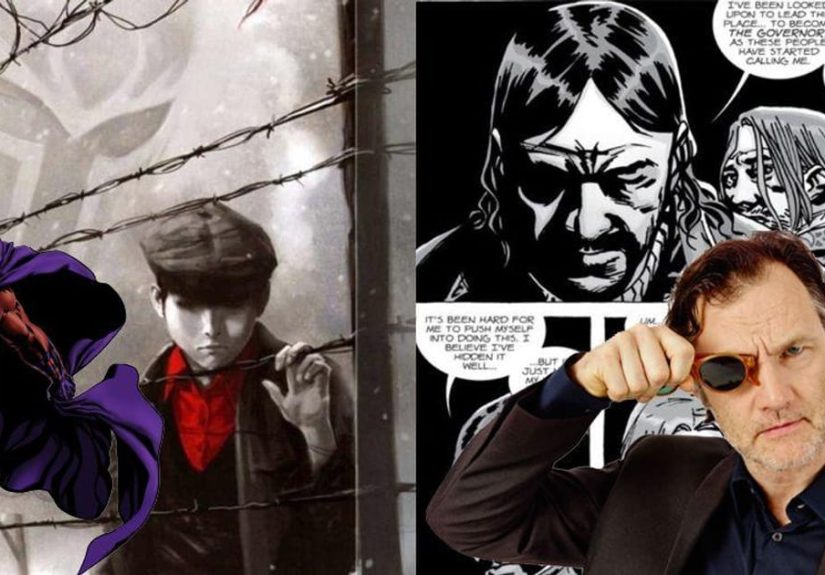
Few backstories are as devastating as Magneto’s. As a child, Erik Lehnsherr grew up in
Nazi-occupied Europe, separated from his family and imprisoned in a concentration camp. He
watches the worst of humanity unfold before his eyes, and when his mutant powers finally
manifest, it’s amidst that horror.
Later, when mutants become the new persecuted minority, Magneto refuses to watch history repeat
itself. His methods are brutal and often unforgivable, but they grow out of real trauma. He
isn’t evil for fun; he’s a survivor who believes coexistence is a lie and that the only way to
keep mutants safe is to dominate first. His origin makes him one of the most tragic and
believable supervillains in all of comics.
3. Doctor Doom – Genius, Grief, and a Single Fatal Mistake
Victor Von Doom’s life begins in suffering. Born in the small, oppressed country of Latveria,
he grows up in poverty under a tyrannical regime. His mother is a sorceress who dies after
making a disastrous pact to save her people, and his father is hunted down and killed. Victor
becomes obsessed with mastering both science and magic – partly to avenge his parents, partly
to protect his homeland.
His defining tragedy, though, is the accident that scars his face. Ignoring warnings from Reed
Richards, Victor tests a dangerous device, which explodes. Scarred and humiliated, he forges an
iron mask and armor, hides behind them, and reinvents himself as Doctor Doom. Underneath the
arrogance and tyranny is a man who never recovered from grief, shame, and the feeling that the
world was always stacked against him.
4. Two-Face – Gotham’s Brightest Hope, Broken in Half
Harvey Dent used to be Gotham’s golden boy – a brilliant, idealistic district attorney working
alongside Batman and Jim Gordon to clean up the city. But years of abuse as a child, buried
under a carefully controlled exterior, left him with deep psychological scars.
In many versions, a mob trial ends when acid is thrown in Harvey’s face, horribly disfiguring
half of it. That trauma, layered on top of his unresolved past, splinters his personality. The
result is Two-Face, a man who literally leaves his morality to the flip of a coin because
believing in justice – in people making fair choices – hurt too much. The tragedy is that the
system he devoted his life to ends up destroying him.
5. The Joker (The Killing Joke Version) – One Bad Day
The Joker’s origin is famously unreliable, but the version told in The Killing Joke is
brutal. He starts as an unnamed, struggling comedian trying to support his pregnant wife. When
a robbery goes wrong and his wife dies in a freak accident, he’s coerced into helping criminals
infiltrate a chemical plant where he used to work.
The plan collapses, Batman shows up, and the would-be crook falls into a vat of chemicals that
bleach his skin white and twist his features into a permanent grin. After losing everything –
his family, his identity, his sanity – he becomes the Joker. It’s not an excuse for the evil he
chooses later, but it’s hard not to feel a chill when he insists that anyone could break after
“one bad day.”
6. Green Goblin – Ambition, Madness, and a Broken Family
Norman Osborn is already a ruthless businessman and emotionally distant father before he ever
puts on a pumpkin-themed mask. In his quest for more power and profit, he experiments on
himself with an unstable chemical formula. The serum enhances his strength and intelligence but
also destroys his sanity.
The Green Goblin is born – a split between a vicious alter-ego and the man who still, on some
level, cares about his son, Harry. His feud with Spider-Man leads to one of the most tragic
moments in comics: the death of Gwen Stacy. Norman’s origin combines corporate greed, untreated
mental illness, and a shattered family dynamic into a slow-motion disaster that drags everyone
around him down.
7. Bane – Raised in a Prison, Built for War
Bane’s childhood is a nightmare. Born in the corrupt nation of Santa Prisca, he is forced to
serve out his revolutionary father’s life sentence in the hellish prison Peña Duro. He grows up
surrounded by violence, abuse, and death, with his only comfort coming from books and his own
self-discipline.
Experiments with the super-steroid Venom turn him into a physical juggernaut, but he’s still
carrying years of trauma. When he sets his sights on Gotham, his plan to “break the Bat” isn’t
about random chaos; it’s about proving that someone who clawed his way up from a literal pit
can crush a privileged hero who had every advantage. Bane is terrifying, but his origin makes
him eerily understandable.
8. Poison Ivy – When Eco-Activism Turns into Vengeance
Pamela Isley is a gifted botanist who often starts as a timid, underestimated scientist. In many
versions, she’s manipulated by a mentor or employer who experiments on her, poisons her, or uses
her as a disposable test subject. She survives, but her biology is altered – she becomes Poison
Ivy, able to control plants and resist toxins.
Her tragedy is two-fold: she loses her old life and any sense that humanity deserves saving.
Betrayed by people and corporations that treat both her and the environment as expendable, she
flips the script and decides humans are the real invasive species. Her love for plants is
genuinely beautiful; her conclusion that mass murder might be the best conservation strategy…
less so.
9. Venom (Eddie Brock) – Failure, Shame, and an Alien Shadow
Eddie Brock’s story is, at its core, about failure. He’s a journalist who cuts corners on a
big story, gets exposed by Spider-Man, and loses his job, his reputation, and his sense of
self-worth. At his lowest point, he’s contemplating suicide in a church when an alien symbiote,
freshly rejected by Peter Parker, bonds with him.
The symbiote amplifies Eddie’s hatred and humiliation, fusing his desire for revenge with the
alien’s need for a host. They become Venom – a monster shaped as much by Eddie’s shame as by the
creature’s powers. The fact that both parts of Venom are essentially “divorced exes” of
Spider-Man makes the whole thing feel like one ugly breakup that never healed.
10. Loki – The God of Mischief Who Never Belonged
Loki grows up as the son of Odin, but he’s never treated quite like Thor. Eventually he learns
why: he isn’t Asgardian by birth. He’s a Frost Giant, taken in as a political bargaining chip
after a war. That revelation shatters his identity. He’s been raised in the shadow of a brother
who is everything Asgard admires – strong, bold, uncomplicated – while he is clever, subtle, and
constantly reminded that he’s “different.”
Loki’s villainy often looks like a centuries-long tantrum fueled by jealousy, hurt, and the
desperate need to prove his worth. His pranks can be funny; his schemes, catastrophic. But
underneath it all is a kid who found out he was never really wanted in the way he thought.
11. Mystique – Survival at the Cost of Everything
Raven Darkhölme’s origin is less cleanly defined than some, but the themes are consistent:
rejection, persecution, and survival at any cost. A shapeshifting mutant, she learns early that
the only way to stay alive is to lie, manipulate, and slip out of identities like outfits. She
becomes an assassin, a spy, and eventually a leader of mutant extremists.
Mystique’s tragedy is that every time she tries to build real connections – with her children,
her allies, or even herself – her instinct for survival kicks in and ruins it. She’s constantly
torn between protecting mutants and destroying anyone in her way, and she’s lost almost
everything that might have made her life gentler.
12. Killmonger – A Child of Wakanda Left Behind
In the comics and in the films, Erik Killmonger is shaped by abandonment and systemic racism.
Born with ties to Wakanda but raised outside its borders, he experiences poverty, violence, and
the feeling that an advanced, wealthy nation could have helped – but chose not to.
His return to Wakanda isn’t just a power grab; it’s a demand for justice that has curdled into
vengeance. Killmonger’s ideas about arming the oppressed and overthrowing oppressors come from
real pain, but his willingness to burn the world to make his point cements him as a tragic
villain rather than a revolutionary hero.
13. Red Hood (Jason Todd) – The Robin Batman Couldn’t Save
Jason Todd starts as a street kid who steals the tires off the Batmobile and ends up becoming
the second Robin. Batman sees potential in him, but Jason is angrier and more impulsive than
Dick Grayson. In the infamous “Death in the Family” storyline, Jason is brutally beaten by the
Joker and left to die in an explosion.
Years later, he returns as the Red Hood, furious that Batman never killed the Joker in
retaliation. Jason’s tragedy isn’t just his death and resurrection; it’s the realization that
the man he saw as a father figure chose his moral code over avenging his “son.” Red Hood
becomes a villain, and sometimes an antihero, built entirely out of heartbreak.
14. Thanos – Twisted Idealism on a Cosmic Scale
Thanos is often portrayed as a monster obsessed with death, power, or balance (depending on the
era and continuity). But his origin is rooted in alienation. Born on Titan with a genetic
mutation that makes him physically different from his people, he grows up ostracized and
fascinated with nihilism and cosmic doom.
In some versions, he falls in love with the literal embodiment of Death and commits atrocities
to impress her. In others, he convinces himself that wiping out half of all life is the only
way to save the universe from collapse. Either way, his tragedy is that he takes genuine fears
– overpopulation, resource scarcity, existential dread – and “solves” them in the most horrific
way possible.
15. Dark Phoenix – When Power Overwhelms a Hero’s Heart
Jean Grey is originally one of the most heroic members of the X-Men. When she bonds with the
Phoenix Force, her powers expand beyond imagination. At first she’s reborn stronger, wiser, and
more compassionate. But manipulation, psychic tampering, and emotional strain twist that power
into something darker.
As Dark Phoenix, Jean becomes a cosmic-level threat, destroying entire star systems in a fit of
hunger and rage. Her story isn’t just a villain arc; it’s a mental health metaphor turned up to
eleven. She loses control in a way that horrifies her, and in many tellings, she chooses to die
rather than risk hurting anyone else again. Few villainous turns feel as sad and inevitable.
What These Sad Supervillain Stories Tell Us About Heroes
Look closely and you’ll notice that many of these villains wanted the same things heroes do:
safety, love, justice, belonging. The difference is how they respond when the world refuses to
give those things back. Heroes channel grief into protection; villains channel it into
domination or revenge.
That tension is what keeps comic book history so compelling. It’s not just “good vs. evil.” It’s
“how do you choose to live with pain?” The saddest supervillain origins are reminders that
empathy and accountability have to exist at the same time. You can understand why they broke –
and still insist they had no right to break the way they did.
Experiences and Reflections on Tragic Supervillain Origins
For a lot of comic fans, the first time a villain’s backstory hits hard is almost shocking. You
open an issue expecting colorful chaos and one-liners, and suddenly you’re staring at panels
about childhood abuse, war, genocide, or losing a loved one to illness. Supervillain origins
like those of Magneto or Mr. Freeze don’t feel like fantasy; they echo real-world history and
real-world fears. That’s one reason readers revisit these stories again and again – they’re not
just fights, they’re emotional autopsies.
Fans often describe a strange shift in loyalty when they learn a villain’s full origin. A
character who once felt like a simple obstacle for the hero starts to feel like a tragic
“what-if” version of the protagonist. Magneto becomes the path Xavier might have taken if he
had lost all faith in humanity. Two-Face becomes a grim warning about what Gotham could do even
to its best people. Red Hood forces Batman’s supporters to ask uncomfortable questions about
the limits of the no-kill rule. None of this excuses what these characters do, but it changes
the emotional math when they step on the page.
Tragic supervillain origins also shape how readers talk about mental health and trauma. Stories
about the Joker’s “one bad day,” Dark Phoenix’s loss of control, or Bane’s childhood in a
prison open the door for conversations about how much environment, illness, and support systems
matter. Many readers see pieces of their own struggles reflected in these heightened, cosmic or
gothic scenarios. They might not be plotting to snap half the universe out of existence, but
the feeling of being ignored, misunderstood, or pushed to the edge is painfully familiar.
From a storytelling perspective, these origins are a masterclass in how to build tension and
sympathy at the same time. A well-written tragic villain makes every showdown feel heavier. When
Batman fights Mr. Freeze, you’re not just watching hero vs. villain; you’re watching a man
desperate to save his wife collide with a man desperate to save his city. When Spider-Man faces
Green Goblin or Venom, he is battling enemies who blame him personally for the worst moments of
their lives. That history turns every punch into a moral dilemma.
For creators, there’s a lesson here: the more specific and emotionally grounded a villain’s
backstory is, the more likely audiences are to care. For readers, there’s another: feeling
empathy for a supervillain doesn’t mean you’re endorsing them. It means the story did its job.
The best tragic origins leave you with a knot in your throat and a lingering thought – not “what
a cool fight,” but “what would it have taken to save this person before they ever put on the
mask?”