Table of Contents >> Show >> Hide
- Why a “Big Battery” Became Urgent (and Not Just Trendy)
- The 100-Day Promise That Turned Into a Real Grid Asset
- Hornsdale in Plain English: MW vs. MWh (Because the Grid Loves Acronyms)
- What a Mega-Battery Does All Day (When It’s Not Starring in Headlines)
- Why the Hornsdale Moment Mattered Beyond Australia
- Batteries Got BiggerFast (and the U.S. Started Sprinting)
- Tesla’s Evolving Role: From Powerpacks to Megapacks
- The Not-So-Fun Part: Safety, Permitting, and Public Trust
- So… Is a “World’s Largest Battery” the Future of the Grid?
- Experiences From the Mega-Battery Era (An Extra , Because Reality Has Notes)
- Conclusion: The Switch That Made Grids Faster
- SEO Tags
Flipping a switch doesn’t usually make history. Most of the time it just turns on a hallway light,
startles a cat, or powers up a coffee maker that suddenly feels very, very necessary. But in early
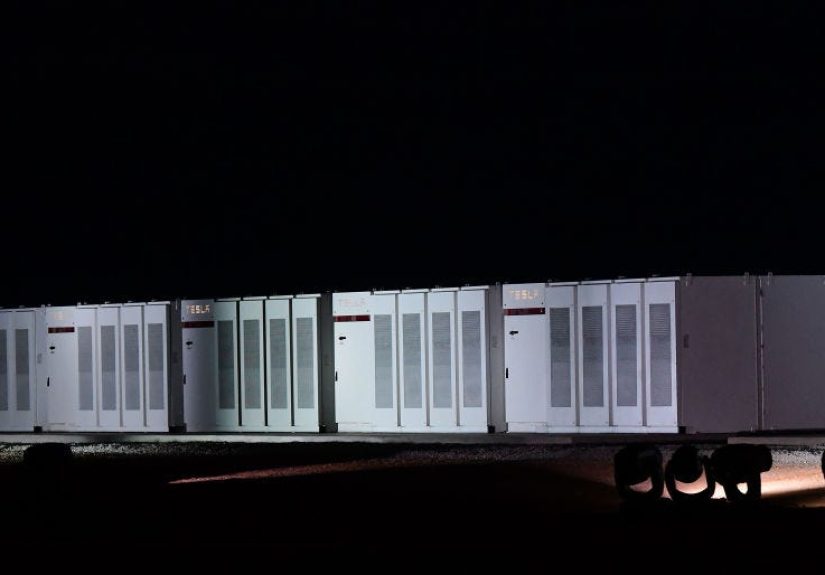
December 2017, one switch mattered more than most: Tesla helped energize what was then the world’s
largest lithium-ion battery, built beside the Hornsdale Wind Farm in South Australia.
On paper, it sounded like a headline-friendly stuntpart engineering, part Elon-on-Twitter performance art.
In practice, it became a proof point for modern power grids: a giant battery can respond faster than
traditional generators, calm down grid “wobbles,” and help renewables behave more like the reliable,
always-on electricity people expect (because nobody wants to schedule dinner around a gust of wind).
Why a “Big Battery” Became Urgent (and Not Just Trendy)
South Australia didn’t pursue grid-scale storage because it was fashionable. It did it because the grid
had been through a rough patch: major outages, heated political debate, and the very real challenge of
operating a system with a growing share of wind power. Add in aging thermal plants retiring and a
heightened fear of blackouts during extreme weather, and the region had a problem that couldn’t be solved
by optimism alone.
The traditional toolboxlarge spinning power plants that ramp up and downworks, but it’s slow. A grid is a
constant balancing act: supply must match demand every second. When something trips offline or demand spikes,
frequency can drift. If that drift gets ugly, you get load shedding or worse. A battery doesn’t need to warm up,
pressurize steam, or negotiate with physics. It can inject power almost instantly.
The 100-Day Promise That Turned Into a Real Grid Asset
The origin story is now energy-industry folklore: a public back-and-forth, a bold deadline, and a high-stakes
wager that Tesla could build the battery fastor it would be free. Whether you love that style of dealmaking or
find it exhausting, the outcome was hard to ignore: the project was completed ahead of the promised window.
The battery that went live at Hornsdale was rated at 100 MW / 129 MWh in its initial configuration.
Translation: it could deliver up to 100 megawatts of power at once, with enough stored energy to do that for a
bit over an hour. It wasn’t designed to replace every power station. It was designed to do something power
stations often struggle with: move extremely fast when the grid needs a quick shove back into balance.
Hornsdale in Plain English: MW vs. MWh (Because the Grid Loves Acronyms)
Think “Speed” and “Fuel Tank”
If megawatts (MW) and megawatt-hours (MWh) make your eyes glaze over, here’s the cheat code:
MW is speedhow fast electricity can be delivered.
MWh is endurancehow long it can keep going at a given rate.
A 100 MW battery is like a sports car that can accelerate quickly. A 129 MWh energy capacity is like the size
of its gas tank. The tank isn’t infinite, but for many grid problems, you don’t need infiniteyou need
immediate.
What Could It Actually Do?
In early coverage, you often saw a practical comparison: it could power tens of thousands of homes for about
an hour. That’s a helpful mental picture, but the more important point is how it helps the grid:
by catching sudden imbalances, smoothing short-term volatility, and providing specialized services that keep
the system stable.
What a Mega-Battery Does All Day (When It’s Not Starring in Headlines)
1) Frequency Regulation: The Grid’s “Steady Hands” Job
Grids run at a target frequency (like 60 Hz in the U.S.). Disturbances happen constantly: a generator trips,
a cloud bank hits solar output, demand surges during a commercial break of a big game. Batteries can respond
in fractions of a second, charging or discharging to counteract small deviations before they snowball.
This is the unglamorous superpower of storage: not “energy for days,” but “stability right now.” The result can
be fewer emergency interventions and less reliance on keeping extra fossil generation idling just in case.
2) Peak Shaving and Energy Arbitrage: Buy Low, Sell High (But for Electrons)
Another core use is time-shifting energy. Charge when electricity is abundant and cheapoften midday when solar
is strongand discharge later when demand rises and prices climb. This is one reason U.S. utilities have
increasingly adopted battery storage: it can reduce the need for peaker plants and lower system stress during
the most expensive hours.
3) Contingency Support: “Keep Things Together While the Adults Arrive”
When a large generator unexpectedly goes offline, the grid needs immediate help before slower resources ramp.
A battery can fill that gap. Think of it as a shock absorber: it doesn’t eliminate every bump, but it prevents
the pothole from becoming a crater.
Why the Hornsdale Moment Mattered Beyond Australia
It’s tempting to treat “world’s largest” as a temporary crownbecause it is. Bigger batteries arrive, the title
moves, and yesterday’s record becomes tomorrow’s footnote. But Hornsdale’s significance wasn’t just its size.
It was the clarity of the lesson: large lithium-ion batteries can be built quickly, integrated into a grid, and
provide valuable reliability services at scale.
That lesson landed at a perfect time. In the years since, the U.S. battery storage market has exploded. Federal
data and grid-operator reporting show rapid growth in utility-scale storage, especially in states with heavy
solar and wind penetration. California and Texas, in particular, have become storage powerhouses as they juggle
the ups and downs of renewable generation.
Batteries Got BiggerFast (and the U.S. Started Sprinting)
Hornsdale was once the headline. Now it’s part of a broader story: industrial-scale batteries are being
deployed across the U.S. in ever-larger projects, often to manage the “duck curve” effectwhen solar floods the
grid midday and then disappears as evening demand spikes.
Consider how quickly the scale shifted:
- U.S. utility-scale battery capacity surged through the early 2020s, with developers planning tens of gigawatts
of additions in short timeframes. - California became a leader in installed battery capacity, with Texas rapidly scaling as wellparticularly
where storage pairs with solar. - Some individual U.S. facilities reached power ratings far beyond Hornsdale’s original 100 MW, reflecting how
quickly “large” became “normal” in grid storage.
The point isn’t to dunk on the old record. The point is that Hornsdale helped make giant batteries feel less
like a novelty and more like infrastructure.
Tesla’s Evolving Role: From Powerpacks to Megapacks
Hornsdale relied on Tesla’s grid storage technology of the era (Powerpack systems). Since then, Tesla has pushed
newer large-format products like Megapack, designed for faster deployment and dense, modular storage.
In plain terms: a lot of modern grid storage looks like shipping-container-sized building blocks that utilities
can stack into enormous systems.
That modular approach matters for two reasons:
- Speed to build: standardized units can shorten design cycles and simplify construction.
- Scale with repetition: instead of reinventing the battery every time, projects scale by adding
more moduleslike leveling up with identical pieces of gear.
The Not-So-Fun Part: Safety, Permitting, and Public Trust
Battery Fires Are Rare, but They’re Not “No Big Deal”
Lithium-ion technology is powerfuland that power comes with risk. Large battery sites require careful design:
spacing, ventilation, thermal management, monitoring, and well-rehearsed response plans. Industry and government
guidance has increasingly emphasized incident response planning, early detection, and coordination with local
fire services.
High-profile battery incidents have also changed the conversation. Communities near proposed sites often have
practical questions: What happens if a unit overheats? How will air quality be monitored? What’s the evacuation
plan? Answering those questions clearly and honestly is now part of building storage at scale.
Economics: Batteries Aren’t MagicThey’re Math
Big batteries win when they can stack multiple value streams: frequency regulation, capacity, peak shifting,
congestion relief, and sometimes resilience services. If a battery is only paid for one job, it’s harder to make
the economics sing. If it can do several jobs (and the market rules allow it), it can become a financial
workhorse that also improves reliability.
So… Is a “World’s Largest Battery” the Future of the Grid?
Not by itself. Batteries are incredible at short-duration flexibilityminutes to a few hours. They are not a
complete substitute for transmission expansion, firm generation, demand response, and long-duration storage
technologies. But they are increasingly a core grid tool because they do something the modern grid desperately
needs: they make electricity more controllable.
Wind and solar are variable. Demand is variable. Weather is chaotic. Batteries help turn that chaos into
something dispatchers can manageless guessing, more precision.
Experiences From the Mega-Battery Era (An Extra , Because Reality Has Notes)
Talk to people who work around grid-scale batteriesoperators, planners, firefighters, even nearby residents
and you’ll notice a theme: the “experience” of a giant battery is less about one dramatic moment and more about
a steady stream of small, practical changes.
In control rooms, the experience is speed. Grid operators describe batteries as resources that
behave more like software than steel. Instead of waiting for a turbine to ramp, a battery’s output can change
almost immediately. That changes how operators think. A contingency event doesn’t feel like a slow-motion
scramble; it feels more like the grid has a reflex. The battery injects power, frequency stabilizes faster, and
other resources have time to respond without panic. It’s not that emergencies disappearit’s that the first
seconds become less scary.
For renewable-heavy grids, the experience is smoother evenings. In places with lots of solar,
the daily pattern can be brutal: midday oversupply followed by a steep ramp as the sun sets and people come
home. Batteries change the vibe. Instead of curtailing as much solar at noon, the grid can store some of it and
“replay” that clean energy later. People don’t notice the battery directlynobody texts their friend, “Wow, the
duck curve is less ducky today.” They notice that lights stay on and price spikes can be less intense.
For developers and utilities, the experience is paperwork (and then more paperwork). The glamour
of “world’s largest” fades quickly when you’re negotiating interconnection studies, meeting local code
requirements, and modeling worst-case fault scenarios. Big batteries are fast, but approvals aren’t always. A
common lesson from projects around the world is that standardization helps: repeatable designs, familiar
equipment, and clear safety frameworks can speed deployment. The flip side is also true: when rules are unclear
or trust is low, timelines stretch.
For communities nearby, the experience is a mix of pride and caution. Many people like the idea
of modern infrastructureespecially when it supports clean energy and reliability. But they also want to know
what happens on the bad day, not the good day. That’s where the best projects earn trust: transparent
monitoring plans, straightforward communication, and coordination with local responders. Communities generally
don’t expect perfection; they expect preparedness.
And for everyone who has ever sat through an outage, the experience is simple: a battery is one
more tool that can prevent a small disruption from turning into a long, miserable evening of melting ice cream.
Hornsdale’s legacy isn’t that it was once the biggest. It’s that it helped make the idea of “grid batteries”
feel normaland once something becomes normal, it scales.
Conclusion: The Switch That Made Grids Faster
Tesla “turning on the world’s largest battery” at Hornsdale wasn’t just a victory lap for a tight deadline.
It was a signal that power systems were entering a new eraone where speed, flexibility, and smart control
matter as much as raw generation. The record has moved on, but the lesson hasn’t: big batteries can stabilize
renewable-heavy grids, reduce peak stress, and give operators precious seconds that sometimes make all the
difference.