Table of Contents >> Show >> Hide
- What Are Superhard Materials, Exactly?
- Why Scientists and Industry Care So Much
- The Big Names in Superhard Materials
- What Makes a Material Superhard?
- Why Hardest Does Not Always Mean Best
- How Superhard Materials Are Made and Tested
- Where Superhard Materials Show Up in Real Life
- The Future of Superhard Materials
- Experiences Related to Superhard Materials
- Conclusion
Some materials are content to be strong. Others are content to be durable. Superhard materials, meanwhile, show up like overachievers who color-code their lab notes, break records, and make cutting tools look heroic. These are the materials scientists chase when ordinary steel taps out, when ceramics chip, when coatings wear off, and when machining temperatures get hot enough to make engineers mutter words that do not belong in textbooks.
At the center of this category are famous names like diamond and cubic boron nitride, but the story does not end with the shiny stuff. Superhard materials also include boron-rich ceramics, advanced carbides, and emerging borides that could change how we cut, polish, protect, and manufacture everything from highway concrete to aerospace components. They matter because hardness is not just a bragging-rights property. In the real world, it affects tool life, energy use, production speed, maintenance costs, and whether a component survives a rough day at work.
This guide explains what superhard materials are, why they matter, where they shine, where they struggle, and why the future of the field is less about finding a magical “diamond killer” and more about matching the right hard material to the right ugly industrial problem.
What Are Superhard Materials, Exactly?
In materials science, a material is generally called superhard when its Vickers hardness is at least 40 gigapascals. That threshold matters because it separates merely hard materials from the tiny club that can seriously resist indentation, scratching, and wear under extreme conditions. It is an elite category, not a crowded neighborhood.
That said, hardness is one of those properties that sounds simpler than it is. In casual conversation, people reach for the Mohs scale and say diamond is a 10, which is true and useful for mineral identification. But engineers and researchers usually need more precise tools, such as Vickers or Knoop hardness tests, because manufacturing decisions are not made on a geology field trip with a pocketknife and optimism.
There is also an important caveat: hardness is not the same as toughness. A material can resist indentation beautifully and still crack like a dropped dinner plate when impact, stress concentration, or thermal shock enters the room. That is why the best superhard materials are not automatically the best engineering materials. Real performance depends on a bundle of properties: hardness, fracture toughness, chemical stability, thermal behavior, manufacturability, and cost.
Why Scientists and Industry Care So Much
Superhard materials earn their reputation because they solve ugly, expensive, high-wear problems. Think cutting tools, grinding wheels, drill bits, wear-resistant coatings, polishing media, armor systems, precision machining, and harsh-environment components. When a factory can cut faster, replace tools less often, or reduce friction in moving parts, the savings ripple across maintenance, labor, energy consumption, and output quality.
That is why this field matters far beyond the lab. A superhard insert in a machine shop can increase productivity. A superhard coating can reduce wear in bearings and valves. A lightweight but hard ceramic can improve armor efficiency. A more chemically stable alternative to diamond can unlock better performance when cutting ferrous alloys. In short, hardness pays rent.
The Big Names in Superhard Materials
Diamond: The Benchmark Everyone Has to Answer To
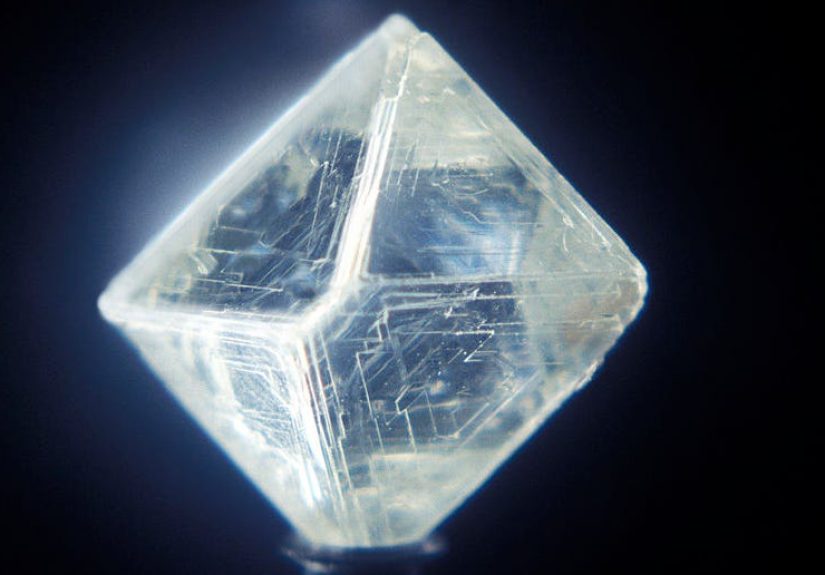
Diamond is still the benchmark. It combines extreme hardness with extraordinary stiffness, excellent wear resistance, and remarkable thermal conductivity. That combination is why diamond has been used for cutting, drilling, grinding, and polishing for generations. In industrial settings, it is less about jewelry-store sparkle and more about brutal efficiency.
In fact, nearly all industrial diamond used today is synthetic, not natural. That is a big deal because synthetic production has made diamond far more practical for tools, abrasives, and coatings. Diamond is especially valuable in applications like concrete saws, grinding tools, precision finishing, and heat-spreading roles where thermal management matters almost as much as mechanical performance.
But diamond is not invincible. It is chemically unhappy around some ferrous materials at the high temperatures generated during machining. That means the crowned champion of hardness can still be a terrible choice for certain steel-cutting jobs. Superhard does not mean universally best. It means “check the application before celebrating.”
Cubic Boron Nitride: The Steel-Shop Specialist
If diamond is the celebrity, cubic boron nitride, or cBN, is the reliable professional who quietly keeps modern manufacturing moving. It is generally considered one of the hardest known engineering materials and is especially prized for machining ferrous alloys, where diamond tends to wear rapidly because of chemical interactions with iron.
This is where cBN becomes a star. It offers very high hardness, strong thermal stability, and better compatibility with steels, cast irons, and other ferrous materials. That makes it a go-to option in cutting tools for hard turning, grinding, and finishing operations where dimensional accuracy and tool life are critical.
Put simply, diamond may wear the crown, but cBN often handles the steel-shop paperwork.
Boron Carbide, Boron Suboxide, and Other Boron-Rich Ceramics
Boron-rich ceramics are fascinating because they bring serious hardness while often remaining lightweight compared with some dense metallic alternatives. Boron carbide has long been known as one of the hardest engineering ceramics and is widely discussed for armor and wear-resistant applications. It offers a compelling mix of low density and high hardness, which is exactly the kind of sentence that makes defense engineers perk up.
Then there is boron suboxide, or B6O, a material that continues to attract attention as researchers look for ceramics with excellent hardness and lower weight. U.S. Army research has highlighted boron suboxide and similar chemistries as promising candidates for lighter, high-performance protective systems. The catch is processing. Making dense, high-quality, commercially scalable parts is not easy, and hard materials rarely come with easy manufacturing manuals.
These materials also remind us that hardness alone is not enough. Some boron-rich ceramics can suffer from brittleness or microstructural issues that limit real-world reliability. The material may look amazing on a hardness chart and still become a headache when shock, flaws, grain boundaries, or high-rate impact enter the picture.
Rhenium Diboride and Transition-Metal Borides
One of the more intriguing branches of the field involves transition-metal borides, especially rhenium diboride. Researchers became excited about it because it showed superhard behavior, could scratch diamond, and could be synthesized under ambient pressure rather than only under the extreme conditions often required for classic superhard materials.
That matters because ease of synthesis can be as important as raw performance. A material that is slightly less hard than diamond but much easier to make, process, or integrate may win the industrial popularity contest. Metallic borides are also interesting because they can combine hardness with electrical conductivity, which opens different design possibilities compared with classic insulating superhard ceramics.
What Makes a Material Superhard?
At the atomic level, superhardness usually comes from a familiar recipe: strong, short, directional covalent bonds packed into a crystal structure that strongly resists deformation. Light elements such as boron, carbon, nitrogen, and oxygen are especially important because they can form compact bonding networks that are difficult to shear apart.
That is why diamond and cBN remain so important. Their crystal structures are efficient, tightly bonded, and mechanically stubborn in the best possible way. Many newer candidate materials borrow the same basic design philosophy: maximize bond strength, minimize easy slip systems, and build structures that resist plastic deformation under load.
Of course, nature and engineering both love trade-offs. The same strong bonding that gives a material its hardness can also make it brittle or difficult to process. It is a bit like building the world’s strongest cookie and then realizing it still snaps if you drop it on tile.
Why Hardest Does Not Always Mean Best
One of the biggest misconceptions in this area is the idea that the hardest material should always be the best material. In real engineering, that logic falls apart quickly. A cutting tool may need hardness, yes, but it also needs fracture resistance, thermal stability, adhesion if coated, and chemical compatibility with the workpiece. A protective ceramic may need low density and impact behavior, not just a heroic indentation number.
Diamond is the classic example. It is the benchmark for hardness, yet it is not ideal for high-speed machining of ferrous alloys. Boron carbide is impressively hard and lightweight, yet brittleness remains a concern in demanding impact scenarios. Some promising borides can be synthesized more easily, but that does not guarantee they will outperform better-established materials in every wear environment.
This is why materials scientists spend so much time talking about property balance. The winner is often the material that is hard enough, tough enough, stable enough, affordable enough, and manufacturable enough. Not very poetic, perhaps, but extremely useful.
How Superhard Materials Are Made and Tested
Making Them
Traditional superhard materials are often produced under extreme pressure and temperature, especially when synthesizing phases like diamond or cBN. Other approaches include chemical vapor deposition for diamond films and coatings, sintering routes for ceramics, and specialized processing for borides and composite structures.
Manufacturing is one of the field’s biggest bottlenecks. A material may look spectacular in a paper and still fail the industrial audition because it is too expensive, too small-scale, too difficult to densify, too prone to defects, or too hard to coat onto a useful substrate without peeling off at the wrong moment.
Testing Them
Hardness is commonly measured with indentation methods such as Vickers and Knoop tests, but serious evaluation does not stop there. Researchers also look at fracture toughness, wear behavior, oxidation resistance, thermal conductivity, chemical reactivity, and performance under realistic operating conditions. This is important because a beautiful hardness number can hide disappointing behavior in actual service.
That is also why national metrology work matters. If hardness measurements are inconsistent, then “record-breaking” claims become slippery. Standardized testing helps researchers compare materials fairly rather than running the scientific equivalent of mixing ruler inches with recipe teaspoons.
Where Superhard Materials Show Up in Real Life
Superhard materials are already all over modern industry, even if most people never notice them. Diamond abrasives and saws are used in construction and repair work, especially in cutting concrete and similar materials. cBN tools are deeply important in machining hardened steels and cast irons. Diamond and diamond-based coatings show up in wear-resistant surfaces, tribological systems, and specialized components where friction and durability matter.
Advanced ceramics and boron-rich compounds are also part of ongoing work in defense and protective systems, where the dream is always the same: better performance at lower weight. In electronics and thermal management, diamond remains attractive because its thermal conductivity can be just as exciting as its hardness. In coatings, carbon-based films can reduce friction and wear, which translates into longer service life and better efficiency.
In other words, the field is not just about “the hardest thing ever made.” It is about making hard materials useful, scalable, and profitable.
The Future of Superhard Materials
The future of superhard materials is not limited to brute-force trial and error. Machine learning, evolutionary structure searches, and high-throughput computational screening are helping researchers identify promising candidates much faster than older methods allowed. That matters because truly superhard materials are rare. Researchers are now exploring new carbon allotropes, boron-carbon-nitrogen compounds, and other multicomponent systems that may offer better performance balances than familiar standbys.
Still, the most realistic future is not a dramatic movie trailer where diamond is suddenly dethroned forever. A more believable outcome is a growing toolkit: diamond for some jobs, cBN for others, boron-rich ceramics for lightweight protection, borides for special environments, and advanced coatings for wear and friction control. The field is getting smarter, not just harder.
Experiences Related to Superhard Materials
One of the most revealing things about superhard materials is how different they feel in theory versus practice. On paper, they look almost mythical: giant hardness values, extreme stiffness, beautiful crystal structures, and phrases like “ultraincompressible” that sound like they belong in a superhero origin story. In shops, labs, and manufacturing environments, the experience is much more grounded. Engineers quickly learn that the hardest material in the room is often also the fussiest.
In machining, for example, working with superhard tooling can feel like switching from a butter knife to a laser pointer. A well-chosen diamond or cBN tool can produce cleaner cuts, better finishes, and much longer tool life. But the moment the material pairing is wrong, the mood changes. Diamond may look unstoppable until it meets hot ferrous alloys, where wear can climb fast. That is the kind of lesson people remember, because it usually arrives with extra noise, extra cost, and extra forms to fill out afterward.
In coating applications, the experience is often about compromise. Diamond films and hard carbon coatings can be amazing for wear resistance and friction control, but adhesion becomes the drama queen of the process. A coating that is wonderfully hard but poorly bonded is basically a very expensive flake waiting for its exit cue. Engineers spend enormous effort on substrates, interlayers, deposition conditions, surface prep, and post-processing because a coating is only as useful as its ability to stay where it was put.
Researchers working on boron-rich ceramics often describe a different kind of challenge: processing. The material may have exactly the kind of hardness and density balance people want, especially for lightweight protection, but turning powders into dense, defect-controlled parts is another story. Pores, grain growth, impurities, and microcracks do not care how promising the original concept looked in a grant proposal. These are the experiences that teach patience. Hard materials are often hardest on the people trying to manufacture them.
There is also a measurement lesson that comes up again and again. In this field, one test result is never the whole truth. A high Vickers hardness number is exciting, but experienced researchers immediately ask follow-up questions. How large was the load? What was the microstructure? What happened to fracture? How repeatable were the measurements? Did the sample survive real wear testing, or did it just perform beautifully for one indentation and then emotionally collapse under actual service conditions?
Perhaps the most common experience of all is discovering that superhard materials are less about chasing a single champion and more about learning respect for context. People who work with them do not just ask, “What is hardest?” They ask, “What survives this temperature, this chemistry, this impact rate, this manufacturing route, and this budget?” That is the real-world mindset. And honestly, it is part of what makes the topic so interesting. Superhard materials are impressive in the lab, but they become truly memorable when they meet the messy, stubborn, gloriously inconvenient world of real engineering.
Conclusion
Superhard materials sit at the intersection of chemistry, physics, manufacturing, and brute industrial necessity. They are valuable because they resist wear, survive punishing conditions, and enable cutting, grinding, coating, protecting, and polishing tasks that ordinary materials simply cannot handle. Diamond remains the benchmark, cBN remains indispensable for ferrous machining, boron-rich ceramics continue to tempt armor and wear designers, and newer borides keep expanding the conversation.
The real lesson is this: the best superhard material is rarely the one with the flashiest headline. It is the one that brings the right balance of hardness, toughness, chemical stability, processability, and cost to the job. In a field obsessed with extreme properties, practical fit still wins. Which is reassuring, because even the hardest materials in the world still have to work for a living.