Table of Contents >> Show >> Hide
- What Is a Subsidiary Company?
- How a Subsidiary Relationship Works
- Types of Subsidiaries
- Why Companies Create or Buy Subsidiaries
- Main Advantages of a Subsidiary Company
- Possible Disadvantages of a Subsidiary Structure
- Subsidiary vs. Affiliate vs. Division vs. Branch
- Legal, Tax, and Accounting Basics
- When a Subsidiary Structure Makes Sense
- Common Mistakes People Make When Talking About Subsidiaries
- Practical Experiences and Lessons From the Subsidiary Model
- Final Thoughts
If the phrase subsidiary company makes you picture a tiny sidekick in a business suit carrying the parent company’s briefcase, you are not completely wrong. A subsidiary is a company that is controlled by another company, usually called the parent company. But the relationship is more interesting than “big company owns smaller company.” A subsidiary can have its own name, its own management team, its own employees, its own contracts, and sometimes even its own personality. In other words, it may live under the same corporate umbrella while still acting like its own adult in the room.
Understanding how a subsidiary works matters for more than business-school trivia. It affects ownership, liability, taxes, branding, accounting, expansion plans, and even how a company looks to investors and regulators. If you have ever wondered why a famous brand seems independent but is actually owned by a much larger corporation, you have already bumped into the world of subsidiaries.
This guide breaks down the meaning of a subsidiary company in plain English, explains why businesses use subsidiary structures, compares subsidiaries with affiliates and divisions, and walks through the practical pros and cons. No legalese fog machine required.
What Is a Subsidiary Company?
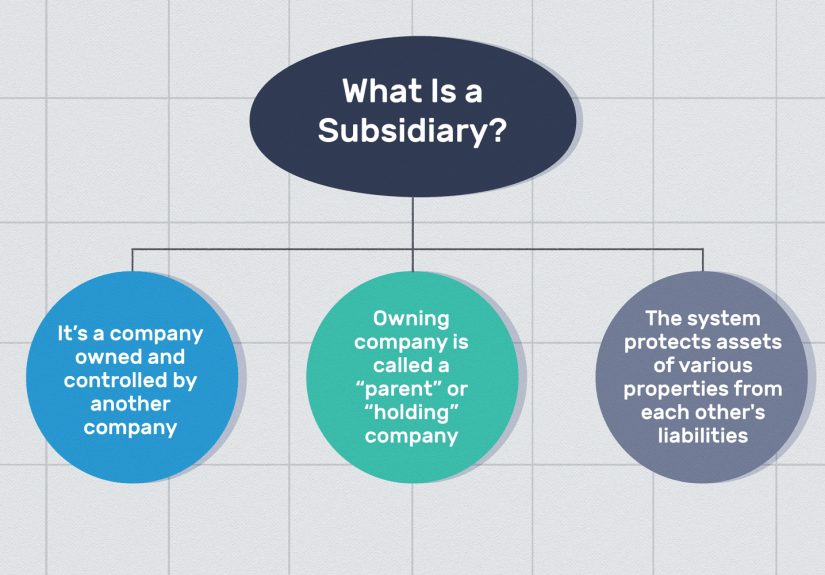
A subsidiary company is a business entity that is controlled by another company. That controlling company is the parent company or, in some structures, a holding company. In everyday business use, control usually means the parent owns more than half of the voting shares. That gives it the power to influence major decisions, appoint directors, and steer the subsidiary’s direction.
Here is the simple version: if Company A owns enough of Company B to call the shots, Company B is a subsidiary of Company A. If Company A owns all of it, then Company B is a wholly owned subsidiary. If Company A owns a controlling but not total stake, it is a majority-owned subsidiary. Either way, the parent has meaningful power over the business.
The important twist is that a subsidiary is usually a separate legal entity. That means it is not just a department or brand nickname. It may have its own formation documents, bank accounts, contracts, liabilities, and reporting obligations. So yes, the parent can hold the steering wheel, but the subsidiary is still its own vehicle on paper.
A Quick Example
Imagine a large food company that wants to enter the premium ice cream market. Instead of changing its existing corporate identity, it buys a smaller ice cream company and keeps that business operating under its original name. The parent provides funding and strategic oversight, but the ice cream company keeps its own marketing style, leadership team, and product development process. That ice cream business is now a subsidiary.
How a Subsidiary Relationship Works
The parent-subsidiary relationship is really about control. The parent may control the subsidiary through ownership of voting stock, board appointment rights, contractual arrangements, or a combination of factors. In practical terms, that control can influence:
- who sits on the board of directors
- major financing decisions
- mergers, acquisitions, or asset sales
- brand strategy and long-term planning
- budget approvals and performance targets
That said, control does not always mean day-to-day micromanagement. Some parent companies stay deeply involved. Others take a lighter touch and let the subsidiary run with substantial independence. Think of it as the difference between a parent who insists on color-coded calendars and one who just says, “Call me if the kitchen catches fire.”
Many corporate groups also have multiple layers. A parent company may own one subsidiary, which then owns another subsidiary below it. That is sometimes called a tiered structure. Corporate org charts can start to resemble a family tree designed by an accountant after three espressos.
Types of Subsidiaries
Wholly Owned Subsidiary
A wholly owned subsidiary is owned almost entirely or entirely by the parent company. This structure gives the parent maximum control. It is common when a parent wants to fully absorb a business while keeping a separate legal shell for branding, liability, tax planning, regulatory compliance, or operational reasons.
Majority-Owned Subsidiary
Here, the parent owns more than 50% but less than 100% of the voting interest. The parent still controls the company, but minority shareholders remain in the picture. That can make governance more complex because not everyone at the shareholder table is wearing the same jersey.
Indirect Subsidiary
An indirect subsidiary is controlled through one or more intermediary companies rather than directly by the top-level parent. This is common in large corporate groups, especially multinational structures.
Operating Subsidiary
This is the business that actually sells products or services. A parent or holding company may own several operating subsidiaries, each focused on a different market, region, or product line.
Why Companies Create or Buy Subsidiaries
Businesses do not create subsidiary companies just to make org charts look impressive. They do it because the structure can solve real strategic problems.
1. To Limit Risk
One of the biggest reasons is liability separation. If a company launches a riskier line of business, placing it in a subsidiary can help ring-fence that risk from the rest of the corporate group. The corporate veil is not a force field, and legal protection is never automatic, but the separate-entity structure can still be very useful when it is properly maintained.
2. To Enter New Markets
A company expanding into a new product category, geography, or customer segment may do so through a subsidiary. This can make compliance easier, keep operations organized, and allow the new venture to build its own identity without dragging the parent’s entire structure into the project.
3. To Preserve Brand Identity
Sometimes the acquired company has strong brand loyalty. Folding it into the parent company immediately could confuse customers or weaken the brand’s appeal. Keeping it as a subsidiary lets the business keep its own voice, website, packaging, and market position.
4. To Separate Business Functions
Large enterprises often use different subsidiaries for manufacturing, intellectual property, real estate, payroll, international operations, or regulated activities. That can make governance cleaner and help management track costs and performance more clearly.
5. To Structure Acquisitions More Efficiently
When one company acquires another, maintaining the acquired entity as a subsidiary can make the transition smoother. Contracts, permits, employees, and customer relationships may stay in place while the parent gradually integrates what it wants and leaves alone what is already working.
Main Advantages of a Subsidiary Company
Operational Flexibility
A subsidiary can operate with its own leadership team and market strategy. That is especially helpful when different businesses under the same parent serve different audiences or industries.
Brand Protection
Subsidiaries can preserve a brand’s individual identity. Customers may never notice the larger corporate owner, and sometimes that is exactly the point.
Strategic Focus
By separating businesses into subsidiaries, companies can measure performance more precisely. A struggling unit is easier to fix, sell, or shut down when it is not tangled into the parent’s core operations like holiday lights in a garage bin.
Potential Liability Separation
A properly formed and maintained subsidiary can help isolate liabilities. If one business unit gets sued or fails financially, the legal separation may reduce the risk of those problems spreading automatically to the parent or sister companies.
Growth Through Acquisition
Buying companies and keeping them as subsidiaries can help a parent grow faster than building everything from scratch. It is often quicker to acquire expertise, customer relationships, and existing infrastructure than to invent them on the fly.
Possible Disadvantages of a Subsidiary Structure
More Complexity
More entities mean more paperwork, more governance, more accounting, more compliance, and more opportunities for someone to say, “Wait, which entity signed this contract?” A subsidiary structure can be smart, but it is not simple.
Higher Administrative Costs
Separate legal entities often need separate registrations, tax filings, accounting records, intercompany agreements, and corporate formalities. That can become expensive fast.
Control Can Get Messy
A parent may technically control the subsidiary, but culture clashes, minority investors, local regulations, and legacy management teams can complicate reality. Owning the business is not the same as making everyone sing from the same songbook.
Liability Protection Is Not Absolute
If corporate formalities are ignored, finances are mixed together, or the subsidiary is treated like a sham, courts may be more willing to disregard the separation. In plain English: you cannot slap the word “subsidiary” on a messy setup and expect magic.
Subsidiary vs. Affiliate vs. Division vs. Branch
Subsidiary vs. Affiliate
A subsidiary is generally controlled by the parent. An affiliate usually involves a significant relationship or ownership stake without full control. This is where people often get tripped up. Not every related company is a subsidiary. Sometimes the parent has influence, but not enough voting power to truly run the show.
Subsidiary vs. Division
A division is typically part of the same legal company, not a separate legal entity. It may have its own managers and budget, but it is still the same company on paper. A subsidiary, by contrast, is usually a distinct legal entity.
Subsidiary vs. Branch
A branch is generally an extension of the same legal entity operating in another place or market. A subsidiary usually has a stronger legal separation. That difference can matter for taxes, contracts, licensing, and liability.
Subsidiary vs. Sister Company
Sister companies are companies owned by the same parent. They may cooperate, ignore each other, or compete for attention at the annual budget meeting. One is not the subsidiary of the other; both are subsidiaries of the same parent.
Subsidiary vs. Holding Company
A holding company usually exists mainly to own interests in other companies. A subsidiary is the company being owned or controlled. A holding company may or may not have active operations of its own.
Legal, Tax, and Accounting Basics
This is the part where business structures stop sounding like simple ownership charts and start meeting the real world.
Legal Separation
In general, a subsidiary is treated as its own legal entity. It can enter contracts, hire employees, own property, and incur liabilities in its own name. That legal separation is one reason subsidiaries are so common.
Tax Treatment
Tax rules can become much more technical than the everyday business definition of a subsidiary. In some U.S. tax contexts, corporate groups are tested under controlled-group rules using specific thresholds and attribution rules. That means a company can be a “subsidiary” in plain business language, while a separate tax rule uses its own framework for grouping related entities. Translation: never let a cocktail-party definition do the work of a tax lawyer.
Accounting and Financial Reporting
When a parent controls a subsidiary, the parent may need to present consolidated financial statements. That means the group’s financial results are combined for reporting purposes, with intercompany balances and transactions adjusted or eliminated as required. For investors, this gives a broader picture of the whole group rather than pretending the left hand has never met the right hand.
Regulatory and Compliance Issues
Some subsidiaries exist because different activities face different licensing or regulatory requirements. A company may use separate entities for banking, real estate holdings, manufacturing, intellectual property, or international operations. In heavily regulated industries, entity structure is not just organization; it is survival.
When a Subsidiary Structure Makes Sense
A subsidiary structure often makes sense when a company wants to:
- acquire a business without erasing its brand
- separate risky operations from core operations
- expand into another state or country with a cleaner structure
- organize multiple product lines under one parent group
- prepare a business unit for sale, spin-off, or outside investment
It may make less sense when the business is very small, the operations are simple, and the administrative burden would outweigh the benefits. Not every lemonade stand needs a corporate family tree.
Common Mistakes People Make When Talking About Subsidiaries
Assuming Every Owned Brand Is a Separate Subsidiary
Sometimes a brand is just a brand. It may not be a separate company at all. It could be a trade name or product line within the parent company.
Assuming Parent and Subsidiary Are Automatically the Same Thing
They are related, but they are not identical. The subsidiary is controlled by the parent, yet it may still have its own legal responsibilities.
Thinking Ownership Percentage Is the Whole Story
Majority voting ownership is a big clue, but control can also be shaped by contracts, governance rights, and other arrangements. Corporate reality loves nuance almost as much as lawyers do.
Believing a Subsidiary Erases All Liability Risk
It can reduce risk, but only when the entity is real, properly run, and respected as separate in practice. Sloppy governance can turn a smart structure into a courtroom headache.
Practical Experiences and Lessons From the Subsidiary Model
In practice, the experience of working with a subsidiary structure is rarely dramatic. It is usually a long series of very practical decisions. A founder who sells a company to a larger parent may be thrilled to gain resources, new distribution channels, and a stronger back office. Then, three months later, that same founder may realize that the parent wants monthly reporting packages, approval for major hires, and a budget spreadsheet detailed enough to account for office snacks. The business still feels independent, but not in the carefree way it used to.
Managers inside subsidiaries often describe the arrangement as a balancing act. On one side, the parent company brings capital, stability, bargaining power, and operational support. On the other side, the subsidiary wants enough room to keep its speed, culture, and customer intimacy. This tension is not necessarily bad. In fact, many healthy corporate groups rely on it. The parent provides discipline; the subsidiary provides specialization. Problems usually show up only when one side overcorrects. Too much parent control can flatten creativity. Too little oversight can create chaos, duplication, or compliance trouble.
Employees feel the subsidiary relationship too. At first, an acquisition or restructuring may sound exciting. Better benefits, larger systems, and more career opportunities can all come with being part of a bigger group. But employees also learn quickly that being a subsidiary can mean new layers of approval, new reporting lines, and occasional identity confusion. Are we still the scrappy company our customers love, or are we now expected to act like the parent’s polished corporate cousin? That question shows up in meetings more often than people admit.
Finance teams usually have the most vivid experience. Intercompany charges, transfer pricing questions, consolidated reporting, entity-level budgets, and legal documentation can turn a simple business into a small universe of spreadsheets. A subsidiary structure can be brilliant strategically, but administratively it asks for grown-up habits. Clean accounting, clear contracts, board minutes, entity-specific signatures, and disciplined governance matter more than ever. This is where many businesses learn that structure is not just about what is written on the org chart. It is about what gets done every month without fail.
Customers, interestingly, may notice very little. And that is often the goal. A well-run subsidiary can keep its voice, its service standards, and its market reputation while quietly benefiting from the parent’s resources behind the scenes. When that happens, the structure feels almost invisible from the outside. The brand remains familiar, but the engine under the hood is stronger. That is usually the sweet spot.
The biggest lesson from real-world subsidiary setups is simple: a subsidiary works best when the relationship is intentional. The parent should know exactly why the entity exists. The subsidiary should know where it has freedom and where it does not. Governance should be clear. Money flows should be documented. Contracts should name the correct entity. And everyone should understand that “separate legal entity” is not just a phrase for slide decks. It is something the company has to respect in daily operations. When businesses get that right, a subsidiary can be one of the smartest tools in the corporate toolbox. When they get it wrong, it becomes an expensive lesson in paperwork, confusion, and preventable risk.
Final Thoughts
So, what is a subsidiary company? It is a company controlled by another company, usually through majority ownership or similar control rights, while still existing as its own legal entity. That mix of control and separation is exactly why subsidiaries are so useful. They help businesses grow, manage risk, preserve brands, organize operations, and structure acquisitions more efficiently.
But a subsidiary is not just a label. It is a legal, financial, and operational structure that needs to be designed and maintained carefully. Used well, it can support smart growth and cleaner strategy. Used badly, it can create layers of cost, confusion, and compliance headaches. In short, a subsidiary can be a powerful business tool, but like any power tool, it works best when somebody reads the instructions.