Table of Contents >> Show >> Hide
- Why Stress Makes You Crave Comfort Food (A.K.A. Your Brain Is Not Being Dramatic)
- Yes, Comfort Food Can Feel ComfortingBut the Comfort Often Has an Expiration Date
- How Stress Eating Can Stress You Out Even More
- 1) The Blood Sugar Roller Coaster (Fun for Exactly Nobody)
- 2) The “Wired-Tired” Effect: Stress + Heavy Food = Not a Vibe
- 3) Sleep Takes a Hit (And Sleep Loss Cranks Up Cravings)
- 4) The “Emotional Hangover”: Guilt, Shame, and the Loop
- 5) Ultra-Processed Foods Can Make the Cycle Easier to Repeat
- 6) Chronic Stress + High-Fat/High-Sugar Patterns Can Change the Body’s Stress Response
- The Stress-Eating Loop, Mapped in 20 Seconds
- How to Keep the Comfort Without the Stress Spiral
- Redefining Comfort: What Comfort Food Is Actually Trying to Do
- Real-Life Moments: What This Looks Like (and What Helps)
- Experience #1: The “Finally Alone” Refrigerator Visit
- Experience #2: The “I’ll Just Have Something Sweet” Spiral
- Experience #3: The Post-Argument Pantry Raid
- Experience #4: The “Deadline Dinner” That Turns Into a Late-Night Snack Marathon
- Experience #5: The “I’m Fine” Snack That Isn’t About Food at All
- Conclusion: Comfort Is the GoalLess Stress Is the Outcome
You had a day. The kind where your brain feels like it’s running 47 tabs, one of them is blasting hold music, and another is auto-playing a slideshow titled “Everything You Forgot to Do.” So you do what millions of humans do: you reach for comfort food. Mac and cheese. Pizza. Ice cream. Chips that somehow vanish between the bag and your mouth. For five glorious minutes, it feels like a warm blanket for your nervous system.
Then the “after” hits. You’re too full. Your energy tanks. Your mood gets weird. You feel guilty (even though food isn’t a moral test). And now you’re stressed… about the fact that you stress-ate. Congratulations: you’ve discovered the stress-eating boomerang.
This article breaks down why comfort food cravings happen under stress, how stress eating can backfire biologically and emotionally, and what you can do to keep the comfort without the crashno food shaming, no robot “just drink water” advice, and definitely no pretending you can “out-willpower” a stressed-out nervous system.
Why Stress Makes You Crave Comfort Food (A.K.A. Your Brain Is Not Being Dramatic)
When you’re stressed, your body flips into a survival mode designed for “running from something with teeth,” not “answering 46 emails and remembering a password you made in 2018.” Stress can activate your hypothalamic-pituitary-adrenal (HPA) axis and release hormones like cortisol. Cortisol’s job is to help you deal with threatone way it does that is by nudging appetite and cravings toward quick energy.
Cortisol + Reward Chemistry = “Where’s the Cookie?”
High-sugar and high-fat foods are calorie-dense and hyper-rewarding. They can light up your brain’s reward pathways and temporarily dull stress signals. It’s not weakness. It’s biology doing what biology does: seeking fast relief.
And comfort foods don’t just taste goodthey often come with memories: grandma’s soup, movie-night popcorn, that cheesy pasta you ate after practice. Your brain loves a two-for-one deal: calories and nostalgia.
Yes, Comfort Food Can Feel ComfortingBut the Comfort Often Has an Expiration Date
Here’s the tricky part: comfort foods can genuinely reduce stress feelings in the short term for some people. Research has explored how stress and comfort food intake can interact with stress physiology (including cortisol). That immediate “ahhh” is real.
But short-term relief doesn’t always equal long-term calm. In many cases, stress eating sets off a chain reactionblood sugar swings, sleep disruption, stomach discomfort, and emotional regretthat can make your body feel more stressed afterward.
How Stress Eating Can Stress You Out Even More
Think of stress like a fire alarm. Comfort food can feel like pulling the battery out of the alarmquiet for a momentbut the smoke (the underlying stress) is still in the house. Sometimes, the battery removal comes with extra problems you didn’t order.
1) The Blood Sugar Roller Coaster (Fun for Exactly Nobody)
Many classic comfort foods are refined-carb heavy: pastries, candy, chips, white bread, sweet drinks, big bowls of pasta. These can spike blood sugar quickly. Your body responds with insulin to bring glucose down, and sometimes that drop can feel like a “crash”fatigue, shakiness, irritability, brain fog, and cravings for more quick carbs.
So you’re stressed, you eat, you spike, you crash… and now you’re stressed plus tired and cranky. (It’s the emotional version of trying to fix a leaky faucet by turning on every faucet in the house.)
2) The “Wired-Tired” Effect: Stress + Heavy Food = Not a Vibe
Stress already revs up your system. Pair that with a large, rich, salty, or sugary meal and your body may feel uncomfortable: thirst, bloating, heartburn, or that heavy “why did I do this?” sensation. Physical discomfort is a stress signal, tooyour brain reads it as “something’s off,” which can amplify anxious feelings.
3) Sleep Takes a Hit (And Sleep Loss Cranks Up Cravings)
Late-night stress eating is commonyour day is finally quiet, your brain finally panics. But large meals or sugary snacks close to bedtime can disrupt sleep quality for some people, and poor sleep can make appetite regulation harder the next day. In other words: the snack isn’t just a snack; it’s sometimes a setup for tomorrow’s cravings.
4) The “Emotional Hangover”: Guilt, Shame, and the Loop
Stress eating often comes with a side of self-judgment: “Why can’t I control myself?” “I ruined my day.” “I’m so bad.” That inner monologue is basically stress in a trench coat pretending to be motivation.
Many reputable health experts emphasize that emotional eating is common and doesn’t make you a failure. But if the pattern becomes frequent, the guilt can become its own triggerleading to more stress, more cravings, and more eating to numb the feelings. That’s the loop.
5) Ultra-Processed Foods Can Make the Cycle Easier to Repeat
A lot of “comfort foods” are ultra-processed: designed to be convenient, intensely flavorful, and easy to overeat. Research reviews have found associations between higher ultra-processed food intake and worse mental health outcomes (like depressive and anxiety symptoms), though this doesn’t mean any single snack “causes” anxiety. It means that, at a population level, diets heavy in ultra-processed foods often travel with poorer physical and mental outcomesand the relationship may involve inflammation, gut-brain signaling, and nutrient displacement.
Translation: if most of your coping food is ultra-processed, you’re more likely to get “comfort now, consequences later,” which can feel like extra stress.
6) Chronic Stress + High-Fat/High-Sugar Patterns Can Change the Body’s Stress Response
Long-term stress and frequent intake of high-fat/high-sugar foods have been studied for their effects on metabolism, abdominal fat storage, and stress biology. Again, this isn’t about appearance. It’s about physiology: when your body is repeatedly stressed and repeatedly soothed with calorie-dense food, it can reinforce the habit loop and shift how stress hormones and appetite signals behave.
In plain English: the more often “stress = comfort food” becomes the automatic script, the more your brain treats it like the default coping tooleven when it stops helping.
The Stress-Eating Loop, Mapped in 20 Seconds
- Stress hits (work, school, family, life).
- Cortisol rises and your brain wants quick reward.
- Cravings appear (usually sugar/fat/salt).
- You eat and feel brief relief.
- After-effects (crash, discomfort, poor sleep, guilt).
- More stress → back to step 1.
The goal isn’t to “never stress eat again.” The goal is to interrupt the loop so comfort food isn’t your nervous system’s only plan.
How to Keep the Comfort Without the Stress Spiral
These strategies are built around one idea: reduce stress first, then choose food on purposeor at least choose food that won’t boomerang into more stress.
1) Use a 60-Second “Name It” Pause
Before you eat, try this tiny check-in:
- What am I feeling? (stressed, lonely, overwhelmed, bored)
- What do I actually need? (rest, a break, comfort, connection, a plan)
- Will food help the need? (sometimes yessometimes not enough)
If food is part of comfort, cool. But naming the feeling gives your brain a second option besides autopilot.
2) Build a “Comfort Plate” Instead of a Comfort Pile
You don’t have to turn comfort food into carrot sticks and sadness. Keep the comfortjust add “steady energy” elements so you don’t crash:
- Add protein: Greek yogurt with dessert, eggs with toast, chicken with pasta, tofu with noodles.
- Add fiber: fruit, beans, veggies, whole grains (even a side salad counts).
- Add a “slow fat”: nuts, avocado, olive oilhelps satisfaction without the sugar spike.
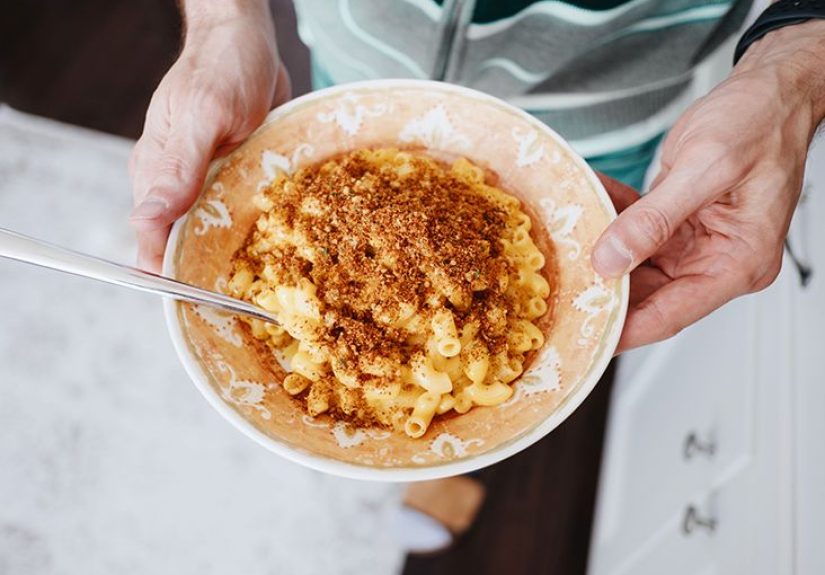
Example: craving mac and cheese? Have itthen toss in peas or broccoli and add a side of chicken or beans. Now it’s still comfort, but your blood sugar isn’t doing parkour.
3) Try “Two-Track Comfort”: Food + Another Soothing Cue
Comfort works better when your brain gets more than one signal of safety. Pair your snack with one non-food comfort cue:
- Hot shower or warm tea
- Cozy hoodie + a favorite show
- 10-minute walk with music
- Text a friend (even a meme counts as connection)
- Box breathing: inhale 4, hold 4, exhale 4, hold 4
Now your brain learns: “stress relief can come from multiple places,” not just the pantry.
4) Use “Delay, Don’t Deny”
If your brain is screaming for cookies, forbidding cookies can backfire and make cookies feel like forbidden treasure. Try a 10-minute delay instead:
- Set a timer for 10 minutes.
- Do one calming action (breathing, stretching, stepping outside).
- If you still want it, eat it slowly and enjoy itno punishment soundtrack.
This builds the skill of choice without turning food into a battle.
5) Make “Low-Drama” Snacks Easy
Stress makes decision-making harder. So reduce friction:
- Keep grab-and-go protein + fiber snacks ready: cheese + fruit, nuts + raisins, hummus + crackers, yogurt + berries.
- Pre-portion crunchy snacks into a bowl instead of eating from the bag.
- Put the most tempting foods out of sight and the easiest “steady” snacks at eye level.
This isn’t about willpower; it’s about environment designbecause stressed brains love shortcuts.
6) Know When It’s More Than “A Snack Thing”
If you regularly feel out of control around food, eat in secret, eat until uncomfortably full, or use food to cope with intense emotions daily, it might help to talk to a healthcare professional or mental health provider. Binge-eating disorder and other eating challenges are treatable, and getting support is a strength movenot a “something is wrong with me” move.
Redefining Comfort: What Comfort Food Is Actually Trying to Do
Comfort food usually isn’t about hunger. It’s about a need: safety, softness, reward, or relief. Food can be part of thatbecause eating is a human comfort. But when comfort food becomes the only tool, it turns into a stress amplifier.
So the best question isn’t “How do I stop stress eating?” It’s:
“What comfort am I trying to getand how else can I get it, too?”
Real-Life Moments: What This Looks Like (and What Helps)
Below are common, real-world patterns people describe (composite examples, not specific individuals). If any of these feel familiar, you’re not aloneand you’re not “bad at coping.” You’re coping the best way you currently know how, and skills can be learned.
Experience #1: The “Finally Alone” Refrigerator Visit
After a long day of being “on,” someone finally gets a quiet moment. Their brain goes: We deserve something. The fridge becomes a reward station. They’re not starving; they’re depleted. They eat faststanding up, scrolling, barely tasting it. Ten minutes later: too full, slightly queasy, and somehow still unsatisfied.
What helps: creating a short transition ritual before eatingwash hands, fill a glass of water, sit down, and take three slow breaths. Then choose a portion and put the rest away. The ritual tells the nervous system: “We’re safe now,” which reduces the urgency to inhale the whole kitchen.
Experience #2: The “I’ll Just Have Something Sweet” Spiral
Stress triggers a sweet cravingcookies, candy, ice cream. The sugar hits, mood lifts briefly, then comes the crash: fatigue, irritability, and a weird “still hungry” feeling. Now they want more sugar to fix the crash caused by sugar. It’s not a character flaw; it’s a predictable biology-meets-stress moment.
What helps: pairing sweet with protein or fiberlike yogurt with chocolate chips, fruit with nut butter, or ice cream after a balanced dinner rather than as a stand-alone “emergency mood patch.” The sweetness stays, but the crash gets smaller.
Experience #3: The Post-Argument Pantry Raid
After conflictfamily tension, friendship drama, a stressful conversationsomeone feels keyed up, shaky, and restless. Eating gives them something to do with their hands and a sensation that overrides the emotional noise. Later, guilt shows up: Why did I do that? And guilt becomes the next trigger.
What helps: adding a “body off-ramp” before eating: walk outside for five minutes, do a quick stretch, take a shower, or hold something warm. When the body calms, the urge often shrinks. If they still eat, it’s more intentional and less frantic.
Experience #4: The “Deadline Dinner” That Turns Into a Late-Night Snack Marathon
Someone skips meals during a busy day, then hits evening ravenous. They eat a big comfort meal, then keep snackingpartly because stress is still high and partly because hunger finally caught up. Sleep feels restless, and the next day starts with low energy and more cravings.
What helps: consistent meals (even small ones) during the daysomething with protein + carbs + fiberso the body isn’t playing nutritional catch-up at midnight. Regular eating doesn’t remove stress, but it reduces how hard stress can hijack appetite.
Experience #5: The “I’m Fine” Snack That Isn’t About Food at All
Sometimes stress eating happens when feelings are hard to name. The snack is a distraction from uncertainty, loneliness, or pressure. The person isn’t trying to sabotage themselves; they’re trying to feel okay.
What helps: building a small list titled “Comfort That Isn’t Food” and actually using it. Not forever. Not perfectly. Just sometimes. The brain learns new routes to calm. Over time, food becomes a choice againnot a reflex.
If you recognized yourself in any of these, the takeaway is simple: your stress eating makes sense. And because it makes sense, it can be adjustedgently, practically, and without turning food into the enemy.
Conclusion: Comfort Is the GoalLess Stress Is the Outcome
Stress eating happens because your body and brain are trying to protect you. Comfort food can deliver quick relief, but it often comes with a rebound: blood sugar swings, physical discomfort, sleep disruption, and emotional guilt that can add more stress on top of the original stress.
The solution isn’t “never eat comfort food.” It’s expanding your comfort toolkit. Pause and name the feeling. Pair comfort with steady energy. Add a non-food soothing cue. Make supportive snacks easier. And if eating feels out of control or deeply distressing, getting professional support is a smart, strong next step.
Because you deserve comfort that actually comfortsand a nervous system that doesn’t feel like it’s living on a roller coaster built out of potato chips.