Table of Contents >> Show >> Hide
- Quick Context: What Is Stratolaunch?
- The Original “First Flight”: Roc Takes Off (April 2019)
- Shot-by-Shot: How to Watch the Roc First Flight Video Like You Know Things
- The Best First-Flight Images: What They Reveal
- Why Air Launch Is a Big Deal (Even If You’re “Just Here for the Video”)
- The Pivot: From Space Launch Dreams to Hypersonic Test Reality
- The Next “First Flight” Everyone Shared: Talon-A’s First Powered Flight (March 2024)
- The “Images You Waited For”: Reusable Hypersonic Flights and Runway Landings (Late 2024–2025)
- How to Spot Real Stratolaunch First-Flight Clips (and Avoid the Internet’s “Trust Me Bro” Edits)
- FAQ: The Questions Everyone Asks After Watching One Clip
- Conclusion: What the Videos and Images Actually Prove
- Viewer Experiences: 10 Things You’ll Feel (and Notice) While Watching Stratolaunch First-Flight Videos
- 1) The scale whiplash
- 2) The long runway roll that feels like suspense
- 3) The first lift looks oddly smooth
- 4) The “two planes?” confusion (and the instant you stop asking)
- 5) The quiet awe of controlled turns
- 6) The separation moment (Talon-A era) will make you hold your breath
- 7) Rocket ignition feels “too close to the airplane,” even when it isn’t
- 8) The photos after the mission hit differently
- 9) You’ll start noticing the ground crew and equipment
- 10) You’ll end up rooting for “boring”
If you’ve ever watched a “first flight” video and felt your brain whisper, “Cool… but what am I actually looking at?”welcome.
Stratolaunch footage is extra fun because “first flight” can mean two different milestones, depending on which rabbit hole you fell into:
the first flight of Roc (the giant twin-fuselage carrier airplane that looks like a runway mated with two jets),
and the first powered flights of Talon-A (the hypersonic test vehicle Roc can carry and release).
This article breaks down the most talked-about Stratolaunch first-flight videos and images, what they show, why they matter,
and how to watch like a flight-test nerdwithout needing a flight-test nerd in the room.
Expect clear explanations, a few “wait, that’s wild” engineering details, and some practical tips for spotting the moments that make these clips historic.
Quick Context: What Is Stratolaunch?
Stratolaunch is a U.S. aerospace company best known for building and flying Roc, a massive “mothership” aircraft designed for air launch.
Roc’s job is to carry a payload under its center wing, climb to altitude, and release itso rockets or test vehicles can start their mission already above a big chunk of the atmosphere.
Think of it as giving a launch vehicle a running start (and yes, that means the videos are basically “aviation history meets science fair project,” in the best way).
The Original “First Flight”: Roc Takes Off (April 2019)
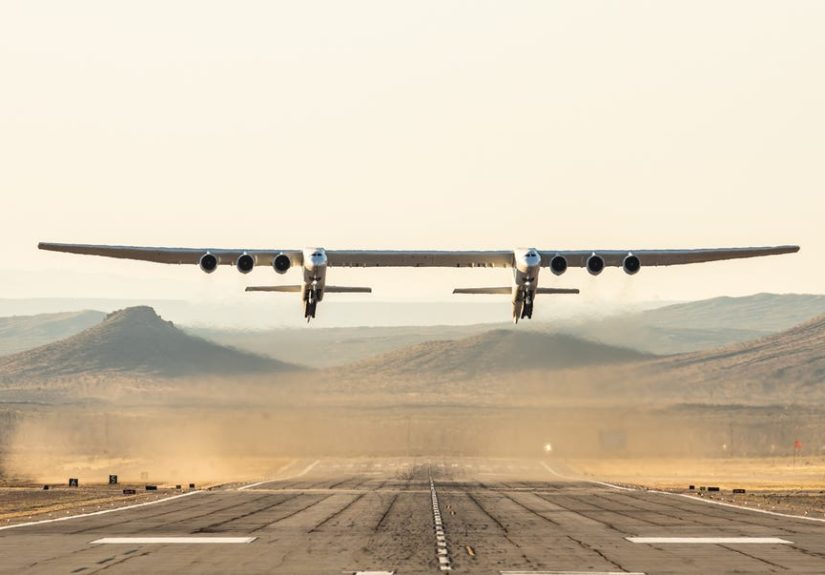
The moment most people mean when they say “Stratolaunch first flight” is Roc’s maiden flight in April 2019.
It’s the one with the crowd energy, the long takeoff roll, and that surreal sight of a plane with two fuselages moving as one.
In official footage and widely shared photos, Roc lifts off, climbs to a modest test altitude, runs through early handling checks, and landssuccessfully.
What the Numbers Tell You (Without Killing the Vibe)
- Where: Mojave Air & Space Port in California (a legendary place for weird-and-wonderful flight testing).
- How long: Roughly a couple hours (a classic “keep it safe, gather data, come home” first sortie).
- How fast / how high: The early test envelope was intentionally conservativeenough to validate basic performance, stability, and control.
The point of a first flight isn’t to flex. It’s to confirm that the aircraft behaves like the simulations promisedespecially during takeoff, climb, turns,
and approach/landing, where the margins are tight and the data is gold.
Shot-by-Shot: How to Watch the Roc First Flight Video Like You Know Things
1) The Taxi and Takeoff Roll: “Why is it taking so long?”
The long roll is part weight, part caution, part physics refusing to be rushed. Roc is enormous, and early flights are flown with meticulous discipline:
smooth throttle, clean centerline tracking, and no drama. Watch the nose attitude and main gear behaviorthis is where test pilots learn if the aircraft feels “honest.”
2) Rotation: The “OK… it’s actually flying” moment
Rotation is where a first flight video earns its goosebumps. With Roc, it’s extra surreal because your eyes try to interpret it as two planes,
then your brain finally accepts it’s one aircraft with a shared wing.
In many clips, the aircraft lifts off cleanlyno wobble, no dramabecause flight-test teams design the first profile to be boring on purpose.
Boring is good. Boring is how you get a second flight.
3) Initial Climb and Gentle Turns: “The airplane is introducing itself”
First-flight turns often look slow and deliberate. That’s the test crew building confidence in roll response, yaw behavior, and overall stability.
If you see a wide, graceful bank, that’s not cinematic pacingit’s careful envelope expansion.
4) Approach and Landing: the “most important 60 seconds”
Landing shots are where you learn the most from the least footage. Watch the flare, the touchdown smoothness, and how straight the aircraft tracks after wheels-down.
For a brand-new airframe, landing is the handshake that says, “Yes, we can do this againsafely.”
The Best First-Flight Images: What They Reveal
Photos from the maiden flight era do more than look coolthey highlight why Roc is such a strange engineering victory.
The most valuable images tend to fall into three categories: scale shots, structure shots, and operations shots.
Scale Shots: When Humans Look Like Spare Parts
The classic “people next to the landing gear” photos exist for a reason: they instantly communicate the aircraft’s size.
Roc’s wingspan is the headline-grabber, but the real jaw-dropper is how that span is paired with a twin-fuselage design that keeps the center wing area usable for carrying payloads.
Structure Shots: The Twin Fuselages Are the Point, Not a Gimmick
A normal airplane has one fuselage, one tail, and the wing roots meet in the middle. Roc flips the script.
With two fuselages, the “middle” becomes an open bay under the central wingexactly where you want to mount a large vehicle for air release.
The images that show the center wing area are basically the entire business model in one frame.
Operations Shots: The Ground Crew Ballet
First-flight images also showcase the invisible hero: procedures. You’ll notice tow vehicles, staging positions, and safety cordons.
That’s because an aircraft this large isn’t just flownit’s choreographed.
Why Air Launch Is a Big Deal (Even If You’re “Just Here for the Video”)
Air launch isn’t new, but Roc scales the idea dramatically.
The concept is simple: carry a rocket or test vehicle to altitude, then release it.
Starting higher means less dense air and less time fighting the thickest part of the atmosphere.
It can also offer flexibility in launch location and trajectoryuseful for testing and for certain mission profiles.
In practice, air launch is hard. You need safe separation dynamics, predictable aerodynamics around the release point,
and a flight-test program rigorous enough to keep everyone’s pulse below “astronaut training montage.”
That’s why these videos matter: they show the platform that makes the whole idea possible.
The Pivot: From Space Launch Dreams to Hypersonic Test Reality
Over time, Stratolaunch’s public focus shifted from primarily launching rockets to supporting hypersonic flight testing.
Roc became more than a spectacular aircraftit became a reusable airborne test range.
That matters because hypersonic development needs real-world data at extreme speed and heat, and test opportunities are historically scarce and expensive.
The Next “First Flight” Everyone Shared: Talon-A’s First Powered Flight (March 2024)
If you’ve seen newer Stratolaunch clips that look like a small spaceplane dropping away and then lighting an enginethose are tied to Talon-A.
In March 2024, Stratolaunch announced the first powered flight of a Talon-A test vehicle (often referenced in coverage as TA-1).
The video-and-image story here is different from Roc’s maiden flight: now the headline moment is the release and rocket-powered acceleration.
What You’re Seeing in the Talon-A Powered-Flight Footage
- Captive carry: Talon-A rides under Roc’s center wing to the release area.
- Clean separation: The vehicle drops away in a controlled attitude (this is a huge engineering and safety requirement).
- Ignition and acceleration: The rocket engine lights after separation, pushing the vehicle into very high-speed flight.
- End-of-test outcome: Early test vehicles may not return like an airplane; the mission focus is data collection and validation.
In other words: Roc’s first flight was about proving the mothership. Talon-A’s first powered flight was about proving the mission.
Both are “first flight” moments. They just scratch different itches.
The “Images You Waited For”: Reusable Hypersonic Flights and Runway Landings (Late 2024–2025)
By late 2024 and into 2025, the story got even more photogenic: reusable hypersonic test vehicles.
In public updates and reporting, Stratolaunch described hypersonic flights with recoverymeaning the vehicle didn’t just fly fast; it came back in a way that supports re-use.
That’s where the images shift again: you start seeing runway-landing shots and post-flight recovery scenes that look more like aviation than rocketry.
Why These Photos Matter
A hypersonic vehicle that can be recovered and reflown changes the economics of testing.
Instead of treating every flight like a one-time science experiment, recovery makes rapid iteration possible.
And for anyone who loves aerospace photography, it’s a gift: you get dramatic “return to base” images instead of a distant splashdown and a press release.
How to Spot Real Stratolaunch First-Flight Clips (and Avoid the Internet’s “Trust Me Bro” Edits)
Because Stratolaunch videos are popular, you’ll also find re-uploads, montages, and heavily edited “first flight” compilations.
If you’re trying to confirm authenticity (or just want the cleanest version), use this checklist:
- Look for consistent timestamps and context: Maiden flight (2019) and Talon powered flight (2024) are different eras with different visuals.
- Audio cues: Roc footage often includes runway ambience and crowd reactions; Talon footage may emphasize separation/engine moments.
- Camera angles: Official releases tend to use stable, high-quality shots; fan footage may be shakier but still valuable for “real-time scale.”
- Terminology accuracy: Credible captions distinguish Roc (carrier aircraft) from Talon-A (test vehicle).
FAQ: The Questions Everyone Asks After Watching One Clip
Is Roc really the “world’s largest plane”?
It’s commonly described that way based on wingspan, which is the category where Roc stands out most.
“Largest” can mean different things (wingspan vs. weight vs. payload), but for wingspan-based bragging rights, Roc is the one that shows up in headlines.
Why two fuselages?
The twin-fuselage design creates a practical center wing area for carrying and releasing large vehicles.
It’s not for looksthough it does look like a concept artist got paid by the inch.
Why do early tests seem slow and cautious?
Flight testing is a measured expansion of a safe envelope. The first flight is about validation, not maximum performance.
Big, careful, “boring” maneuvers are what unlock the later exciting ones.
Conclusion: What the Videos and Images Actually Prove
Stratolaunch first-flight videos and images aren’t just viral aerospace eye candy.
Roc’s maiden-flight footage proved a one-of-a-kind carrier aircraft could take off, handle predictably, and land safely.
The later Talon-A footage and imagery showed that the platform can do what it was built to do: carry, release, and enable high-speed testing that’s hard to replicate any other way.
If you watch the clips with the right lens, you’ll notice how intentionally “unexciting” the most important moments are:
stable climb, gentle turns, clean separation, controlled recovery. That’s the real flex.
Because in aerospace, the most impressive thing isn’t spectacleit’s repeatability.
Viewer Experiences: 10 Things You’ll Feel (and Notice) While Watching Stratolaunch First-Flight Videos
Now for the fun part: the “experience layer.” Not the kind where someone pretends they were on the runway with a headset and a clipboard,
but the very real, very human experience of watching these clips and realizing you’re seeing a rare kind of engineering courage.
Here are ten moments most viewers go throughespecially the first time.
1) The scale whiplash
Your eyes will lie to you at first. From certain angles, Roc looks like a normal jet that’s been stretched by an overly enthusiastic Photoshop intern.
Then a pickup truck drives by under a wing section and your brain recalibrates: Oh. This thing is a building with takeoff clearance.
The best images and wide shots trigger that “wait… how is that real?” feeling every single time.
2) The long runway roll that feels like suspense
In normal aviation videos, the takeoff roll is quick: accelerate, rotate, goodbye. Roc’s roll feels longer, heavier, more deliberate.
Watching it, you start mentally narrating like a sports announcer: “And we are still rolling… still rolling… the aircraft remains committed to the centerline…”
It’s not boredomit’s anticipation, because you know history has a very specific “lift off” moment and you’re waiting for it.
3) The first lift looks oddly smooth
Many first-flight videos are dramatic because cameras shake, crowds cheer, and the aircraft looks like it’s wrestling invisible air currents.
Roc’s first-flight style footage often feels almost calm. That calm is the point. When a new aircraft lifts off without fuss,
it’s a sign the design work, simulations, and ground testing paid rent on time.
4) The “two planes?” confusion (and the instant you stop asking)
The twin fuselages mess with your pattern recognition. Your brain tries to interpret it as two aircraft flying formation with a wing between them,
which is… not a thing you should do on a Tuesday morning.
Then you accept the truth: it’s one airplane, and it’s moving like one airplane. That acceptance feels weirdly satisfyinglike solving a visual puzzle.
5) The quiet awe of controlled turns
When you see gentle banks and wide turns, you may think, “Is that it?” But those moments carry a hidden thrill:
the aircraft is proving it can maneuver predictably and safely.
Watching with that in mind turns a “slow turn” into a “yes, the control laws and structure are behaving” victory lap.
6) The separation moment (Talon-A era) will make you hold your breath
In Talon-A powered-flight clips, the most intense seconds are often the quietest.
The vehicle drops away cleanly, and for a beat it’s just gravity and aerodynamics deciding whether everyone did their homework.
You may catch yourself leaning toward the screen as if your posture can improve separation dynamics (it cannot, but the effort is relatable).
7) Rocket ignition feels “too close to the airplane,” even when it isn’t
The first time you see a dropped vehicle light an engine, it looks alarmingly near the carrier aircraft.
That reaction is normal. Your instincts are responding to “fire + airplane,” which is generally a bad combo.
But in a properly designed profile, ignition timing and separation distance are planned precisely to keep the carrier aircraft out of harm’s way.
Once you realize that, the moment shifts from “oh no” to “oh wow.”
8) The photos after the mission hit differently
Post-flight imagesespecially recovery and runway landing photos in the reusable eracarry a quiet emotional punch.
They show that this wasn’t just a high-speed stunt. It was a controlled operation that came home.
In aerospace, “came home” is the difference between a headline and a program.
9) You’ll start noticing the ground crew and equipment
Rewatch the videos and you’ll stop focusing only on the aircraft.
You’ll notice chase vehicles, line markings, tow procedures, staging positions, and the way crews keep distance and timing consistent.
It’s like rewatching a movie and suddenly realizing the background actors are doing complicated choreography.
That operational precision is part of what makes a first flight succeed.
10) You’ll end up rooting for “boring”
By the end, you’ll find yourself cheering for the least dramatic outcome: stable flight, clean data, safe landing.
That’s the weird magic of flight-test content. The deeper you understand it, the more you admire restraint.
Stratolaunch first-flight footagewhether Roc’s 2019 debut or Talon-A’s early powered flightsturns “boring” into a badge of honor.
Because boring means the team can do it again. And again is where progress lives.