Table of Contents >> Show >> Hide
- What Social Justice Projects Actually Mean
- Why These Projects Matter in Modern Classrooms
- The Core Ingredients of an Effective Social Justice Project
- Strong Social Justice Project Ideas for the Classroom
- How to Teach This Well Without Turning the Room Into Chaos
- Common Mistakes Teachers Should Avoid
- Experiences From Real Classrooms: What This Work Looks and Feels Like
- Conclusion
- SEO Tags
Some classroom projects disappear the minute the glue sticks dry. A poster goes up, everybody nods politely, and by next week it is basically wall camouflage. Social justice projects, when they are done well, do the opposite. They stick. They ask students to notice how the world works, who benefits, who gets ignored, and what can be improved. Then they ask the next, slightly scarier question: now that you see it, what are you going to do with that knowledge?
That is what makes social justice projects in the classroom so powerful. They are not just “awareness activities,” and they are definitely not random opinion-sharing sessions dressed up as learning. Done right, they combine research, discussion, empathy, critical thinking, communication, creativity, and action. In other words, they do a lot more than fill time between quizzes. They help students become thoughtful readers of the world, not just test-takers passing through it.
For teachers, this work can feel exciting and intimidating at the same time. The good news is that effective classroom social justice projects do not require a theatrical speech, a graduate seminar, or a full campus revolution before third period. They require strong structure, clear goals, age-appropriate inquiry, and genuine respect for student voice. The best projects help students explore identity, diversity, fairness, history, and collective action while staying grounded in evidence and academic standards.
What Social Justice Projects Actually Mean
In plain English, social justice projects are learning experiences in which students investigate a real issue connected to equity, fairness, identity, rights, access, or representation, and then create something meaningful in response. That response might be a documentary, a podcast, a primary-source exhibit, a public service campaign, a policy proposal, a school survey, a photo essay, an oral history project, or a community presentation. The format matters less than the purpose. Students are not just consuming information. They are making sense of it and responding with intention.
That is why the strongest projects usually move through four stages: understanding identity, exploring differences, analyzing injustice, and taking action. This progression matters. If students jump straight to action without context, the project can turn into noise with good intentions. If they stay stuck in discussion forever, the unit becomes a think-piece marathon with no landing. The sweet spot is a structured arc from awareness to inquiry to reflection to action.
Just as important, social justice projects are not about telling students what to think. They are about teaching them how to ask better questions, use credible evidence, consider multiple perspectives, identify patterns of inequality, and communicate responsibly. A strong classroom project does not hand students a script. It hands them tools.
Why These Projects Matter in Modern Classrooms
Students already notice unfairness. They see who gets interrupted, who gets stereotyped, whose neighborhoods are neglected, whose histories are missing, and whose problems get treated like somebody else’s problem. Pretending they do not notice is not neutrality. It is avoidance in a cardigan.
Social justice projects give those observations academic shape. They can strengthen literacy because students must read closely, compare sources, write clearly, and support claims with evidence. They can strengthen media literacy because students must evaluate bias, framing, and credibility. They can strengthen civic learning because students begin to understand how communities, systems, laws, institutions, and public narratives affect everyday life.
They also build student agency. When students investigate issues that connect to their lives, their curiosity changes. They do not feel like they are completing an assignment for a gradebook spreadsheet somewhere in the sky. They feel like their work has weight. That shift matters. It often leads to better questions, stronger effort, and more memorable learning.
The Core Ingredients of an Effective Social Justice Project
1. A Real Question, Not a Pretend One
The best projects begin with a meaningful problem or question. Instead of “make a poster about kindness,” students might investigate questions like: Why do some voices get left out of local history? How accessible is our school for students with disabilities? How do media images shape assumptions about race, gender, or poverty? What can young people do to improve civic participation in their community?
A real question creates real energy. It invites research instead of guesswork and pushes students beyond slogans. Nobody needs a three-week project that ends with “bullying is bad.” We knew that on day one.
2. Student Voice and Choice
Social justice work becomes more authentic when students help shape the topic, questions, product, or audience. Maybe the class studies one broad theme, such as representation or access, but students choose whether to respond through film, writing, visual art, or audio storytelling. Maybe they investigate different subtopics within the same essential question. Choice turns compliance into investment.
Student voice is also about ownership. If a project is supposed to empower students, but every decision has already been made by the teacher, that is less empowerment and more decorative participation. Students should have meaningful room to think, question, create, and revise.
3. Evidence, Inquiry, and Academic Rigor
A social justice project should be emotionally engaging, but it cannot run on emotion alone. Students need texts, data, interviews, primary sources, documentaries, historical records, community stories, and credible journalism. They need opportunities to compare viewpoints, trace causes, evaluate claims, and notice what is missing from the record.
This is where the project becomes serious academic work. It is not a side mission from the curriculum. It is the curriculum, just with more oxygen in the room.
4. Inclusive Design for All Learners
Equity projects should not accidentally exclude the very students they claim to serve. Teachers need to build in supports such as multimodal materials, flexible grouping, co-teaching when available, accessible technology, options for verbal or visual expression, sentence stems, graphic organizers, and multiple ways to demonstrate learning. If the project only works for the fastest readers and the boldest speakers, it is not nearly as just as it sounds.
Inclusive design helps all students participate meaningfully. It also sends a powerful message: fairness in the classroom is not just a topic to study. It is a practice to live.
5. Reflection Before, During, and After
Students need time to reflect on what they believed at the start, what changed, what challenged them, and what responsibility comes with new knowledge. Reflection keeps the project from becoming performative. It pushes students to examine not only the issue, but also their own assumptions, choices, and growth.
Strong Social Justice Project Ideas for the Classroom
Oral History and Community Memory Projects
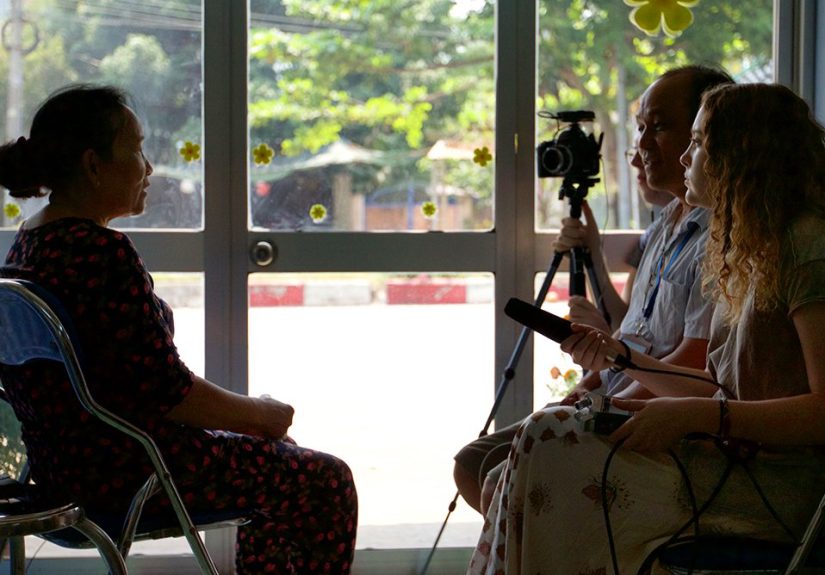
Students interview family members, elders, local leaders, workers, or longtime residents about a topic such as immigration, school change, housing, voting, labor, disability access, or neighborhood identity. They then turn those interviews into a podcast series, class archive, exhibit, or digital story map. This kind of project helps students see that history is not trapped in a textbook. It is living in the voices around them.
Primary Source Justice Investigations
Using letters, photographs, speeches, legal documents, newspapers, and historical records, students investigate how people fought for rights and reform in different eras. Topics might include women’s suffrage, civil rights, Indigenous history, labor organizing, or access to education. Students can compare strategies, evaluate barriers, and connect historical methods of change to current civic questions.
Documentary, Podcast, or Photo-Voice Projects
Students research a community issue and create a short documentary, audio segment, or photo essay to tell the story. This format works especially well because it blends research with media literacy and audience awareness. It also forces students to make choices: whose voices are included, what evidence matters most, and how to represent people fairly instead of treating them like props in a school project.
School Equity Audits
Students examine their own school through a justice lens. They might survey peers about belonging, analyze whose achievements are displayed on walls, review library representation, map physical accessibility, or study participation patterns in clubs and advanced classes. The project can end with recommendations presented to administrators or student government. This kind of work feels immediate because students are studying the place they actually inhabit every day.
Art and Action Campaigns
Not every project has to end in a research paper with the personality of dry toast. Students can create murals, posters, zines, spoken-word performances, social media campaigns, or gallery walks that combine evidence with creative expression. The strongest version of this project includes an action component, such as a public presentation, community dialogue, fundraiser, teach-in, or awareness campaign connected to a clear goal.
Film and Discussion-Based Inquiry
Students analyze documentaries or film clips that explore justice-related themes, then research the real-world issues behind the stories. From there, they can write reviews, hold seminars, create response media, or compare how filmmakers frame social issues. This approach is especially useful for building critical viewing skills and helping students analyze the relationship between storytelling and public understanding.
How to Teach This Well Without Turning the Room Into Chaos
Teachers do not need to choose between brave conversations and classroom stability. The answer is structure. Start by co-creating norms for discussion. Students should know how to disagree respectfully, ask follow-up questions, use evidence, avoid personal attacks, and make room for quieter voices. A socially just classroom is not the loudest room. It is the room where students know how to listen.
It also helps to begin with community-building routines before tackling the hardest material. Restorative circles, listening circles, reflective writing, and small-group discussion protocols can help students build trust and confidence. When students feel safe, seen, and accountable to one another, they are more willing to engage difficult topics with honesty and care.
Teachers should also be explicit about the difference between inquiry and performance. The goal is not to pressure every student into public activism on command. Some students will want to present publicly. Others may produce work meant for a classroom audience. Public-facing work can be powerful, but student safety, context, and readiness matter. No project should demand vulnerability as the price of participation.
Finally, keep the work tied to standards and skills. A great social justice project can teach argument writing, source evaluation, speaking and listening, historical thinking, media analysis, design thinking, research methods, and civic reasoning all at once. That is not mission drift. That is excellent teaching.
Common Mistakes Teachers Should Avoid
One common mistake is making the project too broad. “Solve injustice” is not a unit plan. It is a dramatic slogan. Students need focused questions, defined products, manageable timelines, and specific audiences.
Another mistake is confusing exposure with understanding. Reading one article, watching one video, and declaring students “aware” is not enough. Deep learning requires sustained inquiry, revision, and discussion.
A third mistake is forgetting inclusion. Projects about justice should not rely on a single mode of participation or assume all students have equal access to background knowledge, confidence, technology, or time.
The biggest mistake, though, is turning the whole thing into a teacher performance. Students should not feel like they are sitting through an adult monologue with occasional worksheets. They should be asking, building, testing, revising, and creating.
Experiences From Real Classrooms: What This Work Looks and Feels Like
In real classrooms, social justice projects often begin quietly. A student notices that the school library has plenty of books about famous leaders but very few stories from local communities. Another student wonders why a sidewalk near campus is impossible to navigate in a wheelchair. Someone else watches a documentary, hears a family story, or reads a primary source and suddenly realizes history is not a frozen chapter but an argument that still shapes the present. That is usually how the work starts: not with a dramatic trumpet blast, but with a question that refuses to sit down.
From there, the classroom changes. Students start interviewing people, collecting survey data, annotating speeches, comparing historical strategies, and debating what counts as good evidence. In one setting, students used video storytelling to explore housing inequity and gang intervention. In another, students built social justice statements after researching historical and contemporary issues, then presented those claims to peers. Elsewhere, student listening circles gave young people structured space to name concerns about their school community and offer feedback to leadership. Different format, same heartbeat: students were not being trained to repeat a line. They were learning how to observe, analyze, and speak with purpose.
These experiences matter because the emotional texture of the room changes too. Students who are usually quiet often become more engaged when the topic connects to their lives. Students who love to talk learn that discussion becomes more powerful when it is grounded in facts. Teachers discover that “engagement” looks different when students are not merely chasing points, but trying to make something true, useful, and worthy of an audience.
There are awkward moments, of course. A discussion stalls. A group chooses a topic that is too big. Someone makes a claim that sounds confident but has the evidence level of a rumor overheard near the vending machine. That is part of the process. Good teaching does not eliminate the messiness. It gives students structures for working through it. They revise questions, narrow their scope, gather better sources, and learn that responsible action usually begins with more careful thinking, not louder talking.
Perhaps the most valuable experience students gain is discovering that action can take many forms. Not every project ends with a rally, and not every act of justice has to be public or dramatic. Sometimes the action is a documentary screened for families. Sometimes it is a proposal to improve school accessibility. Sometimes it is a classroom exhibit that restores overlooked stories to the historical record. Sometimes it is simply a student realizing that fairness is not an abstract word adults put in mission statements, but a daily practice of noticing, listening, and responding.
That is why these projects tend to stay with students. Years later, they may forget a quiz grade or the exact order of classroom announcements, but they remember the moment they found their voice, backed it with evidence, and used it for something larger than themselves. That memory is not extra. It is education doing one of its most important jobs.
Conclusion
Social justice projects in the classroom work best when they are thoughtful, inclusive, evidence-based, and action-oriented. They help students connect identity to inquiry, inquiry to empathy, and empathy to responsible action. They can live in English, history, civics, art, media studies, advisory, and interdisciplinary units. Most of all, they remind students that school is not only a place where they learn about the world. It is a place where they practice how to participate in it.
That is a pretty good use of class time. Better than another poster no one remembers by Monday.