Table of Contents >> Show >> Hide
- Why slip, trip, and fall claims become premises liability headaches
- Where these claims usually start
- The smartest way to mitigate claims: build a repeatable prevention system
- Examples of claim prevention in the real world
- Where insurance fits in
- What insurance agents should be telling clients
- Final takeaway
- Practical Experience and Field Lessons on Slips, Trips, and Falls
Slip-and-fall claims rarely begin with courtroom drama. They usually begin with something much less cinematic: a damp lobby, a curled floor mat, a dim stairwell, a loose cord, or a parking lot pothole that has been “on the list” since sometime before the invention of online food delivery. Then someone gets hurt, a report gets filed, video gets reviewed, and suddenly a very ordinary maintenance issue turns into a very expensive conversation.
That is what makes slips, trips, and falls so frustrating for business owners and so important for insurance professionals. These incidents are common, they can happen in almost any industry, and they often look minor right up until they are not. A customer falls in a restaurant entryway. A visitor stumbles over an unmarked change in floor level. A tenant slips on tracked-in rainwater. A vendor twists an ankle in a poorly lit back hallway. The injury may be brief, but the claim can linger for months or years.
The good news is that many premises liability claims tied to slips, trips, and falls are preventable. Better yet, the same practices that reduce injuries also strengthen a business’s defense when a claim is made. In other words, smart prevention is not just good housekeeping. It is good risk management, good customer care, and good legal positioning.
Why slip, trip, and fall claims become premises liability headaches
At the heart of most premises liability disputes is a simple question: Was the property owner or operator acting reasonably? That question sounds polite and harmless. It is not. It is the legal equivalent of asking whether a business saw the hazard, should have seen the hazard, or had enough time to fix it and did not.
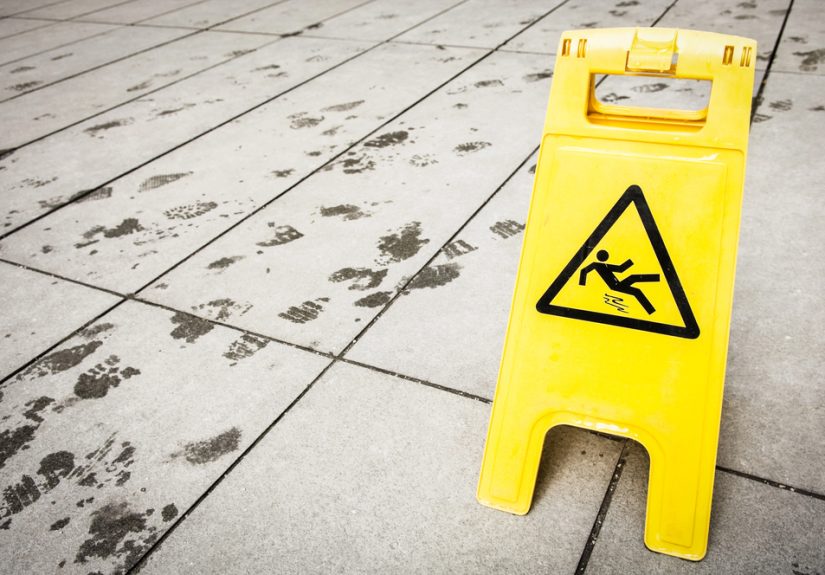
That is why a wet-floor sign, by itself, is not a magical force field. Warning people matters, but warning them without fixing the condition can still leave a business exposed. If a puddle spreads beyond the sign, if the sign is hard to see, or if the hazard sits there long enough to become part of the scenery, a jury may decide the response was too little and too late. Jurors are not known for applauding a puddle with a cone beside it.
What makes these claims especially tricky is that they often turn on details. Was the area inspected regularly? Was the lighting adequate? Were mats secured? Was there camera footage? Did employees know what to do? Was the customer forced to walk through the hazard to reach a service area? Small facts can steer a large outcome.
Where these claims usually start
Slip, trip, and fall exposures are not evenly distributed across a property. They cluster in predictable places. Entrances and lobbies become danger zones during rain, snow, and messy foot traffic. Restrooms create constant moisture risk. Parking lots and sidewalks add cracks, uneven pavement, poor drainage, and weather. Stairways bring lighting, handrail, and tread issues into the mix. Retail aisles, restaurants, grocery produce sections, service bays, and warehouse-adjacent public areas all create their own versions of the same old problem: people walking where conditions change faster than maintenance does.
Transitions are another quiet source of trouble. A change from carpet to tile, a small lip between surfaces, a worn threshold, or a ramp that was never quite right can create a trip hazard that people do not notice until gravity introduces itself. Add glare, shadows, clutter, extension cords, merchandise displays, or a rush-hour crowd, and the odds get worse.
Accessible design matters here too. Public-facing spaces are not just supposed to look polished. They need to function safely for people with different mobility needs. Stable, firm, slip-resistant surfaces and properly treated changes in level are not just design details. They are part of what separates a professional premises strategy from a hopeful one.
The smartest way to mitigate claims: build a repeatable prevention system
The strongest defense against premises liability claims is not a speech after the incident. It is a system before the incident. Businesses that handle these risks well do not rely on memory, luck, or one heroic employee with a mop. They build a process that is visible, teachable, and documented.
1. Walk the floor like you mean it
Regular inspections are the backbone of any prevention strategy. Someone should be assigned to inspect customer-facing areas at defined intervals, and that responsibility should never be vague. “Everybody watches for hazards” sounds nice, but in practice it often means nobody owns the task. Assign names, time intervals, and coverage zones.
These inspections should include entrances, aisles, restrooms, sidewalks, parking areas, stairwells, and any transition points where flooring, elevation, or lighting changes. Seasonal conditions should change the schedule. During storms or peak traffic periods, inspections should happen more often. The point is not to create busywork. The point is to reduce the window of time between hazard creation and hazard correction.
2. Mark the hazard immediately, but do not stop there
Warning signs, cones, temporary barriers, and caution tape all serve an important purpose: they buy time. They tell customers and visitors that a condition exists and that extra care is needed. That matters. But warning devices are an interim response, not a finish line.
Good signage should be obvious, placed where people will actually see it, and matched to the size and spread of the hazard. One lonely cone in the middle of a broad wet area is more decorative than protective. If the hazard cannot be fixed immediately, the business should either block access, redirect traffic, or place multiple warnings that clearly define the affected area.
3. Fix the condition fast
The best warning sign in the world does not replace cleanup, repair, or isolation. Spills should be cleaned promptly. Wet entryways should get absorbent, well-secured mats and frequent replacement. Leaks should be repaired, not merely admired. Loose carpeting, broken tile, potholes, uneven pavement, bad drainage, and failing lighting should move from “known issue” to “completed work order” as quickly as practical.
This is where many claims are born. Not because a hazard appeared, but because it lingered. A business does not need a perfect building to look reasonable. It does need a timely, sensible response when danger shows up.
4. Design for safety, not just appearance
Some properties practically manufacture claims because they are designed with aesthetics first and traction second. Polished stone, glossy tile, decorative transitions, undersized entry mats, and poorly marked elevation changes can all increase exposure. Beautiful floors are wonderful. Beautiful floors that behave like ice rinks are less charming.
Safer design choices include slip-resistant surfaces in wet-prone areas, beveled or ramped transitions where needed, secure mats that stay flat, adequate drainage, consistent stair geometry, visible edge markings, strong contrast at changes in level, and lighting that reduces shadows and glare. A business should also pay attention to how people actually move through the space. Traffic flow matters. If customers must pass through a known wet zone to reach coffee, checkout, or the restroom, the layout itself may be part of the problem.
5. Train employees to spot risk early
Training should cover more than “put out a sign.” Employees should know how to identify hazards, report them, clean them safely, isolate them when necessary, and document what happened if an incident occurs. They should understand that cords across walkways, bulging mats, boxes in aisles, poor lighting, tracked-in water, and obstructed sightlines are not harmless annoyances. They are claims waiting for a witness.
Footwear also deserves attention, especially in operations that involve wet surfaces, grease, outdoor exposure, or active material handling. Slip-resistant shoes, good housekeeping, and common-sense movement practices work better together than separately. No single fix solves everything, but layered prevention dramatically improves outcomes.
6. Plan for weather like it is part of the business model
Weather is one of the most reliable creators of temporary hazards. Rainwater gets tracked indoors. Ice forms on sidewalks. Snow turns parking lots into obstacle courses. Even in warm climates, stormwater pooling, slick entryways, and drainage failures can create same-level fall risks in a hurry.
Written weather-response procedures can make a major difference. That means pre-positioned mats, umbrella bag stations where appropriate, regular mopping schedules during storms, outdoor inspections for ice or pooling water, prompt salting or removal, and assigned employee roles. If weather creates recurring hazards and the business keeps improvising every time, it is not really managing the risk. It is gambling with extra paperwork.
7. Document everything that matters
Documentation is where prevention and claims defense shake hands. Inspection logs, cleaning schedules, maintenance requests, repair records, weather-response checklists, training records, photos, video retention, and incident reports all matter. If a claim is filed a year later, nobody will remember the exact condition of the floor on a Tuesday at 9:12 a.m. Paperwork and footage might.
If an incident occurs, the business should respond with care and discipline. Make sure the injured person gets appropriate help. Preserve video from before, during, and after the event. Photograph the area. Gather witness names. Record employee observations. Note the weather, lighting, floor condition, footwear if relevant, and what corrective action was taken. Do not alter the story after the fact, but do preserve the facts before they disappear.
Examples of claim prevention in the real world
Restaurant: A drink station leaks during lunch rush. The bad response is one cone and a shrug. The better response is a visible warning, immediate cleanup, a temporary traffic reroute, and a maintenance ticket if the leak source is ongoing.
Retail store: Customers track in rainwater near the entrance. The weak response is a small mat that curls at the edges by noon. The better response is a mat program with large absorbent mats, regular swap-outs, extra inspections, and documented storm procedures.
Office building: A dim stairwell has worn tread edges and inconsistent lighting. The cheap response is to hope people use the elevator. The smart response is better lighting, marked stair edges, handrail checks, and a maintenance record showing the problem was addressed.
Parking lot: A cracked walkway and pooled water create a recurring trip-and-slip combination. The worst response is to say, “We have been meaning to fix that.” The better response is a temporary barrier or warning, followed by repair, drainage correction, and a record of both.
Where insurance fits in
Insurance matters, of course. General liability coverage can help respond to bodily injury claims, legal defense costs, medical payments, and settlements within policy terms. For many small businesses, that protection may sit inside a businessowners policy, while larger accounts may rely on commercial general liability structures and, in some cases, umbrella support.
But insurance is not a substitute for prevention. It does not erase a painful injury, a frustrated customer, a damaged reputation, or a claims history that starts getting underwriters’ attention for all the wrong reasons. Good coverage helps a business survive a bad day. Good risk management helps it avoid that day in the first place.
What insurance agents should be telling clients
For agents, this topic is a real opportunity to add value beyond the policy. Clients need practical advice, not vague encouragement. Ask how often they inspect public areas. Ask who owns spill response. Ask how they handle storm days. Ask whether their entry mats stay flat, whether their cameras actually capture key walking paths, whether their stairwells are bright enough, and whether incident reports are standardized.
Encourage clients to think like both a safety manager and a future witness. If a claim happened tomorrow, what evidence would prove the business acted reasonably? If that question produces silence, nervous laughter, or a sentence beginning with “I think our assistant manager handles that,” there is work to do.
Final takeaway
Slips, trips, and falls may look ordinary, but their legal and financial consequences are anything but. The businesses that reduce premises liability claims are rarely the ones with perfect properties. They are the ones with disciplined habits: inspect, warn, fix, train, document, repeat. They do not treat safety as a side quest. They treat it as part of daily operations.
And that is the real lesson here. A safer premises program is not about adding drama to a mop closet. It is about reducing injuries, protecting customers, supporting employees, and making sure that when a claim does arise, the business is not left arguing with a puddle it should have handled an hour earlier.
Practical Experience and Field Lessons on Slips, Trips, and Falls
In real-world operations, the most revealing thing about slip, trip, and fall risk is how ordinary it feels right before something goes wrong. Managers rarely say, “Today seems perfect for a premises liability claim.” What they say is, “We are short-staffed,” or “We will get to that after the lunch rush,” or “It is just a little water.” Experience shows that claims often grow out of routine delays and tiny compromises rather than dramatic failures.
One of the most common patterns is the normalization of repeat hazards. A lobby that always gets slick when it rains. A restroom sink that splashes more than it should. A service hallway with a cord that “has always been there.” A sidewalk section that everyone steps around because the pavement heaves a little. Staff members adapt to these conditions and stop seeing them, but visitors do not have the benefit of local knowledge. They meet the hazard for the first time, and sometimes the floor introduces itself far more aggressively than management intended.
Another experience-based lesson is that timing matters almost as much as the condition itself. A spill that is cleaned in two minutes is usually a maintenance event. A spill that sits for twenty minutes during peak traffic starts looking like a management decision. That distinction matters because claims are often judged through the lens of response. People understand that accidents happen. They are much less forgiving when the hazard appears ignored.
There is also a strong human factor. Employees who are trained only once, handed a cone, and sent on their way will usually deliver inconsistent results. Employees who know inspection routines, cleanup steps, reporting expectations, and escalation procedures tend to respond faster and with more confidence. The difference is visible in incident files. Organized businesses have timestamps, photos, witness names, and clear corrective actions. Disorganized businesses have blurry recollections and a lot of phrases such as “I thought somebody else handled it.”
Weather brings its own lessons. Rain does not simply make surfaces wet. It tests whether a business has realistic staffing, mat coverage, drainage, and follow-through. Winter weather does the same outdoors. Even properties with solid maintenance teams can struggle if responsibilities are unclear or if inspections are not increased during storm conditions. Experience shows that written procedures beat heroic improvisation almost every time.
Finally, there is the reputational side. A person who falls remembers more than the floor. They remember whether anyone helped, whether the response seemed professional, whether the area was still dangerous after the incident, and whether the business acted like safety mattered. That memory can influence whether the matter stays manageable or escalates into litigation. In that sense, slip, trip, and fall prevention is not just about traction. It is about credibility. The businesses that perform best are the ones that make safety visible long before a lawyer ever enters the picture.