Table of Contents >> Show >> Hide
- What You’re Measuring (And Why It Matters)
- Before You Measure: Set Yourself Up for Success
- Simple Ways to Measure Wrapping Paper for a Gift: 13 Steps
- Step 1: Box it if you can
- Step 2: Identify the gift type (box, cylinder, or chaos)
- Step 3: Decide your measuring style: “No-Math” or “Quick-Math”
- Step 4: For boxes, place the gift top-side down on the paper
- Step 5: Measure “around the box” for the paper length (No-Math method)
- Step 6: Measure “over the sides” for the paper width
- Step 7: If you prefer Quick-Math, use this fast formula for most boxes
- Step 8: Mark your cut lines (and keep them straight)
- Step 9: Add a “pattern allowance” if your paper has stripes or big designs
- Step 10: Do a quick test fold before you cut (yes, really)
- Step 11: Special casemeasuring wrapping paper for a cylinder (bottle, candle, tumbler)
- Step 12: Special caseodd shapes (a.k.a. “Why is this gift shaped like that?”)
- Step 13: Consider the diagonal hack when paper is tight
- Quick Cheat Sheet: “How Much Wrapping Paper Do I Need?”
- Common Measuring Mistakes (So You Can Avoid the Wrapping Spiral)
- Wrap-Up: Clean Cuts, Less Waste, Better-Looking Gifts
- Extra: Real-World Wrapping Experiences ( of “Been There” Wisdom)
Measuring wrapping paper sounds like the kind of chore that belongs on a “grown-up responsibilities” bingo cardright between
“change air filter” and “figure out what that one charger goes to.” But here’s the secret: when you measure gift wrap the smart way,
you waste less paper, fight fewer wrinkles, and stop performing emergency patchwork with tiny scraps like you’re wrapping a gift for a hamster.
This guide shows you exactly how to measure wrapping paper for a gift box, a bottle, and even those oddly shaped “what is this, a modern sculpture?”
presents. You’ll get simple methods (with and without math), clean-edge tricks, and a few sanity-saving habits that make your packages look
intentionally fancyeven if you wrapped them five minutes before the party.
What You’re Measuring (And Why It Matters)
When people say “I never have enough wrapping paper,” they usually don’t mean they’re short on paper. They mean they’re short on
accurate guesses. Measuring matters because wrapping paper has two jobs:
- Go around the gift with a small overlap for a neat seam.
- Cover the ends with enough extra to fold clean triangles and flaps without bunching.
Get those two right and the rest is just folding, taping, and pretending you didn’t almost rage-quit when the paper curled back into a tube.
Before You Measure: Set Yourself Up for Success
Tools that make measuring easier (and your life calmer)
- Wrapping paper (bonus points if it has grid lines on the back)
- Scissors or a paper cutter
- Tape (double-sided tape if you want “no tape showing” magic)
- Measuring tape or ruler (a ribbon works in a pinch)
- Flat surface (table, floor, or an ironing board set to a comfortable height)
Quick setup tip: Pre-tear 6–10 small pieces of tape and stick them along the edge of the table. It feels extra… until you try it.
Simple Ways to Measure Wrapping Paper for a Gift: 13 Steps
Step 1: Box it if you can
Measuring is easiest when your gift is in a box. If your present is oddly shaped, consider placing it in a simple gift box first. It’s not “cheating.”
It’s “engineering.”
Step 2: Identify the gift type (box, cylinder, or chaos)
Most measurement methods assume one of three shapes:
- Rectangular box (books, shoes, board games)
- Cylinder (bottles, candles, tumblers)
- Odd shape (stuffed animals, weird angles, mystery lumps)
Pick the closest category. If it’s truly chaotic, jump ahead to Step 12.
Step 3: Decide your measuring style: “No-Math” or “Quick-Math”
You’ve got two legit options:
- No-Math (Roll-and-Mark): Use the gift itself as the measuring tool.
- Quick-Math: Measure the gift’s dimensions and calculate the paper size.
Both work. The No-Math method is perfect when you’re tired and the holidays have turned your brain into mashed potatoes.
Step 4: For boxes, place the gift top-side down on the paper
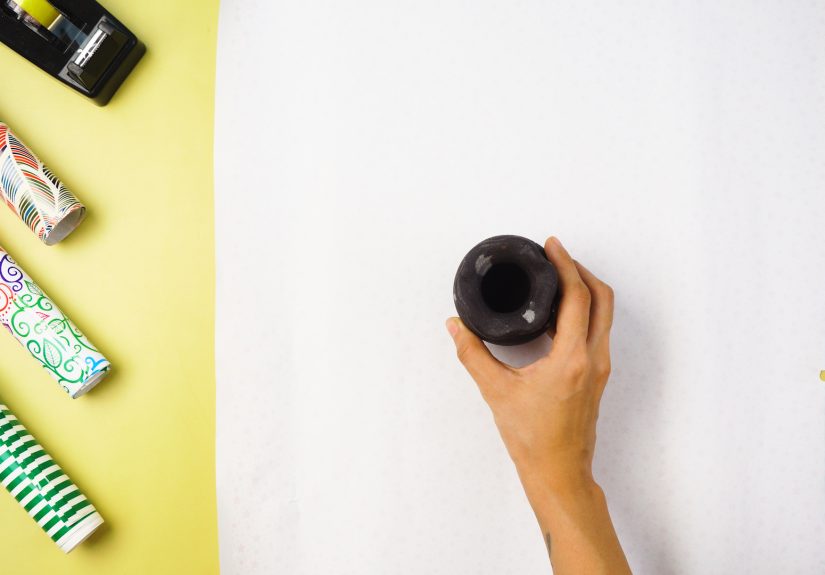
Unroll the paper on a flat surface with the patterned side down (so you can mark lightly on the back). Place the box
top-side down so your seam ends up on the bottom of the finished package. Clean look, hidden tape, instant upgrade.
Step 5: Measure “around the box” for the paper length (No-Math method)
Keep the box in place. Roll the box end-over-end along the paper to measure the distance needed to wrap all the way around.
When the paper reaches the starting point again, add a little extra for overlap.
Overlap rule: Aim for about 1–2 inches of overlap for a tidy seamnot a full paper blanket.
Step 6: Measure “over the sides” for the paper width
Look at how far the paper extends past the box on the left and right sides. You want enough paper to fold clean end flaps.
A simple visual rule: the paper should reach slightly more than halfway up the sides of the box on each end.
Too short = you’ll expose cardboard. Too long = you’ll create bulky “paper diapers” at the ends.
Step 7: If you prefer Quick-Math, use this fast formula for most boxes
Measure the box:
- L = length (longest side on top)
- W = width (shorter side on top)
- H = height
A reliable starting point:
- Paper length (to go around): 2 × (W + H) + 1–2 inches overlap
- Paper width (to cover ends): L + 2 × H
Example: Shoe box (L=13″, W=8″, H=4″)
Paper length ≈ 2×(8+4)+2 = 26″ + 2″ = 28″
Paper width ≈ 13 + 2×4 = 21″
This won’t turn you into a gift-wrap mathematician, but it will keep you out of the “panic-tape” zone.
Step 8: Mark your cut lines (and keep them straight)
Use the grid lines on the back of the wrapping paper if you have them. If not, use a ruler to draw a light pencil line.
Crooked cuts lead to crooked seams, and crooked seams lead to you staring at your gift like it personally betrayed you.
Step 9: Add a “pattern allowance” if your paper has stripes or big designs
If your wrap has stripes, chevrons, or large repeating graphics, you may want the pattern to line up at the seam.
Add an extra 1–3 inches so you can slide the box slightly and match the design without coming up short.
Step 10: Do a quick test fold before you cut (yes, really)
Before committing with scissors, fold the paper up to the box edges:
- Can it wrap all the way around with a small overlap?
- Do the ends have enough height to fold without exposing the box?
If something looks tight now, it will look tragic later. Adjust first, cut second.
Step 11: Special casemeasuring wrapping paper for a cylinder (bottle, candle, tumbler)
Cylinders are basically boxes that refused to have corners. Here’s the simple measurement:
- Paper length (around the cylinder): circumference + 1 inch overlap
- Paper height: cylinder height + 2–4 inches (for top/bottom folds)
If you don’t know circumference, wrap a ribbon or measuring tape around the widest part, then measure that length.
Add the overlap and you’re good.
Step 12: Special caseodd shapes (a.k.a. “Why is this gift shaped like that?”)
For weird shapes, you have three smart options:
- Option A: Put it in a box (fastest, cleanest).
- Option B: Use a gift bag and tissue paper (no one will call the gift police).
- Option C: Make a “pouch wrap” by using extra paper and gathering/tying the top with ribbon.
If you choose Option C, measure by placing the item on the paper and giving yourself plenty of margin. With irregular shapes,
the goal is “looks intentional,” not “achieved perfect geometry.”
Step 13: Consider the diagonal hack when paper is tight
If you’re working with a smaller sheet (or you’re trying to save paper), rotate a rectangular gift about 45 degrees so it sits
like a diamond on the paper. This can reduce waste and sometimes lets a too-small sheet workespecially for flat items like books.
Reality check: Diagonal wrapping can be awesome, but it takes a little practice. Try it on something simple first,
not on the last gift five minutes before guests arrive.
Quick Cheat Sheet: “How Much Wrapping Paper Do I Need?”
- Fastest method: Place box top-side down, roll it end-over-end to measure around, then add 1–2 inches overlap.
- Box formula (typical wrap): Paper length ≈ 2×(W+H) + overlap; paper width ≈ L + 2×H.
- Cylinder method: Paper length ≈ circumference + 1 inch; paper height ≈ cylinder height + 2–4 inches.
- If in doubt: Add a small safety margin now. It’s cheaper than re-wrapping later with scraps and regret.
Common Measuring Mistakes (So You Can Avoid the Wrapping Spiral)
Using too much paper “just to be safe”
Extra paper doesn’t make wrapping easierit makes it bulkier. Aim for clean folds, not a puffy paper comforter.
Forgetting overlap
That seam needs a little extra. Without overlap, you’ll be taping edge-to-edge like you’re repairing drywall.
Cutting without checking the ends
People measure “around” correctly and still come up short on the ends. Always check that the paper rises more than halfway
up the box sides at each end before you cut.
Ignoring paper curl
Wrapping paper curls because it’s been rolled tighter than your schedule in December. Flatten the piece by gently rolling it the other way
for a moment before you start. Your folds will behave better.
Wrap-Up: Clean Cuts, Less Waste, Better-Looking Gifts
Measuring wrapping paper isn’t about perfectionit’s about control. The moment you stop guessing, wrapping gets faster, corners get cleaner,
and you magically stop running out of paper at the worst possible time. Use the roll-and-mark method when you want speed, use quick math when
you want consistency, and remember: a neat seam and tidy ends will make even basic paper look expensive.
Now go forth and wrap like someone who definitely has their life together (even if you’re still wearing socks that don’t match).
Extra: Real-World Wrapping Experiences ( of “Been There” Wisdom)
Measuring wrapping paper sounds straightforward until you’re doing it in the wildby “wild,” I mean a living room floor surrounded by
tape, ribbon, snack crumbs, and that one family member who keeps “helping” by sitting directly on the scissors. Real-life wrapping
has variables. Lots of them. Here are a few scenarios that show how measuring actually plays out when things get… festive.
Scenario 1: The “I Swear This Box Was Smaller” moment. You grab a roll, eyeball a length, cut, and realize the paper
won’t meet in the middleby a cruel and specific amount, like 1.5 inches. This is why Step 5 (roll-and-mark) is such a hero.
Rolling the box end-over-end is basically letting the gift tell you what it needs. No arguments. No guesswork. Just physics doing you a favor.
Scenario 2: The paper is big enough… but the ends look like crumpled wings. This usually happens when the paper extends
way past the box height on the ends. People assume extra paper equals easier folds, but too much creates thick layers that won’t crease sharply.
The cleanest packages often come from “just enough” paper: a bit more than halfway up the side at each end. When the ends are right,
your folds stack neatly instead of puffing out.
Scenario 3: Pattern drama. Stripes are gorgeous until the seam makes them look like they’re fleeing in opposite directions.
Big prints can also land awkwardlylike a reindeer’s face chopped in half at the top fold. This is when you add a little pattern allowance,
slide the box, and choose what part of the design you want front-and-center. In real life, that extra inch or two is the difference between
“designer wrap” and “I wrapped this in a hurry at a gas station.”
Scenario 4: The last-sheet challenge. You’ve got one sheet left, the gift is flat, and hope is hanging by a thread.
This is where the diagonal hack earns its keep. Rotating a book or slim box can suddenly make the corners work, because the paper’s “dead space”
shifts to where it’s useful. It’s not sorceryit’s geometry wearing a festive hat. The catch? It rewards calm folding. If you’re stressed,
diagonal wrapping can feel like trying to fold a fitted sheet while someone times you.
Scenario 5: You’re trying to be eco-friendly without looking like you gave up. Measuring helps here, too. When you cut
closer to what you need, you save paper and still get a crisp result. And the scraps? They’re not trashthey’re future ribbon strips,
gift tag backings, or tiny accent bands that look intentionally “boutique.” Many people find that once they start measuring, they naturally
waste less, keep better leftovers, and feel weirdly proud of their scrap pile (which is a sentence no one expects to say out loud).
The big takeaway from real-world wrapping is simple: measuring isn’t about making things complicated. It’s about preventing surprise problems.
The less you improvise in the middle, the more your gift looks polished at the end. And that’s the whole pointbesides, you know, the gift inside.