Table of Contents >> Show >> Hide
- The Legend in a Nutshell: A Flyer, a Face, and a Global Shiver
- Why That Face Feels Familiar (Even If You’ve Never Seen It)
- Why You Might Actually Dream About Him After Seeing the Poster
- Scary Stories: The “This Man” Face in the Wild
- The Real Explanation Is Still Creepy: Viral Myth + Dream Science
- How to Stop the Face From Showing Up in Your Dreams
- So… Have You Ever Dreamed This Man?
- of Experiences Related to “Have You Ever Dreamed This Man?”
If the internet had a “most punchable-but-also-haunting” face award, the Have You Ever Dreamed This Man? guy would’ve taken home the trophy sometime around 2009right after he crawled out of a creepy flyer, moved into our collective imagination, and started renting space in people’s nightmares.
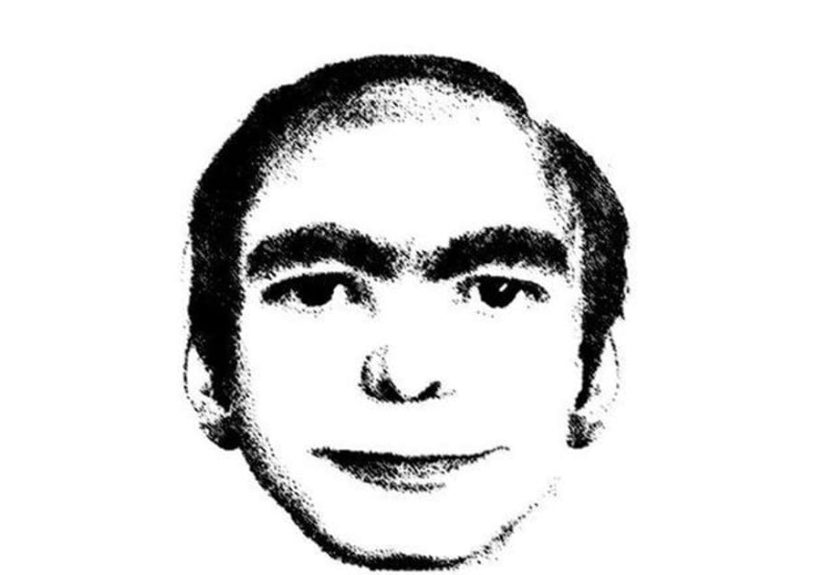
You’ve probably seen the poster: a plain white background, a sketchy identikit portrait, and an ominous question implying youyes, youmight be sharing dreams with thousands of strangers. It’s the perfect horror appetizer: simple, specific, and just plausible enough to make you glance at your bedroom door like it’s planning something.
Here’s the twist that makes the whole thing even scarier (for your brain, not your life): “This Man” wasn’t a supernatural visitor. He was a masterclass in viral mythmakingan internet hoax/conceptual project that spread because it exploited how memory, faces, and dreams actually work.
The Legend in a Nutshell: A Flyer, a Face, and a Global Shiver
The story pitched itself like a paranormal case file: people around the world have allegedly been dreaming about the same unknown man, and no one can identify him. The website and posters invited visitors to share sightings, swapping dream reports the way campers trade ghost storiesexcept now the campfire was your monitor.
Media and blogs helped it rocket outward in the late 2000s, because the premise was irresistible: either there’s a shared dream intruder… or there’s a really weird explanation. In reality, the explanation was “really weird,” just not supernatural: the “This Man” phenomenon is widely documented as a hoax/concept project associated with Italian marketer Andrea Natella and the site thisman.org, later acknowledged as fabricated.
That doesn’t “ruin” the story. It upgrades it. Because the true horror isn’t a mysterious dream stalkerit’s how quickly a well-designed idea can plant itself into your head and start producing extremely convincing feelings.
Why That Face Feels Familiar (Even If You’ve Never Seen It)
The “Dream This Man” portrait is weirdly generic. Not in a boring wayin a “he could be your substitute teacher, your dentist, and a minor villain in a crime show” way. That’s a feature, not a bug.
1) Your brain uses “face shortcuts”
Human face perception isn’t just about memorizing every nose and eyebrow like a CCTV database. We lean on patterns and prototypesmental “averages” built from the faces we’ve seen. Some research and reporting on face perception discusses how the brain may compare faces against an internal reference or “prototype,” making certain averaged or typical faces feel immediately recognizable.
So when you see a face that sits near the “center” of what your brain expects a face to look like, you can get a hit of familiarity without a clear memory attached. It’s like recognizing a song you’ve never heard because it uses the same four chords as half of pop music.
2) Your brain is a professional face-finder
We’re also excellent at finding faces in… not-faces. Wood grain. Outlets. Clouds. That tendency (often discussed under the umbrella of pareidolia) is part of why eerie images stick so wellyour brain prefers a false positive (“that shadow is a person!”) over a false negative (“that person is a shadow!”). Johns Hopkins’ reporting on pareidolia highlights how readily our perception snaps into “face mode.”
The “This Man” portrait lives right in that sweet spot: face-like enough to trigger recognition systems, plain enough to let your imagination fill in the menace.
Why You Might Actually Dream About Him After Seeing the Poster
Here’s the most underappreciated jump scare: once you’ve seen the face, your brain now has it on file. And dreams love using whatever’s on the shelf.
Dreams remix memoryespecially in REM sleep
Dreams are often most vivid during REM sleep, and REM is associated with intense brain activity and emotional processing. Many sleep-research explainers describe REM as a stage where dreaming is common and where the brain works through emotion and memory in its own surreal language.
Translation: if you go to bed unsettled by a creepy face, your brain might decide to “process” that feeling by starring the face in a story. Not because the man is realbecause the anxiety is real, and your sleeping mind is trying to file it somewhere.
Dream recall makes the legend feel “confirmed”
People who remember dreams vividly often do so because of how and when they wake, how fragmented sleep is, and how attention is directed after waking (hello, doom-scrolling). Sleep researchers note that dream recall varies widely, and habits like journaling can change how much you remember.
If you’re primed to look for “This Man,” your brain becomes a diligent intern: “Found him! Put him in the report!” Suddenly you’re not just having a dreamyou’re collecting evidence.
Scary Stories: The “This Man” Face in the Wild
The internet is stuffed with dream reportssome sincere, some performative, some clearly written at 2:47 a.m. with one eye open. Rather than pretend we can verify every account, here are story-patterns that show up again and again, plus what might be happening under the hood.
Story #1: The Silent Helper
In the dream, he’s oddly calmhelpful, even. He guides you through an airport. He leads you out of a burning building. He points at a door you “shouldn’t open.”
Why it works: a neutral face in a stressful dream becomes an emotional anchor. Dreams often pull from waking anxieties and wrap them in narrative. If your day was chaotic, your dream may cast a steady stranger as a guideespecially if your brain is doing emotional sorting during REM.
Story #2: The “Go North” Command
Some versions of the legend include recurring instructionslike “go north”which adds conspiracy flavor and makes the dream feel like a mission.
Why it works: dreams love symbolic direction (escape, change, pursuit). A simple repeated phrase is easy to remember, so it survives the wake-up “memory wipe” better than complicated dialogue. And once one person posts it, other people may unconsciously borrow itbecause humans are incredible at social storytelling.
Story #3: The Wrong Familiar
You “know” him in the dream. He’s your uncle. Your old teacher. Your friend’s dad. But when you wake up, none of those labels make senseonly the feeling of familiarity remains.
Why it works: familiarity can be a sensation without a correct source. Face perception research and reporting describe how we compare faces against internal norms/prototypes, so “close enough” can light up recognition even when the identity is wrong.
Story #4: The Sleep Paralysis Visitor
The scariest reports often overlap with sleep paralysis: you “wake up” but can’t move, and the face is therewatching from the corner, sitting on the bed, leaning in too close like a bad social interaction.
Why it works: sleep paralysis and REM mechanisms are real physiological phenomena (REM involves muscle atoniayour body essentially keeps you from acting out dreams). When that boundary blurs, it can produce vivid, terrifying experiences.
Add a viral face you’ve recently seen, and your brain grabs it like a ready-made monster mask.
Story #5: The Face That Replaces Faces
In these dreams, “This Man” starts appearing everywhere: in crowds, reflections, photographs, even on the face of someone you love. The horror is not that he’s chasing youit’s that reality is getting overwritten.
Why it works: dreaming is a collage. Dreams can blend people and places, and when your brain is primed with a strong image, it can become a “stamp” used repeatedly. Sleep experts also note that stress, sleep disruption, and REM rebound can intensify vivid dreaming and nightmares, which can make repetition more likely.
The Real Explanation Is Still Creepy: Viral Myth + Dream Science
“This Man” didn’t need to be real to feel real. It only needed:
- A face generic enough to trigger familiarity, but distinctive enough to be memorable.
- A suggestive question that makes you search your own memory (“Wait… have I?”).
- A social feedback loop where every new report becomes “proof” for the next person.
- A medium built for spreadblogs, forums, reposts, memes, late-night scrolling.
Coverage of the phenomenon as a hoax and art/marketing project emphasizes exactly that power: the internet can manufacture a collective myth faster than most people can find the “debunk” tab.
And yes, Hollywood sniffed around it
Like many great urban legends, it attracted adaptation talk. Trade outlets reported on a film project tied to the premise (people around the world dreaming of the same man), which shows how “This Man” functioned as modern folklore: instantly cinematic, instantly shareable.
How to Stop the Face From Showing Up in Your Dreams
If you’ve seen the image and now you’re side-eyeing bedtime, here are practical, non-mystical moves:
1) Break the loop before sleep
Don’t reread threads, watch explainers, or stare at the face “one more time” right before bed. You’re basically handing your dreaming brain a prop and saying, “Use this.”
2) Reduce nightmare fuel
Sleep experts note that sleep deprivation and REM rebound can be linked with more vivid dreams and nightmares. Protecting sleep consistency helps reduce intensity.
3) Use a simple mental rewrite
If the face appears, give it a ridiculous job: he’s your dream’s DMV clerk. He’s there to hand you a receipt. He’s confused and asking for directions to the nearest Walgreens. Humor isn’t just copingit’s a fast way to change the emotion of the scene.
4) Journalbriefly
A short note can help offload the dream and reduce rumination. Sleep and psychology resources often recommend journaling for recall and reflection, but keep it quick so you’re not re-anchoring the fear.
So… Have You Ever Dreamed This Man?
If you did, you’re not cursed. You’re human. The “Dream This Man” face is a perfect storm of familiarity, suggestion, and the brain’s talent for turning scraps of memory into cinema.
The legend is spooky because it borrows the tone of a real phenomenonvivid dreams, recurring characters, sleep-paralysis fearand then adds a viral frame that makes it feel shared, confirmed, and therefore “important.” Dream science doesn’t make it less eerie. It just points the flashlight at the real monster: how easily our minds can be nudged into believing a story that fits our feelings.
of Experiences Related to “Have You Ever Dreamed This Man?”
What follows are experience-style vignettes inspired by common themes people report around this urban legendwritten like campfire stories, because that’s how the myth lives best: in half-remembered detail, in the space between “probably nothing” and “why is my hallway so long right now?”
Experience 1: The Receipt
I’m in a grocery store that looks normal until I realize none of the labels have words. Just blank white bars, like the universe forgot to load textures. I reach the checkout anyway. The cashier doesn’t speak. He just slides a receipt toward melong as a scarf, curling off the counter and onto the floor.
I look up and there he is: the face from the flyer, wearing a name tag that says “HELLO, I AM…”
The rest is smudged. He points at the receipt like I’m supposed to read it. The paper is covered in a single repeated line:
“DID YOU REMEMBER TO LOCK THE DOOR?”
I wake up to silence so thick it feels loud.
Experience 2: The Group Chat Dare
My friends and I treated the poster like a joke. One of us dropped it in the group chat at midnight with “If you dream him, you owe us tacos.” We laughed, reacted with skull emojis, and went to sleep.
The next morning, two of them texted me separately: “Stop. I dreamed that guy.”
Different dreams, same face. One said he was standing in a school hallway, blocking the exit, smiling like he’d been waiting. The other said he never movedjust sat at the foot of the bed like a piece of furniture that suddenly decided it had opinions.
The scariest part wasn’t the dreams. It was how fast the joke stopped being funny.
Experience 3: The Mirror Version
In the dream, I’m brushing my teeth in a bathroom that isn’t mine. The light flickers with the slow confidence of a horror movie. I spit, look up, and the mirror shows himstanding behind me.
I spin around. Nothing.
I face the mirror again. He’s closer now. His expression doesn’t change, but the air feels heavier, like my chest is trying to remember how to breathe. I raise my hand toward the glassand the reflection raises his first.
That’s when I understand: he isn’t behind me. He’s in front of me.
Experience 4: The Polite Stranger
The dream is calm, almost boring. I’m on a bus. He sits beside me like it’s the most normal thing in the world. He doesn’t threaten me. He doesn’t chase me. He just asks, very politely, “Do you know where you are?”
I try to answer, but my mouth doesn’t work rightlike the words are stuck in cotton. He nods, as if that’s the expected outcome. Then he leans in and whispers something I can’t hear, because dreams love giving you the vibe of a sentence without the convenience of actual audio.
I wake up with the feeling that I was just given instructions… and failed an invisible test.
These stories hit because they echo what dreams often do best: take a simple image, attach a strong emotion, and let your mind do the rest. If you’ve ever felt the “This Man” chill, you’re not alonejust temporarily recruited into a very human tradition: turning mystery into myth, and myth into one more thing to double-check before you turn off the light.