Table of Contents >> Show >> Hide
- Why This Pumpkin Cake Works (A Little Baking Analysis, No Lab Coat Required)
- Ingredients You’ll Need
- Step-by-Step: Pumpkin Cake (Moist, Tender, and Not One Bit Fussy)
- Cream Cheese Frosting (Fluffy, Tangy, and Not Runny)
- Serving Ideas That Feel Fancy (Without Actually Being Complicated)
- Storage, Make-Ahead, and Food Safety (Yes, This Matters With Cream Cheese)
- Troubleshooting: Common Pumpkin Cake Problems (And Their Fixes)
- Easy Variations (Same Cozy Vibes, New Personality)
- Conclusion
- Kitchen Experiences & Real-World Moments (500+ Words of “Yep, That Happens”)
If fall had a ringtone, it would be the sound of a mixer whirring while cinnamon, ginger, and pumpkin perfume your kitchen.
This pumpkin cake with cream cheese frosting is the kind of dessert that disappears at potlucks, “accidentally” becomes breakfast,
and makes people ask, “Wait… did you make this?” (Yes. Yes you did. Accept the applause.)
Below you’ll get a reliable, crowd-friendly pumpkin cake recipeplus the “why it works” baking science, foolproof frosting tips,
and real-world tricks that keep the cake moist (not gummy) and the frosting fluffy (not soupy). Let’s bake something cozy.
Why This Pumpkin Cake Works (A Little Baking Analysis, No Lab Coat Required)
1) Pumpkin brings moisture… sometimes too much
Pumpkin purée is mostly water, which is great for a tender crumbuntil it isn’t. Too much moisture can lead to a dense or slightly
“gummy” line near the bottom. The fix isn’t complicated: measure correctly, don’t overmix, and (if your purée seems watery) blot or drain it briefly.
Your cake should taste like pumpkin, not like it took a bath.
2) Oil keeps it plush, spices keep it interesting
Many of the best American-style pumpkin cakes use neutral oil because it stays moist even after refrigeration (important when cream cheese frosting is involved).
Butter tastes amazing but can firm up when chilled, so oil gives you that “still soft on day three” magic. We’ll also use a balanced spice blend so it tastes like
pumpkin cake, not a candle store.
3) Cream cheese frosting is the tangy hero
Pumpkin cake is sweet and warmly spiced. Cream cheese frosting is cool and tangy. Together they’re the dessert equivalent of a perfect buddy-cop movie:
opposites, but unstoppable.
Ingredients You’ll Need
For the Pumpkin Cake (9×13-inch sheet cake)
- 2 cups all-purpose flour (spooned and leveled)
- 2 teaspoons baking powder
- 1 teaspoon baking soda
- 1 teaspoon fine salt
- 2 teaspoons ground cinnamon
- 1 teaspoon ground ginger
- 1/4 teaspoon ground cloves
- 1/4 teaspoon ground nutmeg
- 1 1/2 cups granulated sugar
- 1/2 cup light brown sugar (packed)
- 1 cup neutral oil (canola, vegetable, or avocado)
- 1 (15-ounce) can pumpkin purée (not pumpkin pie filling)
- 4 large eggs, room temperature
- 2 teaspoons vanilla extract
- Optional: 1/2 cup buttermilk (for extra tenderness) OR 1/4 cup milk + 1/4 cup sour cream
- Optional mix-ins: 3/4 cup chopped pecans/walnuts or 1 cup chocolate chips
For the Cream Cheese Frosting
- 8 ounces full-fat brick cream cheese, softened (not tub-style if you want stability)
- 1/2 cup (1 stick) unsalted butter, softened
- 3 cups powdered sugar, sifted if lumpy
- 1 1/2 teaspoons vanilla extract
- 1/8 to 1/4 teaspoon fine salt (yes, salt in frostingtrust the process)
- Optional: 1–2 teaspoons milk/cream (only if needed for spreadability)
- Optional “stability helper”: 1–2 tablespoons cornstarch (for hot kitchens or thick swirls)
Optional Toppings (Choose Your Own Adventure)
- Chopped toasted pecans or walnuts
- Cinnamon dusting
- Caramel drizzle
- Orange zest (shockingly good with pumpkin + cream cheese)
Step-by-Step: Pumpkin Cake (Moist, Tender, and Not One Bit Fussy)
1) Prep the pan and oven
Heat oven to 350°F. Grease a 9×13-inch pan and line with parchment if you want easy lifting.
(If you skip parchment, the cake will still taste greatyour spatula will just get more cardio.)
2) Mix dry ingredients
In a medium bowl, whisk together flour, baking powder, baking soda, salt, cinnamon, ginger, cloves, and nutmeg.
Whisking now prevents surprise spice clumps later.
3) Mix wet ingredients
In a large bowl, whisk granulated sugar, brown sugar, and oil until smooth. Add pumpkin purée and whisk again.
Add eggs one at a time, whisking after each. Stir in vanilla.
4) Combinegently
Add the dry ingredients to the wet ingredients and stir until just combined. If using buttermilk (or the milk/sour cream combo),
fold it in at the end. If adding nuts or chocolate chips, fold them in now.
Important: Overmixing develops gluten and turns “soft cake” into “polite doorstop.” Mix only until you don’t see dry flour.
5) Bake
Pour batter into the pan and smooth the top. Bake 30–40 minutes, depending on your pan and oven.
Start checking at 30 minutes. The cake is done when a toothpick inserted near the center comes out with a few moist crumbs (not wet batter),
and the top springs back lightly when pressed.
6) Cool completely
Let the cake cool in the pan on a rack. Do not frost a warm cake unless you enjoy frosting that slowly migrates into the next zip code.
Cool at least 60–90 minutes (longer if your kitchen is warm).
Cream Cheese Frosting (Fluffy, Tangy, and Not Runny)
1) Softening: the calm way
Use softened (not melted) cream cheese and butter. They should be cool-room-temp: pliable, not glossy.
If they’re too warm, frosting can get loose. If they’re too cold, you’ll get lumps.
2) Beat base until smooth
With a hand mixer or stand mixer, beat cream cheese and butter together until smooth and creamy, about 1–2 minutes.
Scrape the bowlcream cheese loves hiding.
3) Add sugar gradually
Add powdered sugar in 2–3 additions, mixing on low so you don’t create a sugar snowstorm.
Add vanilla and salt, then beat on medium until fluffy, 1–2 minutes.
4) Adjust texture (only if needed)
- If frosting is too thick: add 1 teaspoon milk/cream at a time.
- If frosting is too soft: chill 15–20 minutes, then rewhip briefly.
- If you need extra stability (warm room, piping swirls): mix in 1–2 tablespoons cornstarch.
5) Frost the cake
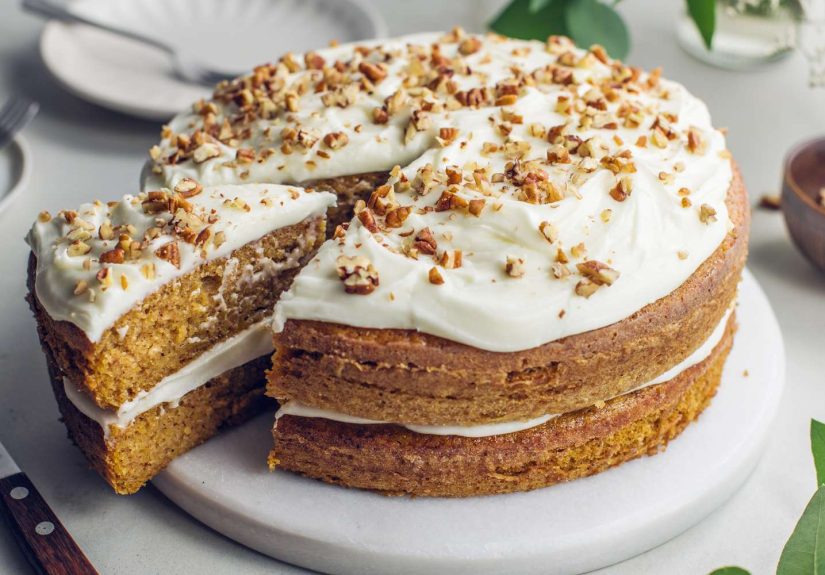
Spread frosting over the fully cooled cake. Top with toasted nuts, a dusting of cinnamon, or an artistic caramel drizzle
(even if it’s not artistic, people will still eat it).
Serving Ideas That Feel Fancy (Without Actually Being Complicated)
- Classic squares: Chill 20 minutes after frosting for cleaner slices.
- Holiday vibe: Sprinkle chopped candied pecans and a pinch of flaky salt.
- Brunch energy: Serve with coffee and pretend it’s a “pumpkin dairy situation” instead of dessert.
- Extra cozy: Add a spoonful of whipped cream and a tiny dash of cinnamon on top.
Storage, Make-Ahead, and Food Safety (Yes, This Matters With Cream Cheese)
Cream cheese frosting is perishable. In general, don’t leave the frosted cake out longer than 2 hours at room temperature.
For best quality, store the cake covered in the refrigerator.
- Fridge: 3–5 days is a great quality window (some guidance allows longer, but flavor/texture is best earlier).
- Serving after chilling: Let slices sit at room temp about 20–40 minutes so the cake softens and frosting turns creamy again.
- Freezing: Freeze unfrosted cake tightly wrapped up to 2–3 months. You can also freeze frosted slices:
chill to firm the frosting, then wrap well to prevent freezer burn.
Troubleshooting: Common Pumpkin Cake Problems (And Their Fixes)
My cake is dense
- Check your baking soda/powder freshness (old leaveners = sad cake).
- Don’t overmix after adding flour.
- Make sure oven is truly at 350°F (an oven thermometer is a tiny investment with big payoff).
There’s a gummy layer near the bottom
- Pumpkin purée might be waterynext time blot/drain briefly.
- Don’t underbake; the center needs to set fully.
- Avoid heavy add-ins sinking (coat chocolate chips/nuts with 1 teaspoon flour before folding in).
My frosting is runny
- Your cream cheese/butter may be too warmchill and rewhip.
- Use brick-style cream cheese for better structure.
- Add a bit more powdered sugar (or a tablespoon of cornstarch for stability).
My frosting is lumpy
- Ingredients were too coldlet them soften properly and beat longer, scraping the bowl often.
- Sift powdered sugar if it’s clumpy.
Easy Variations (Same Cozy Vibes, New Personality)
Maple Cream Cheese Frosting
Replace 1 teaspoon vanilla with 2–3 tablespoons pure maple syrup. If the frosting loosens, add a little extra powdered sugar.
Maple + pumpkin is basically autumn’s official handshake.
Brown Butter Pumpkin Cake
Swap 1/4 cup of the oil for 1/4 cup browned butter (cooled but still liquid). You’ll get a nutty depth that tastes like
you did something very impressive on purpose.
Layer Cake Option
Bake in two 8- or 9-inch round pans. Start checking around 25–30 minutes.
Frost between layers and on top/sides. Chill briefly before slicing for neat layers.
“Pumpkin Bars” Vibe
Bake in a jelly-roll pan for thinner cake, shorten bake time, then slice into bars for parties.
It’s the same dessertjust more portable and slightly more dangerous (to your self-control).
Conclusion
Pumpkin cake with cream cheese frosting is a fall classic for good reason: it’s easy, forgiving, and wildly satisfying.
Keep an eye on moisture (pumpkin is enthusiastic), mix gently, cool completely before frosting, and store chilled for best results.
Whether you go classic sheet cake, dress it up with nuts and caramel, or turn it into layers for a celebration,
you’ll end up with a dessert that tastes like cozy weathereven if it’s 82°F outside.
Kitchen Experiences & Real-World Moments (500+ Words of “Yep, That Happens”)
When people talk about “pumpkin cake season,” they’re not just talking about flavorthey’re talking about the entire experience:
the grocery cart that mysteriously fills with cinnamon, the one can of pumpkin you swear you already had, and the sudden urge to
bake something that makes your home smell like a warm sweater feels. Pumpkin cake has a way of turning an ordinary afternoon into
a mini event, even if the event is just you and a cooling rack.
One of the most common experiences home bakers run into is the “pumpkin purée personality test.” Some cans are thick and scoopable;
others pour like a smoothie. That variability is why two people can follow the “same” pumpkin cake recipe and get slightly different results.
If your batter looks looser than expected, it doesn’t automatically mean disasterit simply means you’ll want to be extra mindful about
not overmixing and making sure the cake is fully baked through the center. Many bakers learn (often after one slightly dense cake)
that pumpkin rewards gentle handling: whisk wet ingredients smoothly, fold in flour just until combined, and let the oven do the rest.
Then there’s the frosting stage, which is where confidence can wobble. Cream cheese frosting is famously delicious and famously sensitive.
The classic scenario goes like this: you’re feeling unstoppable, your cake is cooling, and you decide to “speed things up” by microwaving
the cream cheese or butter a bit too much. Suddenly your frosting is glossy and slack, and you’re staring at it like it betrayed you.
The good news is that this is a normal rite of passage. In real kitchens, the fix is usually simple: chill the frosting briefly, then rewhip.
Many experienced bakers also learn to treat cream cheese frosting like a temperature-based relationshipwhen it’s too warm, it gets clingy
(read: runny); when it’s too cold, it gets distant (read: lumpy). The sweet spot is cool-room-temp ingredients and short, controlled mixing.
Pumpkin cake is also a social dessert. People bring it to potlucks because it’s easy to transport in the pan, it feeds a crowd,
and it looks generous even without fancy decorating. But transportation introduces its own “experience”: the frosting slide.
If you’re traveling, many bakers pop the frosted cake into the fridge for 20–30 minutes before leaving. That quick chill firms the frosting
so it doesn’t shift in the car like it’s trying to change seats. Another common trick is bringing toppings separatelynuts, cinnamon, caramel
and finishing at the destination so the cake looks freshly dressed.
And finally, there’s the moment of serving. A chilled cream cheese–frosted cake slices neatly, but it can taste firmer right out of the fridge.
People often notice the difference when they let slices sit for a short while at room temperature: the crumb relaxes, the spices bloom,
and the frosting turns velvety again. It’s one of those small, learned experiences that transforms “good cake” into “where did you buy this?”
cake. If you want the ultimate experience, pair it with coffee or a lightly sweet tea, and serve it on a day when everyone could use a little cozy.
Pumpkin cake doesn’t just taste like fallit behaves like it, too: best enjoyed unhurried.