Table of Contents >> Show >> Hide
- That Night in Petaluma: A Sleepover That Changed Everything
- A Nation on Edge: How Polly’s Case Reshaped Our Response to Child Abductions
- The Man Behind the Crime and the Rise of “Three Strikes”
- From Grief to Action: The Legacy of the Polly Klaas Foundation
- Why Polly’s Story Still Haunts Us 30 Years Later
- Lived Experiences and the Long Echo of the Polly Klaas Case
- Conclusion: Honoring Polly by Protecting Children Today
On an October night in 1993, 12-year-old Polly Klaas was doing something wonderfully ordinary:
having a sleepover with two friends at her home in Petaluma, California. By the time the night
was over, she had been kidnapped at knifepoint. Two months later, the country learned the
devastating truth Polly had been murdered. Three decades on, her story still feels
heartbreakingly fresh, not just for her family and community, but for anyone who remembers
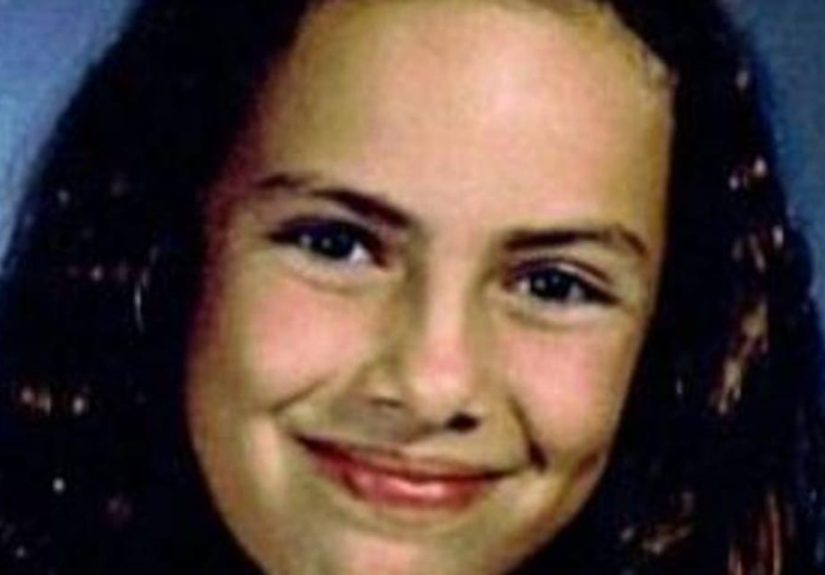
seeing her smiling face on posters, on television, and on the nightly news.
Polly’s case didn’t just dominate headlines; it changed how the United States responds to
child abductions, influenced tough-on-crime laws like California’s “three strikes” statute,
and inspired a lasting child-safety movement. Her legacy lives on in missing-child alerts,
fingerprinting programs, parent safety talks, and in the work of the Polly Klaas Foundation
and related advocacy groups. In other words, Polly’s story is not only a tragedy it is also
a turning point that still shapes policy and parenting 30 years later.
That Night in Petaluma: A Sleepover That Changed Everything
On the evening of October 1, 1993, Polly and two classmates settled into her bedroom for a
slumber party while her mother slept in a nearby room. Sometime around 10:30 p.m., an intruder
entered the house, armed with a knife taken from the family’s kitchen. He tied up Polly’s
friends, covered their heads, and abducted Polly from her own bedroom. The girls, terrified,
eventually freed themselves and raised the alarm, but by then the kidnapper and Polly were gone.
The story hit every parent’s deepest fear: the idea that a child could be taken from what is
supposed to be the safest possible place home. Within hours, the local police, the California
Highway Patrol, and soon the FBI were involved. An all-points bulletin went out describing the
suspect and his vehicle. Unfortunately, technology and coordination between agencies in the early
1990s were nothing like they are today. Key details did not reach all the officers who might have
intercepted the kidnapper in those first crucial hours.
For 65 days, the country watched as the search for Polly grew into a national effort. Thousands
of volunteers combed fields, posted flyers, made phone calls, and participated in one of the
largest missing-child searches the nation had seen. Celebrities like Winona Ryder, who grew up
in nearby Petaluma, publicly offered rewards. For many Americans, Polly’s face became the symbol
of every missing child whose story never made it onto prime-time television.
In December 1993, investigators finally confirmed what everyone had been dreading. A convicted
criminal named Richard Allen Davis led authorities to Polly’s body, which he had hidden in a
shallow grave in Sonoma County. The case shifted from a desperate rescue mission to a homicide
investigation and a national reckoning.
A Nation on Edge: How Polly’s Case Reshaped Our Response to Child Abductions
The Search That Changed How We Look for Missing Children
Polly Klaas was not the first child to be abducted, but the scale and visibility of the effort
to find her changed expectations about how such cases should be handled. Authorities coordinated
with volunteers, tapped into national media, and pushed hard to get her picture and story
in front of as many people as possible. For many communities, it was the first time they’d
seen such a large, organized, and public search for a single missing child.
The case highlighted gaps in how agencies shared information. For instance, an early encounter
between law enforcement and the eventual killer did not lead to his arrest because officers at
the time did not have the full context of the kidnapping. The painful “if only” questions that
followed pushed departments to improve how they issue and respond to alerts, coordinate across
jurisdictions, and move quickly in those critical first hours.
In the years after Polly’s abduction, systems like AMBER Alerts gained more structure and
visibility. While AMBER Alerts were formally inspired by a later case, the urgency created by
Polly’s story contributed to a broader national consensus: when a child is abducted, every
available tool media, technology, and public participation should be activated as fast
as possible.
Polly’s Case and the “Crime Wave” of the 1990s
The early and mid-1990s were marked by intense anxiety about crime in the United States.
Polly’s murder became one of the defining “headline crimes” of that era a case that seemed
to encapsulate fears about random violence and repeat offenders. Her killer was not an unknown
figure with no history; he was a repeat offender with a long criminal record who had cycled
in and out of prison.
As details about his past came out, shock quickly turned into political action. If someone
with that record could still be out on the street and capable of kidnapping and killing a
child, many people asked, what was the point of the system at all? That question helped drive
one of the most consequential criminal justice policies of the decade: the “three strikes”
law.
The Man Behind the Crime and the Rise of “Three Strikes”
Richard Allen Davis had a long history of criminal behavior before 1993, including kidnappings,
robberies, and other serious offenses. When he was identified, arrested, and ultimately tried
for Polly’s murder, the public followed every development. In 1996, after a highly publicized
trial, a jury convicted him of first-degree murder with special circumstances and recommended
the death penalty. He has remained on death row in California ever since, even as the state has
placed a moratorium on executions and courts have reviewed aspects of his sentence.
The case became a major catalyst for California’s “Three Strikes and You’re Out” law, passed in
1994. Under this policy, people with two prior serious or violent felony convictions could face
a sentence of 25 years to life for a third felony. Supporters argued that if such a law had been
in place and properly enforced before 1993, Davis might have been behind bars instead of in
Polly’s bedroom.
Over time, however, the law raised difficult questions. Critics pointed out that “three strikes”
could result in extremely long sentences for relatively minor third offenses, contributing to
mass incarceration. Some family members and advocates who initially supported the law later
called for reforms, recognizing that a policy inspired by a terrible crime could still have
unintended consequences for people whose cases looked nothing like Polly’s.
Today, “three strikes” laws have been modified in various ways, and the broader conversation
around criminal justice is more nuanced. But the connection between Polly’s case and these
policies remains part of her legacy a reminder that the laws we pass in moments of collective
grief can shape society for decades.
From Grief to Action: The Legacy of the Polly Klaas Foundation
Turning Personal Loss into a National Mission
In the wake of Polly’s murder, her family could have disappeared from public life entirely.
Instead, her father, Marc Klaas, became one of the most visible child-safety advocates in the
country. He founded what is now known as the Polly Klaas Foundation, a nonprofit organization
dedicated to helping find missing children and giving families the tools they need to keep kids
safer.
Since the 1990s, the foundation and related initiatives such as KlaasKids have assisted
thousands of families, helping them with everything from poster campaigns and media outreach
to practical safety education. They have also worked with policymakers to push for improvements
in missing-child response systems, including better technology, faster alerts, and more child-
focused support services.
Practical Child Safety Lessons Families Still Use Today
One of the most important parts of Polly’s legacy is the shift from scaring kids about
“stranger danger” to equipping them with practical, age-appropriate safety skills. The child
safety materials developed in her name emphasize:
- Helping kids identify trusted adults in different settings, not just at home.
- Teaching children to listen to their instincts when a situation feels “off.”
- Role-playing “What if?” scenarios so kids can practice what to say and do.
- Guiding parents on how to discuss safety calmly, without overwhelming fear.
- Including digital safety social media and online predators as part of the conversation.
These strategies are a direct response to the realization that we cannot bubble-wrap children
or watch them every second. Instead, we give them knowledge, tools, and supportive adults
who take them seriously when they say, “I don’t feel safe.”
Parents today may not realize that many of the fingerprinting booths at community fairs, the
standardized missing-child posters, and some of the protocols schools use in emergencies are
part of a chain of reforms and practices that grew, in part, from cases like Polly’s. Every
time a child is quickly found because an alert system worked or a teacher knew how to respond,
her legacy quietly shows up in the background.
Why Polly’s Story Still Haunts Us 30 Years Later
Time has moved on. Kids born the year Polly was taken are now in their thirties. Yet for many,
the name “Polly Klaas” still triggers an immediate emotional response. There are several reasons
the story continues to resonate.
First, it represents the shattering of a very specific illusion that the family home is
absolutely safe. This was not a story about a child wandering far from home or running away.
It was a story about a stranger walking into a bedroom and changing everything in a matter
of minutes. That feeling of vulnerability is hard to forget.
Second, Polly’s case became intertwined with major national debates about punishment,
rehabilitation, and the balance between public safety and civil liberties. Whatever people
think about “three strikes” laws now, they cannot fully separate those debates from images of
a smiling 12-year-old who never got to grow up. Her story lives inside our laws as much as it
lives in our memories.
Finally, there is the human side: the family who still speaks about her, reads from her journal,
and keeps her present in day-to-day life. When her parents and siblings share stories about
Polly’s love of books, her favorite colors, and her personality, they remind us that crime
statistics always hide real people with inside jokes, big dreams, and everyday quirks who
deserve to be remembered as more than victims.
Lived Experiences and the Long Echo of the Polly Klaas Case
To understand how deeply the Polly Klaas case continues to affect people, you don’t have to
look only at court records or policy debates. You can listen to the way ordinary families talk
about safety, or how people who were children in 1993 recall their first awareness of real-world
danger.
Many adults who grew up in the 1990s remember seeing Polly’s face on television and in grocery-
store entryways. For some, it was the first time they realized children could be harmed by
strangers. Parents started changing the rules: no more playing outside without checking in
frequently; no more answering the door if Mom or Dad wasn’t right there; more caution around
sleepovers and late-night activities. In countless homes, the phrase “Did you hear about that
girl in California?” became shorthand for a new level of vigilance.
Teachers and school counselors also adapted. In the years that followed, many schools began
hosting child-safety assemblies or partnering with local law enforcement to talk with students
about staying safe. Some kids sat on cafeteria benches listening to officers explain what to do
if a stranger tried to lure them into a car, without realizing how closely those lessons were
linked to a specific girl whose photograph had been in the news just a few years before.
Law enforcement officers who worked on similar cases often describe Polly’s story as a turning
point in their own careers. For some, it was the moment they decided to specialize in missing-
persons work or crimes against children. They talk about the pressure of knowing that every
minute counts, and how cases like Polly’s pushed agencies to refine their checklists, their
communication channels, and their relationships with national databases and nonprofits. What
might look like routine procedure today often has its roots in hard-won lessons from cases
that went terribly, tragically wrong.
Advocates and volunteers tell a similar story. People who signed up for search parties in the
1990s posting flyers, stuffing envelopes, passing out hotline numbers sometimes went on
to volunteer with missing-child organizations for years afterward. They talk about the feeling
of standing in a church parking lot or a community center, surrounded by strangers united by a
single purpose: to bring a child home. Even when the outcome was not the one they hoped for,
many found it impossible to simply “go back to normal.” So they kept showing up, case after
case, hoping that next time the ending would be different.
Parents of today’s children, even if they don’t remember the original case, often inherit the
habits shaped by that era. They save recent photos of their kids “just in case,” keep important
documents handy, and pay attention to local alerts. They may not know Polly’s name, but they’re
living in a culture where her story quietly informed the systems designed to protect their own
kids.
Perhaps the most meaningful experience shared by many who followed Polly’s story is the way it
changed how they see other families’ pain. When a new case of a missing child makes the news,
people who remember 1993 often feel a familiar knot in their stomachs. They know, in a way they
wish they didn’t, how quickly hope can turn to grief, and how important it is to support families
and communities in the middle of that uncertainty. Polly’s story did not just haunt them; it
taught them to pay attention, to care, and to refuse to look away when another photo of a missing
child appears on their screen.
In that sense, the long echo of the Polly Klaas case is not only about fear. It is also about
empathy, community, and the determination to create a world where fewer families have to live
through that kind of nightmare. The systems built in her memory, the safety lessons shared in
her name, and the ongoing advocacy for children’s rights are all ways of saying, even decades
later: we remember Polly, and we are still trying to do better.
Conclusion: Honoring Polly by Protecting Children Today
Thirty years after Polly Klaas was kidnapped and murdered, her story remains painfully vivid.
It is a reminder of how quickly an ordinary night can turn into a tragedy, how deeply one
family’s loss can affect an entire nation, and how the laws and systems we build in response
to those losses can echo for generations.
Honoring Polly’s memory today means more than looking back in sorrow. It means supporting the
organizations that help find missing children, staying informed about how our justice system
treats both victims and offenders, and having honest, age-appropriate conversations with kids
about safety in their neighborhoods, at school, and online. It means refusing to let her
name be just a headline from the 1990s and instead seeing it as a call to keep doing the slow,
unglamorous work of protecting children every single day.