Table of Contents >> Show >> Hide
- What Happened, Exactly?
- Why This Backfired So Fast
- Who Is Caleb Hearon, and Why Was He Such a Tough Target?
- What This Says About MrBeast’s Brand
- The Bigger Lesson for the Creator Economy
- Could This Have Gone Differently?
- Final Take
- Related Experiences: What This Kind of Internet Drama Feels Like in Real Life
- Conclusion
There are internet disagreements, there are celebrity spats, and then there are those strange little moments when the world’s biggest YouTuber accidentally steps into a comedy club without realizing the microphone is already on. That is basically what happened when MrBeast found himself grumbling about a creator ranking that placed comedian Caleb Hearon above him. On paper, it looked like a simple complaint. In practice, it turned into a master class in why raw audience size is not the same thing as cultural influence, why comedians are unusually dangerous in public beefs, and why bringing follower counts to a joke fight is a lot like bringing a spreadsheet to a roast battle: technically possible, spiritually disastrous.
The drama was small by internet standards, but it was revealing. It exposed the tension at the center of modern fame. One side measures reach in subscribers, views, and business empire sprawl. The other side measures relevance in taste, voice, community loyalty, and the ability to make people repeat your joke at brunch. MrBeast dominates the first category. Caleb Hearon, at least in this moment, had a lot of juice in the second. And when those two definitions of influence collided, the internet picked a side faster than you can say, “This will be deleted later.”
What Happened, Exactly?
The Ranking That Started the Fire
The spark came from a creators list that ranked influential online personalities for 2025. Caleb Hearon landed just above MrBeast, and that placement clearly bothered the YouTube giant. On a purely numerical level, you can understand why. MrBeast is one of the biggest digital entertainers on earth, the kind of creator whose subscriber count looks less like a fan base and more like the population of a medium-sized planet. Hearon, meanwhile, is a comedian, actor, and podcast host with a much smaller audience by comparison.
But lists like these are rarely about math alone. They are about impact, conversation, momentum, and cultural presence. That is where the whole thing got spicy. MrBeast seemed to read the list as a scoreboard. The internet read it as a mood board. Those are not the same thing, and confusion between them is how people end up becoming the main character on a Wednesday afternoon for all the wrong reasons.
The Post That Backfired
MrBeast publicly complained that a comedian with around a million followers had been ranked as more influential than he was. It was the kind of post that probably felt clever for about six minutes and painful for the next six hours. Instead of making Hearon look underqualified, it made MrBeast look strangely insecure. The optics were brutal. When the most-followed creator in the room starts arguing with a comedian over placement on a magazine list, the energy shifts instantly from “righteous objection” to “why is the billionaire of attention doing this?”
And then came the predictable but still funny twist: the backlash rolled in, fans piled on, screenshots spread, and the post disappeared. Internet law remains undefeated. If a creator complains in public and then deletes it, the deletion becomes part of the story. In fact, it usually becomes the funniest part of the story.
Why This Backfired So Fast
Followers Are Not the Same as Influence
This was the heart of the problem. MrBeast treated audience size as definitive proof of influence. In one sense, that is perfectly reasonable. Bigger reach usually means bigger cultural power. He has built an empire on scale, spectacle, and the ability to command global attention at a level most creators cannot even daydream about. He is not merely successful; he is industrial-strength successful.
But influence is slipperier than reach. Influence can mean setting the tone of online conversation. It can mean shaping language, humor, taste, and the emotional weather of the feed. A comedian with a smaller but intensely engaged audience can absolutely punch above their numbers because their fans are not just watching. They are quoting, reposting, identifying, defending, and evangelizing. That kind of fandom behaves less like passive viewership and more like a volunteer street team with Wi-Fi.
That is what makes creator rankings so combustible. One camp hears “influence” and thinks total audience. Another hears “influence” and thinks cultural electricity. MrBeast had the former. Caleb Hearon had a great case for the latter. The argument was never really about who was bigger. It was about what kind of “bigger” matters in 2025.
Comedians Are Built for This Kind of Fight
If you are going to publicly challenge someone, it helps if that person is not professionally trained to turn awkwardness into entertainment. Hearon is a comedian. That matters. Comedians live in the land of timing, tone, and crowd instinct. They know how to make an opponent look silly without throwing a punch. Sometimes they do not even need to say much. Their audience will do the rest.
That is exactly why this became such a mismatch. MrBeast operates like a scale machine: bigger set pieces, bigger prizes, bigger numbers, bigger stakes. Hearon operates like a vibe sniper. His strength is not brute force. It is social precision. He knows how to make a room laugh at the absurdity of a moment, and once the room is laughing, the outcome is basically over.
So yes, MrBeast picked a fight with the wrong comedian, but not because Hearon was louder or more famous. He was wrong for the fight because he was funnier, cooler under pressure, and backed by an audience that understands irony better than hierarchy.
Who Is Caleb Hearon, and Why Was He Such a Tough Target?
A Different Kind of Internet Star
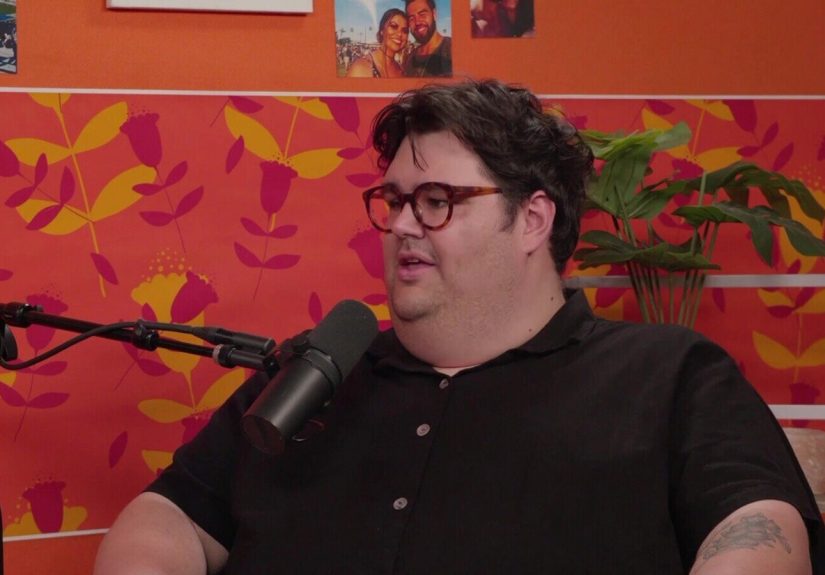
Caleb Hearon is not an algorithmic titan in the MrBeast mold. He is a comedian, writer, actor, and podcast host whose popularity has grown through a mix of stand-up, online clips, acting roles, and his podcast So True. That combination matters because it creates a multi-platform identity that feels personal instead of industrial. Hearon’s audience is not just there for stunts or giant giveaways. They are there for the voice.
And voice is much harder to compete with than volume. You can copy a thumbnail strategy. You can borrow a title format. You can even imitate pacing. But you cannot fake the feeling that a comedian is speaking in a language their audience already shares. Hearon’s fan base recognizes him instantly: sharp, self-aware, loose, observational, and capable of making messy truths sound hilarious instead of preachy.
That gave him an unusual advantage in the whole MrBeast dust-up. He did not need to dominate the conversation. He just needed to survive it with his persona intact. He did. Actually, he did better than that. He looked amused. On the internet, amused usually beats annoyed. Every time.
The Power of a Smaller, Stronger Crowd
The internet loves to pretend size settles everything. It does not. Sometimes the most powerful audience is not the largest one but the most coherent one. Hearon’s supporters understood the assignment immediately. They saw a giant creator punching down, a comedian getting targeted over a ranking, and a perfect opportunity to turn the entire thing into a joke. That kind of response cannot be bought with ad spend.
MrBeast’s audience is massive and global, but it is broad. Hearon’s audience is smaller and tighter. In online conflict, tight communities often move faster than huge ones because they share taste and instinct. They do not need a memo. They smell the bit and sprint toward it.
What This Says About MrBeast’s Brand
The King of Scale Walked Into a Vibe Test
MrBeast’s brand has been built on escalation. More money, bigger videos, grander challenges, more extreme generosity, more spectacle. It is a stunningly effective formula, and it has made him one of the defining figures of the creator economy. But that same formula can produce a blind spot. When you live in a world where numbers often settle the argument, it becomes easy to assume they should settle every argument.
This was not one of those cases. The ranking was subjective. The conversation was cultural. The currency was not size; it was self-awareness. That is where MrBeast stumbled. Instead of laughing it off or congratulating Hearon in a sly, charming way, he treated the list like a mathematical injustice. The internet does not reward that posture when the person complaining is already sitting on top of the mountain.
In other words, the moment called for swagger. He brought wounded bookkeeping.
Why the Internet Read It as Insecurity
Part of being huge is knowing when not to flex. Publicly objecting to a comedian’s ranking made MrBeast look less like a confident giant and more like a brand manager refreshing a dashboard. It shrank him. That is the irony. The complaint was supposed to assert his obvious dominance, but instead it made him seem weirdly threatened by someone whose whole career runs on punch lines and personality.
To his credit, the situation seems to have cooled, and reports later indicated that he apologized. That was probably the smartest move available once the original post detonated. Still, the damage was already done to the moment itself. The internet had chosen its narrative: mega-creator gets mad at comedian, comedian wins without breaking a sweat. Once that plot locks in, good luck editing the script.
The Bigger Lesson for the Creator Economy
Influence Is Cultural, Not Just Numerical
This little feud mattered because it highlighted a bigger truth about online fame. The creator economy has matured enough that “influence” now has layers. There is commercial influence, where MrBeast is obviously elite. There is platform influence, where his reach is nearly unmatched. But there is also tastemaking influence, conversational influence, and identity influence. Those categories reward a different skill set.
Caleb Hearon thrives in those subtler lanes. He is not trying to be the loudest person on the internet. He is trying to be one of the most distinct. And in a crowded attention economy, distinctness can be more powerful than scale because it creates loyalty rather than mere awareness.
The Internet Loves an Underdog With Punchlines
There is also a simpler explanation. People love seeing a giant get ratioed by someone funnier. It scratches a deep democratic itch in online culture. No matter how enormous a person’s platform becomes, the crowd still wants to believe that a well-timed joke can flip the power dynamic. In this case, that fantasy felt real because Hearon represented the exact sort of creator who can make the machine look awkward.
And once a conflict becomes funny, the funny side usually wins. That is not a legal standard. It is not a moral standard. It is just internet physics.
Could This Have Gone Differently?
Absolutely. MrBeast had several better options. He could have ignored the list. He could have made a self-deprecating joke. He could have congratulated Hearon and looked generous. He could have leaned into the absurdity of rankings in general and come off relaxed. Any of those choices would have preserved his status while avoiding the perception that he was rattled by a comedian with less reach.
In fact, the best move might have been the one Hearon later joked about: use that giant influence to boost the special. Imagine how different the story would feel if MrBeast had said, “Fair enough, congrats Calebeverybody go watch his special.” Suddenly he is magnanimous, in on the joke, and impossible to clown. That version of the story does not just avoid embarrassment. It makes him look cool.
Instead, the internet got a reminder that power without comic instinct can be surprisingly fragile.
Final Take
So, did MrBeast really pick a fight with the wrong comedian? Yes, and the reason is bigger than one bad post. He collided with a creator whose strengths were perfectly matched to expose the weakness in his response. MrBeast had numbers, reach, and scale. Caleb Hearon had timing, tone, and a fan base fluent in internet humor. One of those skill sets thrives in a ranking war. The other thrives in a vibe war. Guess which war the internet decided to have.
At the center of it all is a lesson almost every online personality eventually learns: being the biggest person on the platform does not make you immune to looking petty. Sometimes it makes pettiness look even pettier. And if the person on the other side is a comedian, you are not just arguing with them. You are volunteering to become material.
Related Experiences: What This Kind of Internet Drama Feels Like in Real Life
If you spend enough time online, moments like this start to feel weirdly familiar. They arrive fast, usually through a screenshot. One person posts something impulsive, another person becomes the accidental target, and within minutes the whole thing transforms from a private annoyance into a public referendum on status, tone, and who seems cooler under fluorescent digital lighting. Watching the MrBeast and Caleb Hearon situation unfold felt a lot like watching two different versions of internet fame collide in real time.
The first feeling people usually get in a moment like this is disbelief. Not because conflict is unusual online, but because the imbalance is so strange. When someone with overwhelming scale publicly swipes at someone smaller, the emotional math changes. The audience immediately starts asking, “Why is this person even bothered?” That question matters more than the original complaint. Once the crowd starts sniffing insecurity, the post is already halfway to becoming a meme.
Then comes the second feeling: recognition. Anyone who has worked online, posted creatively, or built even a tiny public presence knows the tension between numbers and respect. There is always someone bigger. There is always someone cooler. There is always a list, a ranking, a feature, a breakout moment that makes the whole system feel subjective. That is why the story hit a nerve. It was not just about MrBeast and Caleb Hearon. It was about what happens when public success still does not protect someone from wanting more validation.
For fans, there is also a very specific thrill in watching a comedian get underestimated. Comedy audiences tend to be highly participatory. They do not just support the performer; they absorb the rhythm, the references, the posture, the exact way that person looks at the world. So when a comedian becomes the target of a clumsy public complaint, fans often react like they are being handed a fully assembled playground. They already know how to respond: with jokes, mockery, edits, reposts, and the kind of deadpan commentary that hurts more than yelling ever could.
There is also something revealing about how quickly these moments become less about facts and more about emotional framing. Very few people were seriously debating subscriber counts or the philosophy of influence. They were reacting to vibes. Who sounded confident? Who looked bothered? Who understood the joke? Who accidentally became the joke? Those are the real questions that shape internet narratives, and they often matter more than the original issue itself.
That is why experiences like this stick around in memory longer than the actual post does. They remind people that digital culture is not just a numbers game. It is a perception game. It is a performance game. It is a “can you take a joke without looking like your assistant drafted your feelings” game. And once the audience senses that someone is trying too hard to control the meaning of a moment, they usually do the exact opposite.
In the end, what this experience really shows is that online power can be enormous and still feel fragile. A creator can dominate the charts, own the algorithm, and build a business empire, yet still lose a small public skirmish because someone else understood the human side of the internet better. That is what made this episode memorable. It was not just drama. It was a demonstration. On the internet, scale can make you famous. But tone decides whether you win the room.
Conclusion
“MrBeast Picked A Fight With the Wrong Comedian” works as a headline because it captures something larger than a fleeting social-media squabble. It describes a mismatch between two kinds of power: measurable reach versus cultural agility. MrBeast remains one of the most dominant creators alive, but this episode showed that dominance is not the same as immunity. Caleb Hearon did not need to outscale him. He only needed to fit the moment better. And in internet culture, that can be more than enough.