Table of Contents >> Show >> Hide
- What Makes This Dish Moroccan-Inspired?
- Why Prunes And Almonds Work So Well With Chicken
- The Flavor Building Blocks
- How To Make Moroccan-Inspired Chicken With Prunes And Almonds
- Serving Ideas That Actually Make Sense
- Common Mistakes To Avoid
- Easy Variations For Real Kitchens
- Why This Dish Keeps Winning People Over
- What It Feels Like To Cook And Eat This Dish
- Conclusion
Some dinners whisper. This one strolls into the room wearing perfume, carrying a silk scarf, and acting like it absolutely owns the place. Moroccan-inspired chicken with prunes and almonds is that kind of meal: deeply savory, gently sweet, warmly spiced, and dramatic in the best possible way. It tastes like something you ordered at a lovely restaurant and then bragged about for a week, yet it is built from humble ingredients that know how to behave in a pot.
At its core, this dish is all about contrast. Tender chicken meets silky onions. Sweet prunes lean into the earthy warmth of cinnamon, ginger, and cumin. Toasted almonds bring a nutty crunch that keeps the whole thing from becoming soft and sleepy. The result is rich but not heavy, fragrant but not fussy, and comforting without turning into beige casserole energy. If your weeknight meals have become a repetitive parade of “fine, I guess,” this is the dish that snaps everyone back to attention.
What Makes This Dish Moroccan-Inspired?
The phrase Moroccan-inspired matters here. Traditional Moroccan cooking is wonderfully diverse, and tagines alone can travel in several delicious directions. Some lean savory with olives and preserved lemon. Others embrace a sweet-savory balance with dried fruit, honey, nuts, and aromatic spices. This chicken with prunes and almonds borrows from that second lane, where braised meat, onions, fruit, and warm spices turn into something glossy, layered, and irresistible.
Instead of pretending there is one single “correct” version, it is more useful to understand the pattern. The flavor base usually starts with onions, garlic, ginger, and spices. Chicken is browned or at least gently seared for depth. A small amount of broth or water creates the braising liquid. Dried fruit softens and sweetens the sauce. Almonds are added near the end so they stay crisp. That formula is flexible, which is exactly why home cooks love it. It leaves room for personality without falling apart.
Think of it as a dinner template with excellent manners. It welcomes a Dutch oven if you do not own a tagine. It forgives small ingredient swaps. And it still manages to taste like you had a real plan, even if you were staring into the pantry ten minutes earlier like it had personally offended you.
Why Prunes And Almonds Work So Well With Chicken
Prunes are the underrated geniuses of the dried-fruit drawer. They do not shout the way apricots do. They do not arrive with vacation energy like dates. What they do offer is depth: mellow sweetness, gentle tang, and a jammy texture that melts beautifully into braised dishes. In a Moroccan-inspired chicken recipe, prunes help the sauce become glossy and rich without tasting like dessert. They sweeten the pot, but they also add bass notes.
Almonds do the opposite job. They brighten and lift. Toasted almonds add crunch, nuttiness, and a little luxury, especially when scattered over the top just before serving. Without them, the dish is still good. With them, it suddenly has architecture. Every bite becomes more interesting because you get tender chicken, soft fruit, silky sauce, and that clean, crisp snap from the nuts.
Chicken, especially thighs or legs, is the perfect bridge between those two ingredients. It is rich enough to hold up to sweet fruit, but neutral enough to absorb spices without becoming overwhelming. White meat can work, but dark meat is the smarter choice. It stays juicy during braising and gives the sauce a fuller, rounder flavor. In other words, chicken thighs are doing the emotional labor here, and we should thank them.
The Flavor Building Blocks
1. Onions
Do not rush the onions. They are not background extras. They are part of the sauce. As they soften and collapse, they give the braising liquid body and sweetness. If you cook them until lightly golden, you get even more depth.
2. Warm spices
Cinnamon, ginger, cumin, turmeric, black pepper, and sometimes saffron are the stars of the spice story. The trick is balance. You want warmth and aroma, not a spice cabinet shouting contest. Cinnamon should hum, not sing lead vocals. Ginger should add brightness. Turmeric contributes color and earthiness. Cumin brings grounding. A pinch of cayenne is optional if you want a little heat.
3. Prunes
Use pitted prunes and add them once the braise is underway so they soften without fully dissolving. If you like a more pronounced sweet-savory contrast, you can simmer them briefly with a spoonful of honey and a little braising liquid before folding them into the pot.
4. Almonds
Blanched whole almonds, slivered almonds, or roughly chopped toasted almonds all work. The only nonnegotiable rule is this: add them at the end. If they sit in liquid too long, they lose the very crunch that makes them worth inviting to dinner.
5. Fresh herbs and brightness
Parsley and cilantro bring freshness to a rich dish. A squeeze of lemon right before serving can sharpen the flavors and keep the sweetness from feeling too plush. Not every version uses lemon, but a tiny hit of acidity is rarely a bad idea.
How To Make Moroccan-Inspired Chicken With Prunes And Almonds
This is not difficult cooking. It is patient cooking. That is different. Patient cooking means the recipe rewards calm behavior, a heavy pot, and the radical belief that onions deserve more than ninety seconds of your attention.
Step 1: Season the chicken
Toss bone-in or boneless chicken thighs with salt, pepper, cinnamon, ginger, cumin, turmeric, and a little olive oil. Let the chicken sit while you prep the rest. Even a short rest helps the spices cling and wakes up the flavor.
Step 2: Brown for depth
Sear the chicken in a Dutch oven or deep skillet until lightly browned. You are not cooking it through at this stage. You are creating those savory browned bits that make the sauce taste like it knows what it is doing.
Step 3: Build the base
Remove the chicken and cook sliced onions in the same pot until soft and golden. Add garlic if you like, then a splash of broth or water to loosen the fond on the bottom. That fond is flavor, not mess.
Step 4: Braise gently
Return the chicken to the pot. Add enough broth to come partway up the meat, not drown it. Cover and simmer gently until the chicken turns tender and the sauce begins to thicken. Low and slow wins this race. A furious boil is how you end up with tough chicken and a sauce that tastes tired.
Step 5: Add the prunes
Stir in the prunes during the last stretch of cooking. They should plump up, soften, and mingle with the onions and spices until the sauce becomes glossy and lightly sweet. If the dish tastes flat, add a tiny drizzle of honey. Not a waterfall. A drizzle. We are cooking dinner, not frosting a cake.
Step 6: Finish with almonds and herbs
Top the finished dish with toasted almonds and chopped parsley or cilantro. Serve it over couscous, rice, or with warm flatbread. Spoon the sauce generously. Nobody remembers the person who served dry chicken with restraint.
Serving Ideas That Actually Make Sense
The classic partner is couscous, which catches the sauce beautifully and does not compete with the chicken. Fluffy white rice works too, especially if you want something more neutral. For a lower-carb option, cauliflower rice is acceptable, though this dish deserves a side with more personality. Warm flatbread is wonderful for scooping. Roasted carrots or a simple cucumber-herb salad can round out the table.
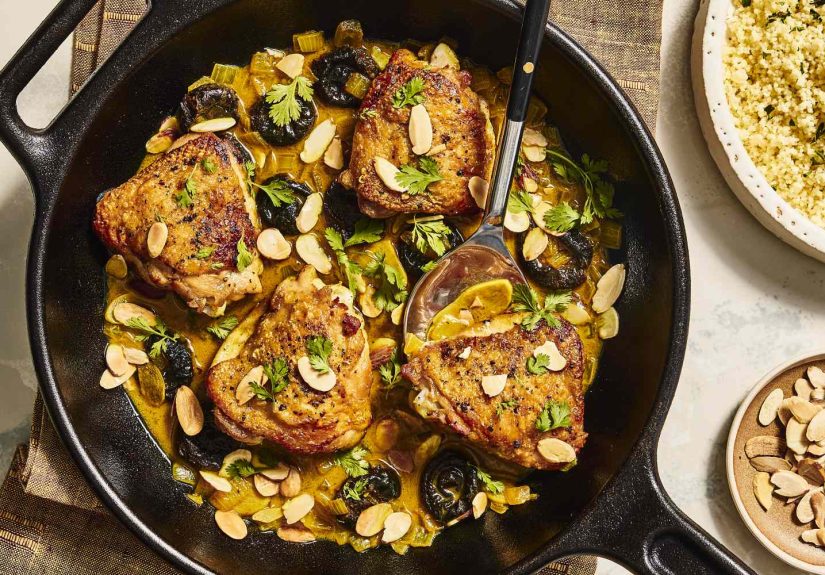
If you are hosting, serve the chicken on a large platter with the prunes nestled around it and the almonds showered over the top. It looks generous, dramatic, and just a little smug. Add a bowl of couscous and some herbs on the side, and people will assume you are far more organized than you truly are.
Common Mistakes To Avoid
Using chicken breast without adjusting the method
Chicken breast can dry out before the sauce fully develops. If you use it, shorten the cooking time and watch carefully. Thighs are still the better move.
Overdoing the sweetness
Prunes already bring sugar and richness. Honey should be optional and measured with restraint. The goal is balance, not a dessert identity crisis.
Skipping the browning step
Can the dish survive without browning? Yes. Will it be as delicious? Not really. Searing builds the kind of savory backbone that helps the sweet elements feel intentional rather than random.
Letting the almonds go soggy
Toast them separately and add them at the last minute. Crunch is part of the whole charm.
Using too much liquid
This is a braise, not a chicken spa. The sauce should feel concentrated and silky, not watery and confused.
Easy Variations For Real Kitchens
If prunes are not your favorite, dried apricots are the closest cousin and create a brighter, tangier sweetness. Raisins can work too, especially if you want a softer sweetness woven throughout the sauce. Almonds can be swapped for pistachios, though almonds are more traditional to the flavor profile. Chickpeas make a good addition if you want the dish to stretch further. Green olives and preserved lemon can take it in a more savory direction. That is the beauty of this style of cooking: once you understand the bones of it, the dish becomes yours.
You can also adapt the technique for a slow cooker. Brown the chicken and onions first, then transfer everything except the almonds and herbs to the cooker. Let it go low and slow until the chicken is tender. Finish with toasted almonds just before serving. It will not taste exactly the same as stovetop braising, but it will still taste excellent, and your kitchen will smell like you have made good life choices.
Why This Dish Keeps Winning People Over
Moroccan-inspired chicken with prunes and almonds succeeds because it surprises people in a gentle way. Folks who think they do not like sweet-and-savory dishes often change their minds after one bite because this one is not sticky or candy-like. It is nuanced. The sweetness sits inside the savory structure instead of overpowering it. The spices are warming rather than fiery. The almonds keep everything lively. It feels special, but it still feels like dinner.
It is also a dish with range. It can be cozy on a quiet Sunday, elegant enough for company, and practical enough for leftovers. In fact, the leftovers are often better because the flavors settle in and become even more harmonious overnight. Very rude of the dish to become more impressive while you sleep, but also appreciated.
What It Feels Like To Cook And Eat This Dish
There are some meals you make because you need food, and there are other meals you make because you want an experience. Moroccan-inspired chicken with prunes and almonds lands firmly in the second category. It starts with aroma. The moment the onions soften and the spices hit warm oil, the kitchen changes mood. It no longer feels like a place where you hurriedly assembled lunch or opened the refrigerator five times hoping a plan would appear. It feels intentional. It smells warm, deep, and inviting, the kind of smell that makes people wander in and ask, “What are you making?” even when they were not remotely interested in your dinner plans ten minutes earlier.
Then there is the visual side of it. This is not a shy dish. The sauce turns a rich golden-brown, the prunes go glossy and dark, and the almonds catch the light on top like little edible confetti. Scatter herbs over the platter and suddenly the whole thing looks festive, almost ceremonial. Even on an ordinary Tuesday, it creates a tiny sense of occasion. That matters more than we admit. Sometimes what we want from dinner is not just nourishment but a break in routine, a reminder that eating can still feel generous and memorable.
The texture is part of the pleasure too. You get the tenderness of the braised chicken, the silky onions that nearly melt into the sauce, the soft, jammy prunes, and then that pop of crunch from the almonds. Every forkful feels composed. Nothing is there by accident. It is comforting without being one-note, rich without becoming heavy, and sweet without drifting into excess. You can taste the patience in it.
Emotionally, this dish has an odd little magic trick: it makes both the cook and the guests feel taken care of. The cook gets the satisfaction of building flavor step by step, of watching simple ingredients turn into something layered and elegant. The guests get a plate that feels thoughtful and abundant. It is the sort of food that encourages slower eating, better conversation, and maybe a brief pause after the first bite so everyone can gather themselves and nod like they have just discovered civilization.
And the leftovers? Honestly, they are half the fun. The next day, the flavors settle even more deeply into one another. The sauce thickens a little, the chicken becomes even more seasoned, and the sweet-savory balance feels rounder. Reheated over couscous or rice, it tastes like the sequel did not just live up to the original but may have improved on it. That is a rare and beautiful thing in the world of leftovers, where most dishes are just trying to survive the microwave with their dignity intact.
In the end, the real experience of Moroccan-inspired chicken with prunes and almonds is less about novelty and more about warmth, generosity, and contrast. It feels familiar enough to comfort you and different enough to wake you up. It turns a regular dinner into a story you actually want to retell. And for a dish made from chicken, onions, dried fruit, nuts, and spices, that is a pretty impressive résumé.
Conclusion
Moroccan-inspired chicken with prunes and almonds is the kind of dish that proves comfort food does not have to be boring. With tender chicken, warm spices, jammy prunes, and crunchy toasted almonds, it delivers the perfect sweet-savory balance in a way that feels both approachable and a little luxurious. It is weeknight-friendly, dinner-party worthy, and flexible enough for real home kitchens. Most importantly, it tastes like something made with care. And that is always a good look on dinner.