Table of Contents >> Show >> Hide
- What the Report Found: Kids Earned More Than You’d Think
- Kids Saved MoreAnd Not Just a Little
- Spending Shifted Online (Because Everything Shifted Online)
- Money Worries Went UpAnd That Changed Behavior
- Why Kids’ Earnings Rose While the Adult Economy Struggled
- How This Fits the Bigger Picture: America Saved More Too
- What Parents Can Learn (Without Turning Home Into a Spreadsheet)
- Keeping the Momentum After the Pandemic
- Conclusion: The Pandemic Was a Weird Financial Classroom
- of Real-World Experiences: What Families Noticed
If you ever needed proof that kids can adapt faster than adults, look no further than the pandemic-era “kid economy.”
While grown-ups were learning how to unmute on Zoom (for the 400th time), many kids quietly leveled up their money game:
earning more, saving more, and shifting spending online like they’d invented e-commerce. A major data-driven report on
children’s money habits during 2020 captured something surprising: kids, on average, didn’t just keep upthey built up
earnings and boosted savings during the most chaotic year in recent memory.
This wasn’t because children suddenly discovered day trading. It was a mix of practical household economics (more chores,
more incentives), fewer places to spend (goodbye movie theater popcorn), and a rapid shift to digital money (hello, tap-to-pay).
Add in the broader backdropgovernment relief that steadied many households, and a historic spike in the U.S. saving rateand
you get a fascinating snapshot of how young people handled money when the world hit pause.
What the Report Found: Kids Earned More Than You’d Think
The headline finding: kids and teens generated a massive amount of income in 2020 through a combination of allowance,
paid tasks, and gifts. The report estimates total earnings in the tens of billions of dollars, with the biggest slice coming
from regular allowance paymentssteady, predictable money that looks a lot like a “salary,” minus the meetings that could’ve
been emails.
Allowance stayed king, but “paid tasks” got a pandemic promotion
Allowance was the main engine of kid income, but the pandemic changed how households used paid tasks (think: specific chores
done for extra money). When families were stuck at home, the “to-do list economy” grew. More people in the house meant more
cleaning, more laundry, more trash, more “who left this here?”and for some families, more opportunities to attach a small
payment to getting stuff done.
Paid tasks weren’t huge per transactionoften just a dollar or twobut they added up. The report also highlights a set of
“high-value” tasks (like mowing the lawn or babysitting) that could deliver bigger payouts. In other words: kids didn’t just
earn money; they learned (sometimes accidentally) that skills and effort can change their hourly rate. Welcome to capitalism,
kiddo. We have cookies. You bought them with chore money.
Digital gifting rose because hugging grandparents was… complicated
One of the most pandemic-specific shifts was gifting. Birthdays, holidays, and family gatherings didn’t stopthey just got
weird. With fewer in-person celebrations, families leaned into sending money digitally as a gift. It’s the modern equivalent
of the classic “here’s a card with cash in it,” except now it arrives instantly and doesn’t get lost in the couch cushions for
six months.
Kids Saved MoreAnd Not Just a Little
The report’s other big reveal: kids saved a meaningful portion of what they received. A common benchmark that shows up in both
personal finance advice and youth financial education is saving around 10% of income. The data suggests kids were often in that
neighborhoodsometimes moreespecially during the most restricted months of 2020.
Why would kids save more in a year that felt like a disaster movie?
- Fewer spending opportunities: No mall trips, fewer hangouts, fewer impulse buys at the register.
- More goal-based saving: Kids saved for items tied to staying connected and entertainedtech, games, and later, “getting back to normal” activities.
- Higher money awareness: When families talked more openly about budgets, job loss, and uncertainty, kids absorbed the message: money matters.
- Digital tools reduced friction: When kids can track balances and set savings goals in-app, saving becomes visible and “game-like.”
There’s also a broader economic context worth noting. In spring 2020, the U.S. personal saving rate hit record highsdriven by
a combination of reduced spending and policy support that boosted incomes for many households. When the whole country is saving
more, kids aren’t living in a bubble; they’re watching adults cancel trips, skip restaurants, and talk about “being careful.”
That tone seeps into family money choices.
Spending Shifted Online (Because Everything Shifted Online)
If 2019 was “kids spend money at stores,” 2020 was “kids spend money where Wi-Fi lives.” The report shows a dramatic increase
in online spending, especially during the tightest lockdown months. That doesn’t mean kids stopped buying snacks or small items;
it means the channel changed. Buying moved from in-person to digital, and the categories got more screen-centered.
Gaming became the unofficial after-school program
With sports, clubs, and social plans disrupted, screens filled the gap. Gaming spending surged in key periods, and popular
digital platforms and game-related purchases climbed. It wasn’t just “more games,” eitherit was socializing, entertainment,
and stress relief wrapped into one.
Food delivery entered the kid universe
Another standout pattern: increased spending around food delivery during the height of restrictions. Families used delivery
more, and older kidsespecially teenswere more likely to participate in that spending, whether they were ordering for themselves
or helping out at home. (It’s also possible that “helping out” sometimes meant “ordering fries and calling it teamwork.”)
Money Worries Went UpAnd That Changed Behavior
The report doesn’t paint a purely cheerful picture. A major portion of kids said they worried about money, and many worried more
after the pandemic began. That matters, because money stress changes behavior: it can push people to save, to avoid waste, and to
think harder before spendingbut it can also create anxiety, especially for younger children who don’t control household finances.
A useful takeaway here is balance. Building savings habits is great. Turning kids into tiny, stressed-out accountants is not.
The healthiest pattern is “aware, not afraid”: teach kids how money works, help them plan, and reassure them that adults are
managing the bigger picture.
Why Kids’ Earnings Rose While the Adult Economy Struggled
This is the part that surprises many readers: how can kids earn more when millions of adults faced layoffs, business closures,
and uncertainty? The answer is that kid income sources are differentand in some ways, oddly pandemic-proof.
1) Allowance is a family policy decision
Allowance isn’t tied to the labor market the way jobs are. Families who maintained income could keep allowance steady. Some even
increased it to replace canceled activities (like giving spending money that would have gone to school events, outings, or snacks).
For other families, allowance was used intentionally to teach budgeting during a time when money choices felt more urgent.
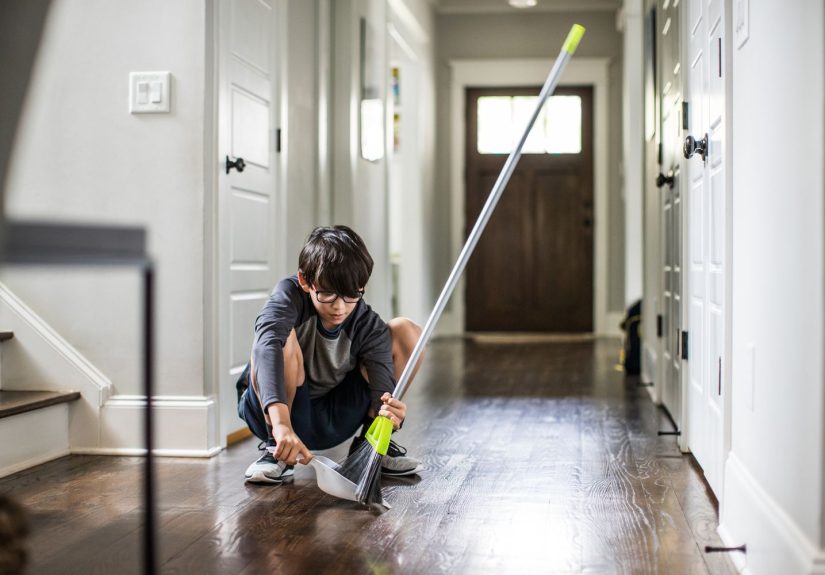
2) Chores expanded because household “work” expanded
When everyone is home, the house becomes the office, the classroom, the gym, and the restaurant. That creates more mess, more tasks,
and more reasons to enlist kids as helpers. Families who attached payment to tasks effectively created a micro-job market at home.
3) Gifts replaced gatherings
When relatives couldn’t visit, sending money became a stand-in for presence. Digital gifting made it easierand in some cases more
frequentto send a small “thinking of you” contribution that kids could save or spend online.
How This Fits the Bigger Picture: America Saved More Too
In 2020, the U.S. saw a historic surge in saving. Disposable income rose for many households due to policy relief, and spending
opportunities collapsed during lockdowns. Economic researchers have described the result as “excess savings”money accumulated
beyond what trends would have predicted. This macro trend doesn’t automatically mean every family saved more, but it helps explain
why “saving” became a national mood.
Kids were watching that mood in real time: parents skipping outings, talking about uncertainty, and emphasizing needs over wants.
In that environment, saving wasn’t just a math exerciseit was part of the family story.
What Parents Can Learn (Without Turning Home Into a Spreadsheet)
The biggest gift of this report is that it shows kids can build real financial habits when the system supports them. You don’t need
to be a financial guru. You just need a few consistent practices that make saving and earning feel normal.
Use allowance with a purpose
- Keep it predictable: Consistency helps kids learn planning.
- Split it up: Try a simple “spend / save / give” approach without obsessing over perfection.
- Let them make small mistakes: A $7 regret purchase is cheaper than a $700 regret purchase later.
Pay for tasks strategically
Not every chore needs a payout. Many families separate “family responsibilities” (no pay) from “extra tasks” (paid). That teaches
both contribution and earning. If you want to sneak in an economics lesson, let kids choose between a higher-paying hard task
(mowing) and lower-paying quick tasks (tidying). They’ll learn about effort vs. reward faster than you can say “labor market.”
Make saving visible
Savings goals work best when kids can see progress. Pick a goal that matters to themsomething concrete like a game, headphones,
a bike, or a future summer plan. Then help them map “how many weeks until I get there?” That’s budgeting, but in kid language.
Keeping the Momentum After the Pandemic
The risk with any crisis-driven behavior change is that it fades when life normalizes. As schools, sports, malls, and hangouts
returned, so did spending temptations. The way to keep the progress isn’t strict controlit’s habit design.
Simple habit upgrades that stick
- Automate saving: If a portion of money goes to savings first, saving becomes the default.
- Teach “pause buying”: A 24-hour wait for non-urgent purchases reduces impulse spending.
- Build earning skills: Teens can explore safe, age-appropriate work and learn what wages really mean.
- Talk about scams and online spending: Digital money is convenient, but it’s also easy to overspend.
For older teens, real jobs can complement allowance. Youth employment took a hit early in the pandemic and then rebounded as
restrictions eased. That matters because paid work teaches taxes, paychecks, schedules, and responsibility in a way chores can’t
fully replicate. The goal is not “work all the time,” but “learn what money feels like when you earn it outside the house.”
Conclusion: The Pandemic Was a Weird Financial Classroom
The pandemic changed childhood in a thousand ways, many of them difficult. But one unexpected outcome was that kids got a crash
course in moneyearning through tasks, receiving gifts digitally, and saving more because spending options shrank and uncertainty
grew. The report’s key message isn’t “kids became rich.” It’s that kids developed habits: saving goals, digital money comfort,
and a sharper understanding that money choices connect to real life.
If families can keep the healthiest parts of those habitsconsistent saving, thoughtful spending, and confident money conversations
the long-term payoff could be bigger than any single allowance payment. And who knows? Maybe the next generation will grow up
automatically muting themselves on Zoom and putting 10% into savings. Dream big.
of Real-World Experiences: What Families Noticed
Ask parents what changed about “kid money” during the pandemic and you’ll hear a pattern: the money conversations got real. Before
2020, it was easy to treat allowance as casualsome weeks yes, some weeks no, and no one really cared because life was busy and
spending happened in a blur. During lockdowns, families had fewer distractions, and money choices became more visible. Kids saw
grocery lists, delivery fees, and the reality of “we’re not doing that right now.” For many, that visibility turned allowance
into something closer to a plan.
One common experience was the “goal swap.” Kids who might have saved for movie nights, mall trips, or a team tournament suddenly
shifted to goals that worked in a socially distanced world: headphones for online school, a better keyboard for gaming, a bike
for outdoor freedom, or a phone upgrade so they could FaceTime friends without sounding like a robot calling from inside a tunnel.
Parents noticed that when the goal felt emotionally importantconnection, entertainment, independencesaving got easier. It wasn’t
abstract anymore; it was “I’m buying my freedom in monthly installments.”
Another real-world change was the rise of “paid tasks as coping.” With everyone stuck at home, parents were stretched thin.
Turning chores into optional paid tasks helped some families reduce conflict. Instead of arguing over every responsibility, parents
could say, “Here are the basics you do because you live here. Here are extra things you can do if you want more money.” Kids who
were motivated by a goal suddenly had a way to earn it. Parents also reported that kids started negotiating like tiny contractors:
“How much for deep-cleaning the fridge?” (Answer: not enough, ever.)
Digital spending created its own set of experiences. Families who previously used cash for everything (or the classic “I’ll pay you
back later,” which is parent-speak for “this is now a donation”) moved toward cards and digital transfers. Kids learned quickly
that online money moves faster than cash, and that “one click” can drain a balance just as efficiently as a trip to the store.
Many parents responded by setting simple guardrails: talking through purchases, making kids wait a day before buying non-essentials,
or requiring a quick explanation like, “What are you buying, and why is it worth it?” Surprisingly, some kids enjoyed the process
it made them feel trusted, and it turned spending into a decision instead of an impulse.
Finally, families talked about empathy more than they expected. Kids heard about job losses and uncertainty, and some responded by
saving “just in case.” Others started giving small amounts to charity partners or helping siblings reach goals. The experience many
parents described wasn’t “my kid became a finance expert.” It was “my kid became more thoughtful.” And thatmore than any statistic
may be the most valuable savings of all.