Table of Contents >> Show >> Hide
- Why the Toothbrush Sander Idea Is So Weirdly Smart
- What a Toothbrush Sander Can Actually Do Well
- Where the Toothbrush Sander Falls Flat
- The Real Secret: This Is Basically a Detail Tool, Not a General Sander
- Choosing Abrasives Still Matters, Even for a Tiny Franken-Tool
- Safety: The Part That Is Less Funny but More Important
- Who Should Love This Idea, and Who Should Skip It
- The Bigger Appeal: A Tool That Captures the Spirit of Making
- What the Experience Usually Feels Like in Real Hobby Work
- Conclusion
Some inventions arrive with angelic music and a standing ovation. Others arrive looking like the result of a dare, a caffeine overdose, and a weekend in a hobby room. The toothbrush sander belongs firmly in the second category. It sounds ridiculous at first. A powered toothbrush? For sanding? That’s either genius or the kind of sentence that makes a dentist and a woodworker both pause mid-blink.
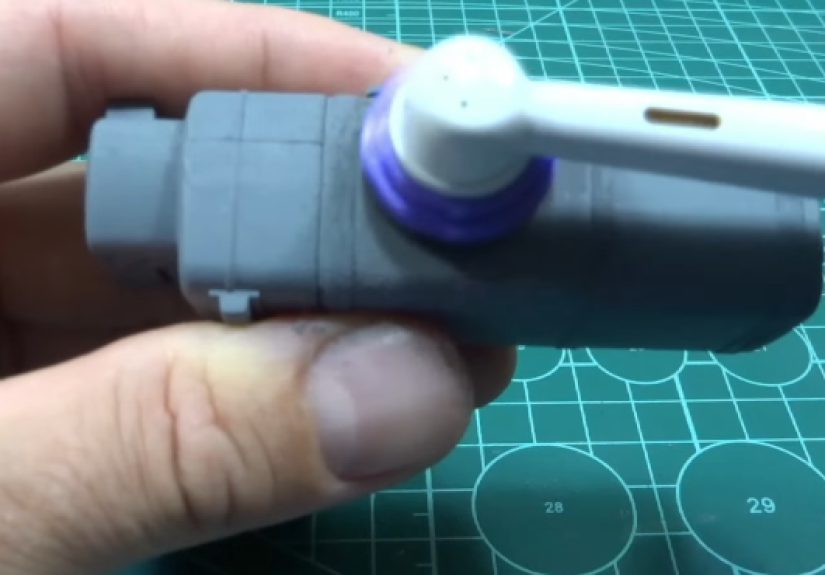
And yet, the idea makes a weird amount of sense. A powered toothbrush is already built around controlled, repetitive motion. It is compact, easy to hold, and surprisingly good at reaching small spaces. In the right context, that sounds less like a joke and more like the beginning of a very niche, very useful tool for hobbyists, model builders, and detail-oriented tinkerers. Not a replacement for a real power sander, obviously. More like the scrappy cousin who shows up late, borrows your extension cord, and somehow becomes the star of the project.
This is why the toothbrush-sander concept keeps grabbing attention. It lives at the crossroads of DIY culture, tool improvisation, upcycling, and the eternal truth that people who build tiny things will absolutely repurpose anything if it saves time and reaches awkward corners. The real question is not whether it is funny. It is funny. The real question is whether it actually works, where it helps, and where it should politely sit down and let a proper sanding tool take over.
Why the Toothbrush Sander Idea Is So Weirdly Smart
The charm of this hack starts with how powered toothbrushes already behave. They are designed to create fast, repeated motion at the brush head while the user mostly guides instead of scrubs. That makes them efficient for oral care and, in a completely different context, interesting for ultra-light abrasion. If you strip away the bathroom identity crisis, what remains is a small handheld device built for controlled movement in tight areas.
That is exactly why the toothbrush sander feels so compelling to hobby communities. Large sanders shine on broad, flat surfaces. Random orbital sanders and finishing sanders are fantastic, but they are not magicians. Tight corners, miniature parts, tiny seams, fragile edges, and curved little surfaces often demand something gentler and smaller. When the job is delicate, control becomes more important than brute force.
That is where this oddball tool earns its reputation. For scale models, 3D-printed parts, miniatures, props, small plastic components, or fiddly detail work, the toothbrush form factor can be a real advantage. It is light. It is easy to maneuver. It does not feel intimidating. It is less “construction site energy” and more “watchmaker with a sense of humor.”
There is also a cultural reason people love it. Tool people appreciate specialization, but makers also adore hacks that squeeze a second life out of familiar objects. Turning an old device into a job-specific helper scratches a very satisfying itch. It is part thrift, part engineering, part mischief. The toothbrush sander is not just a tool. It is a tiny manifesto that says, “I refuse to buy a giant machine for a task the size of a thumbnail.”
What a Toothbrush Sander Can Actually Do Well
1. Tiny, precise sanding jobs
This is the sweet spot. A toothbrush sander makes the most sense when the surface is small and the margin for error is even smaller. Think mold lines on plastic kits, cleanup on miniature terrain pieces, edges on 3D-printed hobby parts, or lightly smoothing a hard-to-reach contour. In those cases, the goal is not aggressive material removal. It is finesse.
2. Tight spaces where bigger tools feel clumsy
Traditional sanders are built for efficiency, but efficiency can become overkill when the work area is tiny. If a normal detail sander feels like bringing a leaf blower to dust a bookshelf, the toothbrush sander starts to look pretty reasonable. Its compact head can get into corners and narrow areas where larger pads and discs struggle.
3. Light-duty surface refinement
Not every sanding job is about tearing material away. Sometimes you just want to soften an edge, smooth a transition, knock down a rough patch, or prep a tiny area before paint. In those moments, a smaller, less aggressive motion can actually be a blessing. The toothbrush sander works best when the job rewards patience instead of power.
4. Hobby work that benefits from a pencil-like grip
The ergonomics are underrated. A powered toothbrush is meant to be held comfortably for a couple of minutes at a time. That translates well to hobby tasks where fine hand control matters. Compared with bulkier tools, it feels more intimate and precise. You are not wrestling the tool. You are guiding it.
Where the Toothbrush Sander Falls Flat
Now for the reality check. A toothbrush sander is not a miracle. It is not even a replacement. It is a specialty workaround, and it has obvious limits.
First, it lacks the muscle for serious stock removal. If your project involves stripping paint from furniture, flattening warped surfaces, reshaping hardwood, or cleaning up large panels, a powered toothbrush will not save the day. It will merely vibrate at the problem with optimism. For big surfaces and heavy sanding, real sanders exist for a reason.
Second, small motion can mean slower progress and quicker clogging. When abrasive material moves over a very short path, debris can build up faster, especially with finishes or softer materials. That means the toothbrush sander may be useful for delicate touch-ups but frustrating for longer sanding sessions.
Third, some powered toothbrushes have built-in timing alerts, pressure-related behavior, or movement patterns designed for teeth, not workshop materials. That is hilarious until the tool buzzes like it wants you to switch quadrants in the middle of cleaning up a resin part. What is charming in a bathroom can get old fast at a workbench.
And finally, there is the durability question. A toothbrush is engineered for oral hygiene, moisture resistance, and repeated brushing cycles. It is not engineered as a dust-handling shop tool. That difference matters. Fine dust, lateral pressure, abrasive wear, and workshop abuse are not part of its original job description.
The Real Secret: This Is Basically a Detail Tool, Not a General Sander
The smartest way to understand the toothbrush sander is to stop comparing it to full-size sanders and start comparing it to other detail tools. Once you do that, its value becomes much clearer.
Professional sanding advice consistently points to matching the tool to the task. Large sanders are for broad surfaces. Finishing sanders help with light smoothing. Detail sanders and rotary tools shine in corners, contours, and small-scale work. The toothbrush sander fits that last category in spirit. It is not about speed. It is about access and control.
That is why the hack resonates with people who build model kits, repair tiny components, or clean up printed objects. They are not asking, “Can this replace my entire sanding setup?” They are asking, “Can this make one annoying little task less annoying?” That is a far more realistic question, and the answer is often yes.
In other words, the toothbrush sander wins not by being powerful, but by being specific. It is the kind of tool you keep around for one class of problem. When that problem appears, it feels brilliant. The rest of the time, it sits quietly and waits for its moment like a very small, slightly overqualified sidekick.
Choosing Abrasives Still Matters, Even for a Tiny Franken-Tool
One of the easiest mistakes in sanding is assuming the machine matters more than the abrasive. It does not. Grit selection still controls much of the result. Coarser grits remove more material but leave deeper scratches. Medium grits help with smoothing and shaping. Fine and very fine grits are better for final cleanup, between coats, and surface prep before finishing.
That rule does not magically disappear because the tool looks like dental equipment having an identity crisis. In fact, the smaller and more specialized the sanding setup becomes, the more important grit choice can be. On small plastic parts, thin edges, or detailed contours, a needlessly coarse abrasive can create damage faster than you can say, “Well, that was a mistake.”
For light detail work, finer grits usually make more sense than aggressive ones. The aim is often to refine, not bulldoze. And because tiny parts can reveal every scratch once paint, stain, or primer goes on, gentle progression matters. Good sanding is not just about removing marks. It is about leaving behind a surface that looks intentional.
That is also why experienced makers keep fallback techniques nearby. Small blocks, folded paper, abrasive sponges, shaped backers, and simple hand-sanding aids can sometimes beat a powered solution altogether. The toothbrush sander is clever, but it is still part of a larger toolbox of precision finishing methods.
Safety: The Part That Is Less Funny but More Important
This is the moment where the article puts on safety glasses.
Sanding creates dust, and dust is not just a cosmetic inconvenience. Depending on the material, it can irritate your lungs, your eyes, and your workspace. If the material includes paint, resin, filler, wood dust, or other fine particles, the risk goes up. Even small-scale sanding deserves ventilation, eye protection, and sensible dust control.
And because this particular tool began life as a toothbrush, a few extra common-sense rules apply. A modified toothbrush should never return to dental duty. Ever. Once it becomes a shop tool, it is a shop tool forever. No plot twists. No “I cleaned it really well.” Absolutely not.
You also need to respect the limitations of the device. If the tool gets hot, struggles, bogs down, or seems unhappy, that is information. Listen to it. The toothbrush sander is for light-duty detail work, not sustained force. Pressing harder is usually not the answer. In sanding, excessive pressure often causes worse results anyway, whether the tool is a premium machine or a former bathroom appliance with a second career.
Finally, hold small parts safely. Tiny workpieces are exactly where people get sloppy because the scale looks harmless. But close work increases the chance of slipping, over-sanding, or putting fingers where they should not be. Good control and stable support matter every bit as much on miniature work as they do on full-size projects.
Who Should Love This Idea, and Who Should Skip It
You will probably love it if you are:
A model builder, miniature painter, prop tinkerer, 3D-print hobbyist, or generally the sort of person who owns sandpaper in sizes that would confuse a contractor. If your work revolves around delicate cleanup, light shaping, and little surfaces that do not justify a large tool, the toothbrush sander is more than a gimmick. It is a charmingly practical solution.
You should probably skip it if you are:
Refinishing furniture, doing cabinetry, sanding broad wood panels, removing finishes, or expecting one tiny hacked device to do the work of a real power tool. That is how disappointment begins. The toothbrush sander belongs in the precision lane. Ask it to haul lumber, and it will file an emotional complaint.
The Bigger Appeal: A Tool That Captures the Spirit of Making
The best part of the toothbrush sander may be what it represents. It reminds us that making things is not always about buying the fanciest tool. Sometimes it is about understanding motion, scale, material, and control well enough to improvise intelligently. That is the heartbeat of creative DIY culture.
This odd little hybrid also shows that good ideas are often context-specific. A toothbrush used as a toothbrush is normal. A toothbrush used as a sander sounds absurd. A toothbrush used as a detail sander for tiny model work? Suddenly it becomes clever. The line between silly and smart is often just a matter of matching the tool to the problem.
So yes, the toothbrush sander is funny. It deserves the double take. It deserves the headline. But it also deserves a little respect. In a world full of oversized solutions, there is something delightful about a tiny tool that says, “Relax, I’m not here to sand a table. I’m here to fix this one infuriating little corner.”
What the Experience Usually Feels Like in Real Hobby Work
Imagine sitting at a workbench with a tiny plastic part in one hand and the kind of optimism that usually appears five minutes before a preventable mistake. The piece is almost finished. Almost. But there is a seam line mocking you from the edge, or a slightly rough patch left behind by a support mark from a 3D print. It is too small for a big sander, too awkward for a sanding block, and too annoying to ignore. This is the kind of moment when the toothbrush sander suddenly feels less like a joke and more like a very specific answer to a very specific irritation.
The first thing people usually notice is how gentle it feels. A big power tool announces itself. A toothbrush-based detail tool sort of hums into the room like it is trying not to disturb anyone. That light touch can be reassuring when you are working on a part that took hours to print, assemble, or clean up. You are not attacking the piece. You are persuading it to cooperate.
There is also something oddly satisfying about the grip. Because the body is slim and familiar, it feels closer to using a pen or hobby knife than using a traditional sander. That makes it easier to follow curves, edges, and weird little contours. You can move slowly, check your progress often, and make tiny corrections without feeling like the tool is dragging you around. In detail work, that sense of control is gold.
Of course, the experience is not all elegance and tiny-tool poetry. Sometimes the abrasive clogs faster than you want. Sometimes the motion feels almost too polite. Sometimes you realize that what you really need is not a creative hack but five minutes of old-fashioned hand-sanding and a better mood. That is part of the reality too. The toothbrush sander is not magic. It is useful in bursts, not universally glorious.
Then there is the comedy factor. If the toothbrush still behaves like a toothbrush, you may get timing pulses or odd buzzing reminders that feel absurd in a workshop. Nothing says “modern making” quite like a tool that seems to think your model kit should be sanded in mouth quadrants. But even that becomes part of the charm. Hobby culture has always had room for slightly ridiculous tools that earn their place by being weirdly effective.
For many makers, the biggest payoff is psychological. Small, tedious tasks can stall a project. When cleanup feels annoying, progress slows. A niche tool that makes those micro-jobs quicker or less frustrating can keep momentum alive. It turns “I’ll deal with that seam later” into “Fine, I’ll fix it now.” And that matters. Finished projects are often the result of removing dozens of tiny excuses, not just making a few big moves.
In the end, the experience of using a toothbrush sander is less about raw performance and more about fit. When the task is delicate, the part is small, and control matters more than speed, it can feel surprisingly right. Not essential. Not revolutionary. Just right. And honestly, that may be the highest compliment any oddball tool can earn.