Table of Contents >> Show >> Hide
- Why Focaccia Makes a Ridiculously Good Sandwich
- Focaccia 101: The Bread Behind the Sandwich
- Choosing or Making Focaccia for Sandwiches
- How to Build an Italian Focaccia Sandwich That Doesn’t Get Soggy
- Classic Italian Focaccia Sandwich Combinations
- Hot Focaccia Sandwiches (When You Want Melty Drama)
- Make-Ahead, Packing, and Serving Tips
- Common Mistakes (And How to Avoid Them)
- FAQ
- Experience Notes: 10 Real-World Lessons from the Italian Focaccia Sandwich Life (Extra )
- 1) The best sandwiches start with restraint
- 2) Fold deli meats instead of stacking them flat
- 3) Tomatoes are innocent, but they are also chaos
- 4) Greens aren’t just “health garnish”
- 5) “Spicy” works best when it’s targeted
- 6) Warm focaccia is an advantageuse it wisely
- 7) Crunch needs to be protected
- 8) Don’t skip the “briny note”
- 9) Party sandwiches want straight lines
- 10) The best focaccia sandwich is the one you can actually bite
- Conclusion
Some breads whisper, “I’m a supporting character.” Focaccia doesn’t whisper. Focaccia kicks in the door, glistening with olive oil, and announces, “I brought texture, aroma, and enough personality to host the entire lunch.”
The Italian focaccia sandwich is what happens when a bakery-worthy slab of bread meets deli-counter ambition. It can be simple (tomato, mozzarella, basilhello, summer), or it can be unapologetically stacked (cured meats, crunchy greens, creamy cheese, something briny, something spicy, and a spread that makes you consider writing the sandwich a thank-you note).
This guide breaks down what makes focaccia such a top-tier sandwich bread, how to choose (or bake) the right kind for slicing, and exactly how to build one that tastes like an Italian café lunchwithout turning into a soggy, sliding, “why is everything in my lap?” situation.
Why Focaccia Makes a Ridiculously Good Sandwich
It’s sturdy without being tough
A great focaccia bread sandwich needs structure. Focaccia usually bakes up with a crisp, bronzed exterior and a soft, airy crumb. That combo is basically a sandwich engineer’s dream: it stands up to fillings, but it still bites cleanly.
Olive oil does the flavor heavy lifting
Focaccia is famously generous with olive oil, which brings richness and aroma. That means you can keep the filling simple and still get a sandwich that tastes layered and complete. Olive oil also helps create those golden edges that make you want to “just have one more bite” twelve times.
Those dimples aren’t just for looks
The dimpled surface isn’t merely focaccia’s signature styleit helps hold olive oil, salt, herbs, and toppings in place. Translation: more flavor in every bite, and fewer sad herbs rolling off onto your cutting board like tumbleweeds.
Focaccia 101: The Bread Behind the Sandwich
What “Italian focaccia” really means here
Focaccia is an Italian flatbread with regional variations (Ligurian styles are especially famous), but the sandwich-friendly version most Americans love is a pan-baked, olive-oil-forward bread that’s thick enough to split horizontally and sturdy enough to handle a real filling.
Thickness matters more than you think
Not all focaccia is ideal for sandwiches. Ultra-thick, super-pillowy focaccia can be wonderful, but it may compress too much when loaded. Very thin focaccia can be crisp and snackable, yet it might crack and shed fillings. The sweet spot is a “sliceable slab”: thick enough to split, not so tall it becomes bread gymnastics.
High-hydration dough is the secret to that airy crumb
Many modern focaccia recipes use a wetter dough (often called “high hydration”), which encourages big bubbles and a light interior. The best part? Plenty of methods are no-knead or low-knead, meaning you can get bakery texture without wrestling dough like it owes you money.
Choosing or Making Focaccia for Sandwiches
Store-bought focaccia: how to pick a good one
If you’re buying focaccia, look for:
- Springy crumb (press lightly; it should bounce back, not crumble).
- Shiny top (a sign of olive oil and a good bake).
- Even thickness so you can split it without creating a bread canyon on one side.
- Good saltfocaccia should taste seasoned, not bland.
Homemade focaccia: bake it “sandwich-style”
If your goal is sandwiches, bake focaccia in a pan size that yields a thicker slab you can confidently split. Many home cooks use a smaller pan for a taller result, specifically because it slices cleanly and holds fillings better than a thin sheet-pan focaccia.
A few sandwich-friendly moves:
- Oil the pan well for crisp edges and easy release.
- Dimple decisivelypress down to the pan without flattening the dough into sadness.
- Salt like you mean it (flaky salt on top is classic and high impact).
- Cool before slicing so the crumb sets and doesn’t tear.
How to slice focaccia for sandwiches
The classic move is a horizontal splitone slab becomes top and bottom like a giant panini bun. Use a serrated knife and keep the blade parallel to the cutting board. Go slowly. This is not a race; it’s a relationship.
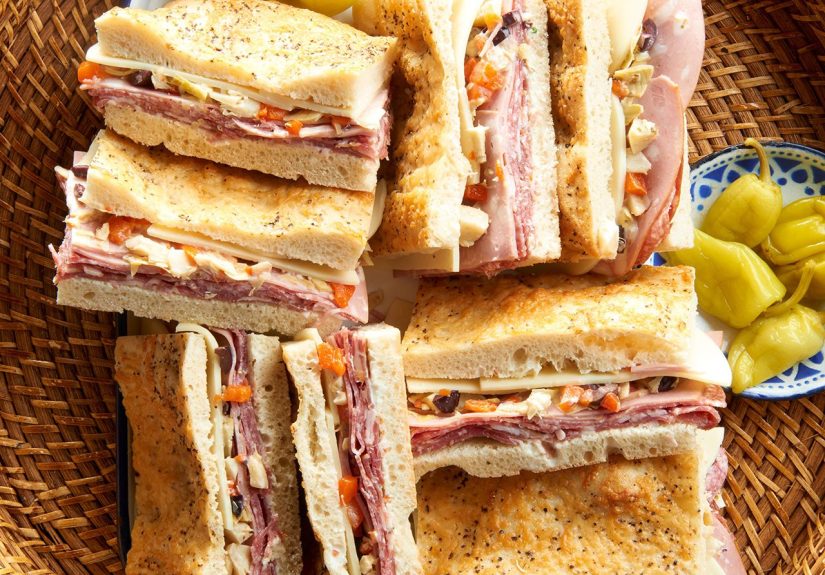
For parties, you can also cut focaccia into rectangles and build Italian deli sandwiches as tidy squares. This is the “feed a crowd” method: less fuss, more applause.
How to Build an Italian Focaccia Sandwich That Doesn’t Get Soggy
Step 1: Warm or toast (strategically)
If your focaccia is very fresh, a light toast can add crunch and protect the crumb from juicy fillings. If it’s day-old, warming it can revive the texture. The goal is not crouton-level hardness; you want a crisp edge and a tender middle.
Step 2: Create a “moisture barrier”
This is the sandwich-maker’s secret handshake. Put a fat-based layer (pesto, mayo, aioli, olive tapenade, softened butter, or even cream cheese) on the bread before adding watery ingredients. Cheese can also act as a barrierespecially slices like provolone or mozzarella.
Step 3: Layer like a grown-up
A good layering order keeps flavors balanced and the sandwich structurally sound:
- Spread on both sides (thin, even coat).
- Cheese near the bread (barrier + glue).
- Meats/proteins next (fold slices for loft and better bite).
- Crunch (lettuce, arugula, onions, pickles, peppers).
- Juicy items last (tomatoes go closer to the center and get lightly salted first).
Step 4: Season your fillings
One common mistake is relying on the bread to do all the work. Even if your focaccia is well salted, your tomatoes still need salt, your greens benefit from a little olive oil and vinegar, and your sandwich becomes dramatically better with a few grinds of black pepper.
Classic Italian Focaccia Sandwich Combinations
Below are proven flavor combos that feel authentically Italian in spirit (bold, bright, salty, fresh), while still being easy to pull off in an American kitchen.
1) The Italian Deli Classic
Think “Italian sub,” but upgraded by swapping the roll for focaccia.
- Meats: salami + capicola + mortadella (or your favorite mix)
- Cheese: provolone
- Crunch: shredded lettuce or arugula, thin red onion
- Briny bite: pepperoncini or roasted red peppers
- Spread: mayo with a little pesto or a swipe of olive tapenade
- Finish: oregano + black pepper, optional drizzle of red wine vinegar
2) Caprese, but make it sandwich-proof
A classic Italian sandwich on focaccia can absolutely be tomato + mozzarella + basilas long as you manage moisture.
- Cheese: fresh mozzarella (pat dry) or burrata (use carefullyshe’s a creamy diva)
- Tomatoes: sliced, lightly salted, briefly drained
- Greens: basil leaves + a handful of arugula
- Spread: pesto (thin layer) or basil mayo
- Optional: balsamic glaze, but go easythis is not dessert
3) Mortadella + pistachio energy
Mortadella is mild, rich, and ridiculously good with creamy cheese and something crunchy.
- Meat: mortadella (folded, not laid flat like office paperwork)
- Cheese: stracciatella or fresh mozzarella
- Crunch: chopped pistachios or crisp lettuce
- Pop: lemon zest or a few pickled onions
- Spread: a tiny swipe of Calabrian chili paste mixed into mayo
4) Tuna salad, upgraded to “Italian lunch counter”
Tuna salad on focaccia can be incredible if you keep it bright and briny.
- Tuna: olive oil-packed tuna, flaked
- Mix-ins: capers, chopped celery, lemon juice, parsley
- Greens: arugula
- Optional: thin slices of fennel or cucumber for crunch
- Spread: you can skip extra mayo if the tuna is already rich
5) Vegetarian roasted veggie focaccia sandwich
If you want meatless without “sad desk salad” vibes, roasted vegetables do the job.
- Veg: roasted zucchini, eggplant, bell peppers
- Cheese: ricotta (seasoned with salt, pepper, lemon) or provolone
- Herbs: basil or oregano
- Spread: olive tapenade or pesto
- Optional: a few sun-dried tomatoes for intensity
Hot Focaccia Sandwiches (When You Want Melty Drama)
The “inside-out” grilled focaccia trick
Here’s a neat hack for a focaccia panini-style sandwich: flip the bread so the cut sides face outward. The interior crumb crisps and browns like a dream, while the olive-oil crust stays tender inside. Cook over medium-low heat with a lid so the cheese melts before the bread gets too dark. Press gently to keep it biteable, not skyscraper-shaped.
Sheet-pan focaccia sandwiches for a crowd
For parties, build a giant sandwich on a full slab, brush the top lightly with oil or butter, and warm it until the cheese relaxes and everything smells like you made plans. Slice into squares and watch people “just try a small piece” four times.
Make-Ahead, Packing, and Serving Tips
Make-ahead without sadness
If you’re packing lunch, keep wet ingredients controlled. Tomatoes and dressed greens can be packed separately and added right before eating. Spreads and cheese go on the bread early; they act as protective layers.
How to store focaccia
Focaccia is best the day it’s baked, but it can hold up well if wrapped tightly. Refresh slices in a warm oven for a few minutes. If freezing, slice it first so you can thaw exactly what you need and avoid the “why did I freeze a whole bread mattress?” moment.
Common Mistakes (And How to Avoid Them)
- Overstuffing: Focaccia is sturdy, not magical. Keep layers balanced so the sandwich doesn’t slide apart.
- Skipping seasoning: Salt your tomatoes, pepper your greens, add acid. Your taste buds deserve full-service lunch.
- Ignoring moisture: Pat mozzarella dry, drain roasted peppers, and use a spread barrier.
- Slicing too soon: Hot bread is fragile. Let focaccia cool so the crumb sets and slices cleanly.
- Wrong knife: Use a serrated knife for clean cuts and less squish.
FAQ
Is focaccia considered Italian bread?
Yesfocaccia is a traditional Italian bread with deep regional roots. The version commonly used for sandwiches in the U.S. is a pan-baked style with olive oil, salt, and often herbs.
Should you toast focaccia for sandwiches?
Often, yes. A light toast improves texture and helps prevent sogginess, especially if you’re using juicy fillings like tomatoes, roasted vegetables, or saucy spreads.
What’s the best cheese for an Italian focaccia sandwich?
Provolone is a classic for deli-style sandwiches. Fresh mozzarella and burrata are excellent for Caprese-style builds (just manage moisture). Ricotta and stracciatella are great when you want creamy contrast to salty meats.
Experience Notes: 10 Real-World Lessons from the Italian Focaccia Sandwich Life (Extra )
If you make (or buy) focaccia specifically for sandwiches, you’ll start noticing a few patternslittle “aha” moments that separate a good sandwich from a legendary one. Consider these the street-smarts of the Italian focaccia sandwich world.
1) The best sandwiches start with restraint
Focaccia has flavor. It’s already bringing olive oil, salt, and texture. That means you don’t need seven competing spreads and three kinds of pickles all yelling at once. Choose one creamy element, one salty element, one bright element, and one crunchy element. Suddenly your sandwich tastes “designed,” not “assembled during a storm.”
2) Fold deli meats instead of stacking them flat
Folding slices creates little air pockets, which makes each bite lighter and more flavorful. Flat-stacked meat compresses into a dense layer that can feel rubbery. Folding is also the easiest way to make a sandwich look like it came from a good deli instead of a sad conference room.
3) Tomatoes are innocent, but they are also chaos
Tomatoes make everything taste betterand also try to ruin the bread. Salt them lightly and let them sit a minute. Blot with a paper towel. If you’re packing lunch, keep them toward the middle of the sandwich, away from direct contact with the bread.
4) Greens aren’t just “health garnish”
Arugula, shredded romaine, and even thinly sliced radicchio bring bitterness and crunch that balance rich meats and cheeses. A tiny drizzle of olive oil and a drop of vinegar on the greens can make the whole sandwich taste brighter without turning it into a salad situation.
5) “Spicy” works best when it’s targeted
A little Calabrian chili paste in mayo, a few pepperoncini, or a swipe of spicy pesto can bring everything to life. But if every layer is spicy, your tongue stops tasting details and starts filing complaints. Make spice a highlight, not a full-time job.
6) Warm focaccia is an advantageuse it wisely
Slightly warm focaccia makes cheeses more aromatic and meats more tender. But hot focaccia can melt spreads into an oil slick. Warm it gently, then let it sit a minute so it’s cozy, not steaming.
7) Crunch needs to be protected
If you love crisp lettuce or pickled onions, keep them away from wet spreads. Put cheese or meat between “crunch” and “moisture.” This keeps your textures distinct instead of turning everything into one soft layer.
8) Don’t skip the “briny note”
Olives, capers, pepperoncini, pickled onions, or even a little olive tapenade add the kind of savory depth that makes sandwiches taste Italian in a very satisfying way. It’s the difference between “nice” and “where has this been all my life?”
9) Party sandwiches want straight lines
If you’re feeding a group, build on a rectangular focaccia slab and think like a geometry teacher: even layers, edge-to-edge coverage, clean cuts. Press lightly, chill briefly to set, then slice into tidy portions. It looks professional and eats neatly.
10) The best focaccia sandwich is the one you can actually bite
This sounds obvious until you’re staring at a six-inch-tall tower of deliciousness that requires jaw unhinging. Keep the height reasonable, press gently, and remember: the goal is repeated joyful bites, not one heroic bite followed by structural collapse.
Conclusion
A great Italian focaccia sandwich isn’t just “stuff between bread.” It’s a small, edible architecture project: crisp edges, tender crumb, balanced layers, and a few bold Italian flavors (olive oil, herbs, cured meats, bright acidity) working together like a well-rehearsed band.
Whether you’re building a classic deli-style focaccia sandwich, a Caprese-inspired summer lunch, or a hot, melty grilled version with the cut sides crisped up, the core rules stay the same: protect the bread from moisture, season your fillings, and keep the stack bite-friendly. Do that, and focaccia will happily take your sandwich game from “fine” to “why did I ever accept less?”