Table of Contents >> Show >> Hide
- The Big Picture: What the iPhone 17 Line Actually Changes
- Display: The Upgrade People Will Notice in About Three Seconds
- Cameras: Apple Gave the Base Model a Real Promotion
- Pro Cameras: Where Apple Starts Showing Off
- Performance, Battery, and Connectivity: More Than Just Chip Names
- Design and Durability: Familiar, but More Intentional
- Which iPhone 17 Model Makes the Most Sense?
- Real-World Experience: What Living With the iPhone 17 Actually Feels Like
- Conclusion
- SEO Tags
If the iPhone 16 felt like Apple playing it safe, the iPhone 17 feels like Apple finally loosening its tie, rolling up its sleeves, and admitting that yes, people really do notice a 120Hz display. The iPhone 17 generation is not one giant sci-fi leap, but it is the kind of upgrade cycle that makes daily use feel noticeably better. And honestly, that matters more than a keynote full of buzzwords doing cartwheels.
The biggest story is that Apple stopped treating the regular iPhone like the kid’s menu option. The base iPhone 17 now gets a larger 6.3-inch display, ProMotion up to 120Hz, an always-on screen, an upgraded 48MP ultra wide camera, and a new 18MP Center Stage front camera. Meanwhile, the Pro and Pro Max take the formula further with a redesigned aluminum unibody, longer battery life, vapor cooling, and a seriously ambitious camera setup that includes Apple’s longest iPhone telephoto reach yet.
So if you are trying to figure out what actually changed with the iPhone 17, this breakdown covers the pieces that matter most: cameras, display, performance, battery life, design, and whether any of it is worth your money. Spoiler: for the first time in a while, the standard iPhone is not just the “good enough” choice. It is the smart choice for a lot of people.
The Big Picture: What the iPhone 17 Line Actually Changes
Before diving into camera sensors and brightness levels like proper phone nerds, it helps to understand the overall shift. Apple’s iPhone 17 strategy is less about inventing brand-new categories and more about redistributing premium features. The regular iPhone 17 inherits several upgrades that used to be locked behind the Pro paywall, while the Pro phones move deeper into “creator tool” territory.
That means the standard iPhone 17 is no longer stuck with a plain 60Hz panel or an aging selfie camera. It starts at 256GB of storage, runs on the A19 chip, and delivers a much more upscale everyday experience. The Pro and Pro Max keep the bragging rights, of course, but the distance between “regular” and “Pro” is finally smaller.
In plain English: the iPhone 17 feels like the first base iPhone in years that was allowed to sit at the grown-ups’ table.
Display: The Upgrade People Will Notice in About Three Seconds
The display is where the iPhone 17 makes its loudest entrance. The standard model now has a 6.3-inch Super Retina XDR OLED display with a 2622-by-1206 resolution, always-on display support, and ProMotion with adaptive refresh rates up to 120Hz. Outdoor peak brightness reaches 3000 nits, which helps in bright sun and gives HDR content more pop.
That may sound like a spec-sheet flex, but this is the change most users will feel immediately. Scrolling is smoother, animations look cleaner, and the phone simply feels faster even before you start measuring chips and cores. It is one of those upgrades that is hard to unsee once you get used to it. Go back to 60Hz after a few days and your eyes may file a complaint.
The iPhone 17 Pro also has a 6.3-inch display, while the Pro Max stretches to 6.9 inches. Both Pro models keep the same 120Hz ProMotion and always-on perks, along with the same 3000-nit outdoor peak brightness. So visually, the standard iPhone 17 has closed much of the old gap. If screen quality is your top concern, Apple has made the regular model dramatically more competitive.
Why the new display matters in real life
This is not just about prettier menus. A smoother refresh rate improves gaming, social scrolling, web browsing, and even simple tasks like switching between apps. The always-on display also makes the lock screen more useful for widgets, notifications, time checks, and glanceable information. In other words, the iPhone 17 screen is not only nicer; it is more convenient all day long.
Cameras: Apple Gave the Base Model a Real Promotion
The iPhone 17 camera story is surprisingly strong, especially on the standard model. Apple kept the 48MP Fusion main camera but added a much more meaningful ultra wide upgrade. The base iPhone 17 now has a 48MP Fusion Ultra Wide camera instead of the older, lower-resolution setup found on previous non-Pro models. That means better detail, better flexibility, and stronger performance for landscape shots, tight indoor photos, and macro work.
The main camera also supports 2x optical-quality telephoto through sensor cropping, which gives you a more practical zoom option without needing a dedicated telephoto lens. For a lot of everyday users, that is enough. Snap a portrait, zoom in on your dog looking dramatically out a window, photograph your lunch before you forget it existsdone.
Apple also improved video features on the standard iPhone 17. You get 4K Dolby Vision recording up to 60 fps, spatial video recording, macro video, and Dual Capture, which records from the front and rear cameras at the same time. That is a genuinely useful feature for reaction videos, interviews, travel clips, and creator-style content. It is not a gimmick. It is the kind of tool people will use once, grin, and immediately keep using.
The new 18MP Center Stage front camera
One of the coolest updates in the iPhone 17 lineup is the 18MP Center Stage front camera. Apple redesigned the selfie camera around a square sensor, which gives you more flexibility to zoom, rotate, and reframe shots. It also improves group selfies, video calls, and casual front-camera videos because the framing can adjust more intelligently.
This is one of those rare front-camera upgrades that feels designed for how people actually use phones in 2026. Not everyone is trying to become a lifestyle vlogger in a beige kitchen, but a smarter selfie camera is useful for FaceTime, social posts, travel photos, and basically every “wait, everybody get in the frame” moment.
Pro Cameras: Where Apple Starts Showing Off
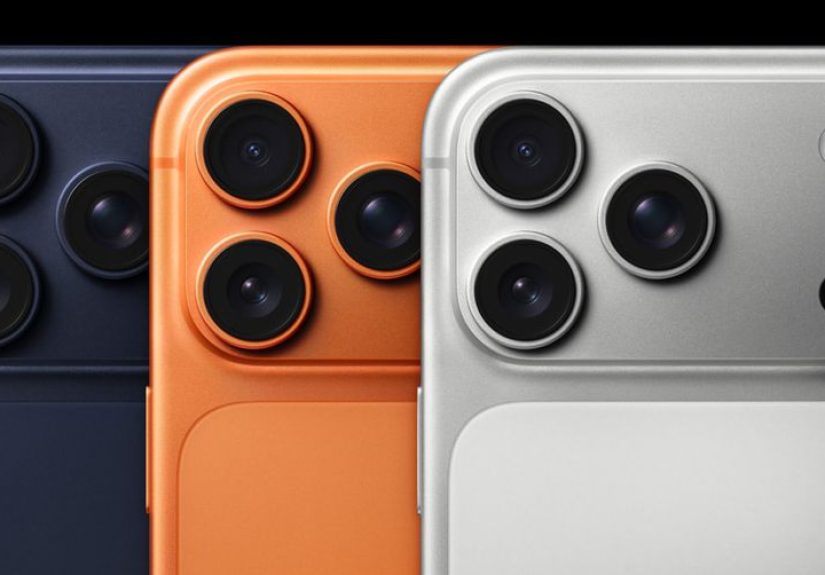
If the regular iPhone 17 got promoted, the iPhone 17 Pro and Pro Max got executive corner offices. Apple’s Pro camera system now uses three 48MP rear cameras: a 48MP Fusion Main, a 48MP Fusion Ultra Wide, and a 48MP Fusion Telephoto. The telephoto system is the big headline here.
The Pro telephoto camera is a 100mm 4x lens with tetraprism design, and Apple says it can also deliver 8x optical-quality shots at 200mm. That gives the iPhone 17 Pro line the longest telephoto reach Apple has ever offered on an iPhone. For people who shoot concerts, architecture, travel scenes, sports, pets that refuse to come closer, or literally anything on the other side of a fence, this matters.
The Pro models also support more advanced image and video tools, including ProRAW, ProRes, ProRes RAW, Apple Log 2, and 4K Dolby Vision video up to 120 fps on the main camera. This is where Apple separates “great phone camera” from “serious mobile production machine.” If your content workflow includes editing, grading, or capturing video for professional use, the Pro phones clearly earn their name this year.
That said, many buyers will never need these features. If your photo library is mostly pets, food, vacations, and screenshots you swear you will organize later, the standard iPhone 17 camera system is more than capable.
Performance, Battery, and Connectivity: More Than Just Chip Names
The standard iPhone 17 runs on the A19 chip with a 6-core CPU and 5-core GPU, while the Pro and Pro Max use the A19 Pro with a 6-core CPU and 6-core GPU. On paper, that sounds like the usual Apple upgrade ladder. In practice, the bigger difference is not just peak speed. It is how the phones sustain performance under heavier loads.
The Pro models use a new vapor-cooled thermal design and aluminum unibody construction that help dissipate heat more effectively. That matters for gaming, long video sessions, heavy multitasking, and other workloads that usually turn phones into hand warmers. The standard iPhone 17 is still very fast, but the Pro phones are built to stay cooler and hold that performance longer.
Battery life is strong across the lineup. The standard iPhone 17 is rated for up to 30 hours of video playback, the iPhone 17 Pro goes up to 33 hours, and the Pro Max reaches up to 39 hours. Fast charging is also improved: Apple says all can reach up to 50% charge in 20 minutes with a 40W adapter or higher. That is the kind of practical upgrade people appreciate far more than another marketing phrase about “next-generation synergy” or whatever the keynote interns came up with.
Connectivity also gets a quiet but meaningful upgrade thanks to Apple’s in-house N1 wireless networking chip. It supports Wi-Fi 7, Bluetooth 6, and Thread. That sounds technical because it is technical, but the takeaway is simple: faster wireless performance, better modern networking support, and stronger future-proofing for connected devices and smart home use.
Design and Durability: Familiar, but More Intentional
The iPhone 17 does not reinvent Apple’s design language, but it does refine it. The regular model keeps an aluminum design with a color-infused glass back and comes in black, white, mist blue, sage, and lavender. It measures 7.95 mm thick and weighs 177 grams, which keeps it comfortable in the hand while still feeling substantial.
The iPhone 17 Pro and Pro Max go in a different direction with a heat-forged aluminum unibody design. These phones are thicker and heavier than the base model at 8.75 mm, with the Pro weighing 206 grams and the Pro Max reaching 233 grams. They are not shy about feeling more industrial this year. The tradeoff is clearer thermal management, more battery space, and a more distinct identity.
Apple also introduced Ceramic Shield 2 across the lineup, with claims of better scratch resistance. Whether you are the kind of person who baby-protects your phone with a military-grade case or the kind of person who says “it builds character” while carrying a screen full of tiny scratches, improved durability is welcome.
Which iPhone 17 Model Makes the Most Sense?
For most people, the standard iPhone 17 is the sweet spot. It now has the display people wanted, the camera improvements people will actually use, a smarter selfie camera, strong battery life, double the starting storage, and performance that will feel fast for years. That combination makes it easier to recommend than almost any regular iPhone in recent memory.
The iPhone 17 Pro is for buyers who genuinely care about zoom, advanced video formats, longer sustained performance, and a more premium industrial design. The Pro Max is for people who want the biggest screen, the biggest battery, and the most everything. It is the deluxe buffet option. You may not need it, but you will definitely notice it.
In other words, Apple did something refreshingly sensible with the iPhone 17 family: it made the regular model much better without making the Pro models pointless.
Real-World Experience: What Living With the iPhone 17 Actually Feels Like
After the spec comparisons and camera math, the better question is this: what is it actually like to use the iPhone 17 every day? The answer is that the phone feels less like a flashy annual refresh and more like a cleanup job on years of obvious missing pieces. That sounds less exciting, but in real life it is exactly why the experience lands so well.
The first thing most people will notice is the display. The move to 120Hz makes the whole phone feel smoother and more polished, whether you are bouncing between apps, scrolling through social media, reading articles, or flicking through photos. It is not a “wow” feature in the dramatic, keynote-demo sense. It is better than that. It is the kind of upgrade that quietly improves every single interaction until you stop thinking about it because it now feels normal.
The second big everyday win is the front camera. The new Center Stage camera is not just for influencers talking to ring lights at midnight. It is useful when you are trying to fit friends into a selfie, take a quick video while walking, or hop on a call without worrying about awkward framing. For families, students, remote workers, and anyone who communicates with their face more often than they would like to admit, it makes the phone feel smarter in a practical way.
The rear cameras are also more fun than previous base iPhones because the upgraded 48MP ultra wide gives you more freedom. You do not have to think as hard about whether a scene is too tight, too wide, or too weirdly lit. The phone handles more situations confidently. That creates a more relaxed shooting experience, and that matters. Great cameras are not just about perfection; they are about making you want to use them more often.
Battery life adds to that comfort. The iPhone 17 feels built for normal, messy, real-world use: maps, messaging, music, photos, videos, doomscrolling, and the occasional stretch where you swear you are just checking one thing and somehow end up researching air fryers for 40 minutes. It lasts. Not in a miracle way, but in a trustworthy way.
And that might be the best summary of the iPhone 17 experience overall. It feels trustworthy. The base model finally feels premium enough that you are not constantly reminded of what you did not buy. The Pro models still offer more, but the regular iPhone 17 no longer feels like the compromise pick. It feels like the sensible pick, the phone that nails the things people touch, see, and use every day.
Conclusion
The iPhone 17 is not important because Apple invented an entirely new smartphone category. It is important because Apple finally improved the parts users notice most. The base model now has a high-refresh-rate display, always-on screen, stronger cameras, better battery life, more storage, and a smarter front camera. The Pro models extend that with deeper zoom, pro-grade video tools, better thermals, and bigger batteries.
That makes the iPhone 17 family feel more coherent than recent lineups. There is a clearer reason to buy each model, and for the first time in a while, the standard iPhone does not feel like the leftovers plate. If your priority is everyday value, the iPhone 17 is the standout. If your priority is creative flexibility and maximum hardware, the Pro models deliver. Either way, Apple’s 2025 phone lineup is less about flashy experimentation and more about getting the fundamentals very, very right.