Table of Contents >> Show >> Hide
- Why Pen Sketches Work So Well for Quarantine Memories
- Simple Supplies That Actually Help (No Fancy Shopping Spiral Required)
- The Secret Sauce: Pick a Shading Style and Stick With It
- My Quarantine Sketch Themes (and How You Can Steal Them)
- A Quick Method for Turning “Boring” Into a Sketch Worth Keeping
- Sketch Prompts for Quarantine Days (No Inspiration Required)
- How to Make the Series Feel Like a Story (Instead of Random Doodles)
- Yes, This Can Support Your Mental Well-Being (Without Turning It Into Homework)
- Sharing Your Quarantine Pen Sketches Online (If You Want To)
- Conclusion: The Point Isn’t PerfectionIt’s Proof You Lived Those Days
- Extra: of Quarantine Sketching Experiences (What I Learned the Hard Way)
Quarantine time did something weird to my sense of time. Monday felt like Thursday’s cousin, my sourdough starter got an attitude, and somehow I developed strong opinions about which corner of the couch had the best lighting. So I did what any reasonable adult would do: I started drawing it.
Not “museum-level” drawing. More like “if this sketchbook ever becomes evidence, I’m pleading the fifth.” But pen sketching gave my days a shape. It made the small stuff feel worth noticing: the way steam curled out of a mug, the mountain range of laundry, the heroic journey from bed to kitchen.
This post is part story, part practical guide, and part permission slip to make imperfect art on purpose. If you want to capture your own home-quarantine moments (or any “stuck inside” season of life) with pen sketches, here’s a fun, low-pressure way to do itwithout turning your living room into an art school critique.
Why Pen Sketches Work So Well for Quarantine Memories
Photos are great, but they can also be… a lot. A sketch is selective. It’s you deciding what matters. And during quarantine, when days blur together, that choice becomes a tiny act of control.
Pen is especially good at this because it’s honest. You can’t “erase your way to confidence.” Instead, you learn to adapt: turn a wobbly line into texture, a mistake into shadow, a blob into a plant. (Congratulations, you now own a plant. Please water it occasionally.)
Simple Supplies That Actually Help (No Fancy Shopping Spiral Required)
You can start with whatever you already have. Still, a few basics make pen sketching way easierespecially if you’re drawing daily:
- A fineliner or pigment pen for consistent lines (great for details and journaling-style sketches).
- A thicker pen (or brush pen) for bold shadows and emphasis.
- A sketchbook with smoother paper if you like crisp lines; smoother surfaces can make fine detail cleaner.
- Optional: a pencil for light guidelines if your brain prefers a safety rail.
Paper matters more than people admit. Super textured paper can chew up fine tips and make tiny lines look fuzzy. A smoother pad (often called “smooth” bristol or similar) can feel like drawing on a clean, polite countertop instead of a shag carpet.
The Secret Sauce: Pick a Shading Style and Stick With It
Pen sketches look best when they feel cohesive. The fastest way to create that “I totally meant to do this” vibe is to choose a mark-making style and stay loyal to it for a sketch or a series.
Four classic pen shading techniques (choose your fighter)
- Hatching: parallel lines. Great for calm, clean shading.
- Cross-hatching: layered lines at angles. Great for deeper shadows and drama.
- Stippling: dots. Slow, meditative, and oddly satisfyinglike bubble wrap for your eyeballs.
- Random/scribble lines: loose textures that feel energetic and forgiving.
Here’s the helpful rule: you don’t need to master all of them. Pick one that matches your mood and your subject. Quarantine sketches often shine with simple hatching or loose scribble shadingbecause the goal isn’t perfection, it’s “this is what my day felt like.”
My Quarantine Sketch Themes (and How You Can Steal Them)
I kept returning to the same categories of moments, because quarantine life is basically a looped playlist. If you’re building your own sketch series, try rotating these themes:
1) The Rituals
Coffee. Tea. The “stare out the window like a Victorian ghost” moment. The handwashing choreography. Draw the objects that show up every day: a mug, a kettle, a soap bottle, a half-dead sponge. These sketches become visual timestampseven when the calendar stops making sense.
2) The Tiny Landscapes of Home
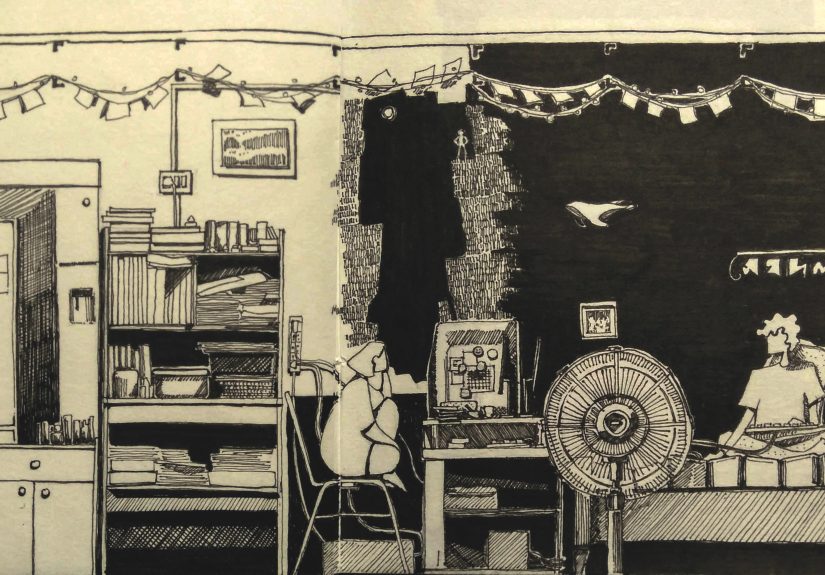
The corner of your desk. The view from your couch. The kitchen counter that mysteriously collects mail like it’s building a nest. Quarantine turned ordinary spaces into entire worlds, which means they’re valid subjects.
3) Food Adventures (a.k.a. “I baked because I needed a quest”)
Sketch your “signature” quarantine recipe: banana bread, instant noodles upgraded with a single green onion, or whatever snack you ate at 2 a.m. while doomscrolling. Food sketches don’t require perfect proportionsjust recognizable shapes, highlights, and a few confident lines.
4) The Human Moments
If you live with people, sketch hands holding a phone, feet in fuzzy socks, someone staring at a laptop with the thousand-yard Zoom gaze. If you live alone, sketch yourself in reflection (mirror selfies, but make it art). Faces are optional. Gestures tell the story.
A Quick Method for Turning “Boring” Into a Sketch Worth Keeping
When everything feels the same, you need a structure that helps you notice differences. Here’s a simple method I used:
- Pick one moment from the day that had a clear feeling: calm, restless, funny, lonely, cozy.
- Choose one object that represents it (mug, mask, keys, headphones, grocery bag, book).
- Draw the silhouette first (big shape), then add only 5–10 details that matter.
- Shade with one technique (hatching or stippling), pushing the darkest darks last.
- Add a one-line caption like a diary: “Day 12: I argued with a sourdough starter.”
The caption is magic. It turns a sketch into a memory. Also, it makes future-you laugh, which is a solid return on investment.
Sketch Prompts for Quarantine Days (No Inspiration Required)
If your brain goes blank, borrow these prompts. They’re designed to be specific enough to start, but open enough to be yours:
- Draw: the view from where you drink your morning beverage.
- Draw: the “most touched object” in your home today (remote, phone, doorknob, etc.).
- Draw: a pile (laundry, dishes, books, mail). Add shading so it looks oddly dramatic.
- Draw: your hands doing something ordinary (typing, washing, chopping, holding a spoon).
- Draw: your “quarantine mascot” (pet, plant, or the snack cabinet).
- Draw: the outside world from a windowthen add a small detail that shows your mood.
How to Make the Series Feel Like a Story (Instead of Random Doodles)
A quarantine sketchbook becomes powerful when it has continuity. You can create that with tiny, repeatable choices:
- Use the same pen set for most sketches so the line quality stays consistent.
- Keep a repeating element: a daily mug, a recurring chair, the same window view.
- Limit your “visual vocabulary”: maybe you only shade with hatching, or you always leave a clean highlight.
- Date the page and add one sentence. Think “visual journal,” not “final masterpiece.”
The goal isn’t to impress strangers. The goal is to capture your life with enough honesty that it feels real.
Yes, This Can Support Your Mental Well-Being (Without Turning It Into Homework)
During stressful periods, small routines help. Sketching is a routine that produces something tangible: “I did this. I was here.” It can also work like gentle journalingespecially if you add captions or short reflections.
The trick is to keep it lightweight. If sketching becomes a test, it stops being a refuge. So make rules that are easy to win: one sketch in 10 minutes, one object, one shading style, done. Your nervous system doesn’t need extra pressure; it needs a safe place to land.
Sharing Your Quarantine Pen Sketches Online (If You Want To)
If you share, share like a humannot like a brand. People connect with process and honesty: the messy desk, the smudged finger, the “I drew this while waiting for pasta water to boil.”
A simple format that works:
- Post the sketch (clean photo, natural light if possible).
- Add the one-line caption (the memory).
- Optional: include a tiny tip you learned (“Cross-hatching made this shadow work!”).
And if you don’t share? Still valid. Some art is private. Some art is for future-you.
Conclusion: The Point Isn’t PerfectionIt’s Proof You Lived Those Days
Quarantine days can feel like they disappeared into a blur of screens, snacks, and suspiciously similar Tuesdays. Pen sketches help you pin those days downone line at a time. You don’t need talent. You need attention. And maybe a pen that doesn’t die halfway through a shadow.
If you try this, start small: one object, one moment, one page. In a week, you’ll have a story. In a month, you’ll have a time capsule. And years later, you’ll look back and think, “Wow. That was strange. Also, why did I eat so much banana bread?”
Extra: of Quarantine Sketching Experiences (What I Learned the Hard Way)
The first week I tried sketching quarantine life, I aimed way too high. I told myself I’d draw “a scene” every daypeople, furniture, perspective, dramatic lighting, the whole cinematic production. On Day Two, I drew a chair that looked like it was melting. On Day Three, I drew my own hand and accidentally gave myself seven fingers. That’s when I realized quarantine didn’t need me to become a renaissance master. It needed me to notice what was happening right in front of me.
So I switched to “micro-moments.” A spoon on a plate. A tangle of earbuds. The stack of delivery boxes that made my hallway look like a tiny cardboard city. When you draw small, you finish. When you finish, you come back tomorrow. Consistency beats ambitionespecially when the world already feels heavy.
I also learned that pen has a personality. Pencil is forgiving; pen is like that friend who says, “We’re doing this now,” and drags you onto the dance floor. At first, I hated that I couldn’t erase. Then it became the point. Mistakes stopped being emergencies and started being texture. A crooked line became wood grain. A blot became a shadow. A lopsided circle became “a charmingly imperfect bowl,” which is artist-speak for “please don’t look too closely.”
The biggest surprise: sketching made my home feel bigger. Not physically biggermy walls did not politely move outwardbut mentally bigger. When you slow down to draw a window latch or the folds in a blanket, you start seeing variety in places you assumed were boring. The same room becomes a hundred subjects depending on the hour, the weather, and your mood. On anxious days I drew tight cross-hatching because it matched the buzzing in my head. On calmer days I used light hatching and left more white space, like I was letting the page breathe.
I kept a tiny rule: every sketch got one sentence. Sometimes it was funny (“Day 19: I made coffee and then forgot it existed.”). Sometimes it was honest (“Day 27: I miss hugging people.”). Those captions turned the drawings into a record of feelings, not just objects. Later, flipping through the pages felt like opening a diary I didn’t realize I was writing.
If you’re doing this now (or revisiting an old sketchbook), here’s my best advice: don’t wait to feel inspired. Draw the boring thing in front of you. Draw it badly. Label it lovingly. Repeat. Eventually, the sketchbook becomes evidence that your days matteredeven the quiet ones, even the weird ones, even the ones where the highlight of the afternoon was successfully locating your other sock.