Table of Contents >> Show >> Hide
- Quick Start: What Your Parakeet Actually Needs (Not What the Pet Store Shelf Suggests)
- Set Up the Perfect Parakeet Home
- Parakeet Diet: What to Feed (and What to Never Feed)
- Daily Routine: Social Time, Exercise, and Sleep
- Enrichment: Toys, Foraging, and “Jobs” for a Busy Beak
- Hygiene and Grooming: Keeping Your Bird (and Your Home) Fresh-ish
- Health Care: How to Spot Trouble Early
- Safety Checklist: Toxins, Air Quality, and Other “Surprisingly Dangerous” Stuff
- If You Have Two Parakeets: Friendship, Not an Automatic Marriage
- Experience Section: 12 Real-Life Lessons That Make Parakeet Care Easier (and Funnier)
- Conclusion
Parakeets (aka budgies, aka tiny feathered comedians with zero respect for your Zoom calls) are one of the most popular pet birds in America for a reason:
they’re friendly, social, smart, and small enough to fit into your life without requiring a second mortgage for a custom aviary.
But “small” doesn’t mean “simple.” A well-cared-for parakeet can thrive for years, while a bored, poorly fed, fume-exposed parakeet can get sick fast.
This guide gives you a practical, real-world plan for parakeet carehousing, diet, enrichment, handling, hygiene, and health
with the goal of raising a bird who’s bright-eyed, chatty, and not plotting your downfall from the top perch.
Quick Start: What Your Parakeet Actually Needs (Not What the Pet Store Shelf Suggests)
- Space to move: A roomy cage with safe bar spacing, plus daily out-of-cage exercise.
- Real nutrition: Pellets + fresh veggies, with seeds and millet as “dessert,” not “the whole menu.”
- Clean air: No cooking fumes, smoke, strong sprays, or nonstick pan overheating nearby.
- Sleep: A consistent routine with long, quiet nights (your bird is not a night owl; it’s a tiny sunrise cult member).
- Social + mental stimulation: You, a buddy bird (sometimes), toys, foraging, and training.
- Preventive vet care: An avian vet, baseline wellness exams, and a plan for emergencies.
Set Up the Perfect Parakeet Home
Cage Size and Bar Spacing: Bigger Beats “Cute”
When people ask about parakeet cage setup, they often focus on height. But parakeets are horizontal movers: they hop, climb, flap, and scoot side-to-side.
Choose a cage with ample width so your bird can stretch and flutter between perches.
Just as important: bar spacing. For budgies, aim for tight spacing (around 1/2 inch or less) so they can’t squeeze their head through.
A cage that’s “almost right” becomes “emergency vet visit” surprisingly quickly.
Where to Put the Cage
Pick a spot that’s bright (natural daylight is great), stable, and socialsomewhere your bird can see the household without being in the center of chaos.
Avoid drafts from windows, A/C vents, and heaters. Also avoid kitchens. Birds have sensitive respiratory systems, and cooking fumes can be dangerous.
If you want your bird alive and well, your nonstick pan and your parakeet should not be roommates.
Perches: Give Those Feet a Variety Pack
One smooth dowel perch is like making you wear the same pair of shoes every day… in one size… forever. Mix perch types and diameters:
natural wood perches, rope perches (checked frequently for frays), and platform perches for resting. Variety helps prevent foot soreness and pressure issues.
Skip sandpaper perch covers. They’re abrasive, can irritate feet, and don’t replace proper nail care.
Food and Water Stations
Use sturdy bowls that are easy to remove and clean. Place them where droppings can’t rain down from above (gravity is undefeated).
Fresh water should be available all day, and bowls should be washed daily.
Light, Temperature, and Sleep Setup
Most healthy parakeets do well at typical household temperatures (roughly mid-60s to around 80°F), as long as you avoid sudden changes.
For sleep, many birds benefit from a quiet, dim environment at night. A breathable cage cover can helpjust don’t block airflow completely.
Parakeet Diet: What to Feed (and What to Never Feed)
The Ideal Everyday Diet (No, “All Seed” Isn’t It)
In the wild, budgies eat a variety of seeds and plant material depending on season and availability. In captivity, a seed-heavy diet often turns into
“junk food only,” which can contribute to obesity and nutrient deficiencies. A balanced parakeet diet usually includes:
- Quality pellets as a main staple
- Fresh vegetables daily (especially dark leafy greens and colorful veggies)
- Fruit in moderation (think “treat,” not “salad base”)
- Seeds/millet as limited extras, training rewards, or enrichment
Fresh Foods: Your “Grocery List” for a Happier Bird
Great veggie options include leafy greens (like kale, collards, and romaine), broccoli, carrots, bell peppers, and squash.
Offer a small chopped mix and rotate options so your bird doesn’t become a picky toddler in feathers.
Fruit can be offered a few times per week in small portions: berries, apple (no seeds), melon, or pear. If your parakeet acts like fruit is the greatest
invention since perches, that’s normaljust keep it controlled.
Treats and Training Rewards
Millet spray is basically parakeet currency. Use it strategically for bonding and training. If millet is available 24/7,
it stops being exciting and starts being “daily cake breakfast.”
Water: Simple, Fresh, and Clean
Provide fresh water at all times. Clean bowls and bottles daily with soap and hot water, rinse well, and refill.
“But it still looks clean” is something humans say right before bacteria throws a party.
Foods and Substances to Avoid
Some foods and household exposures are particularly risky for pet birds. Avoid:
- Avocado (toxic to birds)
- Chocolate, caffeine, alcohol
- Onion/garlic in significant amounts
- Very salty, sugary, or fatty foods
- Apple seeds (remove them)
Also avoid giving your parakeet access to metal objects that may contain lead or zinc (like some cheap jewelry, hardware, or questionable cage parts).
Daily Routine: Social Time, Exercise, and Sleep
Out-of-Cage Time (Yes, Even If Your Bird Has Opinions)
Parakeets need movement. Aim for daily supervised time outside the cage in a bird-safe room.
Before the door opens: turn off ceiling fans, close windows, cover mirrors if your bird panic-flies, and remove hazards (open water, hot drinks, other pets).
Start small if your bird is new. Let them learn the room, then practice gentle returns to the cage using treats and calm routinesnever a chase scene.
Sleep: The Most Underrated Part of Budgie Care
Many parakeets do best with long nightsoften around 10–12 hours of quiet darkness. Signs your bird is sleep-deprived include crankiness, screaming,
and “I will bite the finger that feeds me” energy. Keep bedtime consistent.
Taming and Handling: Build Trust Like You’re Negotiating with a Tiny Diplomat
If you’re learning how to take care of a parakeet for the first time, focus on trust before tricks.
Sit near the cage, talk softly, offer treats through bars, then inside the cage. Teach a “step-up” onto your finger or a handheld perch.
Bites are usually communication, not villainy. Common triggers: fear, sudden movements, hands invading personal space, or pushing too fast.
Back up a step, go slower, reward calm behavior, and keep sessions short and upbeat.
Enrichment: Toys, Foraging, and “Jobs” for a Busy Beak
Toys: Safe Materials, Regular Rotation
Birds are built to chew, shred, and destroy (respectfully). Offer toys made from bird-safe materials like untreated wood, paper, and sturdy plastics.
Rotate toys to prevent boredom. Inspect frequentlyespecially rope or fabric toysfor loose strings that can tangle toes.
Foraging: Turn Snacks into an Activity
In the wild, budgies work for food. You can mimic that:
- Hide a few pellets in a paper cup with crumpled paper on top
- Use a simple foraging wheel designed for small birds
- Clip leafy greens so your bird has to nibble and explore
Foraging reduces boredom and can cut down on screaming or feather-destructive habits that sometimes show up in understimulated birds.
Hygiene and Grooming: Keeping Your Bird (and Your Home) Fresh-ish
Cleaning Schedule That Won’t Ruin Your Weekend
- Daily: Change water, remove wet/soiled food, spot-clean obvious mess, wipe the “splash zone.”
- Weekly: Wash perches and toys as needed, swap cage liner, scrub bowls thoroughly, clean grate and tray.
- Monthly: Deep clean the cage and reassess anything rusty, frayed, or suspicious.
Use bird-safe cleaning methods and avoid harsh fumes. If you can smell it strongly, your bird is basically swimming in it.
Bathing
Many parakeets love shallow dishes for bathing. Others prefer misting from a spray bottle set to a gentle, fine mist.
Don’t force it. Offer opportunities and let your bird choose.
Nails and Beak Care
Healthy birds maintain beak shape through chewing and regular use. Nails may need occasional trimming.
If you’re not experienced, have an avian vet handle trimstiny toes + sharp clippers + wiggly bird is not a great first-date scenario.
Health Care: How to Spot Trouble Early
Parakeets Hide Illness (It’s a Survival Instinct, Not a Personal Attack)
Birds often act “fine” until they’re not. Watch for subtle changes:
- Less chirping or unusual quiet
- Fluffed feathers for long periods
- Sleeping more, sitting low, or reluctance to move
- Tail bobbing, open-mouth breathing, or wheezing
- Changes in droppings, appetite, or weight
- Spending all day on the cage floor
If something feels off, call an avian vet promptly. “Wait and see” is often not a bird-friendly strategy.
Wellness Exams and Finding the Right Vet
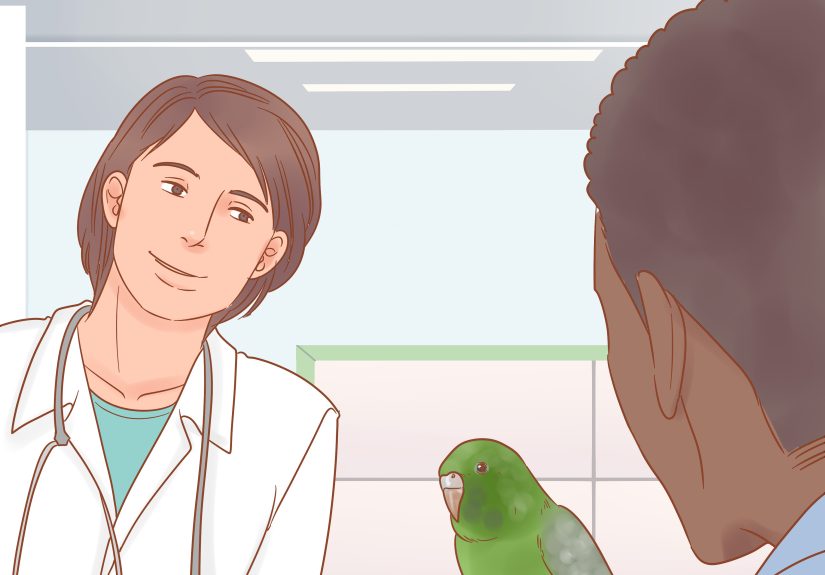
A baseline exam soon after adoption is smart, even if your bird seems healthy. After that, routine checkups help catch issues early.
Look for a veterinarian experienced with birds (avian or exotic practice), not just dogs and cats.
Quarantine New Birds
If you bring home a second parakeet, quarantine the newcomer in a separate airspace for a period recommended by your vet.
It’s not being paranoid; it’s being responsible. Many illnesses spread before symptoms are obvious.
Safety Checklist: Toxins, Air Quality, and Other “Surprisingly Dangerous” Stuff
Parakeet-proofing is less like baby-proofing and more like “assume your bird is a curious toddler with wings and a can opener.”
- Nonstick fumes (PTFE): Overheated nonstick cookware can release fumes that are dangerous to birds. Keep birds away from kitchens.
- Aerosols and fragrances: Avoid strong sprays, scented candles, plug-ins, incense, and paint fumes near your bird.
- Metals: Avoid lead/zinc exposure (cheap metal toys, old paint chips, questionable hardware).
- Plants: Many houseplants can be toxicassume “unknown plant = not a bird toy.”
- Open water: Sinks, toilets, bucketsclose lids and supervise.
- Other pets: Cats and dogs can seriously injure birds even when “just playing.”
If You Have Two Parakeets: Friendship, Not an Automatic Marriage
Two budgies can be wonderfulmore social interaction, more activity, more chirping (yes, that’s a pro and a con).
But it can also mean squabbles, territorial behavior, or one bird bonding more to the other than to you.
Provide enough space, multiple food and water stations, and duplicate favorite perches and toys. Watch dynamics.
If you don’t want breeding behavior, talk to an avian vet about managing nesting triggers (like nest boxes, dark hidey spots, and high-calorie “springtime” foods).
Experience Section: 12 Real-Life Lessons That Make Parakeet Care Easier (and Funnier)
Here’s the part nobody tells you when you google “how to take care of a parakeet” at midnight after bringing home a bird that suddenly refuses to eat anything green:
parakeet care is half science, half improv comedy.
1) Millet is not food. It’s a negotiation tool. The fastest way to train “step-up” is to treat millet like a paycheck.
One tiny piece for bravery, one tiny piece for cooperation, and absolutely no signing bonuses for screaming.
2) Silence can be suspicious. When your budgie goes quiet, it can mean “I’m sleeping,” but it can also mean “I found the forbidden corner.”
Quiet is when you should casually check that your bird isn’t chewing something weird, like the book spine you loved in college.
3) New foods require theater. Some parakeets won’t try veggies until you pretend you’re eating them.
Yes, you may have to dramatically munch romaine like it’s the best snack you’ve ever had while your bird watches with suspicion.
Congratulationsyour bird is now your food critic.
4) The cage is not a “bird jail.” It’s a safe home base.
If your bird only goes in the cage when the fun ends, they’ll start treating it like a betrayal box.
Try giving treats inside the cage, offering a favorite toy there, and letting the cage be where good things happen too.
5) Routine beats perfection. You don’t need a Pinterest-level setup.
A consistent sleep schedule, daily fresh water, basic cleaning, and regular interaction will outperform a fancy cage that never gets scrubbed.
6) Birds read your mood. If you approach the cage like you’re wrestling an alligator, your budgie will respond accordingly.
Calm movements, a gentle voice, and predictable cues make handling easier. Your bird wants to feel safenot surprised.
7) Toys aren’t optional; they’re mental health tools. A bored parakeet can become loud, nippy, or anxious.
Rotating toys and adding foraging activities is like giving your bird a “job,” and it reduces drama. Usually.
8) Droppings are data. Not glamorous, but true.
The best early-warning system for parakeet health is noticing changes in droppings, appetite, energy, and posture.
In bird parenting, you become weirdly observantand that’s a good thing.
9) “One quick spray” can be a big deal. Air fresheners, harsh cleaners, paint fumes, and cooking smoke matter more than most people realize.
If you want a bird-safe home, think “clean air first,” and use mild, bird-appropriate cleaning habits.
10) Training isn’t about tricks; it’s about communication. Target training, step-up practice, and gentle handling aren’t circus moves.
They make daily life easier: vet visits, nail trims, cage transfers, and basic trust.
11) Your parakeet will pick a favorite person. Sometimes it’s you. Sometimes it’s your roommate who said,
“I don’t even like birds,” and now walks around like a Disney princess.
Don’t take it personally. Keep building positive interactions, and your bond can grow over time.
12) Small improvements stack fast. Switching gradually to a better diet, adding one new toy, improving sleep consistency,
and booking that wellness examthese little upgrades can transform your bird’s energy and behavior in a few weeks.
Parakeet care rewards the steady, not the frantic.
Conclusion
Taking care of a parakeet comes down to a few powerful basics: a roomy, safe setup; a balanced diet with pellets and fresh veggies;
daily social time and exercise; consistent sleep; clean air; and proactive health care.
Do that, and you’ll likely end up with a lively little companion who chirps hello, learns routines, and turns ordinary days into slightly louder,
much funnier ones.