Table of Contents >> Show >> Hide
- Why Standing Still Feels Worse Than You’d Expect
- Start With Your Foundation: Shoes, Socks, and the Floor
- Micro-Movements: The Secret Weapon of People Who Stand All Day
- Posture That Saves Your Back (Without Turning You Into a Statue)
- Recovery After You Clock Out: Make Tomorrow Easier
- Fuel and Hydration: Your Legs Aren’t Cactus
- When Standing Discomfort Is a Red Flag
- Workplace Tweaks You Can Ask For (Without Sounding Like a Diva)
- Extra : Real-World “I Stood All Day” Experiences (and What Actually Helped)
Standing sounds easyuntil you do it for six hours straight and your feet start sending you strongly worded emails.
Whether you’re a nurse, teacher, retail worker, line cook, barber, warehouse picker, or the brave soul who volunteers to “just stand here and greet people,”
long periods on your feet can trigger foot pain, swollen ankles, stiff calves, and that low-back ache that makes you walk like a tired robot.
The good news: staying comfortable while standing all day isn’t about one magic product. It’s a system.
When you combine smart footwear, micro-movement, better posture, and simple recovery habits, your body stops treating your shift like an endurance event.
Let’s build that systemwithout turning you into someone who stretches dramatically in the break room like it’s a wellness retreat.
Why Standing Still Feels Worse Than You’d Expect
The human body loves movement and tolerates stillness the way a cat tolerates a bath. When you stand in one spot, gravity pulls fluid downward, your leg muscles
do less “pumping,” and circulation can slow. Meanwhile, your feet absorb repeated load, your calves and hip muscles stay lightly contracted, and your back
stabilizers work overtime just to keep you upright. Over time, that can mean swelling, heaviness, and increased strainespecially if your job involves hard floors
and minimal chances to sit.
Comfort comes from two principles: reduce stress (better surfaces, better shoes, better alignment) and increase circulation
(more movement, more position changes, better recovery). If you only do one thing, do this: move more ofteneven in tiny ways.
Start With Your Foundation: Shoes, Socks, and the Floor
Choose Shoes Like You Choose Coworkers: Supportive and Not Full of Surprises
If you stand for a living, your shoes are safety gear. Look for a stable base, a supportive midsole, and a fit that doesn’t pinch, rub, or let your heel slide.
Bonus points for a roomy toe box (your toes should not be living in a cramped studio apartment).
- Prioritize support front and back: backless shoes and flimsy flip-flops can change your gait and invite problems over time.
- Test the “twist and bend” check: good shoes are typically stiff through the middle but bend at the ball of the foot.
- Watch for wear: if the sole is uneven, the cushion is dead, or the upper collapses, you’re basically standing on a tired pancake.
- Match the shoe to the job: slip-resistant for kitchens, cushioning for concrete floors, stable support for lots of turning and walking.
Insoles and Orthotics: The Cheat Code (When Used Correctly)
Insoles can be a game-changer for long shiftsespecially if you have high arches, flat feet, plantar fasciitis tendencies, or you’re on unforgiving surfaces.
But the best insole is the one that fits your foot and your shoe. If it creates pressure points, don’t “power through” and hope it improves.
- Try before you commit: walk around, pay attention to pressure hotspots, and keep the return policy in mind.
- Think alignment, not just cushion: a deep heel cup and real arch support can reduce fatigue by improving mechanics.
- Consider clinician guidance: persistent pain or recurring injuries may need custom orthotics or a professional evaluation.
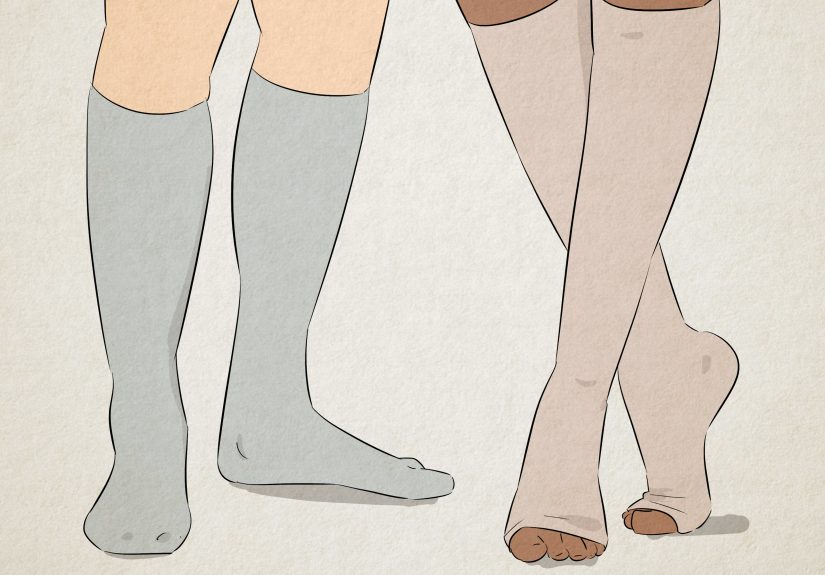
Compression Socks: A Gentle Squeeze That Helps Your Legs Fight Gravity
Standing for long periods can contribute to swelling in the legs and ankles. Compression socks support circulation by applying graduated pressure, which can help
reduce heaviness and discomfort. For many people, starting with light compression is enough for everyday wearespecially if the goal is comfort,
not medical treatment.
- Use them strategically: long shifts, travel days, or events where you’ll be mostly stationary.
- Pair with movement: compression works best when you also move your ankles and calves regularly.
- Be smart if you have medical issues: if you have vascular disease, diabetes complications, or unusual swelling, ask a clinician what’s appropriate.
Upgrade the Surface: Anti-Fatigue Mats and Footrests
Standing on hard surfaces (tile, concrete, packed flooring) is like doing life on “hard mode.” Anti-fatigue mats encourage subtle muscle movement and can reduce
discomfort for workers who stand for long periods. If you can’t add a mat, a small footrest (even a low step) helps by letting you change hip and back angles.
- Anti-fatigue mat: best for stations where you stand in place (registers, prep areas, assembly lines).
- Footrest trick: rest one foot up for 30–60 seconds, then switchyour low back often sighs with relief.
- Shoe + mat combo: a mat can’t fully compensate for unsupportive shoes, and great shoes can’t fully fix a brutal floor. Use both if possible.
Micro-Movements: The Secret Weapon of People Who Stand All Day
Change Positions Every 30–60 Minutes (or Sooner If You Can)
Your body doesn’t need a dramatic breakit needs a pattern interrupt. Small changes reduce static load and help circulation.
If your job allows it, rotate tasks, walk a quick loop, or at least shift your setup.
- Shift weight gently from left to right (avoid collapsing into one hip like you’re leaning on an invisible wall).
- Do ankle pumps: lift heels, then toes10 reps each.
- Do calf raises: 8–12 slow reps while waiting for something to finish.
- Use the “one foot up” stance on a low step or bar, then switch sides.
“Break Math” That Works in Real Life
If you can plan breaks, aim for short, regular recovery instead of one heroic break at the end. A practical structure many workplaces use is a
10–15 minute rest break every 1–2 hours during demanding standing work (even small breaks can reduce fatigue).
If your schedule is chaotic, set a mental rule: “Every time I can, I reset my posture and move for 60 seconds.”
Stealth Stretching: Don’t Look Weird, Feel Better
You don’t need to unroll a yoga mat next to the cash register. Try these subtle moves:
- Hip flexor reset: step one foot back, tuck pelvis slightly, hold 15 seconds each side.
- Thoracic opener: gently squeeze shoulder blades down and back for 5 seconds, repeat 5 times.
- Foot roll later: when you’re off-duty, roll your arch on a ball or water bottle for 1–2 minutes per foot.
Posture That Saves Your Back (Without Turning You Into a Statue)
“Stand up straight” is well-meaning advice that sometimes backfires. Comfort is less about rigid perfection and more about a
neutral, changeable posture. The fastest posture mistakes during long standing are locking the knees, leaning into one hip, and craning the neck forward.
A Quick Standing Checklist
- Feet: hip-width apart, weight spread across the whole foot (not just heels or the outside edges).
- Knees: softnot locked. Locked knees can hyperextend and contribute to low back strain.
- Pelvis: neutral (avoid dumping forward or tucking aggressively).
- Ribs + core: gently stacked over pelvis, as if you’re zipping up snug jeans (support, not bracing for impact).
- Shoulders + head: shoulders relaxed, chin level, ears over shoulders (not starring in “Neck Forward: The Musical”).
If you work at a counter, adjust the setup so you aren’t reaching forward constantly. If you have to stand in one spot, use a footrest or mat and switch positions often.
The goal is not “perfect posture forever.” The goal is “good posture most of the time, plus frequent movement.”
Recovery After You Clock Out: Make Tomorrow Easier
The recovery habits you do after standing all day determine how you feel tomorrow morning. Think of it as a tiny maintenance routine that keeps small aches
from becoming big problems.
Do This in the First 30 Minutes After Your Shift
- Elevate your legs for a few minutes to help fluid move back upward (pillows work; you don’t need a fancy contraption).
- Hydrate and go easy on salty foods if swelling is an issue.
- Gentle stretching for calves, hamstrings, and hip flexors (15–30 seconds each, 2 rounds).
If You’re Sore or Swollen
- Ice can reduce pain and swelling after a tough day (wrap it; don’t freeze your skin like a cartoon character).
- Foot support matters at home, too: if your feet hurt, avoid going barefoot on hard floors for long periods.
- Address patterns: recurring heel pain could be plantar fasciitis, which often improves with supportive shoes, stretching, and a targeted plan.
Fuel and Hydration: Your Legs Aren’t Cactus
Dehydration and high sodium intake can contribute to fluid retention and that “my shoes feel tighter at hour six” feeling. Hydration won’t replace good shoes,
but it’s an easy multiplier: more water, better circulation support, fewer headaches, and less overall fatigue. Aim for steady intake throughout the day,
not a frantic chug-fest at the end of your shift.
When Standing Discomfort Is a Red Flag
Some soreness is normal when you’re building tolerance or surviving a brutal shift. But certain symptoms deserve prompt medical attentionespecially when swelling is sudden,
unexplained, or one-sided.
- Seek urgent care if leg swelling happens suddenly, is painful, occurs in one leg, or is accompanied by skin changes or shortness of breath.
- Make an appointment if pain persists, swelling becomes frequent, or you’re developing visible vein issues alongside heaviness or aching.
- Don’t guess if there’s redness, warmth, or tendernessthose can signal more serious circulation problems.
Workplace Tweaks You Can Ask For (Without Sounding Like a Diva)
Comfort is an ergonomics issue, not a personality flaw. If you’re standing for hours, these changes can pay off fast:
- Anti-fatigue mats for fixed standing stations.
- A footrest under counters or work surfaces.
- Task rotation so you’re not locked into one posture all day.
- Planned micro-breaks (even short, frequent breaks can reduce fatigue and improve performance).
- Workstation height adjustments so you’re not constantly reaching or hunching.
Extra : Real-World “I Stood All Day” Experiences (and What Actually Helped)
Tips are great, but the moment of truth is always the same: hour four. That’s when your feet start bargaining, your calves get tight, and your lower back begins writing
dramatic poetry about betrayal. Here are a few real-world style scenarios that show what tends to help mostquickly.
The Retail Shift (8 Hours on Tile)
A cashier switched from “whatever sneakers were clean” to a supportive pair that didn’t fold like a tortilla in the middle. The surprise hero wasn’t just the shoeit was
adding a simple insole and replacing it when it flattened out. Their second win: a tiny footrest under the counter. Every few minutes, one foot went up, then the other.
It looked like nothing. It felt like a back reset button. They also started doing five calf raises during slow moments. Not enough to sweatjust enough to keep circulation
from going on vacation.
The Hospital Floor (Fast Walking + Standing Still)
A nurse noticed their legs felt worst on charting daysless walking, more standing in one place. Compression socks helped, but only after they stopped thinking of them as
a “magic fix” and paired them with movement: ankle pumps while charting, and a quick hallway loop when possible. They also got picky about hydration (because coffee alone
is not a hydration strategy). The final improvement came from changing how they stood at bedside: knees soft, weight distributed, and occasional “one foot on a step” stance
during longer conversations.
The Line Cook (Concrete Floors, No Mercy)
For a cook, the floor was the enemy. Anti-fatigue mats at key stations made the biggest differenceespecially at prep areas where they stood nearly still. The second fix was
rotating stance: instead of leaning into one hip, they learned to shift weight deliberately every few minutes. After the shift, they elevated legs while scrolling their phone
(a rare moment when scrolling counts as “self-care”), then rolled arches on a frozen water bottle. Not glamorous, but it cut down morning heel pain.
The Teacher (Standing, Pacing, and “Hallway Duty Feet”)
A teacher found that “standing all day” was actually two different problems: teaching (lots of pacing) felt fine, but hallway duty (static standing) wrecked their calves.
The fix was a routine: during duty, they did subtle toe taps and heel raises, shifted stance every minute or two, and wore shoes with real support (not stylish flats that
look innocent but secretly hate you). They also started bringing a second pair of shoes and swapping mid-daylike rebooting a computer, but for feet.
The pattern across these stories is simple: comfort comes from support + movement + recovery. Shoes and mats reduce the load. Micro-movements keep blood
and joints happier. Recovery habits stop tomorrow from feeling like a sequel to today’s pain. Put those together, and standing for a long time becomes manageablemaybe not
“fun,” but at least not “why do my feet feel like they’re aging in dog years?”