Table of Contents >> Show >> Hide
- First, Make Sure It’s Sawfly Larvae (Rose Slugs)
- Why They Keep Coming Back (A Tiny Life Cycle With Big Attitude)
- The Best Strategy: IPM (Integrated Pest Management) for Roses
- Step 1: Start Scouting Early (And Inspect Like a Detective)
- Step 2: Mechanical Control (The “No Drama” Fixes That Work)
- Step 3: Make Your Roses Less Inviting (Cultural Prevention)
- Step 4: Protect the Good Guys (Biological Control Without Buying a Single Bug)
- Step 5: Low-Impact Sprays (When You Need Reinforcements)
- A Simple “Do This, Then That” Action Plan
- Troubleshooting: Why Your Treatments “Did Nothing”
- Prevention That Actually Helps Next Season
- Conclusion: Your Roses Can Win This
- Extra: Real-World Garden Experiences (The Stuff That Doesn’t Fit on a Product Label)
- 1) “The leaves look terrible, but I can’t find any bugs.”
- 2) “I sprayed something…and nothing happened.”
- 3) “They come back every time I think I’m done.”
- 4) “I used soap/oil and the leaves looked…sad afterward.”
- 5) “The best ‘treatment’ was…paying attention.”
- 6) “My roses looked awful, then they bounced back.”
You walk outside, ready for a peaceful moment with your roses… and the leaves look like someone took a tiny cheese grater to them.
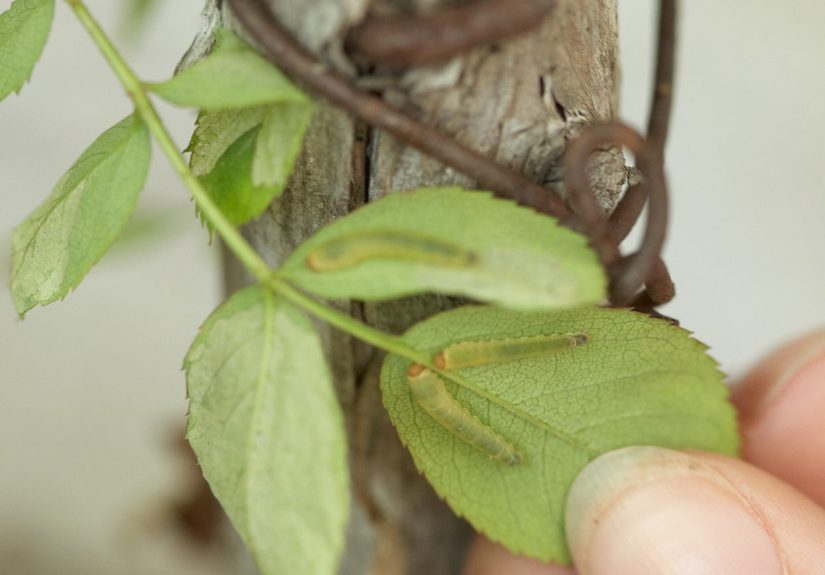
Congrats: you’ve likely met sawfly larvaealso known as rose slugs (not actually slugs, not actually caterpillars, but definitely committed to chaos).
The good news: rose sawfly damage is usually fixable, and you can stop it without turning your garden into a chemical crime scene.
This guide breaks down what works (and what wastes your time), using a practical, step-by-step plan that fits real-life schedules.
First, Make Sure It’s Sawfly Larvae (Rose Slugs)
What they look like
- Small, greenish, worm-like larvaeoften hanging out on the underside of leaves.
- Some species look smooth; others (like bristly rose slug) have tiny spines that can be hard to see without looking closely.
- They may curl up when resting (especially the curled rose sawfly type).
What the damage looks like
- “Windowpane” or “skeletonized” leaves: the soft green tissue is scraped away, leaving veins (and sometimes a thin leaf layer) behind.
- Later damage can include holes and notched edges.
- Damage often starts low or mid-plant and spreads if you don’t intervene.
Quick ID table (because your time is valuable)
| What you see | Most likely culprit | Where to look |
|---|---|---|
| Windowpane/skeletonized patches | Rose slug sawfly larvae | Underside of leaves |
| Holes + some skeletonizing, worse later in season | Bristly rose slug (multiple generations) | Undersides, then throughout |
| Larvae that curl up; heavier defoliation possible | Curled rose sawfly larvae | Leaves and leaflets |
| Neat semicircle cuts on leaf edges | Leafcutter bees (not pests) | Edges only (leave them alone!) |
Why They Keep Coming Back (A Tiny Life Cycle With Big Attitude)
Sawflies go through egg → larva → pupa → adult. Adults lay eggs in or along rose leaves/petioles, larvae feed for a few weeks, then many drop to the soil or litter to pupate.
Some species have just one generation, while others (notably the bristly type) can have multiple waves across the growing season.
Translation: you can “win” in May and still get a surprise rematch in July if you stop scouting.
The Best Strategy: IPM (Integrated Pest Management) for Roses
IPM is just a fancy way of saying: use the least dramatic solution that actually works, and escalate only if needed.
Here’s the plan, from gentlest to stronger options.
Step 1: Start Scouting Early (And Inspect Like a Detective)
The biggest mistake gardeners make is noticing the damage after the larvae have already had a buffet.
Start checking in spring and keep checking weekly during active growth.
How to scout fast (2 minutes per plant)
- Look for skeletonizing/windowpane damage on leaves.
- Flip several leaves and check the undersidesespecially on the lower and mid canopy.
- Scan for tiny green larvae lined up like they’re waiting for a ride at the bus stop.
- Mark “hot spots” (a ribbon tie or quick phone photo helps).
Step 2: Mechanical Control (The “No Drama” Fixes That Work)
Option A: Hand-pick (or glove-pick) and dunk
If you only see a handful, remove them right then. Drop them into a cup of soapy water.
It’s not glamorous, but neither is a rose bush that looks like it fought a blender.
Option B: Blast them off with water
A strong spray from a hose nozzle aimed at the undersides of leaves can knock larvae off.
Many won’t make it back upplus birds and ground predators may finish the job.
Option C: Prune targeted leaves (not the whole plant)
If one section is heavily infested, prune those leaves/leaflets and discard them (don’t compost if you’re dealing with a big outbreak).
This is especially helpful if you’re late to the party and want to stop the spread quickly.
Step 3: Make Your Roses Less Inviting (Cultural Prevention)
Healthy roses can outgrow moderate cosmetic damage faster than stressed roses can say, “I’m not thriving.”
While cultural steps won’t magically erase sawflies, they do reduce how hard an infestation hits.
- Water at the base (not the foliage) and avoid drought stress.
- Mulch lightly to stabilize moisture, but don’t pile mulch against stems.
- Don’t overdo nitrogen: a constant push of tender new growth can attract pests and increase feeding pressure.
- Clean up fallen leaves and plant debris where pupae may hide.
- Space and prune for airflownot because sawflies hate airflow, but because you’ll scout more easily and reduce disease stress.
Step 4: Protect the Good Guys (Biological Control Without Buying a Single Bug)
Birds, beneficial insects, and natural enemies can help keep sawfly populations in checkespecially if you avoid wiping them out with broad-spectrum sprays.
Easy ways to encourage natural predators
- Grow a few small-flower plants nearby (think dill, alyssum, yarrow) to support beneficial insects.
- Avoid persistent, broad-spectrum insecticides when you canthese can harm pollinators and beneficials.
- Use spot treatments instead of blanket spraying everything that’s green and innocent.
Step 5: Low-Impact Sprays (When You Need Reinforcements)
If you’re seeing more larvae than you can reasonably pick off, sprays can helpbut they must contact the larvae.
That means thorough coverage, especially on leaf undersides.
What to use first
- Insecticidal soap: works best on small larvae; requires direct contact; repeat as needed.
- Horticultural oil: can suppress soft-bodied pests and may help with eggs/early stages; apply with care to avoid leaf stress.
- Neem-based products: can reduce feeding and disrupt development in some immature pests; effectiveness varies by product and timing.
How to spray without frying your rose leaves
- Spray early morning or evening (avoid hot sun and high heat days).
- Cover the undersides of leavesthis is where the “rose slug buffet” usually happens.
- Test on a small area first, especially with oils/neem, and wait 24 hours for any leaf sensitivity.
- Recheck in 3–5 days. If larvae are still active, repeat per label directions.
- Avoid spraying open blooms when possible to reduce risk to pollinators.
When you need something stronger (still be smart about it)
Spinosad is often recommended for sawfly larvae and can be effective, but it can also harm some beneficial insects when wet.
If you choose it, apply at dusk or very early morning, avoid spraying flowers, and follow label directions exactly.
What NOT to rely on
Bt (Bacillus thuringiensis) is commonly used for caterpillarsbut it generally doesn’t work on sawfly larvae because they aren’t moth/butterfly caterpillars.
If you used Bt and nothing happened, it wasn’t “bad luck.” It was biology.
A Simple “Do This, Then That” Action Plan
If you find 1–10 larvae on a plant
- Hand-pick or hose-blast them off.
- Check again in 3–4 days.
If you find 10+ larvae or damage is spreading
- Hose-blast first (instant reduction).
- Follow with insecticidal soap or horticultural oil, focusing on leaf undersides.
- Repeat scouting weekly (more often during peak growth).
If you keep getting repeat waves all season
- Assume multiple generations are occurring.
- Stay consistent with scouting and spot treatments.
- Prioritize low-impact approaches to protect natural enemies that can reduce later outbreaks.
Troubleshooting: Why Your Treatments “Did Nothing”
- You sprayed the tops of leaves only (larvae were under the leaves, giggling).
- You waited too long and the larvae had already dropped to pupate.
- You used Bt (effective for caterpillars, not sawfly larvae).
- You sprayed once and expected a season-long miracle (some products require repeat applications).
- Heat + oil/soap stressed the foliage (timing mattersalways follow label precautions).
Prevention That Actually Helps Next Season
You can’t put a “No Sawflies Allowed” sign in the garden and expect compliance, but you can reduce the odds of a big outbreak.
- Spring habit: start underside checks as new leaves expand.
- Sanitation: remove heavily damaged leaves and clean up fallen debris.
- Don’t carpet-bomb the garden: preserve beneficials by avoiding unnecessary broad-spectrum sprays.
- Keep roses vigorous: consistent watering, good sun, and balanced fertility help plants bounce back.
Conclusion: Your Roses Can Win This
Sawfly larvae are annoying, persistent, and oddly talented at hiding on leaf undersidesbut they’re not unstoppable.
The winning combo is simple: scout early, remove fast, spray smart (undersides!), and repeat as needed.
Do that, and your roses can get back to producing flowers instead of auditioning for a “before” photo in a pest-control brochure.
Extra: Real-World Garden Experiences (The Stuff That Doesn’t Fit on a Product Label)
Garden advice sounds wonderfully straightforward until you apply it to real lifewhere it’s 92°F, your hose is tangled like spaghetti,
and the sawfly larvae are somehow always on the one rose bush you planted closest to your neighbor’s patio.
Here are common, experience-based scenarios gardeners run intoand what tends to work best in each.
1) “The leaves look terrible, but I can’t find any bugs.”
This is a classic rose slug moment. Many gardeners only look at the top of the leaf, see the damage, and assume the pest is gone.
In reality, sawfly larvae often feed on the underside, and the “windowpane” damage becomes obvious only after the thin remaining layer dries out.
The fix: pick 10 damaged leaves across the plant, flip them, and check in bright light. If you still don’t see larvae, check again in 2–3 days.
Timing matters; sometimes the larvae have finished feeding and dropped to pupate, which means the best move is prevention and scouting for the next wave.
2) “I sprayed something…and nothing happened.”
There are three usual reasons. First, the spray didn’t contact the larvae (undersides, undersides, undersides).
Second, the product chosen wasn’t a match (Bt is the most common mismatch because sawflies aren’t caterpillars).
Third, the infestation had already moved on to the pupal stage in the soil.
Gardeners who get results tend to do a two-part approach: hose-blast to reduce numbers immediately, then follow with a low-impact spray for the stragglers.
That combo turns “nothing happened” into “oh wow, they’re actually gone.”
3) “They come back every time I think I’m done.”
If you’re dealing with a species that has multiple generations, the comeback isn’t personalit’s predictable.
Gardeners who break the cycle usually do short, consistent check-ins (weekly, or twice weekly during peak growth) rather than a single big intervention.
Think of it like brushing your teeth: one heroic brushing in April does not cover you until September.
The practical trick is to keep a tiny routine: every weekend, inspect three sections of each rose (lower, mid, upper), then act immediately if you spot larvae.
4) “I used soap/oil and the leaves looked…sad afterward.”
This often comes down to timing and plant stress. Oils and soaps can be hard on foliage if applied in hot sun, during heat waves,
or when plants are drought-stressed. Gardeners who avoid leaf issues usually spray early morning or evening,
keep roses well-watered (at the base), and test a small section firstespecially on tender new growth.
Also, more is not better: follow label rates, don’t double-dose, and don’t spray repeatedly “just in case.”
5) “The best ‘treatment’ was…paying attention.”
This sounds annoyingly Zen, but it’s true. The most successful gardeners aren’t necessarily the ones with the most products.
They’re the ones who spot the first few larvae early, remove them quickly, and avoid letting a small problem become a full-season leaf renovation project.
Once you’ve had one season with sawfly larvae, you develop a sixth sense: you notice the first faint windowpane patch and your brain goes,
“Ah yes, the tiny green freeloaders have returned.” Catching them early keeps your roses looking good and reduces the need for stronger sprays.
6) “My roses looked awful, then they bounced back.”
Many gardeners panic when they see skeletonized leaves, but roses are tougher than they look.
If you stop the active larvae and keep the plant healthysteady watering, decent sun, and reasonable fertilityroses often push new growth.
The key is preventing repeated defoliation over multiple generations. One bad month is usually cosmetic; several waves can weaken the plant
and make it more vulnerable to other stressors. That’s why the long game is scouting plus quick response, not perfection.