Table of Contents >> Show >> Hide
- Why Your Pre-Winter Lawn Cut Matters
- First, Know What Kind of Lawn You Have
- How to Cut Your Lawn Before Winter, Step by Step
- 1. Keep Mowing Until the Grass Slows Down
- 2. Lower the Height Gradually, Not All at Once
- 3. Follow the One-Third Rule Every Time
- 4. Aim for the Right Height, Not the Lowest Height
- 5. Mow When the Lawn Is Dry
- 6. Sharpen the Mower Blade Before the Final Rounds
- 7. Manage Leaves While You Mow
- 8. Handle Clippings the Smart Way
- 9. Pair Mowing With Other Smart Fall Lawn Care
- The Best Final-Mow Strategy by Lawn Type
- Common Pre-Winter Mowing Mistakes to Avoid
- What a Healthy Lawn Should Look Like Going Into Winter
- Practical Experiences and Lessons Homeowners Learn the Hard Way
- Final Thoughts
There are two kinds of people in late fall: the ones who lovingly prep their lawn for winter, and the ones who make one heroic final mow in shorts, sneeze through a pile of leaves, and call it landscaping. If you’d prefer a healthier yard next spring, you want to be in the first group.
The truth is, your last few cuts before winter matter more than many homeowners realize. Mow too short, and you stress the grass right before cold weather. Leave it too tall under a blanket of leaves and snow, and you can invite matting, moisture problems, and disease. The sweet spot is not dramatic. It is thoughtful. A few smart mowing decisions in fall can help your lawn green up faster, look thicker, and recover better when spring arrives.
This guide walks through exactly how to cut your lawn before winter, what height makes sense, which mistakes to avoid, and why your grass type matters more than your neighbor’s opinions shouted over the fence.
Why Your Pre-Winter Lawn Cut Matters
Fall mowing is not just about keeping the yard tidy for holiday photos or convincing yourself that outdoor chores count as cardio. It shapes how the turf enters dormancy. Grass that heads into winter at the right height tends to stay cleaner, breathe better, and bounce back more evenly in spring.
When a lawn is left excessively tall going into winter, the blades can flop over, trap moisture, and create a cozy little hideout for trouble. In colder regions, that can mean greater risk of matted turf and snow mold. On the flip side, a lawn cut too low loses valuable leaf area, which weakens the plant and reduces its ability to store energy.
That is why the goal is not a final “super short” mow. The goal is a healthy, moderate height that protects the crown of the grass while reducing excess top growth.
First, Know What Kind of Lawn You Have
Before you touch the mower deck, identify whether your lawn is made up mostly of cool-season grass or warm-season grass. This changes how you should handle late-season mowing.
Cool-Season Grasses
These include tall fescue, Kentucky bluegrass, perennial ryegrass, and fine fescues. They are common in much of the North, Midwest, and transition zone. These grasses actively grow during cool weather, so fall is still an important growth period for them.
For most cool-season lawns, a good target for the final stretch of mowing is around 2.5 to 3 inches, or slightly shorter than your usual high summer setting. That does not mean hacking a 4-inch lawn down to 2.5 inches in one go. It means reducing the height gradually over several mowings if needed.
Warm-Season Grasses
These include bermudagrass, zoysiagrass, centipedegrass, and St. Augustinegrass. They dominate in much of the South. Warm-season lawns typically slow down and go dormant as temperatures cool.
For these lawns, the key is usually to maintain the normal species-appropriate height through fall rather than perform a dramatic pre-winter buzz cut. A severe cut right before dormancy can expose the lawn to unnecessary stress. In many cases, the lower cleanup cut people talk about happens closer to spring green-up, not at the doorstep of winter.
How to Cut Your Lawn Before Winter, Step by Step
1. Keep Mowing Until the Grass Slows Down
Do not stop mowing just because the calendar says “November” or because you are emotionally done with yard work. Keep mowing as long as the grass is still growing. In some regions, that may mean weekly mowing into late fall. In others, growth slows much sooner.
Your cue is the lawn itself. If the grass is still gaining height between cuts, it still needs mowing. A lawn left shaggy for the season’s final stretch can enter winter in worse shape than one that gets a few extra tidy trims.
2. Lower the Height Gradually, Not All at Once
If your cool-season lawn has been maintained on the taller side in late summer, do not suddenly scalp it for the final mow. Lower the mower deck in stages over two or three cuts. That gives the grass time to adjust and prevents shock.
A good example: if you have been mowing tall fescue at 3.5 inches, step it down to 3 inches, then 2.75 or 2.5 inches on the next mow if conditions warrant. That is a healthy transition. Taking off too much at once is basically a bad haircut with root consequences.
3. Follow the One-Third Rule Every Time
This is the golden rule of mowing, and yes, it still applies in fall. Never remove more than one-third of the grass blade in a single mowing. Cutting more than that stresses the plant, reduces photosynthesis, and leaves the lawn more vulnerable.
If the yard got away from you because of rain, travel, or a temporary refusal to acknowledge your responsibilities, mow high first. Then come back a few days later for a second pass at the proper height.
4. Aim for the Right Height, Not the Lowest Height
For cool-season grasses, the late-fall goal is usually a moderate cut, often in the 2.5-to-3-inch range. For warm-season lawns, stick close to the recommended maintenance height for your grass type. Bermudagrass and zoysia are typically kept shorter than tall fescue, while St. Augustine stays taller than centipede.
The point is simple: mow for the grass you have, not for some universal “winter setting” your mower does not actually possess.
5. Mow When the Lawn Is Dry
Wet mowing is messy, uneven, and more likely to leave clumps that smother the turf. It can also create ruts in soft soil, especially during the colder, wetter part of fall.
Pick a dry day. Let dew evaporate. Then mow. Your mower will perform better, your cut will be cleaner, and you will avoid turning your lawn into a damp confetti experiment.
6. Sharpen the Mower Blade Before the Final Rounds
A dull blade tears grass instead of cutting it cleanly. Those ragged tips lose moisture faster, look brown, and can make the lawn more vulnerable to stress and disease. If your yard looked oddly tan a day after mowing this season, your blade may have been more villain than tool.
Sharpen or replace the blade before your final late-season cuts. This is one of the easiest upgrades you can make for a better-looking lawn.
7. Manage Leaves While You Mow
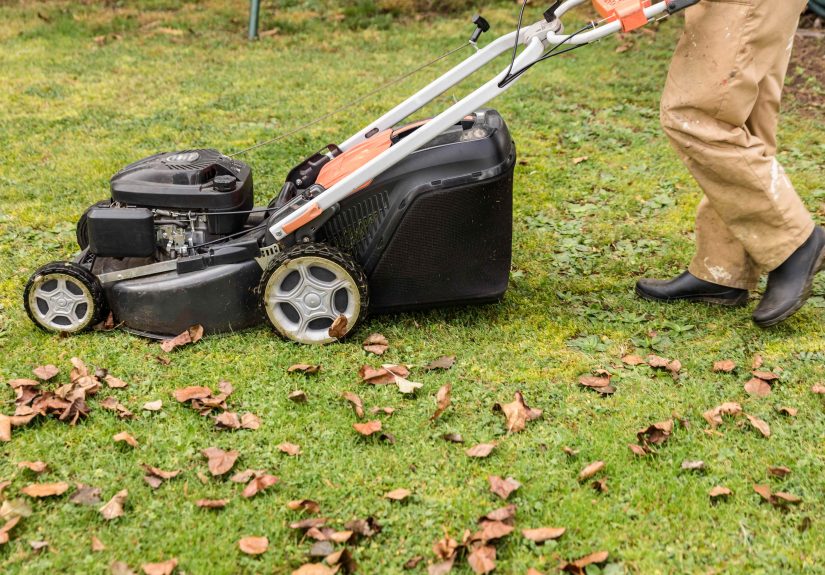
Leaves are not automatically the enemy. A light layer can often be mulched into the lawn, where the tiny chopped pieces break down and return organic matter to the soil. That is efficient, tidy, and much easier than pretending you enjoy raking for fun.
But there is a limit. If the leaf layer is so thick that you cannot see much grass beneath it, mulch mowing is no longer enough. Heavy buildup can smother turf over winter. In that case, mow with a bagger, rake, or remove the excess and compost it elsewhere.
8. Handle Clippings the Smart Way
Short grass clippings usually do not need to be bagged. They break down quickly and can recycle nutrients back into the lawn. The exception is when clumps are heavy, the turf is wet, or you are trying to remove excess leaf litter on the final mow.
If your last cut creates big piles of debris, do not leave them sitting. Spread them out, re-mow, or collect them. A tidy surface going into winter is a better surface.
9. Pair Mowing With Other Smart Fall Lawn Care
Mowing is only one piece of the fall lawn equation. For cool-season lawns, fall is often the best time for overseeding, aeration, and appropriate fertilization. For warm-season lawns, fall care is more about proper mowing, weed management, and avoiding poorly timed nitrogen applications that can push tender growth too late in the season.
If your lawn is thin, patchy, or compacted, a good fall mowing plan works even better when combined with the right seasonal maintenance for your region and grass type.
The Best Final-Mow Strategy by Lawn Type
If You Have Tall Fescue or Kentucky Bluegrass
Keep mowing as long as the lawn grows. Gradually move the height down if you have been mowing very high, and finish around 2.5 to 3 inches. Remove leaves often enough that they never form a thick mat.
If You Have Fine Fescue
These grasses are often maintained a bit differently depending on the look you want, but a fall mow can help remove excess material and reduce winter mess. Avoid going too short.
If You Have Bermudagrass or Zoysiagrass
Maintain normal mowing height into fall while the lawn is still actively growing. Do not confuse a spring cleanup cut with a pre-winter scalp. The timing matters.
If You Have Centipede or St. Augustine
Keep the lawn neat, mow at the appropriate species height, and avoid an aggressive late-season cut. These grasses generally do not benefit from being chopped down hard right before dormancy.
Common Pre-Winter Mowing Mistakes to Avoid
- Scalping the lawn: Cutting too low weakens the grass and exposes the crown.
- Stopping too early: Grass that is still growing still needs mowing.
- Ignoring leaves: A thick blanket of leaves can smother turf over winter.
- Mowing wet grass: It leads to clumping, uneven cuts, and sometimes ruts.
- Using a dull blade: Torn grass tips look rough and recover poorly.
- Dropping mower height too fast: Gradual adjustment is safer than one dramatic chop.
- Using the same advice for every lawn: Cool-season and warm-season grasses do not want identical treatment.
What a Healthy Lawn Should Look Like Going Into Winter
By the final mow, your lawn should look clean, even, and moderately trimmed, not shaved down to stubble. You should be able to see healthy turf with minimal debris on top. There should be no thick leaf mats, no heavy clumps of clippings, and no ruts from mowing soggy soil.
Think of it this way: you are not trying to make the lawn look “finished forever.” You are trying to send it into winter in stable condition. Healthy roots, moderate blade height, and a clean surface set the stage for better spring recovery.
Practical Experiences and Lessons Homeowners Learn the Hard Way
One of the most common lawn regrets shows up in early spring. A homeowner looks outside, sees thin brown patches, and assumes winter was just unusually rough. Sometimes that is true. But often the damage started with fall habits. The lawn was left too tall under wet leaves, or it was cut too short in one final marathon mow because the owner wanted to “be done with it.” The result is the same: spring arrives, and the grass looks tired before it has even had a chance.
Homeowners with cool-season lawns often notice the biggest difference when they stop treating the final mow like a dramatic event. The better approach is almost boring in the best way. They continue mowing into late fall, lower the height slightly over time, mulch leaves when the layer is light, and remove them when the buildup gets heavy. Come spring, these lawns usually green up more evenly and need less panic-raking, less patch seeding, and fewer muttered apologies to the yard.
People in colder climates also learn that snow mold and matted grass are not just abstract gardening terms invented to sell products. If the lawn goes into winter long, messy, and buried under leaf litter, the surface can stay damp and pressed down for weeks. On the other hand, a lawn that was cut to a sensible height and kept reasonably clean tends to emerge with fewer ugly surprises.
Warm-season lawn owners have their own version of this lesson. Many hear that they should cut lower “before winter,” but the timing gets misunderstood. They scalp too late in fall, stress the lawn before dormancy, and then wonder why spring recovery feels slow. In reality, warm-season turf usually responds better when it is maintained properly through fall and then cleaned up at the right time near green-up. That timing difference matters more than people expect.
Another practical lesson involves mower blades. Homeowners are often shocked by how much better the lawn looks after sharpening the blade. The color improves, the cut looks more even, and the grass does not get those ragged brown tips that make a decent lawn look sad. It is one of those maintenance jobs that feels optional until you do it once and realize your mower had been chewing instead of cutting.
Leaf management also tends to separate the thriving lawns from the struggling ones. A light layer of mulched leaves is usually helpful. A thick soggy blanket of whole leaves is not. The experienced homeowner learns to watch the lawn, not just the trees. If the grass is still visible after mulching, great. If not, it is time to bag, rake, or compost the excess. That small decision can make a huge difference by March.
In real neighborhoods, the healthiest spring lawns are rarely the ones that got the most dramatic treatment in fall. They are the ones that got the steadiest, smartest care. A reasonable height. A sharp blade. Dry mowing conditions. No giant leaf blanket. No last-minute scalping stunt. Just solid lawn care that quietly pays off when the weather warms up and your grass wakes up looking like it actually had a restful winter.
Final Thoughts
If you want a healthier yard next spring, focus less on giving your lawn one final aggressive cut and more on guiding it gently into dormancy. Keep mowing as long as it grows. Use the right height for your grass type. Never remove too much at once. Mow dry. Use a sharp blade. Stay ahead of leaves.
That may not sound flashy, but lawns love boring competence. And in spring, boring competence looks a lot like a thicker, greener yard.