Table of Contents >> Show >> Hide
- Why Kale Tastes Amazing One Day and Aggressively Healthy the Next
- Before You Cook: How to Prep Kale So It Tastes Better
- Method 1: Sautéed Kale for Fast, Garlicky Flavor
- Method 2: Roasted Kale for Crispy Edges and Big Personality
- Method 3: Braised Kale for Deep, Cozy, Slow-Cooked Flavor
- Method 4: Steamed Kale for Clean Flavor That Loves a Bold Finish
- How to Reduce Kale’s Bitterness Without Hiding It
- Common Kale Mistakes to Avoid
- Which Kale Method Is Best?
- Extra Kitchen Experience: What Cooking Kale Teaches You About Flavor
- Conclusion
- SEO Tags
Kale has a reputation problem. Somewhere between the smoothie era and the salad era, it got branded as the vegetable equivalent of doing taxes: good for you, probably necessary, and not exactly thrilling. That is deeply unfair to kale. When it is cooked well, kale is earthy, savory, a little nutty, pleasantly bitter in the way dark chocolate is pleasantly bitter, and sturdy enough to stand up to big flavors without collapsing into green mush.
When it is cooked badly, though? It can taste like lawn clippings that lost the will to live. The good news is that kale is not difficult. It is just a leafy green with opinions. Give it salt, fat, acid, and the right heat, and it becomes one of the most flexible vegetables in your kitchen. In this guide, you will learn how to cook kale four different ways for maximum flavor: sautéed, roasted, braised, and steamed. You will also learn how to prep it properly, how to make it less bitter, and how to turn this famously tough green into something people actually fight over at dinner.
Why Kale Tastes Amazing One Day and Aggressively Healthy the Next
Kale is a cruciferous vegetable, which means it brings bold flavor, sturdy leaves, and a little natural bitterness to the party. That bitterness is not a flaw. It is part of kale’s charm. But it does mean kale benefits from smart cooking. The trick is balance. Bitter greens love rich ingredients like olive oil, butter, bacon, nuts, or cheese. They also love sharp ingredients like lemon juice, vinegar, mustard, and chili flakes. Think of kale like that dramatic friend who becomes delightful the second snacks arrive.
Texture matters too. Curly kale is frilly and great for crisp edges. Lacinato kale, sometimes called dinosaur kale or Tuscan kale, is flatter, darker, and often a little more tender. Red Russian kale is softer and slightly sweeter. Any of them can work here, but each behaves a little differently. Curly kale tends to get the crunchiest in the oven, while lacinato is especially good for sautés and braises.
Before You Cook: How to Prep Kale So It Tastes Better
1. Wash it like you mean it
Kale is famous for hiding grit in its ruffles and folds. If it is not labeled pre-washed or ready to use, give it a thorough rinse in cool water. Swish the leaves around, lift them out, and repeat if needed. Nobody wants a side dish that crunches for the wrong reason.
2. Remove or manage the stems
The stems are edible, but they are tougher than the leaves. For fast cooking methods, strip the leaves from the stems and chop the leaves. If you do not want to waste the stems, slice them thinly and start cooking them a few minutes earlier. They add great texture to sautés, soups, and braises.
3. Dry the leaves well
This step matters most for roasting. Wet kale steams instead of browning, and steamed kale chips are just sad salad confetti. Use a salad spinner or kitchen towels until the leaves are as dry as you can reasonably get them.
4. Chop with purpose
For sautéing and braising, bite-size pieces are ideal. For roasting, tear the leaves into slightly larger pieces because they shrink in the oven. For steaming, rough chopping is fine since the leaves will soften quickly.
Method 1: Sautéed Kale for Fast, Garlicky Flavor
If you want the quickest route to delicious kale, sautéing wins. This method softens the leaves, keeps some pleasant chew, and gives you plenty of room to pile on flavor. It is ideal for weeknights, grain bowls, pasta, eggs, roasted chicken, and those evenings when dinner is basically “whatever is in the fridge plus hope.”
How to do it
Heat olive oil in a large skillet over medium heat. Add sliced garlic, shallots, or onion first and cook until fragrant. Then add the kale and toss until it turns bright green and starts to wilt. If the pan looks dry or the leaves are still stubborn, add a splash of water or broth, cover briefly, and let the kale steam for a minute or two. Finish uncovered so any extra liquid evaporates.
How to make sautéed kale taste fantastic
The finishing move is what separates “I am eating vegetables because adulthood” from “Wait, who ate all the kale?” Add a squeeze of lemon juice, a dash of red pepper flakes, flaky salt, black pepper, and maybe a shower of Parmesan. You can also go in other directions: soy sauce and sesame oil for an Asian-inspired version, smoked paprika and garlic for a deeper savory edge, or a splash of apple cider vinegar if you want brightness.
Best pairings for sautéed kale
Sautéed kale is wonderful with white beans, sausage, mushrooms, chickpeas, caramelized onions, roasted sweet potatoes, or a fried egg. It also slips beautifully into mac and cheese, lasagna, and warm grain bowls. Basically, if your meal needs one thing that tastes fresh but still hearty, sautéed kale is your answer.
Method 2: Roasted Kale for Crispy Edges and Big Personality
Roasting transforms kale. The leaves shrink, the edges crisp, and the flavor gets nuttier and less sharp. This method can give you classic kale chips, but it can also produce something even better: roasted kale that is partly crisp, partly tender, and deeply savory. Think of it as the leafy green version of a perfectly roasted Brussels sprout.
How to do it
Heat the oven to 350 to 425 degrees Fahrenheit, depending on whether you want delicate chips or more deeply roasted leaves. Tear the kale into pieces, remove the thick center ribs, dry thoroughly, and toss lightly with olive oil and salt. Spread it in a single layer on a baking sheet. Do not crowd the pan. Give the leaves room, or they will steam and sulk.
For chip-style kale, bake until crisp, usually around 12 to 18 minutes. Check early and rotate the pan if needed. For a roastier side dish with mixed texture, use slightly higher heat and pull it when the edges are crisp but some centers still have a little chew.
Flavor boosters for roasted kale
This is where you can get playful. Try garlic powder, onion powder, nutritional yeast, chili flakes, za’atar, smoked paprika, grated Pecorino, sesame seeds, or a light dusting of Parmesan after baking. A tiny squeeze of lemon at the end wakes everything up. Just go easy on the oil. Too much oil makes kale greasy instead of crisp, which is not the glamorous outcome anyone wants.
When roasted kale works best
Serve it as a snack, scatter it over soup, add it to grain bowls, or use it as a crunchy topping for roasted fish, chicken, or pasta. It is also a fun way to convert a kale skeptic, because crispy vegetables tend to have excellent public relations.
Method 3: Braised Kale for Deep, Cozy, Slow-Cooked Flavor
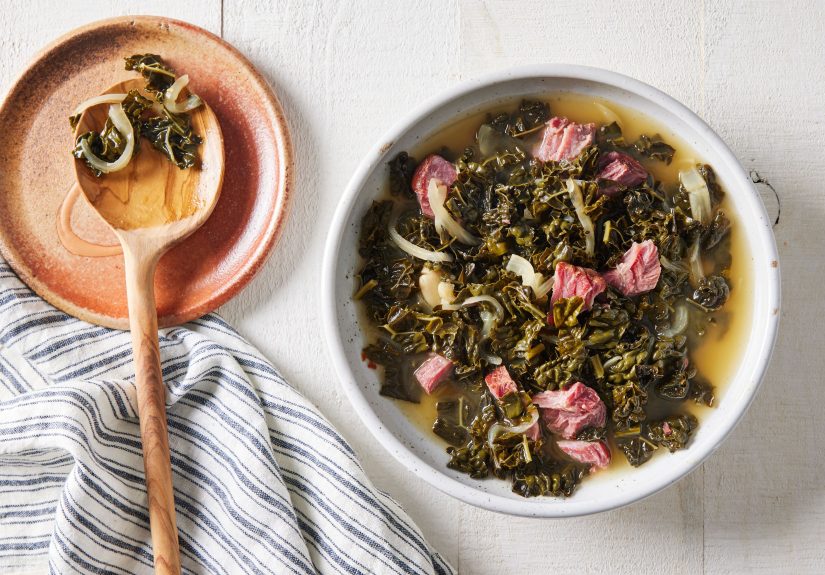
Braising is the method for people who want kale to become silky, savory, and completely settled into the rest of the dish. Instead of fighting kale’s toughness, braising uses it. The leaves hold up beautifully in broth, stock, tomato juices, or pot liquor, soaking up flavor while turning tender and rich.
How to do it
Start with olive oil in a pot or Dutch oven. Cook onions or shallots until softened, then add garlic and maybe a little red pepper. Add chopped kale and stir until it begins to wilt. Pour in a small amount of broth, stock, or even tomatoes with their juices. Cover and simmer gently until the kale is tender, usually 10 to 20 minutes depending on the variety and how soft you want it.
How to build great braised kale flavor
Braised kale loves smoky, meaty, and umami-rich ingredients. Bacon, pancetta, ham hock, sausage, anchovy, white beans, mushrooms, or tomatoes all work beautifully. A splash of vinegar at the end keeps the dish from tasting flat. So does a small knob of butter. If you want a vegetarian version with serious depth, use vegetable broth, onions, garlic, tomato paste, and a touch of miso.
What braised kale is perfect for
Serve it with cornbread, roast chicken, pork chops, creamy polenta, mashed potatoes, or beans and rice. It is especially good in cooler weather, when a quick sauté feels too cheerful and you want your greens to have a little more emotional range.
Method 4: Steamed Kale for Clean Flavor That Loves a Bold Finish
Steaming does not always get the spotlight, but it deserves more respect. It is gentle, quick, and keeps kale tender without waterlogging it. The secret is that steamed kale needs a strong finish. On its own, it is mild and pleasant. Dressed properly, it becomes bright, punchy, and surprisingly addictive.
How to do it
Bring an inch or two of water to a simmer in a pot fitted with a steamer basket. Add chopped kale, cover, and steam until just tender. Depending on the thickness of the leaves, that usually takes around 5 to 10 minutes. You want the leaves softened and bright green, not cooked into oblivion.
How to make steamed kale memorable
As soon as it comes out, season it while it is hot. Toss with olive oil or butter, lemon juice, salt, pepper, minced garlic, toasted sesame oil, crushed nuts, chili crisp, or a spoonful of vinaigrette. This is also a great method if you want a lighter side dish but still want real flavor. Steamed kale pairs especially well with tahini sauce, yogurt-based dressings, or mustard vinaigrettes.
Why steaming is underrated
Because it gives you a clean slate. If you are serving rich mains like salmon, meatloaf, or mac and cheese, steamed kale provides freshness without competing too much. It is also a nice option when you want kale to taste like itself, only softer and friendlier.
How to Reduce Kale’s Bitterness Without Hiding It
If you have ever taken a bite of kale and felt like your mouth had been judged, use these simple fixes:
- Add acid: lemon juice, balsamic vinegar, sherry vinegar, or apple cider vinegar.
- Add fat: olive oil, butter, avocado, nuts, tahini, cheese, or even a bit of bacon fat.
- Add salt thoughtfully: enough to season, not enough to turn dinner into a science experiment.
- Cook it a little longer: undercooked kale can taste harsher than properly tender kale.
- Pair it with sweetness: raisins, dates, caramelized onions, roasted squash, apples, or maple mustard dressing all work well.
Common Kale Mistakes to Avoid
- Not drying it before roasting: moisture is the enemy of crisp edges.
- Using too much oil: kale needs coating, not a spa treatment.
- Skipping acid: lemon or vinegar often makes the whole dish taste more alive.
- Ignoring the stems: they are useful if sliced thin and cooked properly.
- Overcrowding the pan: especially in the oven, where crowding leads to steaming.
Which Kale Method Is Best?
If you want speed, choose sautéed kale. If you want crunch, roast it. If you want comfort, braise it. If you want clean flavor and a light side dish, steam it. The best method depends on the meal, your mood, and whether you want your vegetables elegant, cozy, or just delightfully crispy enough to eat half the tray before dinner.
Extra Kitchen Experience: What Cooking Kale Teaches You About Flavor
One of the funniest things about kale is that it rarely wins anyone over on first impression. Spinach shows up to the party soft, agreeable, and low-maintenance. Kale arrives wearing boots and asking whether your skillet is hot enough. That is exactly why cooking kale is such a useful kitchen lesson. It teaches patience, balance, and the very important culinary truth that not every ingredient is supposed to be lovable in its raw form.
In real home cooking, the first experience many people have with kale is disappointment. They toss it in a pan for two minutes, sprinkle on a little salt, take a bite, and wonder why dinner tastes like a health resolution from January 2. The problem is usually not the kale. The problem is expectation. Kale is hearty. It needs enough heat to soften, enough seasoning to wake up, and enough confidence from the cook to let it become what it wants to be.
That is why sautéed kale is such a game changer. The moment garlic hits warm olive oil and kale follows it into the pan, the kitchen starts smelling less like obligation and more like dinner. Add a squeeze of lemon at the end and suddenly the bitterness turns sophisticated instead of bossy. The same thing happens with braised kale. At first it seems too sturdy for a pot of broth and onions, but give it ten or fifteen minutes and it relaxes into the dish like it belonged there all along.
Roasting teaches a different lesson: dryness is not always a bad thing. In fact, for kale, it is often the difference between crisp and floppy. Anyone who has made a tray of limp kale chips understands this immediately. The leaves need space. They need dry surfaces. They need just enough oil to conduct heat and carry flavor. Then the edges curl and crisp, and suddenly kale becomes a snack you eat standing over the stove, pretending you are only “checking the texture.”
Steaming, meanwhile, is where restraint comes in. It is easy to overlook because it seems simple, almost too simple. But steamed kale shows how powerful a finish can be. A drizzle of good olive oil, a bit of lemon, flaky salt, black pepper, maybe toasted almonds or sesame seeds, and a plain green vegetable turns into something focused and elegant. It is proof that maximum flavor does not always require maximum complication.
There is also something satisfying about how forgiving kale can be once you understand it. Overcook delicate greens and they disappear into sadness. Kale can handle more heat, more stirring, more sauce, more time. It is resilient. That makes it useful for cooks who are multitasking, feeding families, or trying to pull dinner together while answering emails and wondering why one sock always vanishes in the dryer.
Perhaps the best experience of all is realizing how many flavors kale can carry. It works with lemon and Parmesan, garlic and chili, bacon and beans, tahini and sesame, tomatoes and broth, apples and mustard. It can be rustic, polished, cozy, crisp, sharp, or mellow. Once you learn how to cook kale four different ways for maximum flavor, it stops being “that healthy green” and starts becoming one of the most versatile ingredients in your kitchen.
And honestly, that may be kale’s greatest trick. It begins as a vegetable people think they should eat, and ends as a vegetable they actually want to eat. That is not just good cooking. That is a tiny kitchen miracle.
Conclusion
Kale does not need better marketing. It needs better cooking. Sauté it for speed, roast it for crunch, braise it for comfort, or steam it for a cleaner, lighter side. In every case, the formula stays beautifully simple: prep it well, season it boldly, and balance its natural bitterness with fat, acid, and salt. Do that, and kale stops tasting like a chore and starts tasting like dinner.