Table of Contents >> Show >> Hide
- The Goal: “Tender-Crisp,” Not “Fork-Disintegrates”
- Why Carrots Turn Mushy (So You Can Stop It)
- Carrot Prep That Protects Texture
- The No-Mush Timing Chart (Use This Like a Cheat Code)
- Best Methods for Firm, Non-Mushy Carrots
- Method 1: Roast at High Heat (The “Crisp Edges, Sweet Centers” Classic)
- Method 2: Parboil, Then Roast (For Thick Carrots That Refuse to Cook Evenly)
- Method 3: Steam (The Cleanest “Tender-Crisp” Option)
- Method 4: Blanch + Shock (Restaurant Texture With Home-Kitchen Effort)
- Method 5: Glazed Carrots (Shiny, Sweet, and Still Structured)
- Method 6: Sauté / Stir-Fry (Fast Heat, Fast Results)
- Method 7: Microwave Steam (Yes, ReallyIt’s Not a Crime)
- Method 8: Air Fryer Carrots (When You Want Roasting Energy, Faster)
- Advanced Texture Tricks (Optional, but Fun)
- Troubleshooting: When Things Go Wrong
- Make-Ahead Strategy: Crisp Now, Crisp Later
- Kitchen Experiences: 10 Real-Life Lessons From the Land of Not-Mushy Carrots
- Conclusion
Carrots have two main personality types: crisp and confident or sad and mushy. And somehow, when we’re not watching,
they sprint straight into Baby Food Territory. If you’ve ever pulled a pan of carrots out of the oven and discovered they’ve become a sweet orange paste
that politely refuses to hold its shapewelcome. You’re among friends.
The good news: you don’t need fancy chef powers. You need controlover cut size, heat, water, and time. This guide breaks down exactly how to
cook carrots so they stay tender-crisp (not squeaky-raw, not kindergarten-cafeteria soft), with method-specific tips, timing targets,
and a few “don’t do this unless you want carrot pudding” warnings.
The Goal: “Tender-Crisp,” Not “Fork-Disintegrates”
“Not mushy” doesn’t mean “barely cooked.” It means the carrot still has a slight bitethe fork goes in, but you feel a little resistance.
Think al dente, but for a vegetable that’s been told all its life it’s supposed to be sweet.
How to test doneness (the fastest truth serum)
- Fork test: The fork should pierce easily, but not slide through like warm butter.
- Taste test: One bite should feel juicy and structured, not grainy or collapsing.
- Visual cue: Edges may brown (roasting/air frying), but the centers should still look intact.
Why Carrots Turn Mushy (So You Can Stop It)
Mushy carrots usually come from one (or a tag-team combo) of these issues:
- Overcooking: Even 2–3 extra minutes can push carrot cells past “tender” into “surrender.”
- Too much water + too much time: Long simmering is basically a spa day for carrots… until they dissolve.
- Cut too small: Thin coins cook fast, then keep cooking while you’re doing literally anything else.
- Carryover cooking: Hot carrots keep softening after you pull them off heatespecially if covered.
- Alkaline additives (looking at you, baking soda): They can soften vegetables faster and make mush more likely.
Carrot Prep That Protects Texture
1) Start with firm carrots (your texture begins at the grocery store)
Fresh carrots should feel firm and crisp, not limp or bendy. If you’re choosing between “snaps when you try to bend it” and
“kinda floppy like a sad wand,” choose the snappy one. Firmer carrots roast better, hold shape better, and give you more wiggle room on timing.
2) Cut for the method (size is your secret thermostat)
Uneven pieces cook unevenlysome go mushy while others stay tough. Aim for uniform cuts:
- Roasting: 1/2-inch thick diagonal slices or 1/2-inch batons (sticks) for a sturdy bite.
- Sauté/stir-fry: Matchsticks (julienne) or thin coins for quick cookingwatch closely.
- Steaming/boiling: Coins or chunks, but keep them consistent in thickness.
- Glazing: Coins or small batons work well because the glaze clings evenly.
3) Dry carrots roast better (wet carrots steam)
If your carrots are wet when they hit the pan, the surface steams first, delaying browning and encouraging softer texture. Pat them dry before roasting or air frying.
Browning = flavor + better structure.
4) Salt smartly
Salt early for roasting and sautéing so seasoning penetrates. For blanching, salt the water so the carrots taste like themselves (but better), not like warm faucet water.
The No-Mush Timing Chart (Use This Like a Cheat Code)
| Method | Best Cut | Typical Time | Key Move to Avoid Mush |
|---|---|---|---|
| Roast (425–450°F) | 1/2-inch batons or thick diagonal slices | 20–40 min | Single layer + pull when just tender |
| Sauté / Stir-fry | Matchsticks or 1/4-inch coins | 5–10 min | High heat + frequent tossing |
| Steam (stovetop) | Coins or chunks | 6–12 min | Start timer when steam is steady |
| Blanch + Shock | Coins or batons | 2–5 min | Ice bath immediately |
| Glaze (butter + water + sugar) | Coins | 8–12 min | Finish uncovered to reduce glaze |
| Microwave steam | Coins or small batons | 3–6 min | Stop early + rest 1 min |
| Air fryer (400°F) | Batons | 12–18 min | Shake halfway + don’t overcrowd |
Best Methods for Firm, Non-Mushy Carrots
Method 1: Roast at High Heat (The “Crisp Edges, Sweet Centers” Classic)
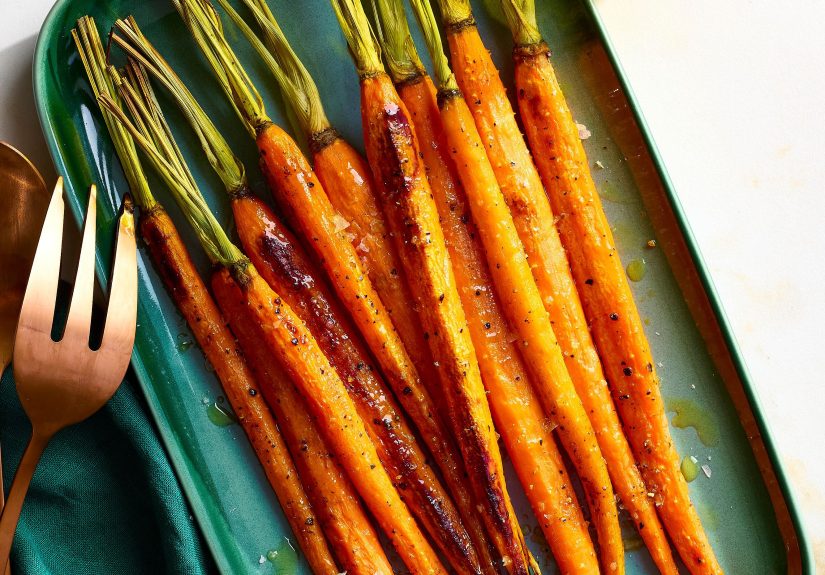
Roasting is the most reliable way to get carrots that are sweet, caramelized, and still structured. High heat evaporates surface moisture quickly,
helping edges brown before the insides turn soft.
- Heat the oven: 425–450°F. (Convection roast is great if you have it.)
- Cut evenly: 1/2-inch batons or thick diagonal slices.
- Dry + coat: Pat dry, then toss with oil, salt, pepper.
- Space matters: Spread in a single layer with breathing room. Crowding = steaming = softness.
- Roast: 20–40 minutes depending on size, tossing once halfway.
- Pull at “just tender”: They keep cooking a bit after you remove them.
Example flavor combos that won’t sabotage texture:
- Honey-balsamic: Add honey + balsamic near the end so sugars don’t burn while carrots finish.
- Harissa + cumin: Bold spices cling well and make carrots taste like they’ve been to culinary finishing school.
- Garlic + thyme + lemon zest: Add lemon at the end for brightness (and to avoid soggy citrus bitterness).
Method 2: Parboil, Then Roast (For Thick Carrots That Refuse to Cook Evenly)
If you’re roasting big, dense carrots, the outside can brown while the inside stays stubborn. A brief parboil gives you a head start so roasting finishes
the job with caramelizationwithout needing extra oven time that turns them soft and wrinkly.
- Simmer cut carrots in salted water for 3–5 minutes until barely starting to soften.
- Drain well and let steam-dry for a minute (wet carrots won’t brown).
- Roast at 375–425°F until browned and tender, typically 20–35 minutes depending on cut size.
Method 3: Steam (The Cleanest “Tender-Crisp” Option)
Steaming is gentle, fast, and surprisingly easy to overdo if you wander off. The trick is to treat the timer like it’s a smoke alarm: ignore it at your own risk.
- Add a small amount of water to a pot (about an inch), bring to a simmer.
- Place carrots in a steamer basket (or use a shallow-pan steam method with a tight lid).
- Cover and steam until tender-crisp: usually 6–10 minutes for coins, 10–12 for thicker chunks.
- Uncover immediately and serveor toss with butter/herbs so they stop cooking.
Method 4: Blanch + Shock (Restaurant Texture With Home-Kitchen Effort)
Blanching is a quick partial cook. Shocking in ice water stops cooking instantly, locking in color and texture. This is the method when you want carrots
that are crisp-tender now and still crisp-tender later.
- Bring a pot of salted water to a boil.
- Add carrots and cook 2–3 minutes (thin coins) or 3–5 minutes (batons) until barely tender-crisp.
- Drain and plunge into an ice bath immediately.
- Dry well. Finish by sautéing, glazing, or reheating briefly before serving.
Method 5: Glazed Carrots (Shiny, Sweet, and Still Structured)
Glazing is basically controlled simmering: you cook carrots in a small amount of liquid (often water + butter + sugar/honey), then reduce that liquid into a glossy coating.
The anti-mush move is finishing uncovered so the glaze thickens quickly instead of continuing to steam the carrots into softness.
- Add carrots to a skillet with butter, a little water (or stock), salt, and a spoon of sugar/honey.
- Cover and simmer 5–7 minutes until close to tender-crisp.
- Uncover and cook 2–4 minutes, tossing, until the liquid reduces and coats the carrots.
- Finish with pepper, herbs, or a squeeze of lemon.
Method 6: Sauté / Stir-Fry (Fast Heat, Fast Results)
Sautéing works great when you want carrots with bite in under 10 minutes. High heat helps them stay snappylow heat turns them into slow-cooked softness.
- Cut small and uniform (matchsticks are ideal).
- Use a hot pan with oil first, then add carrots.
- If you need help cooking through, add 1–2 tablespoons water and cover for 1 minute, then uncover and let moisture evaporate.
- Stop at tender-crisp; toss with butter, sesame oil, or a quick glaze.
Method 7: Microwave Steam (Yes, ReallyIt’s Not a Crime)
The microwave is excellent for tender-crisp carrots because it’s fast and doesn’t require drowning them in water. The danger is going 60 seconds too long.
So cook in short bursts and check early.
- Put carrots in a microwave-safe bowl with 2–3 tablespoons water.
- Cover (lid or plate). Microwave on high for 3–5 minutes.
- Let rest 1 minute (carryover happens), then test.
- If needed, add 30-second bursts until just tender-crisp.
Method 8: Air Fryer Carrots (When You Want Roasting Energy, Faster)
Air fryers are basically small convection ovens that are impatient (and we respect that). They brown quickly and can keep carrots from going softif you don’t overcrowd.
- Cut into batons, pat dry, toss with oil and salt.
- Air fry at 400°F for 12–18 minutes, shaking halfway.
- Check early; pull when the fork meets slight resistance.
Advanced Texture Tricks (Optional, but Fun)
Use acidity strategically (especially if you tend to overcook)
A small splash of vinegar or lemon in the cooking liquid can help vegetables stay firmer because acidity slows the breakdown of the “glue” in plant cell walls.
The trade-off: it may take slightly longer to soften, and you’ll taste the tangso use it as a subtle assist, not a sour prank.
Avoid alkaline shortcuts if you want bite
Baking soda (alkaline) can soften vegetables faster. That’s great when you want creamy beans or ultra-soft potatoesbut it’s the opposite of what you want
for carrots with structure. If you’ve ever wondered why your carrots went from “fine” to “baby food” in seconds, check whether you added anything alkaline.
Don’t trap steam after cooking
Covering hot carrots or leaving them in hot water is basically signing them up for extra cooking. Drain, uncover, and get them onto a plate or into a cool-ish bowl quickly.
Troubleshooting: When Things Go Wrong
“My carrots are mushy. Can I fix them?”
You can’t un-mush a carrot (if you figure out how, please accept your Nobel Prize). But you can pivot:
- Blend into carrot soup with ginger and coconut milk.
- Mash with butter and a pinch of cumin.
- Turn into a quick purée for bowls, pasta, or spreads.
- Fold into muffins, pancakes, or carrot cake batter.
“My carrots are tough, not mushy.”
- They’re likely undercooked or cut too thick for the time used. Keep cooking in short bursts.
- For roasting, consider the parboil-then-roast method next time.
“They’re cooked but kind of bland.”
Carrots love salt and fat. Finish with butter, olive oil, herbs, or a tiny drizzle of honey. A pinch of spice (cumin, chili flakes, paprika) adds depth fast.
For brightness, add acid at the end (lemon/vinegar), not early, if you want quicker cooking.
Make-Ahead Strategy: Crisp Now, Crisp Later
If you’re cooking for guests or meal prep, do this:
- Blanch + shock carrots until tender-crisp.
- Dry thoroughly and refrigerate in an airtight container.
- To serve, reheat quickly: a hot skillet with butter for 2–4 minutes, or a hot oven for 5–8 minutes.
This gives you a bigger safety margin than cooking from raw at the last secondbecause “last second” is when carrots sense fear and become mush.
Kitchen Experiences: 10 Real-Life Lessons From the Land of Not-Mushy Carrots
I used to think mushy carrots were just… fate. Like taxes, or that one sock that disappears in the laundry and starts a new life somewhere tropical. My “method”
was basically: cut carrots, cook carrots, forget carrots, rediscover carrots as orange sadness. Over time (and after enough holiday dinners where the carrots
looked like they’d been through emotional hardship), I started paying attention to what actually made the difference.
Lesson one: carrots punish multitasking. You can sauté onions and still answer a text. You can roast chicken and still set the table.
But if you’re steaming carrot coins and you wander off to “just quickly” do something else, you’ll come back to a pot of soft orange rounds that can be
cut with a stern look. Once I started setting timersreal timers, not “my brain will remember”my success rate jumped immediately.
Lesson two: cut size is basically a volume knob for mush. I used to slice carrots thin because it felt efficient. It’s not efficientit’s risky.
Thin slices cook fast, then keep cooking while you’re draining pasta, plating, or negotiating with a child about why vegetables are not “suspicious.”
Switching to thicker diagonal slices for roasting gave me a cushion: the edges browned before the centers collapsed. Suddenly my carrots had textureand dignity.
Lesson three: crowding the pan is a silent saboteur. I once roasted carrots on a sheet pan so packed they were basically spooning.
They came out soft and pale, like they’d been steamed in a beige sauna. The fix was simple: more space, higher heat, and (when I’m feeling extra)
preheating the sheet pan so the carrots start sizzling the second they land. The difference is dramaticmore caramelization, less steaming, and that satisfying
“tender with a bite” texture that makes carrots feel like a real side dish instead of a vegetable obligation.
Lesson four: carryover cooking is real. The first time I nailed roasted carrots, I left them covered on the counter “to keep warm.”
Ten minutes later they’d softened noticeably. Now I either serve right away, or I keep them warm uncovered in a low oven so steam doesn’t get trapped.
If I’m glazing carrots, I finish uncovered so the sauce reduces quickly instead of continuing to steam the carrots into softness.
Lesson five: blanch-and-shock is the ultimate dinner-party flex. The first time I tried it, I felt like I’d unlocked a secret chef level:
vibrant color, crisp-tender texture, and zero stress because the carrots were basically “pre-done.” Later, I just finished them in a hot skillet with butter
and herbs for a couple minutes. Guests thought I was organized. I did not correct them.
Finally, the most humbling lesson: even perfect carrots can be ruined by one extra minute “just to be sure.” Carrots don’t need “sure.”
They need “just right.” Pull them when they’re slightly firmer than your final goal, because they’ll coast into perfectionif you let them.
Conclusion
If you remember nothing else: cook carrots hot and fast (or gently and briefly), cut them evenly, don’t drown them, and stop cooking sooner than you think.
Roasting at high heat, steaming with a strict timer, and blanching with an ice bath are your best anti-mush tools. Once you lock in texture, flavor becomes easy
butter, herbs, spices, glazes, and bright finishes can do the rest.