Table of Contents >> Show >> Hide
- Step 1: Get painfully specific about what you want (and why he should care)
- Step 2: Pick the right “door” (because the front door isn’t always the fastest)
- Step 3: For speaking requests, use the official “Book a Branson” pathway
- Step 4: For philanthropy or impact initiatives, go through Virgin Unite (and do your homework)
- Step 5: For interviews, statements, or media, contact the correct press office (not “the internet”)
- Step 6: Use public platforms strategically (LinkedIn and social media: short, respectful, and human)
- Step 7: Write an outreach message that gets read (cold-email rules for contacting powerful people)
- Common mistakes to avoid (a.k.a. how not to get filtered)
- Conclusion: The smart way to reach Richard Branson (without being weird about it)
- Real-World Outreach Experiences
- SEO Tags
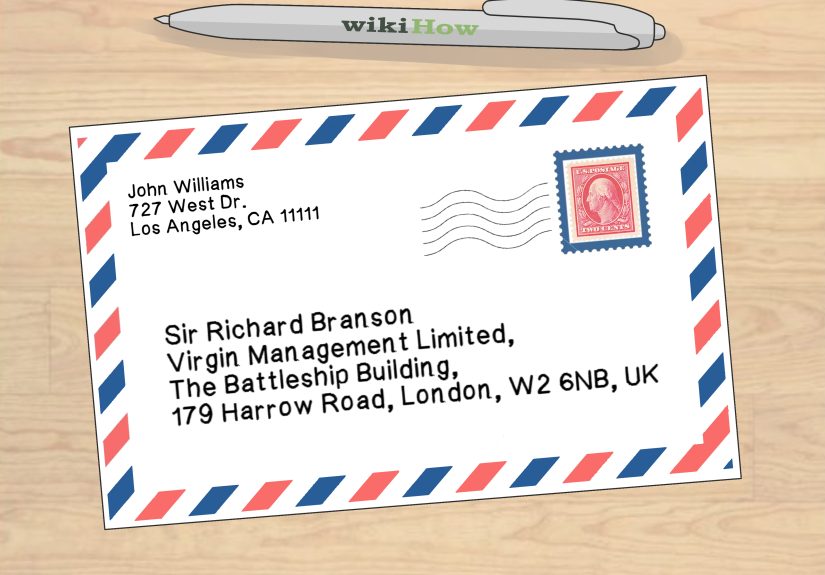
If you’ve ever thought, “I should just message Richard Branson,” you’re not alone. Sir Richard is one of the most visible entrepreneurs on Earthpart founder, part adventurer, part philanthropist, part walking motivational quote generator. The catch? High-profile people don’t have a single magical inbox where heartfelt messages float gently to the top. They have teams, filters, responsibilities, and (likely) a strong allergy to vague requests.
The good news: you can reach himor the right people around himif you approach this like an adult with a plan (and not like someone who just discovered the “Caps Lock” key). These seven steps will help you choose the correct channel, write a message that gets read, and avoid the scams and dead ends that swallow most attempts.
Quick reality check (with love): Your goal usually isn’t “contact Richard Branson.” Your goal is to get a decision, an introduction, a booking, a donation consideration, or a press response. If Richard is the right person, great. If not, the fastest path is the right team.
Step 1: Get painfully specific about what you want (and why he should care)
Before you send anything, define your objective in one sentence. Not a paragraph. Not a three-act trilogy. One sentence:
- Speaking: “We’d like to invite Richard Branson to keynote our entrepreneurship summit in October.”
- Media: “We’re requesting an interview about Virgin’s approach to purpose-led business.”
- Philanthropy: “We’re seeking guidance/partnership on a climate-health initiative aligned with Virgin Unite’s focus.”
- Business idea: “We have a partnership proposal that specifically fits X Virgin company and includes a clear pilot plan.”
- Personal note: “I want to thank him for X and ask one targeted question.”
Why this matters
Richard Branson’s public presence revolves around entrepreneurship, leadership, social impact, and big global issues. If your message doesn’t connect to those themesor to a specific Virgin businessyour chances drop faster than a reality TV show’s ratings in season nine.
Mini checklist (steal this)
- What exactly am I asking for?
- What’s the deadline?
- What’s the benefit for him, his team, or the audience?
- What proof can I include in one line? (Credibility, traction, press, numbers)
- What’s the smallest “yes” they can give? (Intro, quick reply, redirect, form submission)
Step 2: Pick the right “door” (because the front door isn’t always the fastest)
“Contact Richard Branson” is a broad request. The more you narrow it, the more likely you’ll find an official channel designed for it. In practice, you’ll usually choose one of these routes:
Common routes that actually work
- Speaking engagements: Use the official booking request process (more on that in Step 3).
- Philanthropy/social impact: Use Virgin Unite’s official contact channels (Step 4).
- Media requests: Use official press offices (Step 5).
- Business partnerships: Start with the relevant Virgin brand/company and the appropriate department, not Richard directly.
- Public engagement: Use platforms where he’s publicly active (Step 6) and keep it short.
This approach is not “giving up.” It’s professional routing. Big brands run on specialization. The press office handles press. The foundation handles foundation work. The speaking team handles speaking. Richard handles… being Richard.
Step 3: For speaking requests, use the official “Book a Branson” pathway
If your goal is to have Richard Branson speak at an event, avoid random “booking agents” who appear out of nowhere like mushrooms after a rainstorm. Start with official booking channels first. Typically, this means filling out a formal request that captures event details, audience size, format, dates, and budget.
What to include in a speaking request
- Event basics: name, location, date options, in-person vs virtual
- Audience: who they are, expected attendance, industries represented
- Theme: leadership, entrepreneurship, innovation, purpose, etc.
- Why Richard: one paragraph max
- Logistics: duration, format (keynote, fireside chat), Q&A
- Budget range: yes, it mattersthis isn’t a bake sale fundraiser
Pro tip: If your budget is limited, consider whether your event could benefit from someone in the broader Virgin ecosystem (executives, entrepreneurs, social impact leaders) who might be a better match and more available.
Step 4: For philanthropy or impact initiatives, go through Virgin Unite (and do your homework)
Virgin Unite is the independent nonprofit foundation of the Virgin Group and the Branson family. If your outreach is about social or environmental impact, start there rather than blasting DMs. But be strategic: many foundations do not accept unsolicited grant applications in the way people assume.
How to approach Virgin Unite professionally
- Align first: Show you understand what they focus on and why your initiative matches.
- Be concrete: Goals, partners, timeline, measurable impact.
- Ask smart: An introduction, advice, amplification, partnershipdon’t default to “money please.”
- Keep it tight: A short email + a 1-page PDF is stronger than a 42-page manifesto.
Sample impact outreach (short and sane)
Subject: Partnership idea aligned with entrepreneurship + climate resilience
Hello Virgin Unite team,
I’m reaching out with a potential partnership concept focused on supporting small businesses adapting to climate-related disruptions. We’ve piloted this approach with [credible partner] and saw [one measurable result]. If this aligns with your current priorities, could you point me to the best person to speak withor let me know the correct pathway to share a 1-page summary?
Thank you for your time,
[Name, title, organization]
[Phone] | [Website]
Step 5: For interviews, statements, or media, contact the correct press office (not “the internet”)
Journalists and producers typically use official press offices. The “Virgin” universe includes multiple brands, and many have dedicated media contacts. If your request relates to a specific Virgin company (travel, telecom, space, finance, etc.), start with that company’s media center rather than a generic message aimed at Richard.
Media outreach tips that improve your odds
- Lead with the angle: What’s the story? Why now?
- Be specific: Interview format, timing, embargo needs, and intended outlet.
- Offer value: Audience reach, topic relevance, and what’s unique.
- Respect boundaries: If a number/email says “press only,” don’t use it for unrelated requests.
If you’re not a journalist but you want attention for a cause or project, consider partnering with a credible media outlet or PR professional who can package the story properly. A well-timed press pitch beats a thousand “Hey Richard!” messages.
Step 6: Use public platforms strategically (LinkedIn and social media: short, respectful, and human)
Richard Branson maintains a strong public presence online. Platforms like LinkedIn can work for visibility and networking, but your message needs to fit the medium. Think “clear and polite,” not “paragraph of destiny.”
What works on public platforms
- Comment thoughtfully on a post he wroteadd insight, not flattery confetti.
- Share a relevant post and tag appropriately (sparingly), adding one line of context.
- Send a short LinkedIn message only if you have a legitimate reason and strong credibility.
Example LinkedIn message (under 60 seconds to read)
Hi Richardthank you for your recent post about entrepreneurship and purpose. I’m leading a program that helps first-time founders launch sustainable businesses, and we’ve reached [metric]. If you’re open to it, I’d love to ask one question: what’s the most overlooked habit you’ve seen in founders who actually build long-term teams? If you’d rather, I’m happy to direct this to your team. Thanks either way[Name]
The goal here isn’t a guaranteed reply. It’s to show you’re real, relevant, and respectfulwhich can lead to a redirect to the right person (often the true win).
Step 7: Write an outreach message that gets read (cold-email rules for contacting powerful people)
Most outreach fails for boring reasons: it’s too long, too vague, too self-focused, or it asks for something huge with zero proof. Whether you email a press office, a foundation, or a corporate contact, these rules apply:
The “busy-person” format
- Subject line: specific and honest (no clickbait, no “URGENT” unless it’s literally urgent)
- First line: why you’re writing and why them
- One proof point: traction, credibility, or relevance
- Clear ask: a small next step
- Close: gratitude + contact info
Template: Business partnership inquiry (clean and credible)
Subject: Partnership proposal: 6-week pilot for [specific Virgin brand/team]
Hello [Name/Team],
I’m reaching out because [specific Virgin company] is expanding/operating in [relevant area], and we’ve built [solution] that could help with [specific outcome]. We’ve already proven this with [one credible proof point].
Would the right person on your team be open to a 15-minute call next week to see if a small pilot makes sense? If I’m in the wrong place, I’d appreciate a redirect.
Best,
[Name]
[Title, company] | [Phone] | [Website]
Follow-up etiquette (the part everyone messes up)
- Wait 5–7 business days before a first follow-up (unless time-sensitive).
- Keep follow-ups shorter than the original.
- Add new value: a link to coverage, a new milestone, a clearer ask.
- Stop after 2–3 follow-ups. Persistence is good; becoming an inbox ghost is not.
Common mistakes to avoid (a.k.a. how not to get filtered)
- Asking for “a quick call” with no agenda: Nothing is quick without context.
- Sending attachments out of the gate: Many orgs block them. Offer a link or a 1-pager upon request.
- Pitching Richard like he’s customer support: Route to the right Virgin company/team instead.
- Falling for “private contact” scams: Use official channels and verify before sending money or sensitive info.
- Making it all about you: Lead with alignment and value, not a life story.
Conclusion: The smart way to reach Richard Branson (without being weird about it)
Contacting Richard Branson isn’t about finding a secret email address. It’s about choosing the correct channel, writing a message worth reading, and being realistic about how busy high-profile people operate. Start by clarifying your ask, then route it through official paths: speaking requests through booking forms, impact initiatives through Virgin Unite, media through press offices, and public engagement through concise, respectful messages on platforms where he’s active.
If you do this well, the “best case” isn’t always Richard replying personally. Often, it’s something better: a team member who can actually take actionand a next step that moves your idea forward.
Real-World Outreach Experiences
Below are realistic, composite-style scenarios based on common outreach patterns people use when contacting high-profile founders. They’re not personal anecdotesthink of them as “what tends to happen when you try this in the real world.”
Experience 1: The founder who stopped pitching “Richard” and started pitching “fit”
A startup founder wanted Richard Branson’s attention for a sustainability product. Their first attempt was a long email with a broad ask: “Can you support our mission?” It went nowhere. On the second attempt, they rewrote the approach: they identified a specific Virgin brand whose customers matched their target audience, proposed a six-week pilot with clear success metrics, and asked for the correct contact person. They never contacted Richard directlyinstead, they treated the outreach like a business conversation. That version got a response within a week: not a “yes,” but a redirect to someone who could evaluate it. The founder learned the simplest rule in outreach: you don’t need the celebrity, you need the decision-maker.
Experience 2: The nonprofit that asked for advice instead of money
A small nonprofit assumed “foundation contact” meant “grant request.” But their work didn’t neatly fit an open application process. They reframed the ask: instead of requesting funding, they asked for guidance and network introductions related to entrepreneurship and community resilience. They sent a one-page summary with three measurable outcomes and a specific question: “Who should we speak with to explore partnership or amplification?” The reply they received wasn’t a blank checkbut it was valuable: a short note explaining what types of partnerships were more realistic and what information would be needed for next steps. Asking for the right kind help made it easier for the team to respond.
Experience 3: The journalist who got traction by being extremely specific
A producer wanted Richard Branson for a segment about purpose-led leadership. Instead of a generic “We’d love to interview Richard,” they pitched a tight angle tied to a timely topic, included the show’s audience size, and offered multiple format options: live, pre-recorded, or written Q&A. They also made it easy to say no: “If Richard isn’t available, we’d welcome an interview with a Virgin executive closest to X initiative.” That flexibility mattered. The press office responded with a counter-offeran interview with another leader who could speak directly to the topic. The segment still worked, and the producer built a relationship that helped with future requests.
Experience 4: The LinkedIn message that worked because it didn’t try too hard
A business student wanted one meaningful answer from Richard Branson for a class project. They didn’t send a dramatic message. They commented thoughtfully on a post first, then sent a brief LinkedIn note with one question and a clear promise: “No follow-ups, no pitch, no attachmentsjust one question.” That message had the right tone: respectful, low-pressure, and human. Whether Richard replied personally or a team member nudged it along, the student eventually received a short response pointing them to a relevant blog post and a key takeaway. The student’s biggest win wasn’t “getting access.” It was learning that short, sincere, specific outreach stands out in a world of noisy requests.