Table of Contents >> Show >> Hide
- What Heart Rate Actually Means (In Plain English)
- Before You Start: What You’ll Need
- How to Calculate Your Heart Rate: 8 Steps
- Step 1: Decide Which Heart Rate You’re Measuring
- Step 2: Find a Reliable Pulse Spot
- Step 3: Place Your Fingers Correctly (No Thumb, No Hulk Grip)
- Step 4: Make Sure Your Body Is Still (and Your Brain Is Calm-ish)
- Step 5: Count Your Beats for a Set Time
- Step 6: Do the Math to Get BPM
- Step 7: Repeat 2 More Times and Average (Your Accuracy Upgrade)
- Step 8: Interpret the Number (and Use It for Something Useful)
- What’s a “Normal” Heart Rate?
- Using Heart Rate for Exercise Intensity
- Common Mistakes (and How to Avoid Them)
- Manual Counting vs. Smartwatches: Which Is Better?
- Quick FAQs
- Conclusion
- Experiences That Make Heart Rate “Click” (Real-World Scenarios)
Your heart rate (also called your pulse rate) is basically your body’s built-in speedometer.
It tells you how hard your heart is working right nowwhether you’re sleeping, scrolling, sprinting, or simply
arguing with your printer. The good news: you don’t need a lab, a stethoscope, or a medical degree to calculate it.
You just need a pulse point, a timer, and the ability to count without getting personally offended by math.
In this guide, you’ll learn exactly how to calculate your heart rate in 8 simple steps, plus how
to double-check your accuracy, interpret your number (resting vs. active), and use it for fitness goals like
target heart rate zoneswithout turning your workout into a spreadsheet.
What Heart Rate Actually Means (In Plain English)
Heart rate is the number of times your heart beats in one minute, measured in
beats per minute (BPM). Each beat pushes blood (and oxygen) through your body. When you exercise,
your muscles demand more oxygen, so your heart beats faster. When you relax, your heart usually slows down.
Heart rate vs. pulse: are they the same?
Most of the time, yes. Your pulse is the pressure wave you feel in an artery every time your heart
beats. If your heart rhythm is regular, your pulse rate matches your heart rate. If your rhythm is irregular, a
wearable or clinician measurement may be more reliable than quick counting.
Before You Start: What You’ll Need
- A watch, phone timer, or stopwatch (anything that can count seconds).
- Two fingers (index and middle finger work bestyour thumb has its own pulse and likes to sabotage accuracy).
- A place to sit for 1–3 minutes if you’re measuring resting heart rate.
- Optional: a fitness tracker or smartwatch to compare readings.
How to Calculate Your Heart Rate: 8 Steps
Step 1: Decide Which Heart Rate You’re Measuring
“Your heart rate” can mean different things depending on the moment. Pick the one you want:
- Resting heart rate (RHR): Best measured when you’re calm and truly at rest (often first thing in
the morning, before caffeine, stress, or chasing a bus). - Active/exercise heart rate: Measured during or right after activity to estimate intensity.
- Recovery heart rate: Measured after you stop exercising to see how quickly your heart rate drops.
(A faster drop is often a sign of better cardiovascular fitness.)
Step 2: Find a Reliable Pulse Spot
The easiest pulse points for most people are:
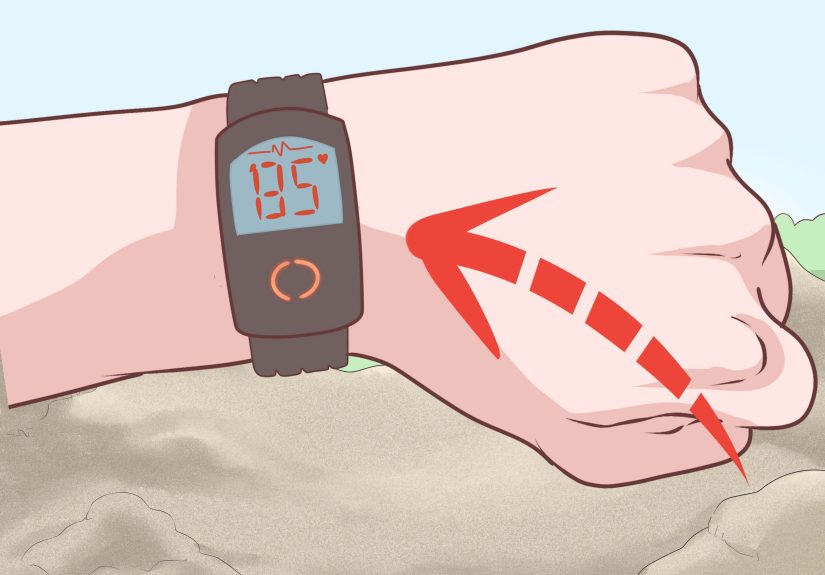
- Radial pulse (wrist): On the thumb side of your wrist, just below the base of your thumb.
Easy, accurate, and socially acceptable in public. - Carotid pulse (neck): To the side of your windpipe, just under your jawline. Useful if the wrist
is hard to feel, but be gentle and never press on both sides at once.
Step 3: Place Your Fingers Correctly (No Thumb, No Hulk Grip)
Use the tips of your index and middle fingers. Press lightly until you feel a steady pulse.
If you press too hard, you can “flatten” the artery and lose the pulse. If you can’t feel it at first, adjust
your finger position slowlytiny changes help.
Step 4: Make Sure Your Body Is Still (and Your Brain Is Calm-ish)
For the cleanest reading:
- Sit down and rest your arm on something steady.
- Don’t talk while counting (your pulse doesn’t need commentary).
- If measuring resting heart rate, sit quietly for a couple minutes first.
Step 5: Count Your Beats for a Set Time
Choose one of these common counting windows:
- 60 seconds: Most accurate, especially if your rhythm feels uneven.
- 30 seconds: Count beats for 30 seconds, then multiply by 2.
- 15 seconds: Count beats for 15 seconds, then multiply by 4 (fast and popular).
- 10 seconds: Count beats for 10 seconds, then multiply by 6 (quick, but less forgiving).
If you’re exercising and your heart rate is changing quickly, shorter windows (15 seconds) can be more practical.
If you’re at rest and want accuracy, go for 60 seconds.
Step 6: Do the Math to Get BPM
Your calculation depends on the counting window:
- 60 seconds: BPM = beats counted
- 30 seconds: BPM = beats counted × 2
- 15 seconds: BPM = beats counted × 4
- 10 seconds: BPM = beats counted × 6
Quick example
You count 22 beats in 15 seconds. Multiply by 4:
22 × 4 = 88 BPM. That’s your heart rate.
Step 7: Repeat 2 More Times and Average (Your Accuracy Upgrade)
Heart rate naturally wiggles up and down. To reduce “random chaos”:
- Measure three times, about 30–60 seconds apart.
- Add the three BPM numbers.
- Divide by 3 to get your average.
This is especially helpful for resting heart rate, where you’re trying to learn what’s normal for you.
Step 8: Interpret the Number (and Use It for Something Useful)
A single heart rate reading is like a single weather report: helpful, but it makes more sense with context.
Here’s how to interpret yours.
What’s a “Normal” Heart Rate?
Resting heart rate (RHR)
For many adults, a typical resting heart rate often falls somewhere around 60–100 BPM.
People who are very fit (especially endurance athletes) may have lower resting rates. Kids and teens often have
different typical ranges than adults, and your personal baseline matters a lot.
What changes resting heart rate from day to day? Plenty:
sleep, stress, hydration, temperature, illness/fever, fitness level, and stimulants like caffeine.
So don’t panic over one random readinglook for trends.
When a “weird” number deserves attention
If your heart rate is repeatedly much higher or lower than your usual baseline, or you have symptoms like
fainting, chest pain, severe shortness of breath, or feeling like your heart rhythm is irregular, it’s a good idea
to get medical advice promptly. (This article is for general education, not diagnosis.)
Using Heart Rate for Exercise Intensity
Heart rate is popular for workouts because it’s measurable. But it’s not perfectyour max heart rate estimate can
be off, and trackers can be wrong. Think of heart rate as a helpful guide, not an unbreakable law.
Estimate your maximum heart rate
The most common shortcut is:
Max HR ≈ 220 − your age.
It’s simple and widely used, but it’s only an estimatereal max heart rate varies by person.
Some organizations and clinicians also use alternative formulas (like versions based on 207/208 − 0.7×age),
especially in exercise science contexts.
Target heart rate zones (simple method)
Many fitness resources use these general intensity ranges:
| Intensity | Typical Target Zone | What It Feels Like |
|---|---|---|
| Moderate | ~50% to 70% of max HR | You can talk, but singing would be… ambitious. |
| Vigorous | ~70% to 85% of max HR | Talking is possible in short phrases. Singing is a no. |
Example: Target zone for a 30-year-old (simple estimate)
Max HR ≈ 220 − 30 = 190 BPM
Moderate zone ≈ 50–70% of 190 → 95–133 BPM
Vigorous zone ≈ 70–85% of 190 → 133–162 BPM
A more personalized option: Heart rate reserve (Karvonen method)
If you want training zones that factor in your resting heart rate, use heart rate reserve (HRR):
- HRR = Max HR − Resting HR
- Target HR = (HRR × intensity %) + Resting HR
Example: Karvonen method
Let’s say you’re 40 years old, with a resting HR of 70 BPM.
Max HR ≈ 220 − 40 = 180 BPM
HRR = 180 − 70 = 110
Target at 70% intensity = (110 × 0.70) + 70 = 77 + 70 = 147 BPM
Common Mistakes (and How to Avoid Them)
- Using your thumb: Your thumb has its own pulse, which can confuse counting.
Use index + middle finger. - Counting while moving: Movement makes your pulse harder to feel.
Pause, steady your arm, then count. - Pressing too hard: Light pressure works besttoo much can block the pulse.
- Counting too short when your rhythm feels irregular: If beats feel uneven, count for 60 seconds.
- Comparing yourself to “perfect numbers”: Your baseline matters. Trends matter more than a single reading.
Manual Counting vs. Smartwatches: Which Is Better?
Manual pulse counting is simple and surprisingly accurate when you’re still and careful.
Wearables are convenient for trends over time and for exercise, but accuracy can vary with motion,
skin contact, device fit, and sensor quality. The best approach is often:
use your smartwatch for trends, and occasionally do a manual check to see if they agree.
Quick FAQs
How often should I measure my resting heart rate?
If you’re curious about fitness or stress, try measuring in the morning a few times per week for a month.
You’ll learn your baseline and how it changes with sleep, training, and life.
What if I can’t find my pulse?
Try the wrist first, relax your hand, and reposition your fingers slightly. Warm your hands if you’re cold.
If you still can’t find it, try the neck gently, or use a smartwatch/pulse oximeter if available.
Is the “220 − age” max heart rate formula accurate?
It’s a useful estimate, not a guarantee. Real max heart rate varies. If you’re training seriously,
consider using perceived exertion (like the talk test) along with heart rate, or ask a qualified professional
about more individualized testing.
Conclusion
Calculating your heart rate is one of the easiest health skills you can learnand it pays off in multiple ways:
you can track your resting baseline, measure workout intensity, and spot patterns linked to sleep, stress, hydration,
and fitness. The core idea is simple: find a pulse, count beats for a set time, convert to BPM, and repeat for accuracy.
If you want to get extra nerdy (the fun kind of nerdy), you can use target heart rate zones or the heart rate reserve method
to personalize training intensity. But even the basic method15 seconds × 4can teach you a lot about your body.
Experiences That Make Heart Rate “Click” (Real-World Scenarios)
Most people don’t remember heart rate math because of a chart. They remember it because of a moment.
Here are a few common experiences that tend to make heart rate suddenly feel very realand very useful.
1) The “Why Am I Out of Breath Already?” Walk
A lot of people first try checking their pulse after an innocent activitylike speed-walking to make a light,
climbing stairs, or carrying groceries like they’re competing in a strongman event. You stop, feel your pulse,
and it’s thumping like a tiny drummer trying out for a rock band. That’s often the first lesson:
your heart rate responds fast. If you measure right away, you’ll get a higher number than if you wait
60–90 seconds. It teaches you two skills at once: (1) timing matters, and (2) recovery heart rate is a thing.
People who repeat this experiment over a few weeks often notice that the same stairs feel easier and the number
drops faster afterwardan encouraging sign that fitness is improving, even before your mirror agrees.
2) The “Resting Heart Rate Reality Check” Morning Experiment
Measuring resting heart rate sounds simple until you do it on two different mornings and get two different results.
One day you slept great and wake up calmyour RHR looks lower. Another day you slept poorly, had a stressful week,
or you’re fighting off a coldyour RHR might be higher than usual. Many people learn the most important heart rate concept
right here: context beats judgment. Instead of deciding “good” or “bad,” it’s smarter to ask
“What changed?” Sleep, stress, hydration, and illness can all nudge your number. Over time, this becomes practical:
if your resting heart rate is consistently higher than your usual baseline, it can be a gentle hint to prioritize rest,
hydration, or easier training for a day or two.
3) The First Time You Try Training Zones (and Your Ego Objects)
People love the idea of “training smarter,” right up until the moment a heart rate zone suggests slowing down.
This is especially true for new runners or cyclists. You start an “easy” workout, check your BPM, and realize that
staying in a moderate zone means moving slower than you expected. That can feel comicallike your fitness plan is asking
you to “jog at the speed of polite conversation.” But here’s what many people discover after a few weeks:
staying in a moderate zone can build endurance without leaving you wrecked, and it often makes harder workouts feel better, too.
The experience teaches a sneaky lesson: effort and pace aren’t the same. On a hot day, your heart rate may be
higher at the same pace. Under stress, your heart rate might spike faster. Zones help you match training to your body
on that day, not just to your ambition.
4) The “My Watch Says One Thing, My Fingers Say Another” Moment
Lots of people compare a smartwatch reading to a manual pulse check and get two different numbers.
It usually happens during movement: the watch struggles with wrist motion, sweat, or fit, and your manual check
(done while still) may be steadier. Instead of treating this like a tech betrayal, many people turn it into a simple habit:
use the watch for trends (daily patterns, workouts over time) and use manual counting as a spot-check.
After a few comparisons, you learn whether your device is generally close for you and how tight it needs to be on your wrist.
That confidence is valuable, because once you trust your measurement, you can actually use it to make decisions.
5) The “Stress Heart Rate” Surprise
Heart rate isn’t only about fitness. People sometimes check their pulse during a stressful momentbefore a test,
after an argument, or during a nervous presentationand realize their heart rate is elevated even though they’re not moving.
That experience makes the mind-body connection feel less like a motivational poster and more like biology.
Some people use this as a cue to practice a calming routine: a few slow breaths, a short walk, or a quick reset.
Even without trying to “control” heart rate, noticing patterns can help you understand your triggers and recovery.
The takeaway from all these experiences is the same: learning to calculate your heart rate isn’t just a party trick
(though it’s a surprisingly decent one). It’s a practical skill that helps you measure effort, track change,
and understand your body in real time. And the best part? The equipment fits in your pocket and comes with fingers.