Table of Contents >> Show >> Hide
- The Day My Job Ended (And My Inbox Became a Crime Scene)
- The E-mail I Sent That Almost Cost Me Everything
- How One E-mail Can Blow Up a Severance Deal
- What I Wish I’d Known About Severance Before Touching “Send”
- Severance is usually a contract, not a right
- If you’re 40+, there are special rules for waiving age claims
- Final paycheck timing isn’t one-size-fits-all
- COBRA can be your bridge (but it’s a clocked decision)
- Severance pay is taxable (and withholding can surprise you)
- Unemployment + severance: the “it depends” Olympics
- How the Fallout Happened (In Three Very Stressful E-mails)
- What To Do Instead (A Severance-Safe Playbook)
- A Safer “Clarifying” E-mail Template (That Won’t Haunt You)
- How I Saved the Deal (Barely)
- Conclusion: Treat Your Inbox Like It’s Under Oath
- Additional Experiences: The 500-Word “Inbox Therapy” I Wish Everyone Had
There are e-mails you send with confidencelike “Here’s the doc!” or “Happy birthday!”
And then there are e-mails you send with pure adrenaline, shaky thumbs, and the emotional stability of a shopping cart
with one bad wheel.
This is a story about the second kind: the one e-mail that almost torched my severance, my references, and my ability
to sleep without hearing Outlook’s “whoosh” sound in my soul.
The Day My Job Ended (And My Inbox Became a Crime Scene)
The meeting invite was three minutes long and titled “Quick Sync.” If you’ve ever worked in America, you already know:
nobody schedules a “Quick Sync” to congratulate you on your “excellent vibes.”
I was laid off. There was a script, a sympathetic look, and a polite reminder that my access would end “shortly.”
Then came the severance packet, which landed in my personal e-mail like a politely wrapped grenade.
Severance can feel like a life raft, but it’s usually a contract first and a hug second. In the U.S., employers generally
aren’t required by federal law to offer severance payso when they do, it’s often in exchange for something important:
your signature on terms that protect them. That’s why the paperwork is never just “sign here, feel better.” It’s more like
“sign here, and also promise five things, and also don’t say seven things, and also return the laptop.”
The E-mail I Sent That Almost Cost Me Everything
Here’s what I should have done: read the agreement, take a breath, and talk to someone (a lawyer, a trusted mentor,
or at minimum a calm friend who uses punctuation responsibly).
Here’s what I actually did: I wrote a “clarifying” e-mail to HR from my work account.
My subject line was basically “So we’re doing this, huh?”which is not a phrase that belongs in a legal negotiation.
What was in the e-mail?
Not threats, not profanity, nothing that would get played on the evening news. But it had three ingredients that can ruin
severance discussions fast:
- Emotion masquerading as logic (“This is unfair and everyone will know.”)
- Accidental admissions (“I know I downloaded those files, but…”)
- Unforced errors (“If you don’t fix this, I’ll talk about it publicly.”)
That last one wasn’t a formal “threat,” but it was close enough to make a company’s legal team sit up like prairie dogs.
And because I sent it from my work e-mail, it was sitting right there on their systems, timestamped, searchable, and
ready for a screenshot cameo in the Hall of Regret.
How One E-mail Can Blow Up a Severance Deal
A severance offer can be conditional. Many agreements say you only get paid if you:
return company property, keep certain information confidential, don’t disparage the company (or at least don’t defame it),
and sign a release of claims. Even if you’ve already been told, “This is your package,” the fine print often reads:
“This is your package if you follow the rules.”
1) It can look like you violated confidentiality
Even before signing, companies may argue that certain information is confidential (customer data, internal strategy,
proprietary documents). If your e-mail references internal files, attachments, or “receipts,” you may accidentally trigger
a fight about confidentiality, data handling, or trade secrets.
2) It can create “cause” vibes after the fact
Some severance plans carve out exceptions for misconductlike misuse of company systems or mishandling documents.
When you write something like “I forwarded myself a few things,” you may think you’re being honest. The company may think:
“Thank you for the written statement.”
3) It can derail negotiations by escalating tone
Severance negotiation is weirdly similar to returning a toaster: calm receipts and clean facts get results; dramatic monologues
get security called. An angry e-mail can shift the conversation from “What’s fair?” to “What’s our risk?”
4) It can become evidence
Employment disputes often involve electronic evidencee-mails, chat logs, files. When you send a heated message, you’re not
just venting; you’re creating a document. And documents are famously bad at capturing sarcasm, context, and the fact that you
wrote it while eating cereal for dinner.
What I Wish I’d Known About Severance Before Touching “Send”
Severance is usually a contract, not a right
Most private-sector severance arrangements are governed by company policy and agreement terms, not a blanket federal requirement.
That’s why your leverage often comes from negotiation, timing, and any legal claims you may havenot from “the law says you owe me.”
If you’re 40+, there are special rules for waiving age claims
If a severance agreement asks you to waive Age Discrimination in Employment Act (ADEA) claims, federal law requires specific
disclosures and time periods in many situations. Common guardrails include time to consider the agreement (often 21 days for an
individual termination, and commonly 45 days in certain group layoff contexts), plus a 7-day revocation period after signing.
The details matter, but the spirit is simple: you shouldn’t be rushed into signing away age-discrimination claims.
Final paycheck timing isn’t one-size-fits-all
People assume “they have to pay me immediately.” Federal law doesn’t require an immediate final paycheck in every case;
many rules depend on the state and the regular payday cycle. Translation: don’t rely on vibescheck your state’s rules.
COBRA can be your bridge (but it’s a clocked decision)
Losing employer coverage is a panic multiplier. COBRA can allow you to continue your employer-sponsored health plan for a period
after job loss, but you typically have an election window and premiums can be expensive. Some severance packages include an employer
subsidy for COBRA premiumsif so, make sure the dates and amounts are spelled out clearly.
Severance pay is taxable (and withholding can surprise you)
Severance is generally treated as taxable wages. Depending on how it’s paid, it may be withheld like “supplemental wages,” which can
feel like the government took your severance out for a nice dinner and didn’t invite you. Translation: plan for taxes, don’t spend
the gross amount like it’s already yours.
Unemployment + severance: the “it depends” Olympics
In some states, severance won’t affect unemployment benefits. In others, it can delay benefits or reduce them depending on how the severance
is structured (lump sum vs. allocated across weeks). It’s a state-by-state maze, which is why HR answers are often… interpretive dance.
How the Fallout Happened (In Three Very Stressful E-mails)
After I hit send, I felt momentary reliefthe way you feel after you slam a door. Then the consequences arrived.
- E-mail #1 (from HR): “We received your message. Please remember your obligations regarding company property and confidentiality.”
That’s corporate for: “We are now reading this with legal counsel.” - E-mail #2 (from IT): “Your access has been disabled.”
This was expected, but the timing felt like a judgment. - E-mail #3 (from HR again): “Your severance offer is contingent upon compliance with the agreement terms.”
Translation: “We can take this away if you give us a reason.”
My stomach dropped. Not because I’d done something evil, but because I’d done something dumb in writing. And dumb in writing is how
problems become permanent.
What To Do Instead (A Severance-Safe Playbook)
1) Stop writing. Start documenting.
Replace “vent e-mails” with a private timeline. Dates, names, facts. Keep it neutral. Your future self will thank you for not making
your notes sound like a reality TV confessional.
2) Don’t negotiate from your work account
If you’re separated, use a personal e-mail. Work systems are owned by the employer, and messages may be retained and discoverable.
Also: don’t forward internal documents to yourself “for safekeeping” without understanding your legal and policy obligations.
3) Read the agreement like it’s a prenup
Not because your employer is your spouse, but because you’re about to sign something that controls money, future behavior, and how you
talk about the past. Look carefully at:
- Release of claims: What rights are you giving up?
- Non-disparagement/confidentiality: How broad is it? What’s allowed (e.g., legal complaints, truthful testimony)?
- Non-compete / non-solicit: Does it restrict future work or contacting clients?
- Reference language: Will they confirm title/dates only, or provide a neutral reference?
- Payment details: Lump sum or salary continuation? Timing? What triggers loss of payment?
- Benefits: COBRA subsidy? End dates? Any reimbursement terms?
- Return of property: Deadlines and confirmation of compliance.
4) Know that “gag clauses” have gotten more complicated
Over the last few years, the legal landscape around overly broad confidentiality and non-disparagement clauses in severance agreements has been
actively debated, including by the National Labor Relations Board (NLRB). The practical takeaway for employees: don’t assume a clause is enforceable
just because it’s printed, and don’t assume it’s unenforceable just because you saw a headline. If you’re covered by labor law protections, the
wording can matter a lot.
5) If you need to push back, do it like a grown-up with a spreadsheet
Instead of “This is insulting,” try “I’d like to discuss the terms, especially the payment schedule and the scope of the release.”
Your goal is to sound like someone who will be reasonable in court, even if you never plan to go near a court.
6) Consider professional review
If the severance is substantial, if there are restrictions on future employment, or if you suspect discrimination/retaliation, a short consultation
with an employment attorney can be worth it. Even one hour can help you spot landmines and rewrite your approach.
A Safer “Clarifying” E-mail Template (That Won’t Haunt You)
If you truly need to communicate (and sometimes you do), keep it clean, short, and boring:
Subject: Severance Agreement – Questions
Hello [Name],
Thank you for sending the separation documents. I’m reviewing the agreement and have a few questions:
1) Can you confirm the payment timing and whether it is lump-sum or salary continuation?
2) Can you clarify the scope of the confidentiality and non-disparagement provisions, including any exceptions for legal processes?
3) Can you confirm how benefits and COBRA continuation will be handled, including any employer subsidy?
Thank you,
[Your Name]
Notice what’s missing: threats, sarcasm, and the phrase “my cousin is a lawyer.” You can be firm without being combustible.
How I Saved the Deal (Barely)
I did three things immediately:
- I stopped sending emotional messages. Cold turkey. No “just one more e-mail.”
- I asked for time. Calmly. In writing. From a personal account.
- I got advice. Not from TikTok, not from a group chatactual professional guidance.
Then I cleaned up the mess: I clarified that I intended to comply with return-of-property terms, asked for a written checklist for equipment return,
and requested that future communication go through my personal e-mail.
HR’s tone softened. The legal team stopped circling. I still didn’t love the offer, but I stopped actively making it worse, which is an underrated life skill.
Conclusion: Treat Your Inbox Like It’s Under Oath
Severance is stressful because it sits at the intersection of money, identity, and fear. That’s exactly why the smartest move is to slow downnot speed up.
One e-mail won’t always ruin your life, but it can absolutely reroute your exit, shrink your options, and hand the other side a tidy narrative.
If you remember nothing else, remember this: your severance negotiation is not the time to “tell your truth” in all caps. It’s the time to protect yourself
with calm facts, careful words, and a plan.
Additional Experiences: The 500-Word “Inbox Therapy” I Wish Everyone Had
After my near-disaster, I started collecting storiesmine, friends’, former coworkers’, the guy I met at a coffee shop who somehow told me his entire layoff
saga between ordering and picking up a muffin. Different industries, same theme: an e-mail can become the villain in your severance story because e-mail feels
casual when it’s emotionally urgent.
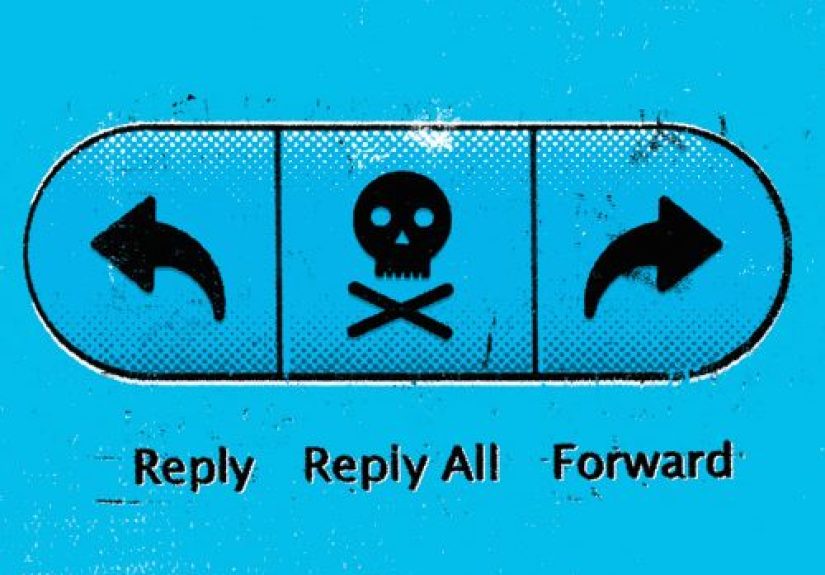
One friend hit “Reply All” on a layoff thread and wrote what can only be described as a poetic review of leadership competence. It was funny. It was truthful.
It was also the kind of message that makes a company instantly stop treating your separation like a customer-service issue and start treating it like a risk
management event. The severance didn’t vanish, but the negotiation window slammed shut. The company defaulted to “standard package only,” and every future request
was met with: “Per policy.” (Policy is the corporate version of “because I said so.”)
Another person I know tried to negotiate by writing, “I have screenshots of everything.” They meant “I have documentation.” What the company read was “I’m preparing
to go nuclear.” The result was a defensive response, a tighter agreement, and a longer review process. In severance discussions, you don’t want to sound like a
superhero with a hidden device; you want to sound like a reasonable adult who understands agreements and timelines.
My own personal low point was reading my draft e-mail the next morning and realizing it sounded like I’d written it while trapped in an elevator with my ego.
I learned a surprisingly effective technique: I would write the angry e-mail, then save it as a draft named “DO NOT SEND, YOU WALNUT.” Then I’d write a second
version as if a judge might read it out loud. The second version was always shorter, calmer, and about 400% more useful.
The best “experience lesson” I can offer is this: your goal isn’t to win an argument with HR. Your goal is to exit with the most money and the fewest restrictions
while protecting your future employability and mental health. E-mail is a tool, not a diary. If you need a diary, use a diary. If you need leverage, use facts,
deadlines, and professional help.
And if you’re tempted to send the spicy message anyway? Imagine your e-mail printed on a giant poster board in a conference room labeled “Exhibit A.” If you
wouldn’t frame it, don’t send it.