Table of Contents >> Show >> Hide
- What Counts as a Home Tour (And Why You Keep Clicking Them)
- The Anatomy of a Great Home Tour
- What You Can Steal From Home Tours (Without Getting Banned From the Internet)
- Common Home Tour Styles You’ll See Across the U.S.
- How to “Tour” Homes Like a Pro (Online or IRL)
- If You’re Hosting a Home Tour: Make It Look Better Without Lying
- Common Home Tour Mistakes (And the Easy Fixes)
- The Future of Home Tours: More Video, More “Shop the Look,” More Reality
- Experience Add-On: What You Start Noticing After 10 Home Tours (And Why It Changes Your Own Home)
- Conclusion
Home tours are the guilt-free way to snoop. Nobody calls the cops, your shoes are (usually) still on, and you get to peek at how other people actually liveor at least how they want the internet to think they live. One minute you’re admiring a perfectly imperfect linen sofa. The next, you’re zooming in like a detective to confirm whether that “casual” stack of coffee-table books is color-coded (it is).
But the best home tours aren’t just pretty pictures. They’re case studies in problem-solving: awkward layouts turned into cozy zones, small kitchens made to feel generous, and “we can’t move that wall” limitations transformed into design superpowers. If you’ve ever stared at your own living room and thought, “Why does this space feel… cranky?” a well-done home tour can be the fastest path to a fix.
What Counts as a Home Tour (And Why You Keep Clicking Them)
In the U.S., “home tour” has become an umbrella for a whole ecosystem of peeking. Glossy magazines take you inside designer projects and celebrity homes. Digital outlets bring you into rentals, starter houses, and DIY transformations. Networks and lifestyle brands highlight everything from bold makeovers to “real people with real storage problems.” You’ll also see “Idea Houses” and showhomesspaces created to demonstrate products, trends, and regional style.
The appeal is part inspiration, part escapism, and part practical education. A home tour lets you borrow someone else’s courage: the bravery to paint the hallway moody, to mix patterns, to hang art lower than you think you should, or to admit that the “formal dining room” is now a puzzle-and-homework arena (as it always wanted to be).
The Secret Sauce: Constraint + Personality
The tours people remember tend to have two ingredients: a clear constraint and a clear point of view. Constraint might be square footage, budget, climate, rental rules, a historic home, or a household that includes kids, dogs, roommates, instruments, hobbies, and the occasional emotional support treadmill. Point of view is the personality: vintage-heavy, modern-minimal, colorful-maximal, coastal-calm, farmhouse-warm, or “my style is: I found it and I loved it.”
The Anatomy of a Great Home Tour
You can learn a lot by noticing what strong home tours consistently show. Whether it’s a magazine spread or a tiny apartment walkthrough, the best tours answer the same questions: What was the problem? What was the plan? How does it work on a random Tuesday?
1) A Strong “Why” (Not Just a Strong Wallpaper)
A home tour is more satisfying when you understand the “why” behind the decisions. Maybe the owners wanted a calmer home after busy workdays. Maybe they love hosting. Maybe they’re rebuilding after a move, a renovation, or a life change. This context turns design from decoration into strategy.
2) Flow and Sightlines: The Unsexy Superpower
Beautiful homes often look “easy,” but that ease is usually engineered. Pay attention to how rooms connect. Do you see the sofa from the entry? Is there a clear path that doesn’t require sidestepping a chair like you’re playing furniture Tetris? Home tours frequently reveal small layout movesfloating furniture, adding a slim console, creating a drop zonethat make a house feel calmer without buying a single “statement” piece.
3) Lighting Layers: The Before/After You Can Feel
If a home tour makes you whisper, “This looks so cozy,” lighting is often the reason. Great spaces rarely rely on one overhead fixture. They stack lighting: ambient (overall glow), task (reading, cooking), and accent (art, shelves, architecture). Tours also show how lamps, sconces, and dimmers can make even a plain room feel intentional.
4) Storage That Doesn’t Kill the Vibe
The most useful tours don’t pretend clutter doesn’t existthey design around it. Look for closed storage near where mess happens: baskets by the sofa, cabinetry near the entry, hooks where bags naturally land, drawer organizers in the kitchen. “Pretty” homes are often just “homes with a system.”
5) Lived-In Details: The Proof of Life
A memorable tour includes evidence of real humans: books that look read, art that looks collected, a kitchen that can handle breakfast, and a bedroom that isn’t styled like it’s waiting for a committee meeting. These details are what make a home feel like a home instead of a showroom with a mortgage.
What You Can Steal From Home Tours (Without Getting Banned From the Internet)
You don’t need a renovation budget to use home tours as a design toolkit. In fact, the most transferable ideas are often the simplest.
Color Strategy: Pick a “Home Palette,” Not a “Room Palette”
Many great homes look cohesive because they repeat a few colors throughoutsometimes subtly, like a warm white + deep green + brass; sometimes boldly, like jewel tones with black accents. The key is repetition. If you love a color in one room, echo it elsewhere through textiles, art, or accessories. Cohesion is basically the design version of a chorus: repeat it and people remember the song.
High-Low Mixing: The Budget-Friendly Cheat Code
A classic trick you’ll see across U.S. home tours: splurge where it matters (sofa, mattress, a durable rug) and save on pieces you can swap (pillows, prints, side tables). The “expensive” look often comes from a few anchor items plus thoughtful stylingnot from buying a matching set from a single store.
Vignettes: The Micro-Makeover That Works Everywhere
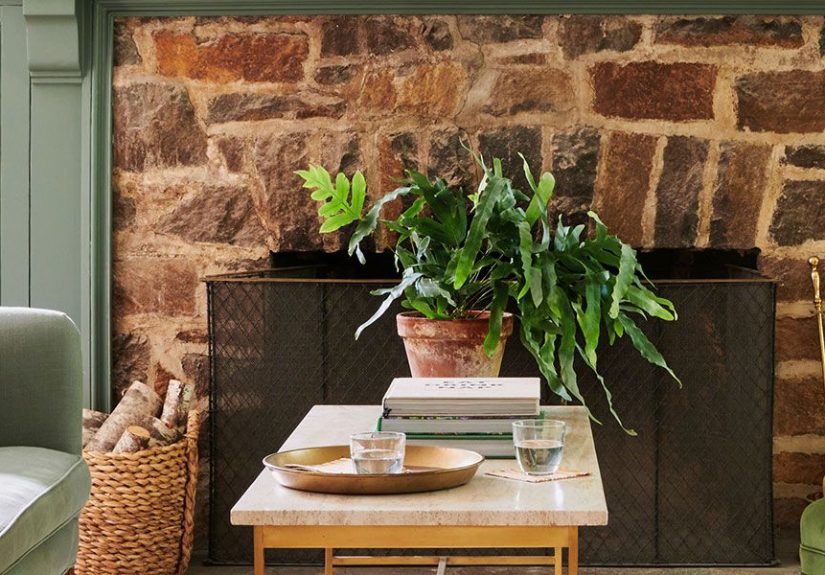
Home tours love a good vignette: a tray on an ottoman, a lamp next to a stack of books, a small bowl for keys, or a framed print leaning on a shelf. These tiny scenes make a space feel designed, and you can copy them in minutes. The rule is simple: combine something tall (lamp/plant), something flat (book/tray), and something personal (photo/object).
Texture: The Cure for “Why Does This Room Feel Cold?”
If you’re afraid of color, borrow texture. Tours often layer linen, wool, leather, wood, ceramic, and metal to create richness without loud paint. Texture is what makes neutrals look intentional instead of unfinished.
Common Home Tour Styles You’ll See Across the U.S.
Not every tour fits neatly into a label, but patterns emerge. Here are a few styles that show up again and againplus what you can borrow from each.
Modern Farmhouse (Still Here, Just More Grown-Up)
The updated version is less “everything is white shiplap” and more “warm woods, functional layouts, and a few vintage pieces.” Borrow the practicality: durable textiles, big tables, and storage that handles real life.
Coastal Calm (Not Just Beachy, More Breathable)
Coastal tours often emphasize light, airflow, and easy materialsthink natural fibers, soft blues/greens, and flexible seating. Borrow the idea of “visual exhale”: fewer hard edges, more gentle transitions, and a palette that feels like a deep breath.
Midcentury + Modern (Clean Lines, Warm Soul)
Midcentury-inspired homes tend to balance minimal shapes with warm woods and iconic silhouettes. Borrow the editing: fewer pieces, better proportions, and a focus on craftsmanship.
Maximalist Happy Homes (Color, Pattern, Personality)
The strongest maximalist tours aren’t chaosthey’re curated. They repeat a few colors, keep some “quiet” zones, and let bold choices appear intentional. Borrow the bravery in small doses: a patterned rug, a painted powder room, or one wall that’s unapologetically you.
Small-Space Genius (Where Every Inch Has a Job)
Tours of apartments and compact homes are basically masterclasses. You’ll see multifunctional furniture, vertical storage, and zone-making tricks (rugs, curtains, shelving) that create separation without walls. Borrow one principle: if it’s in your home, it should earn its keepstorage, seating, or joy. Bonus points if it does two.
How to “Tour” Homes Like a Pro (Online or IRL)
Home tours aren’t only something you scroll; many are spaces you can actually visit. Showhouses and “Idea Homes” can be open seasonally, and open houses offer real-world lessons in layout and light. Even if you’re not moving tomorrow, touring homes can train your eye.
What to Notice in Two Minutes
- Light: Where does daylight land? Which rooms feel best at what time of day?
- Sound: Does the home echo? Soft textiles can change everything.
- Storage: Where do shoes, coats, and bags go? (Or where do they pile?)
- Transitions: Are there places to pausean entry bench, a hallway table, a landing?
- Scale: Is the furniture right-sized, or is it crowding pathways?
Tour Etiquette (Because We Live in a Society)
If you’re touring in person: ask before photographing, respect off-limits areas, and remember that someone else’s home is not a museum exhibiteven if it looks like one. If it’s a showhome, follow posted guidelines and don’t treat the styled pantry like a snack bar (unless explicitly invited, in which case: congratulations).
If You’re Hosting a Home Tour: Make It Look Better Without Lying
Whether you’re listing a home, sharing it online, or inviting people over, the goal isn’t perfection. It’s clarity: show the space, the function, and the feeling. Here’s how home tours stay flattering without becoming fiction.
Quick Prep Checklist
- Declutter surfaces: Keep a few intentional items; stash the rest.
- Create a drop zone: Entry hooks, a tray, a basketinstant calm.
- Reset seating: Chairs facing each other reads “conversation-ready.”
- Make beds like you mean it: Smooth sheets, aligned pillows, done.
- Hide cords and remotes: The fastest way to upgrade a room.
- Add one living thing: Flowers, a plant, or a bowl of lemonssimple, not cheesy.
- Turn on lamps: Overhead-only lighting is the design equivalent of yelling.
- Open blinds strategically: Let in light, reduce glare, protect privacy.
- Freshen the air: Clean, neutral, welcomingavoid overpowering scents.
- Photograph corners, not just walls: Corners show depth and scale.
- Show function: A desk with a task lamp, a reading chair with a throw.
- Keep it consistent: Similar color temperature bulbs reduce visual chaos.
Common Home Tour Mistakes (And the Easy Fixes)
“Everything Matches” Syndrome
A perfectly coordinated room can feel flat. Fix it by adding contrast: a vintage piece, a textured rug, mixed metals, or art that isn’t the exact same color as the sofa. Rooms need a little friction to feel alive.
Trend-Chasing Without a Plan
Tours can tempt you into collecting trends like baseball cards. The fix: decide your “forever” elements (layout, durable finishes, your preferred palette), and let trends live in the swap-friendly zone (paint, pillows, prints).
Ignoring Scale
If your room feels off, it might not be the colorit might be proportion. Oversized furniture in a small room or tiny art on a big wall can make a space feel unsettled. Fix it by measuring pathways (aim for comfortable clearance), choosing fewer larger pieces, and scaling art appropriately.
The Future of Home Tours: More Video, More “Shop the Look,” More Reality
Home tours have moved from magazine pages to endless formats: quick reels, long-form videos, interactive walkthroughs, and virtual tours. The direction is clear: viewers want both inspiration and honestybeautiful rooms and the backstory, the budget priorities, and the “here’s what we’d do differently” lessons. The more a tour teaches, the more it sticks.
The smartest takeaway? Treat home tours like a design gym. You’re training your eye. The goal isn’t to copy a room line-for-line; it’s to understand why it worksand then apply that logic to your own space.
Experience Add-On: What You Start Noticing After 10 Home Tours (And Why It Changes Your Own Home)
After you’ve “walked through” enough homesdigitally or in personyou begin to notice the same quiet signals again and again. Not the flashy ones (though, yes, the dramatic staircase gets your attention). The subtle ones. The details that make a space feel welcoming, functional, and strangely flattering to the people who live there.
First, you start to feel entries. A good entry isn’t about size; it’s about permission. Permission to arrive, to exhale, to put your stuff somewhere sensible. The homes that feel instantly calm usually have a place for shoes, a spot for keys, and lighting that doesn’t blast you like an interrogation lamp. Even a narrow hallway can do this with a hook rail, a slim bench, and one warm lamp. Once you notice it in tours, your own front door suddenly looks at you like, “So… where do you want the backpacks to go, exactly?”
Next, you start tracking where the eyes land. Great rooms have a focal pointsometimes it’s a fireplace, sometimes it’s a view, sometimes it’s a big piece of art, and sometimes it’s simply a well-styled bookcase that says, “Yes, a human with interests lives here.” In home tours, you’ll see designers use this trick constantly: they give your attention a place to rest. And if your room doesn’t have one, your brain keeps scanning like it’s looking for the exit sign. The fix can be surprisingly simple: center the sofa on something, hang one large piece of art, or create a “moment” with a console, mirror, and lamp.
Then comes the “real life” reveal: seating that faces seating. Tours that feel hospitable almost always set up conversation zones. Not “everyone stare at the television like it’s a fireplace,” but “we can actually talk without twisting our spines.” Two chairs angled toward a sofa. A small table that implies snacks might appear. A rug big enough that the furniture doesn’t look like it’s tiptoeing around the room. Once you notice this pattern, you realize why some living rooms feel awkward: they’re arranged for a photo, not for people.
Home tours also teach you that “expensive” often means edited. It’s not that every object costs more; it’s that fewer things are fighting for attention. You’ll see a kitchen with three beautiful items on the counter and suddenly understand why your own counter feels chaotic: it’s hosting a convention. The lesson isn’t to live with nothingit’s to give your favorites space to be seen. A bowl for fruit. A tray for oils. A jar for utensils. Containment is the most underrated form of luxury.
Finally, the most important discovery: the homes that photograph best usually have one thing in commonthey reflect the owners. Not in a “name spelled in wall letters” way, but in a “this is our life and we like it” way. A record collection within reach. A mudroom that admits the family hikes. A reading nook that looks used. Once you internalize that, you stop trying to design a house for imaginary judges and start designing for the people who actually pay rent there. And that is the kind of home tour result you can feelno scrolling required.
Conclusion
The best home tours don’t just show you what’s stylishthey show you what’s possible. They prove that a home can be beautiful and practical, curated and lived-in, aspirational and still honest about backpacks, pets, and the reality of Tuesday night dinner. Use them as inspiration, surebut also as a guide to better decisions: stronger layout, smarter lighting, more meaningful storage, and personal details that make your space feel like yours.