Table of Contents >> Show >> Hide
- What Counts as a “Cursed Image,” Exactly?
- Where Cursed Images Came From (and Why They Won’t Leave)
- The Psychology: Why We Can’t Look Away
- Types of Cursed Images (With Concrete Examples)
- “Cursed” vs. “Blursed” vs. “Blessed” (A Quick Field Guide)
- How to Curate a “Hey Pandas” Worthy Cursed Image Collection (Without Being Gross)
- Why “Hey Pandas” Prompts Work So Well for Cursed Images
- How to Tell If an Image Is “Cursed” (A Fast Checklist)
- Conclusion: The Internet’s Favorite Kind of “What Am I Looking At?”
- Experiences: The Real-Life Moments That Turn Into Cursed Images
You know the feeling: you’re innocently scrolling, minding your own business, when an image appears that makes your brain do a hard reboot.
It’s not exactly scary. It’s not exactly funny. It’s not even exactly anythingexcept deeply, spiritually wrong.
Congratulations. You’ve encountered a cursed image.
The internet didn’t invent “unsettling,” but it did give it a group chat, matching outfits, and a very specific vibe: a photo that feels like it shouldn’t exist,
yet is undeniably real (or real enough to make you uncomfortable). And if you’ve ever read a “Hey Pandas” prompt and thought, “I have exactly the kind
of questionable camera-roll chaos this is asking for,” this one’s for you.
What Counts as a “Cursed Image,” Exactly?
In internet-speak, a cursed image is typically a photograph (or photo-like image) that feels mysterious, disturbing, surreal, or just plain
offoften because it lacks context. It’s the visual equivalent of walking into a room and hearing someone say, “Don’t worry about it,” which instantly
makes you worry about it.
The Core Ingredients
- Context vacuum: You can’t tell what happened before or after, and your imagination fills the gap with nonsense and dread.
- Normal thing + wrong setting: A familiar object appears where it absolutely shouldn’t, like it took a wrong turn at reality.
- Uncanny vibes: Something looks almost human, almost safe, almost normalalmost doing a lot of heavy lifting.
- Low-fi photography energy: Harsh flash, odd angles, grainy quality, and that “found photo” feeling that makes it seem like evidence.
- Unintended comedy: The image is unsettling, but you still want to laugh because what else are you supposed to do?
This is why cursed images are often described as “haunted” even when nothing supernatural is happening. They don’t need ghosts.
They have ambiguity, and ambiguity is basically a ghost that pays rent in your brain.
Where Cursed Images Came From (and Why They Won’t Leave)
“Cursed images” rose as a recognizable meme genre in the mid-2010s, spreading through platforms that love bite-sized weirdness: Tumblr, Twitter/X,
and later the broader meme ecosystemcompilations, repost accounts, and community threads. Tech and culture outlets have described the appeal as a loop:
the image makes you uncomfortable, your curiosity spikes, and your thumb goes, “One more.”
The “Hey Pandas” style prompt fits perfectly into that ecosystem because it’s built for participatory internet culture: a simple call-and-response that turns
personal camera rolls into a crowd-sourced museum of the inexplicable. It’s not just “show me cursed images.” It’s “show me your cursed images,”
which adds a human layer: these aren’t studio props; they’re the accidental artifacts of real life.
The Psychology: Why We Can’t Look Away
Cursed images sit at the intersection of fear, humor, and curiosity. Researchers who study horror and humor often point to a key idea:
we enjoy “safe” versions of unsettling experiences. A scary movie in your living room, a haunted house where you can exit, a meme that makes you grimace
while you’re perfectly fine on your couchyour nervous system gets stimulation, but you’re not actually in danger.
Benign Violation: The Secret Sauce
One popular framework in humor research is that jokes work when something feels like a violation (of norms, expectations, logic) while also feeling safe or
“benign.” Cursed images can hit that same sweet spot: the photo violates how reality should behave, but you’re viewing it through the protective glass of
a screen, with social permission to laugh.
Creepiness Loves Ambiguity
“Creepy” isn’t the same as “scary.” Creepy is uncertainty flavored with mild threat. If your brain can’t categorize what it’s seeing quicklyfriend or foe,
normal or abnormal, staged or accidentalit lingers. That lingering is the whole cursed-image experience: a pause, a squint, and the whispered question,
“Why does this exist?”
Types of Cursed Images (With Concrete Examples)
Not all cursed images are created equal. Some are “lightly cursed,” like a funny dream. Others are “please don’t make eye contact with it,” like a nightmare
wearing Crocs. Here are common categories you’ll see in cursed image collections.
1) The Domestic Glitch
A normal home scene becomes cursed through one wrong detail: a chair facing the corner like it’s on time-out, a birthday cake that looks emotionally unwell,
or a pantry item arranged in a way that suggests it has plans.
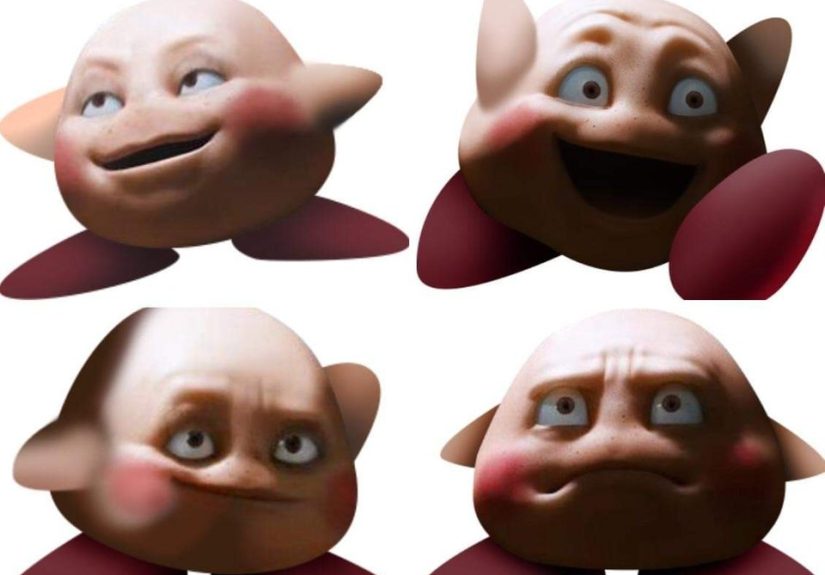
2) The Uncanny Almost-Human
Mannequins, masks, dolls, animatronics, and costume heads are classic. They’re not dangerous, but they trigger that “almost human” responseespecially when
lit poorly or photographed up close. This is where the uncanny valley vibe can show up: the more human-like something gets, the more we expect it to behave
like a human. When it doesn’t, the discomfort spikes.
3) The Liminal Snapshot
Empty hallways, deserted play areas, parking lots at nightspaces designed for people, caught without people. These images feel like a story paused mid-sentence.
You’re not seeing a monster; you’re seeing the absence of one, and your imagination does the rest.
4) The “Wrong Scale” Photo
Perspective tricks can make everyday objects look enormous or tiny, producing the kind of visual confusion that reads as cursed. A close-up of something mundane
(like a sponge) can look like alien terrain. Your brain doesn’t like being pranked by optics.
5) The Accidental Surrealism
Reflections, shadows, motion blur, and bad timing can turn ordinary moments into accidental art-horror. A pet mid-yawn becomes a cryptid. A panorama stitch
gives someone a spaghetti arm. A flash catches a floating dust speck and suddenly you’ve photographed “an orb,” which is how cursed images become family legends.
“Cursed” vs. “Blursed” vs. “Blessed” (A Quick Field Guide)
- Cursed: Unsettling, confusing, mildly threatening, or reality-breaking.
- Blessed: Comforting, wholesome, satisfyingyour nervous system exhales.
- Blursed: Both at once. You hate it, but you love it. Your soul is doing jazz hands while your brain files a complaint.
“Blursed” is especially common in community prompts because personal photos often carry mixed signalslike a kid’s craft project that is adorable in intention
but looks like it crawled out of a swamp. That contradiction is the charm.
How to Curate a “Hey Pandas” Worthy Cursed Image Collection (Without Being Gross)
Cursed doesn’t have to mean graphic or harmful. In fact, the best cursed images are often PG-13 weird: unsettling, absurd, and oddly funnywithout leaning on
gore, shock, or cruelty. If you’re building a set for a community prompt, aim for “strange but safe.”
Step 1: Start With Your Camera Roll’s Weirdest “Why Did I Save This?” Folder
Search your phone for “panorama,” “flash,” “night,” “blurry,” or “screenshot.” Cursed images often hide in the technical leftovers:
accidental captures, half-saved snaps, and images that were never meant to be seen by anyone besides Future You, who would immediately delete them.
Step 2: Prefer Confusion Over Shock
A great cursed image makes people ask questions. A cheap cursed image answers them with “because I wanted attention.” Choose photos that feel like a mystery:
odd objects, strange angles, impossible setups, and scenes that look staged even when they aren’t.
Step 3: Remove Identifiers and Respect Privacy
Blur faces, hide addresses, remove license plates, and avoid sharing anything that could embarrass someone who didn’t consent.
The goal is communal laughter, not collateral damage.
Step 4: Keep It Accessible
If you’re posting online, add brief alt text or a short caption that describes what’s visiblewithout “explaining the joke.” Think:
“Blurry flash photo of a mannequin head on a kitchen chair at 2 a.m.” That keeps your post readable for everyone while preserving the cursed aura.
Step 5: Use a Light Content Warning When Needed
If an image includes bugs, medical imagery (even mild), or something that might trigger phobias, label it gently. “CW: spiders” is kinder than
“SURPRISE, SPIDER.”
Why “Hey Pandas” Prompts Work So Well for Cursed Images
Community prompts create a shared frame: everyone agrees to interpret images through a playful lens. That matters.
It turns discomfort into a social gamespot the odd detail, craft the funniest reaction, and marvel at how many people have accidentally photographed
something that looks like a portal to an alternate dimension behind a Taco Bell.
They also democratize creativity. Not everyone can stage a cinematic horror shot, but anyone can accidentally take a cursed photo while opening their
front camera, walking past a store display, or attempting to photograph a cake that refuses to be aesthetically pleasing.
How to Tell If an Image Is “Cursed” (A Fast Checklist)
- Did you say “nope” out loud even though nothing “bad” is happening?
- Does it feel like a dream you can’t fully remember?
- Would adding context make it less creepy… or somehow worse?
- Is the lighting doing that harsh-flash “evidence photo” thing?
- Does it look like the photo was taken three seconds before a plot twist?
If you answered “yes” to two or more, congratulations: your image may be cursed. Please handle responsibly and do not feed it after midnight.
Conclusion: The Internet’s Favorite Kind of “What Am I Looking At?”
Cursed images endure because they’re a perfect micro-dose of chaos: safe discomfort, quick curiosity, and a weird little laugh when your brain fails to
categorize what it’s seeing. They’re not just images; they’re tiny puzzles that your nervous system tries to solve in real time.
And in the “Hey Pandas” spirit, the best part is sharing the puzzleso everyone else can feel briefly haunted together.
Experiences: The Real-Life Moments That Turn Into Cursed Images
Most people don’t go out intending to create cursed images. Cursed images happen the way you accidentally bite your cheek: abruptly, unfairly, and
somehow on a day when you were already doing your best. They’re the byproduct of living in a world filled with reflective surfaces, bad lighting,
and objects that look normal until your camera catches them from a slightly wrong angle.
One of the most common “cursed image experiences” is the front-camera ambush. You open your phone to check something innocenttime, weather,
a messageand the selfie camera is already on. For a split second, you see your face in harsh screen-lighting, mid-thought, eyes unfocused, mouth doing
whatever mouths do when they’re not being supervised. It’s not a selfie. It’s a candid screenshot from your soul’s security footage. You close it immediately,
but it’s too late: the memory is saved in your brain as “evidence I am a cryptid.”
Then there’s the panorama betrayal, a classic camera-roll haunt. You’re trying to capture something prettyskyline, beach, a group of friends
and the panorama stitch decides your buddy’s arm should be three feet longer, your dog should have two heads, and the horizon should bend like it’s tired of
being perceived. The final image looks like reality tried to load and got interrupted. You show it to someone, expecting laughter, and they go quiet for a second.
That’s how you know it’s not just funnyit’s cursed.
Retail stores contribute heavily to the cursed image economy. You walk past a seasonal display and see a mannequin in a pose that reads less “casual fashion”
and more “witness protection.” A row of identical dolls stares in unison, and your brain whispers, “They’re rehearsing.” You take a picture because it feels
ridiculousuntil later, when you look at it again at night and realize the lighting turned the scene into a low-budget horror poster. In the moment, it was
absurd. In your camera roll, it’s a warning.
Food is another reliable source of accidental cursed imagery, not because food is scary, but because food is vulnerable. One wrong photobad flash, weird angle,
the glossy sheen of sauceand your lovingly prepared dinner becomes “mysterious specimen.” You send the photo to a friend like, “Look what I made!” and they
respond, “Are you okay?” Suddenly you’re defending a lasagna like it’s on trial. Some meals are delicious. Some meals are delicious and cursed.
Pets, too, are blessed creatures who sometimes photograph like folklore monsters. A cat mid-jump becomes a floating blur with judgmental eyes. A dog yawns and
briefly looks like it contains an ancient echo. You didn’t capture “my sweet boy.” You captured “my sweet boy, guardian of the threshold.” You still love them,
but now you also respect them a little more, because clearly they have access to dimensions you don’t.
The funniest part is that cursed images often start as attempts at normal documentation: “Here’s my new lamp,” “Here’s the hotel hallway,” “Here’s the cake
before we cut it.” But the camera flattens depth, exaggerates shadows, and strips away the comforting context of real-time experience. The image becomes a
standalone object, and your brain treats it like a clue. That’s why these photos linger. You remember the moment as ordinarybut the picture insists it wasn’t.
And when you finally share one in a “Hey Pandas” thread, the experience becomes communal: strangers supply captions, theories, and reactions that are somehow
both comforting and chaotic. Your cursed image transforms from “why is this on my phone” into “ah yes, the internet understands me.” In a world where so many
posts are polished and intentional, cursed images are a reminder that the funniest, weirdest content still comes from real life happening unsupervised.