Table of Contents >> Show >> Hide
- Who Was Henrietta Lacks?
- Why HeLa Cells Became So Important
- Where the Controversy Starts
- The Next Layer of Controversy: Privacy and Profit
- The Scientific Mess Nobody Likes to Brag About
- Why Henrietta Lacks Still Matters Now
- Conclusion
- Extended Reflections: What the HeLa Story Feels Like in Real Life
- SEO Tags
Some stories in science sparkle with progress. Others come with a shadow. The story of Henrietta Lacks and the immortal HeLa cells does both at once, which is probably why it still hits like a jolt decades later. On one side, HeLa cells helped transform modern medicine. On the other, the woman behind those cells was never asked for permission, never given a say in how her tissue would be used, and never allowed to witness the astonishing scientific empire that grew from her biology.
That tension is the reason this story refuses to stay in the past. Henrietta Lacks is not just a footnote in laboratory history. She is at the center of one of the most important conversations in modern bioethics: who benefits from medical research, who gets credit, who gets protected, and who gets left out while science speeds ahead with its lab coat flapping dramatically in the wind.
If you want to understand why HeLa cells remain famous, controversial, and deeply relevant, you have to hold two truths at the same time. The cells changed medicine. The way they were obtained exposed a moral failure. That is the real legacy, and it is far more complicated than the feel-good version science sometimes likes to tell itself.
Who Was Henrietta Lacks?
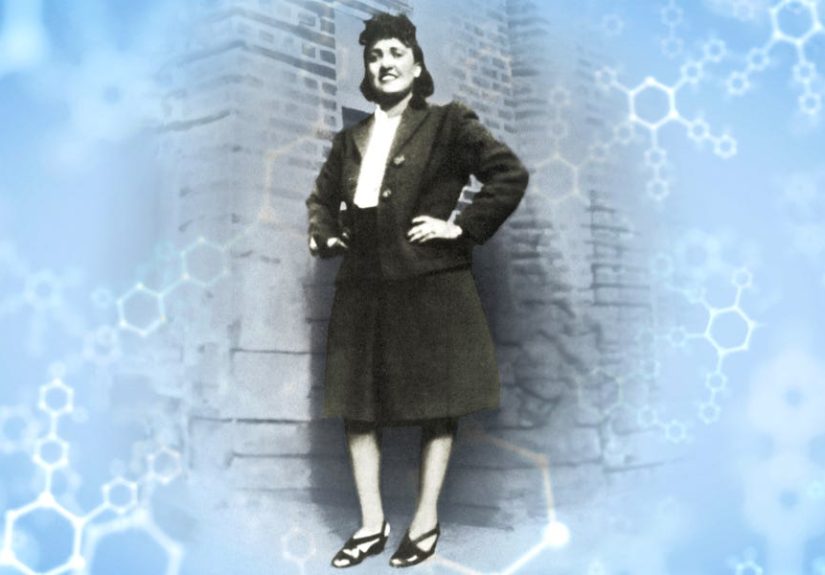
Henrietta Lacks was a Black woman, a mother of five, and a tobacco farmer’s daughter whose life did not begin anywhere near the polished mythology of scientific discovery. In 1951, at age 31, she went to Johns Hopkins Hospital in Baltimore for treatment of an aggressive cervical cancer. During her care, tissue from her tumor was taken. Some of that tissue made its way into a lab. That moment, which seemed medically routine at the time, ended up reshaping biomedical research.
Scientists later named the cell line “HeLa,” using the first two letters of Henrietta’s first and last names. It sounds tidy, almost corporate, like a product line that accidentally conquered the world. But behind that neat label was a real person whose family would spend years learning, piece by painful piece, what had happened and what it meant.
The Biopsy That Changed Science
Researchers had long wanted human cells that could survive and reproduce outside the body. Most cells simply refused to cooperate. They would divide a few times, then stop, like exhausted employees finally closing their laptops. Henrietta Lacks’ cancer cells behaved differently. They multiplied rapidly and kept going. In laboratory terms, they were “immortal,” meaning they could continue dividing indefinitely under the right conditions.
That made HeLa cells revolutionary. Scientists suddenly had a durable, shareable, fast-growing human cell line they could use again and again. What followed was an explosion of research. The same biological trait that made Henrietta’s cancer devastating also made her cells uniquely valuable to science.
Why HeLa Cells Became So Important
HeLa cells did not merely become useful. They became a scientific workhorse. They were used to study viruses, cancer, genetics, toxins, radiation, and the basic machinery of cells. They helped scientists test the polio vaccine and later contributed to work in fields ranging from infectious disease to reproductive biology to modern genomics.
One reason HeLa cells mattered so much is that they made research scalable. Scientists could grow large quantities of the same human cells, distribute them between labs, repeat experiments more easily, and compare results with much greater consistency. That was a huge leap for twentieth-century biomedical science. It helped move research from improvised trial-and-error toward something more standardized and powerful.
Even today, HeLa cells show up in studies involving cancer biology, virology, drug screening, toxicology, and vaccine-related research. They have been used so often, in so many settings, that they became almost invisible through familiarity. Researchers knew the cells. The public often did not know the woman.
More Than a Scientific Curiosity
What made HeLa especially influential was not just that the cells survived. It was that they arrived at exactly the moment science was ready to industrialize cell culture. Laboratories could ship them, grow them, and build entire lines of inquiry around them. HeLa cells became part laboratory tool, part scientific legend, part cautionary tale. That is not a normal career arc for a cluster of cells, but then again, HeLa was never normal.
And to be fair, the science is genuinely astonishing. Countless medical advances would likely have taken longer without HeLa. But the word “astonishing” should not be confused with “ethically uncomplicated.” That is where the controversy begins.
Where the Controversy Starts
The central ethical issue is painfully clear: Henrietta Lacks did not give informed consent for her cells to be used in research. Her family was not informed in any meaningful way for years. They did not share in the recognition, control, or financial value that grew around HeLa. For many people, that is the heart of the controversy. This was not just a scientific success story. It was also a story of extraction.
To understand the outrage, it helps to remember the historical setting. In 1951, informed consent practices were nothing like what patients expect today. Researchers and physicians often used leftover tissues without explicit permission. That historical fact matters, but it does not erase the moral problem. “It was common then” is context, not absolution.
The racial dimension also matters. Henrietta Lacks was a Black woman receiving care in an era shaped by segregation, inequity, and deep mistrust between medical institutions and Black communities. Her story became emblematic of how vulnerable patients, especially Black patients, could be treated as sources of biological material rather than full partners in care or research.
Why Consent Matters Beyond Paperwork
Consent is not just a signature on a form. It is a recognition of dignity. It says the person in the hospital bed is not a passive source of data, tissue, or useful bits of biology. It says they are still fully human when science finds them interesting.
That is why the Henrietta Lacks story still lands so hard in ethics classrooms, medical schools, and public debates. It exposes what happens when scientific ambition outruns moral reflection. Researchers got something invaluable. The patient who made it possible got no chance to agree, object, negotiate, or even know.
The Next Layer of Controversy: Privacy and Profit
If the original lack of consent were the only issue, this would already be a landmark ethical case. But the controversy did not stop in 1951. It evolved. As HeLa cells became one of the most widely used cell lines in history, they also became part of a commercial ecosystem. Companies sold HeLa-related products, built tools with them, and profited from their use. Meanwhile, the Lacks family struggled financially and often learned about major developments after the fact.
That imbalance made the story feel even sharper. One family’s involuntary contribution became part of a thriving scientific and commercial machine. The family’s question, understandably, was not just “Why were the cells taken?” but also “Why did everyone else seem to gain something from them while we were left outside the door?”
Then came another ethical flashpoint: genomic privacy. In 2013, researchers published genomic information from HeLa cells, raising concerns because that data could reveal information not only about the cell line but about Henrietta Lacks’ descendants. After discussions with the family, the National Institutes of Health announced an agreement creating controlled access to HeLa genomic data. That agreement was significant because it acknowledged, at last, that the family had a legitimate stake in how this information was shared.
More recently, the unresolved issue of profit has stayed in the headlines. Legal actions by the Lacks estate against biotechnology and pharmaceutical companies have kept public attention on the question of unjust enrichment. A 2023 settlement with Thermo Fisher Scientific underscored that this is not just historical philosophy. It is a living dispute about ownership, benefit, and accountability.
Can Cells Be “Yours” Forever?
The HeLa story forces a difficult question: once tissue leaves a patient’s body, who controls it? The patient? The hospital? The researcher? The company that turns it into a product? The law has not always answered that question in ways people find morally satisfying. HeLa remains the clearest example of why the gap between what is legal and what feels just can be enormous.
That gap is exactly why Henrietta Lacks continues to matter. Her story presses the point that biomedical innovation is not value-neutral. It carries choices about fairness, recognition, and power. Cells may be microscopic, but the ethics around them are not.
The Scientific Mess Nobody Likes to Brag About
There is another controversy attached to HeLa, and this one is less famous but hugely important inside science: contamination. HeLa cells grow so aggressively that they have contaminated other cell lines in laboratories, sometimes overtaking them entirely. In plain English, they were the overachieving guest who walked into someone else’s experiment, ate the snacks, took over the couch, and then signed the lease.
This created real scientific problems. Researchers sometimes believed they were studying one kind of cell when they were actually studying HeLa. That led to misidentified cell lines, muddled results, and a body of literature that had to be questioned. The problem became so widespread that HeLa contamination turned into a warning case about cell authentication and quality control.
This matters because the HeLa story is often told as pure triumph plus ethics scandal. But there is a third lesson hiding in plain sight: scientific tools can become so successful that they distort the very research they enable. HeLa did not just help create modern cell biology. It also taught researchers the hard way that reproducibility and verification are not optional luxuries.
Why Henrietta Lacks Still Matters Now
Henrietta Lacks remains central to conversations about medical ethics because her story sits at the intersection of race, research, privacy, consent, and commercialization. It is not merely about one hospital or one lab. It is about how systems behave when they value discovery more than dialogue.
Today, researchers, institutions, and policymakers are far more likely to emphasize informed consent, privacy protections, community engagement, and transparency around biospecimens. That shift did not happen by accident. Stories like Henrietta Lacks’ forced medicine to look in the mirror and admit that scientific progress can coexist with exploitation unless institutions deliberately choose otherwise.
Importantly, the lesson of HeLa is not that research is bad. Quite the opposite. The lesson is that good science must also be ethical science. We do not have to choose between discovery and dignity. The real failure comes when anyone pretends that choice is necessary.
The Most Important Legacy of All
The ultimate legacy of Henrietta Lacks is not just the immortal HeLa cells. It is the insistence that the people behind the samples must remain visible. Science often reduces the world into things that can be labeled, measured, frozen, shipped, and studied. Henrietta Lacks reminds us that a sample has a source, a history, and a human meaning.
That is why her story keeps showing up in classrooms, documentaries, ethics panels, and news coverage. It asks a deceptively simple question that still challenges modern medicine: can a system praise what a person’s cells did for humanity while ignoring what that person was denied? Once you hear the question clearly, it becomes very hard to look away.
Conclusion
Henrietta Lacks and the controversy behind immortal HeLa cells remain essential to understanding both the brilliance and the blind spots of modern medicine. HeLa cells changed research forever. They helped unlock major advances in virology, cancer science, vaccine development, and cell biology. But their success came attached to a profound ethical breach: tissue was taken without informed consent, the family was kept in the dark, privacy concerns emerged later, and commercial value spread far beyond the people most directly connected to the cells.
That is why this story endures. It is not just about what science achieved. It is about what science owes. Henrietta Lacks deserves to be remembered not as a background character in someone else’s breakthrough, but as the human being whose story continues to reshape how we think about research ethics, patient rights, and respect in medicine. HeLa cells may be immortal, but so is the question they leave behind: progress for whom, and at what cost?
Extended Reflections: What the HeLa Story Feels Like in Real Life
The power of the Henrietta Lacks story is that people do not experience it only as history. They experience it emotionally, almost physically. In classrooms, students often begin by reacting to the scientific miracle. Immortal cells? World-changing research? A line of human cells that helped push medicine into a new era? That part sounds like a triumph. Then the second half of the story arrives, and the mood changes. Suddenly, the case is not just impressive. It is unsettling. Students start asking the kind of questions that make a room go quiet: Did she know? Did her family benefit? Why was the system built this way? The experience of learning about HeLa often begins with awe and ends with discomfort, which is probably a sign that the lesson is working.
In medical training, Henrietta Lacks often becomes a kind of ethical checkpoint. Future doctors and researchers are reminded that a patient is never just an interesting case. That sounds obvious, but medicine has a long history of becoming so fascinated by disease that it forgets the person carrying it. The HeLa story brings the person back into focus. It reminds trainees that bedside manners and bioethics are not decorative extras. They are part of competent care. A doctor can understand every lab value on the chart and still fail the patient if respect is missing.
In research settings, the experience is slightly different. Scientists may encounter HeLa cells as ordinary tools before they fully absorb the history. That creates its own odd tension. Imagine spending years using a famous cell line and only later confronting the human story behind it. For many researchers, that realization changes the emotional texture of their work. The flask on the bench stops being just a standard reagent and starts feeling like part of a larger moral inheritance. The science remains valid, but the story demands humility. It says, in effect, that useful material can still come from an unjust process, and researchers have a responsibility to remember both facts at once.
For patients and families, the HeLa case often resonates at the level of trust. Many people hear the story and immediately translate it into a personal question: if I go to a hospital, what happens to my tissues, my data, my genetic information, and my choices? That reaction is not paranoia. It is a practical response to a real history. Trust in medicine is not built by saying, “Things are better now, so don’t worry.” Trust is built when institutions explain clearly, ask honestly, protect privacy carefully, and treat people as partners rather than raw material with a billing address.
For Black communities in particular, the experience of the Henrietta Lacks story often connects to a broader history of medical exploitation and exclusion. That is one reason the story carries so much moral force. It does not read as an isolated mistake. It reads as part of a pattern. And patterns, unlike accidents, require structural change. When institutions publicly honor Henrietta Lacks today, the gesture matters. But memory alone is not enough. The truest tribute is building a research culture where transparency, shared decision-making, and dignity are routine rather than exceptional.
That may be the most lasting experience the HeLa story creates: it leaves people less willing to separate scientific excellence from ethical responsibility. It teaches that discovery without respect is incomplete. It also teaches that acknowledgment matters. Saying Henrietta Lacks’ name does not undo what happened, but refusing to say it would repeat the old mistake of letting the science eclipse the person. In that sense, the story continues to work on us. It changes how people read a consent form, how they think about biobanking, how they talk to patients, and how they define progress. Not bad for a lesson carried by cells the world once treated as immortal and anonymous.