Table of Contents >> Show >> Hide
- 1) Start With the “Big Picture” of FA (So the Small Stuff Makes Sense)
- 2) Build a Care Team That Actually Talks to Each Other
- 3) Safety First: Fall Prevention Without Turning Home Into a Bubble
- 4) Mobility & Transfers: Save Their Energy and Your Back
- 5) Speech, Swallowing, and Communication: Keep the Connection Strong
- 6) Don’t Forget the “Invisible” Symptoms: Fatigue, Pain, and Mood
- 7) Heart, Diabetes, and “The Stuff That’s Not Neurology”
- 8) School, Work, and Daily Independence: Advocate Like a Pro (Without Burning Out)
- 9) Make a “Care System” You Can Run on a Bad Day
- 10) Your Health Matters: Avoid Caregiver Burnout Before It Becomes a Crisis
- 11) Money, Benefits, and Legal Planning: Boring but Life-Changing
- 12) Staying Hopeful Without Selling Fairy Tales
- Conclusion: Strong Care Is Built, Not “Perfected”
- Real-World Caregiver Experiences & Lessons (An Extra 500+ Words)
Caring for someone with Friedreich’s ataxia (FA or FRDA) can feel like you’ve been hired as the world’s most loving project manager… for a project where the requirements keep changing and the “user manual” is missing. Some days you’re a cheerleader. Other days you’re a logistics wizard. And occasionally you’re a human GPS trying to navigate a wheelchair through a doorway that was clearly designed by someone who hates geometry.
This guide is built for Friedreich’s ataxia caregivers who want practical, real-life strategies: how to support mobility and safety, communicate better, manage appointments, protect your own health, and build a care plan that doesn’t collapse the first time life gets unpredictable. (Because it will. Life loves plot twists.)
Important: This is educational content, not medical advice. Always partner with your loved one’s clinicians for diagnosis, treatment, and urgent concerns.
1) Start With the “Big Picture” of FA (So the Small Stuff Makes Sense)
Friedreich’s ataxia is an inherited condition that affects the nervous system and often impacts balance, coordination, speech, sensation, and strength over time. FA can also involve the heart (commonly cardiomyopathy) and may increase the risk of diabetes or other complications. Symptoms often start in childhood or adolescence, but every person’s timeline and needs are different.
Caregiving gets easier when you reframe the goal: you’re not “fixing” FA. You’re building systems that help your person live as independently, safely, and joyfully as possible while the care needs evolve.
Caregiver mindset that helps (a lot)
- Progression ≠ failure. A new mobility aid isn’t “giving in.” It’s leveling up.
- Plan for change. Pick flexible routines over rigid rules.
- Team sport. You’re not supposed to do this alone (even if you’re really good at it).
2) Build a Care Team That Actually Talks to Each Other
FA is multisystem, so the best care is often multidisciplinary. Think neurology, cardiology, physical medicine/rehab, physical therapy (PT), occupational therapy (OT), speech-language pathology (SLP), and sometimes endocrinology, genetics, mental health, and social work.
How to turn “a bunch of appointments” into a coordinated plan
- Create a one-page “Care Snapshot” (keep it on your phone and printed): diagnoses, medications, allergies, baseline function, fall history, key specialists, and emergency contacts.
- Bring a running question list to appointments (notes app works). Add questions as they pop up.
- Ask for written therapy goals from PT/OT/SLPso home practice has a clear purpose.
- Pick a “quarterback.” This might be a neurologist, primary care clinician, or rehab physician. The point: one person helps coordinate referrals and big-picture decisions.
3) Safety First: Fall Prevention Without Turning Home Into a Bubble
Balance and coordination issues can make falls a daily risk. Your job isn’t to remove all risk (impossible). Your job is to reduce avoidable risks and build safer habits.
High-impact home tweaks (cheap-ish, effective, not ugly)
- Lighting: motion night lights for hallways and bathroom trips.
- Floors: remove loose rugs, add non-slip pads, manage cords like you’re training for an obstacle course (but less fun).
- Bathrooms: grab bars, non-slip mats, shower chair, handheld shower head.
- Stairs: sturdy railings on both sides if possible; mark edges with contrasting tape if vision is an issue.
- Seating: stable chairs with arms (standing up is easier; wobble-chairs are not your friend).
Fall-prevention habits that don’t feel like nagging
- “Pause before you move.” A two-second reset before standing reduces hurried, risky transfers.
- One task at a time. Walking while carrying items and answering texts is basically an extreme sport.
- Use the right device early. Cane/walker/wheelchair decisions should be proactive, not panic-driven after a scary fall.
4) Mobility & Transfers: Save Their Energy and Your Back
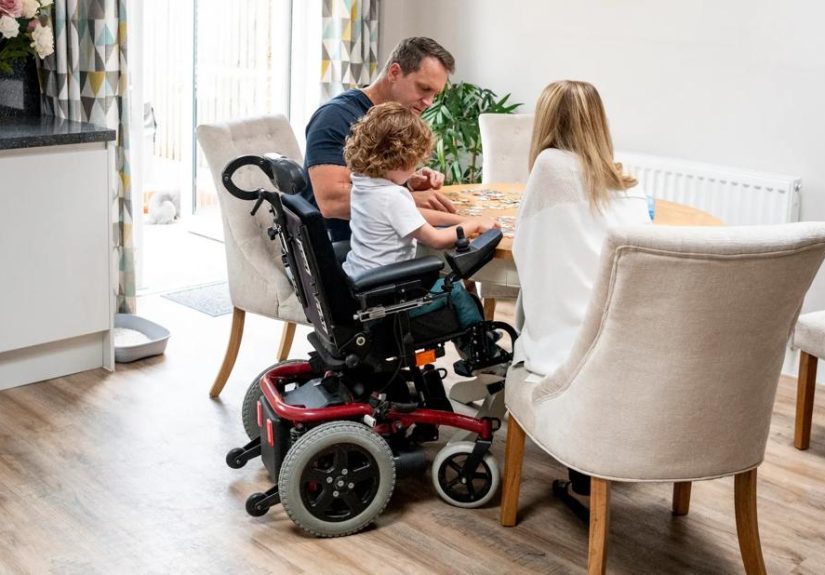
Mobility changes are common in FA, and needs can shift over time. Assistive technology (from simple grabbers to power wheelchairs) is about independencenot limitation. The right setup can reduce fatigue, prevent injuries, and keep your loved one more engaged in daily life.
Practical tips for safer transfers
- Ask PT/OT to teach transfers (bed-to-chair, toilet, car). A 15-minute lesson can prevent months of back pain.
- Use cues, not force: “Nose over toes,” “push from armrests,” “small steps.”
- Consider transfer aids (transfer boards, gait belts, pivot discs) based on therapist guidance.
- Respect fatigue. Many falls happen when someone is tired and trying to “just do one more thing.”
Choosing mobility aids without drama
If your loved one resists a device, try a reframing: “This doesn’t replace walking. It protects your freedom to do more, longer, with less fear.” Also: let them test devices in the real world (stores, sidewalks). The best mobility aid on paper is useless if it’s annoying in practice.
5) Speech, Swallowing, and Communication: Keep the Connection Strong
FA can affect speech clarity (dysarthria) and sometimes swallowing. A speech-language pathologist can help with strategies to improve intelligibility, conserve voice energy, and reduce choking risk.
Everyday communication upgrades
- Reduce background noise: turn off the TV during conversations (yes, even if it’s “just for ambiance”).
- Face-to-face: visual cues help listeners understand.
- Slow down together: encourage a slightly slower pace and intentional pauses.
- Use tools: text-to-speech apps, voice amplifiers, or shared note apps for longer discussions.
Mealtime: safety + dignity
- Ask about a swallowing evaluation if there’s coughing/choking, recurrent pneumonia, or weight loss.
- Small bites, upright posture, unhurried meals can help. (Also: no “make them laugh while they’re swallowing” jokes. Save the comedy for later.)
- Adaptive utensils and plate guards can reduce frustration and boost independence.
6) Don’t Forget the “Invisible” Symptoms: Fatigue, Pain, and Mood
Many caregivers focus on mobility because it’s visible. But fatigue, pain, anxiety, and depression can be just as limiting. Addressing these can dramatically improve quality of life.
Energy management (the underrated superpower)
- Prioritize: ask, “What must happen today?” and “What can wait?”
- Batch tasks: fewer transitions = less exhaustion.
- Plan rest like medicine: short, scheduled breaks prevent crash-and-burn afternoons.
- Use seating everywhere: a shower chair, a kitchen stool, and a lightweight transport chair can preserve energy.
Mental health counts as health
Chronic conditions can bring grief, frustration, and stress. If your loved one (or you) is struggling, counseling, support groups, and caregiver coaching can be as important as PT. There’s strength in saying, “We need more support.”
7) Heart, Diabetes, and “The Stuff That’s Not Neurology”
FA can involve cardiac complications (including hypertrophic cardiomyopathy) and may be associated with diabetes in some people. That’s why cardiology and primary care follow-up mattereven when the main day-to-day challenges look “neurological.”
Caregiver-friendly ways to stay on top of medical monitoring
- Keep a shared calendar for cardiology visits, labs, imaging, and therapy check-ins.
- Track symptoms like shortness of breath, chest discomfort, palpitations, dizziness, or swellingreport changes promptly.
- Ask about diabetes screening and what signs to watch for (increased thirst, urination, unexplained weight changes, fatigue).
Medication note: treatments are evolving
In the U.S., omaveloxolone (Skyclarys) was approved as a treatment for Friedreich’s ataxia for certain ages/eligibility. If your loved one is on disease-specific therapy or considering it, ask the prescribing clinician about monitoring (for example, labs) and side effects, and keep a simple “meds + labs” tracker so nothing slips through the cracks.
8) School, Work, and Daily Independence: Advocate Like a Pro (Without Burning Out)
FA caregiving often includes navigating school supports, workplace accommodations, and the endless paperwork universe. A few strategic moves can protect independence.
Practical accommodations that can make life easier
- Mobility: accessible parking, elevator access, extra transition time.
- Writing/typing: speech-to-text, ergonomic keyboards, note-taking support.
- Fatigue: flexible schedules, remote options, planned breaks.
- Safety: emergency evacuation plans that actually consider mobility needs.
Tip: document what helps. A short list of “What works” becomes a powerful tool for IEP/504 meetings, HR conversations, and new clinicians.
9) Make a “Care System” You Can Run on a Bad Day
Caregiving plans often look great on good daysand then fall apart when you’re tired, rushed, or juggling a surprise appointment. Build systems that still work when you’re running on fumes.
The three lists that save sanity
- Daily basics: meds, meals, hydration, mobility plan, short exercise/therapy routine.
- Weekly rhythm: therapy sessions, laundry, refills, equipment checks, appointment scheduling.
- “If things go sideways” plan: who can step in, where the medical info is, which urgent care/hospital to use, transport options.
Equipment readiness (aka “Don’t wait until it breaks”)
- Schedule routine checks for wheelchairs/walkers/brakes.
- Keep spare batteries/chargers for critical devices.
- Photograph equipment model numbers for faster repairs and replacements.
10) Your Health Matters: Avoid Caregiver Burnout Before It Becomes a Crisis
Caregiver burnout is realespecially in rare disease caregiving where support can feel harder to find. Protecting your health isn’t selfish; it’s how you stay able to provide care.
Burnout prevention that’s actually doable
- Respite counts. A two-hour break is not “nothing.” It’s refueling.
- Say yes to helpspecifically. Instead of “We’re fine,” try “Can you drive to PT on Thursdays?”
- Keep your own appointments. Put them on the calendar like they’re non-negotiable (because they are).
- Find your people. FA organizations, ataxia groups, rare disease caregiver communities, and local disability resource networks can reduce isolation.
If you’re feeling trapped, resentful, or constantly exhausted: that’s not a moral failing. It’s a signal. Talk to a clinician, therapist, or caregiver support organization and build a support plan for you.
11) Money, Benefits, and Legal Planning: Boring but Life-Changing
The “admin” side of FA can be overwhelming: insurance, disability benefits, transportation, home modifications, and adaptive equipment. Start small and keep it organized.
Caregiver-friendly planning steps
- Create a medical binder (digital or physical): diagnosis docs, meds, test results, therapy notes, equipment info.
- Track expenses for tax/benefits and reimbursement programs.
- Ask a social worker about disability benefits, transportation options, and local assistance programs.
- Consider legal planning (powers of attorney, healthcare proxy, guardianship considerations when appropriate).
12) Staying Hopeful Without Selling Fairy Tales
FA is serious, and caregivers deserve honesty. But hope is not denialit’s strategy. Hope is finding the right specialist. Hope is adapting the kitchen so your loved one can still cook. Hope is joining a registry, tracking symptoms, showing up to therapy, and building community.
Research and clinical trials continue to evolve. If your loved one is interested, ask their clinician about reputable trial listings and whether participation makes sense for their situation.
Conclusion: Strong Care Is Built, Not “Perfected”
The best Friedreich’s ataxia caregivers aren’t superheroes. They’re problem-solvers with a support network, a few smart systems, and the humility to ask for help. Focus on safety, communication, therapy carryover, and your own wellbeing. Then repeat tomorrowpreferably with coffee.
Real-World Caregiver Experiences & Lessons (An Extra 500+ Words)
If you talk to enough FA families, you start hearing the same theme in different accents: “We didn’t become experts overnight. We became experts one awkward Tuesday at a time.” The following are common caregiver experiencesshared and echoed across the rare disease communityturned into lessons you can use without needing to learn them the hardest way.
Experience #1: The “We’re fine” phase (and why it ends)
Many caregivers start out trying to keep life exactly the same. The instinct is sweet: protect normalcy, avoid scary labels, push through. But the “we’re fine” phase often ends right after the first big fall, the first choking scare, or the first moment you realize you’re doing three people’s jobs while pretending it’s no big deal.
The lesson caregivers wish they learned earlier: early supports are protective, not pessimistic. Getting PT/OT input early, trying mobility aids before a crisis, and making small home modifications can prevent injuries and preserve confidence. One parent described it like switching from “reactive mode” to “intentional mode”and said the whole household felt calmer once the plan wasn’t built on wishful thinking.
Experience #2: The mobility aid debate (aka “But I’m not there yet”)
Caregivers often end up in delicate negotiations about walkers, wheelchairs, or scooters. It’s not really about the deviceit’s about identity. People worry a mobility aid will change how others see them, or how they see themselves.
A helpful approach caregivers share: treat it like a toolbox, not a “final verdict.” Some families keep optionswalker for short distances, wheelchair for long outingsso the person can choose based on energy and environment. That shift (“You’re in control of the tool”) often reduces resistance. And once the right device prevents a fall and enables a fun outing, the conversation usually becomes less emotional and more practical.
Experience #3: The appointment spiral (and the “quarterback” fix)
FA caregiving can turn into appointment Tetris: neurology, cardiology, therapy, labs, dental, vision, equipment repair, insurance calls… plus normal life on top. Many caregivers describe a period where they felt they were “running a small medical startup” with no paid time off.
The fix that repeatedly comes up: choose a “quarterback” clinician and build a simple tracking system. One caregiver swears by a shared calendar plus a monthly “health admin hour” where they handle refills, forms, and scheduling. Another prefers a single spreadsheet or notebook with three sections: “Symptoms,” “Questions,” and “Next steps.” The specifics don’t matterwhat matters is that the system is simple enough to keep using when you’re tired.
Experience #4: Communication changes that surprise everyone
Caregivers frequently say they underestimated how much speech changes would affect social life. Not because their loved one had “nothing to say,” but because conversations take more energy, group settings get noisy, and people interrupt without realizing it. That can lead to withdrawal, which can look like mood changeswhen it’s really communication fatigue.
Small changes help: quieter environments, patience with pacing, and low-pressure tools like texting or shared note apps. Several caregivers describe a “breakthrough moment” when friends and family learned to pause and listen, and the person with FA felt included againwithout having to fight for the floor.
Experience #5: The caregiver’s emotional whiplash
This one’s universal: caregivers can feel grateful, angry, hopeful, exhausted, and guilty in the same hour. Many describe feeling “selfish” for wanting time alone. The truth is simpler: caregiving is demanding.
The most helpful advice caregivers pass on is almost comically basic: schedule breaks before you need them. Build a tiny support benchone friend who can sit with your loved one, one family member who can drive to therapy, one respite option you trust, one online group where you can vent without judgment. If that feels impossible, start with one person and one task. Nobody builds a village in a weekend.
And finally, the most human lesson: you can do everything “right” and still have hard days. That doesn’t mean you’re failing. It means you’re caring for someone with a complex condition while also being a person. Give yourself the same compassion you give your loved one. You’re on the same team.