Table of Contents >> Show >> Hide
- Why a PVC Storage Hack Works So Well for Garden Tools
- What You Can Store With a PVC Garden Tool Organizer
- How to Plan the Reorganization Before You Cut Anything
- The Basic PVC Storage Hack: Two Easy Approaches
- How to Build a Simple PVC Garden Tool Organizer
- Best Layout Ideas for a Cleaner Garage or Shed
- Don’t Reorganize Dirty Tools
- Common Mistakes to Avoid With PVC Garden Tool Storage
- Why This Hack Is Great for Busy Gardeners
- Real-World Experience: What This Reorganization Feels Like Over Time
- Conclusion
If your garage or shed currently looks like a rake rebellion broke out at midnight, welcome. You are among friends. Most gardeners do not set out to create a chaotic leaning tower of shovels, tangled hoses, rogue hand trowels, and that one pair of pruners that disappears the moment weeds start acting bold. It just sort of happens. One busy weekend becomes two, one planting season becomes three, and suddenly your “garden corner” looks like a yard-sale table that lost hope.
That is exactly why a PVC storage hack for gardening tools is so satisfying. It is cheap, practical, surprisingly sturdy, and wonderfully unglamorous in the best possible way. PVC pipe is not here to impress your neighbors. It is here to stop your long-handled tools from crashing to the floor every time you reach for one rake. And honestly, that is real luxury.
This guide walks through how to reorganize garden tools using PVC storage, why the method works, how to set it up in a garage or shed, and how to keep the whole system from becoming just another “great idea” buried under potting soil by next month. Along the way, we will cover tool grouping, layout strategy, safety, maintenance, and a few common mistakes that turn good intentions into clutter with better branding.
Why a PVC Storage Hack Works So Well for Garden Tools
The beauty of PVC storage is that it solves a very specific problem: long, awkward gardening tools do not like standing politely in a corner. Rakes slide. Hoes hook each other. Shovels flop dramatically. Brooms join the chaos because they enjoy attention. PVC creates simple individual slots or wall-mounted holders that keep each tool separated, visible, and easy to grab.
That matters more than it sounds. When tools have a designated spot, they are easier to return after use. When they are easier to return, they stay cleaner, last longer, and stop turning your shed into an obstacle course. Good organization also helps you notice duplicates, broken handles, dull blades, and missing essentials before spring arrives and your to-do list starts yelling.
Another reason this method is popular is cost. Compared with metal storage systems, custom cabinetry, or full wall-track systems, PVC is budget-friendly and forgiving. If you cut one piece a little too short, you are not ruining a luxury remodel. You are having a mildly annoying five-dollar moment.
What You Can Store With a PVC Garden Tool Organizer
A well-planned garden tool organizer made from PVC can hold more than just shovels and rakes. Depending on the diameter of the pipe and the way you mount it, you can organize:
Long-handled tools
Shovels, spades, hoes, metal rakes, leaf rakes, cultivators, brooms, edgers, and pole tools all fit beautifully into PVC-based wall slots or vertical floor caddies.
Skinny accessories
Short PVC tubes can store hand forks, trowels, pruning saws in sheaths, kneeling pads, gloves, twine, plant labels, and even rolled drip-line parts. This is especially handy if your “small gardening supplies” are currently living in five different buckets for no clear reason.
Seasonal extras
PVC can also hold tomato stakes, bamboo canes, narrow digging bars, and extension wands for sprayers. In other words, all the weird, skinny items that otherwise end up sliding behind shelves like they are trying to escape adulthood.
How to Plan the Reorganization Before You Cut Anything
Before you start slicing pipe and mounting brackets, pause. The best storage projects are won in the planning stage, not while standing in a garage with a drill in one hand and mild regret in the other.
Step 1: Empty the area
Pull out every garden tool, supply, and mystery object in the zone you want to organize. Yes, all of it. This is the moment of truth. You may discover three hand weeders, two broken hoses, an ancient bag of grass seed, and one screwdriver that has apparently been living a second life in your potting area.
Step 2: Sort by category
Create piles for long-handled tools, cutting tools, digging tools, watering gear, hand tools, plant-care supplies, and seasonal items. Grouping matters because storage works best when similar items live together. Your future self should not have to visit three corners of the garage to water tomatoes.
Step 3: Edit ruthlessly
Discard broken tools that are unsafe or no longer useful. Set aside tools that need repair, sharpening, or cleaning. If you own five nearly identical trowels and only ever use one, congratulations on your accidental collection. Keep the favorite and donate the rest.
Step 4: Measure your wall or corner space
PVC storage can work on a wall, inside a cabinet, beside a workbench, or in an unused corner. Measure the width, height, and depth of the space. Also measure the length of your longest tools so you do not create an organizer that forces a leaf rake to stand like it is doing yoga.
The Basic PVC Storage Hack: Two Easy Approaches
There are two smart ways to use PVC for gardening tool reorganization, and both are beginner-friendly.
Option 1: Wall-Mounted PVC Slots
This is the cleaner, more polished approach. You cut short sections of PVC pipe and mount them to a wall board or directly onto studs. Each section becomes a holder for a tool handle. Some gardeners cut a notch in the pipe so tools slip in and out more easily. This works especially well for lightweight or medium-weight long-handled tools.
Why it is great: It keeps tools off the floor, uses vertical space well, and makes each item easy to see.
Option 2: Vertical PVC Floor Caddy
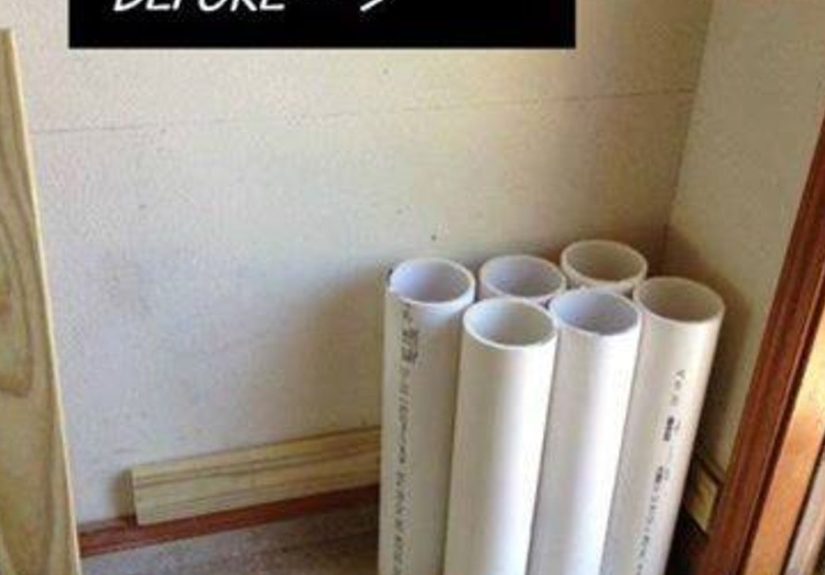
This version uses wider PVC sections attached upright to a wood base or set inside a crate-like frame. Tools drop into the tubes and stand vertically. It is excellent for a shed corner or garage edge where wall space is limited.
Why it is great: It is fast to build, renter-friendly if you do not want many wall anchors, and ideal for corralling multiple tools in one compact footprint.
How to Build a Simple PVC Garden Tool Organizer
You do not need a full workshop or a dramatic home-improvement soundtrack to make this work. A basic setup usually includes PVC pipe, a saw, screws, anchors or mounting hardware, and a backing board if you are making a wall unit.
Materials
Choose PVC diameter based on what you plan to store. Narrower pipe works for hand tools or slim handles. Wider pipe is better for rakes, shovels, and tools with bulkier grips. You may also want sandpaper to smooth edges, a marker for labeling, and a moisture-resistant board if your garage gets humid.
Build process
First, cut the PVC into equal sections. For wall-mounted holders, short pieces often work best because they keep tools stable without swallowing half the handle. For floor caddies, taller sections give better support. Smooth rough cut edges so the pipe does not scratch tool handles or your knuckles.
Next, map the spacing before mounting. Leave room for wider heads like leaf rakes and bow rakes so handles are not jammed together. Install the holders low enough for stability but high enough that tool heads do not drag awkwardly on the floor. Then load the system and adjust if needed. This is one of those rare DIY projects where the test phase involves dramatically sliding tools into place and whispering, “Oh wow, that actually works.”
Best Layout Ideas for a Cleaner Garage or Shed
A PVC hack works best when it is part of a bigger storage strategy. Do not stop at “the shovels now live in pipes.” Give the whole space a little logic.
Create zones
Keep digging and soil tools together. Store watering supplies near the hose or utility sink. Put pruning tools in a dry, easy-to-reach section. Dedicate a shelf or tote to fertilizers, ties, gloves, and seed-starting extras. A garage or shed becomes easier to use when it is arranged by task rather than by whatever fit somewhere last year.
Use vertical space
Pair PVC holders with pegboards, hooks, shelves, or labeled bins. Long-handled tools can live on one wall while smaller hand tools sit above a potting bench or work surface. Vertical storage makes the room feel bigger and keeps floor space open for wheelbarrows, bags of soil, or the inevitable stack of empty nursery pots you swear you will reuse.
Use corner space wisely
If your shed is small, a corner-based PVC caddy is especially effective. Corners are often wasted because they are awkward, but long-handled tools naturally fit there. Think of it as turning dead space into useful real estate without paying luxury condo prices.
Don’t Reorganize Dirty Tools
This part matters. A storage upgrade is the perfect excuse to clean your tools before putting them away. Dirt, sap, moisture, and rust are not cute rustic details. They shorten tool life and can even help spread plant disease.
Brush off soil, wash off sticky residue, dry tools thoroughly, and oil moving parts on pruners and loppers. Sharpen cutting edges when needed. Wooden handles benefit from occasional sanding and a light oil treatment. If you have used tools around diseased plants, disinfect them before storing them back with the rest of your gear.
A clean tool organizer full of dirty tools is like folding gym clothes instead of washing them. Technically organized, emotionally suspicious.
Common Mistakes to Avoid With PVC Garden Tool Storage
Making the pipe too tight
If the openings are too narrow, you will fight the system every time you put something away. Storage should remove friction, not create a daily arm workout.
Ignoring weight and wall support
PVC is handy, but your mounting method matters. Secure wall-mounted holders into studs or use appropriate anchors. Heavier tools need stronger support than a couple of hopeful screws and positive thinking.
Mixing wet and dry storage
Do not store damp tools, and do not place wooden handles where they stay in contact with wet floors or concrete for long periods. Moisture is the enemy of both metal and wood.
Skipping labels for small gear
Once your long tools are organized, the little items become the new clutter villains. Label bins for gloves, pruners, twine, fertilizer scoops, and irrigation bits so the system stays useful.
Why This Hack Is Great for Busy Gardeners
The real magic of a PVC storage hack for gardening tools is not just that it looks tidy. It saves time. You stop hunting for the hand cultivator. You stop stepping over the broom to get the spade. You stop knocking down six tools to reach one. Gardening already includes enough bending, hauling, trimming, digging, watering, and muttering at weeds. Your storage should not add drama.
It also helps protect the investment you have made in your tools. Even modestly priced garden tools add up. Better storage means fewer cracked handles, less rust, less blade damage, and less accidental duplication. When you can actually see what you own, you buy smarter and work faster.
Real-World Experience: What This Reorganization Feels Like Over Time
I have seen plenty of gardening spaces that started with good intentions and ended in chaotic compromise. The PVC method stands out because it is simple enough to maintain after the excitement of the project wears off. The first week feels amazing. Every tool has a place. The floor looks bigger. You can find the leaf rake without negotiating with a snow shovel and a tomato cage. Even the garage seems offended that you tolerated the old setup for so long.
Then real life arrives. A fast Saturday cleanup turns into “I’ll put that away later.” A muddy shovel leans by the door. Gloves land on a shelf instead of in their bin. This is where a good system proves itself. With PVC storage, the reset is easy. Long-handled tools can be put back in seconds. There is no complicated puzzle, no overstuffed cabinet, no heavy lid to lift. The ease of return is what keeps the organization alive.
One of the best surprises is how much mental clutter disappears when physical clutter does. Gardening is supposed to be satisfying, but a messy tool area creates low-grade irritation before the work even begins. When the tools are lined up neatly, the whole job feels lighter. You walk in, grab what you need, and get started. No treasure hunt. No mini tantrum. No accidental archaeology dig through old seed trays.
Another thing you notice over time is which tools you actually use. Once everything is visible, patterns become obvious. The favorite hand fork gets grabbed every weekend. The oversized loppers only come out twice a year. The weird bargain-bin cultivator you bought in a burst of optimism never leaves its slot. That kind of visibility helps you refine your storage even more. Frequently used tools move to the easiest reach zone. Rarely used items shift higher, lower, or farther back.
The hack is also weirdly motivating. A cleaned-up wall of tools has a way of nudging you toward better habits. You are more likely to wipe down a shovel when you know exactly where it belongs. You are more likely to sharpen pruners when they are not buried in a random drawer under twine, labels, and expired plant food. Organization does not magically make a person disciplined, but it makes discipline less annoying, which is close enough.
There is also a financial upside that sneaks up on you. Once the tools are visible and protected, you stop buying duplicates because you “thought you lost the other one.” You catch rust earlier. Wooden handles last longer. Tool heads are less likely to bang into each other on the floor. A humble PVC setup can quietly save money simply by preventing neglect.
And perhaps the most satisfying part is this: the system feels customizable without being precious. If your collection changes, you can add another pipe section, widen spacing, create a second zone for seasonal gear, or build a small hand-tool station nearby. It evolves with your garden instead of locking you into a perfect-looking setup that only works for one season and one photo.
That is why this project sticks. It is not flashy. It is not expensive. It does not require a contractor, a design board, or a deep emotional relationship with premium cabinetry. It is just a smart, durable, low-fuss solution that makes gardening easier every single time you reach for a tool. And in a world full of overcomplicated home projects, that kind of usefulness feels downright luxurious.
Conclusion
If your shed or garage is full of toppling rakes, muddy shovels, and hand tools hiding like introverts at a party, a Gardening Tool Reorganization- PVC Storage Hack is one of the easiest fixes you can make. It is affordable, space-saving, beginner-friendly, and adaptable to almost any layout. More importantly, it helps turn clutter into a workable system that protects your tools and cuts down daily frustration.
You do not need a perfect workshop to get organized. You need a little planning, a few lengths of PVC, and a willingness to stop letting your rake live wherever it pleases. Once the system is in place, your garden prep gets faster, your tools stay in better shape, and your storage area finally starts acting like part of the garden plan instead of a side quest in household chaos.