Table of Contents >> Show >> Hide
- A quick snapshot: what you’ll notice first
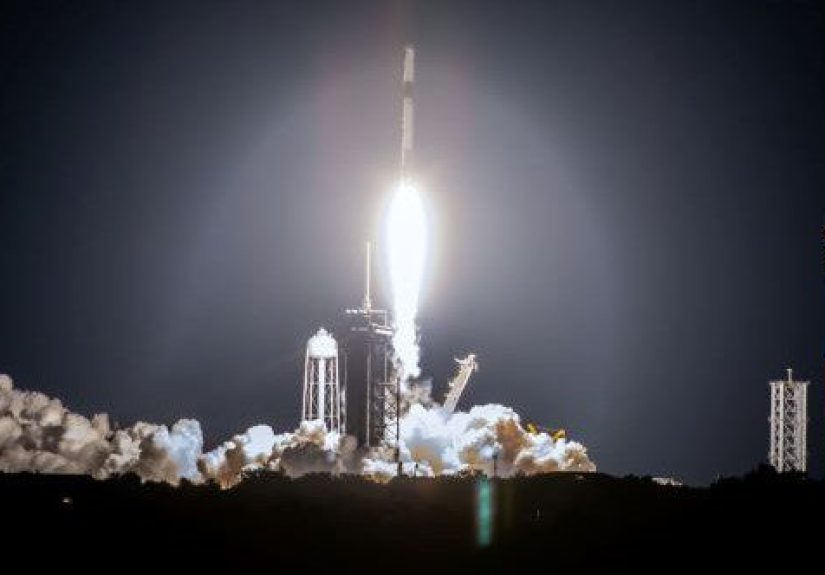
- 1) Humans are about to fly around the Moon again (for real)
- 2) Robotaxis stop being a novelty and start being transportation
- 3) Your phone starts working in more places than cell towers do
- 4) Personalized mRNA cancer vaccines move from “wow” to “workflow”
- 5) Gene editing stops being a headline and becomes a treatment category
- 6) Fusion keeps stacking milestones (and “ignition” becomes repeatable)
- 7) Solid-state batteries inch toward mass-market reality
- 8) Direct air capture gets bigger, louder, and more industrial
- 9) Post-quantum encryption becomes a real-world upgrade cycle
- 10) AI agents stop being chatbots and start acting like coworkers
- Conclusion: the future is arriving in layers, not one big “ta-da!”
- Future Now: 10 “You Had to Be There” Experiences You’ll Have Soon (Bonus)
- 1) Watching a Moon mission like it’s a playoff game
- 2) Taking your first “no-driver” ride and feeling weirdly… normal
- 3) Texting from a dead zone without panic
- 4) Your favorite app quietly flips into “sat mode”
- 5) Hearing “personalized vaccine” in a doctor’s office without it sounding sci-fi
- 6) Seeing gene therapy programs become a “department,” not a headline
- 7) Reading fusion news that sounds like engineering, not wishcasting
- 8) Test-driving an EV where charging time is no longer the main conversation
- 9) Buying carbon removal like it’s a utility service
- 10) Delegating to software and getting back finished work
If the future ever sends a “u up?” text, it’s doing it right now. The next few years are shaping up to be
delightfully weird in the best way: astronauts circling the Moon again, robotaxis rolling into new cities, your phone
quietly texting from the middle of nowhere without a cell tower in sight, and medicines that look suspiciously like
science fiction finally acting like regular-old clinical reality.
This isn’t a list of flying-car daydreams and “trust me, bro” predictions. These are near-future technologies and
emerging innovations that are already funded, tested, regulated, or actively rolling outmeaning the only thing
standing between you and the future is time (and maybe a software update).
A quick snapshot: what you’ll notice first
| What’s coming | What it changes for regular humans | When you’ll feel it |
|---|---|---|
| Crewed Moon flyby (Artemis II) | Deep-space becomes “Tuesday news,” not a museum exhibit | Very soon |
| Robotaxis expand | Driverless rides go from “demo” to “default option” | Soon |
| Satellite-to-phone texting & apps | Dead zones shrink dramatically | Soon |
| Personalized mRNA cancer vaccines | More tailored cancer care paths | Next few years |
| CRISPR therapies scale | Gene editing becomes a real treatment category | Now → accelerating |
| Fusion milestones stack up | Clean-energy headlines shift from “if” to “how fast” | Now → steady progress |
| Solid-state batteries get real | Faster charging, longer range, fewer battery trade-offs | Late decade, but moving fast |
| Direct air capture ramps | Carbon removal moves from boutique to industrial scale | Now → scaling |
| Post-quantum encryption | Your digital life gets a quantum-proof makeover | Rolling out now |
| AI agents everywhere | Software stops waiting for you and starts doing the work | Right now |
1) Humans are about to fly around the Moon again (for real)
The last time humans left low Earth orbit, bell-bottoms were still a thing. That changes with the Artemis program’s
next big milestone: a crewed lunar flyby. This mission isn’t about planting flagsit’s about proving the entire
deep-space stack works with actual humans onboard: life support, navigation, communications, heat shielding, and
the kind of reliability you want when “pull over” is not an option.
Why this matters
Crewed deep-space missions force technology to grow up. You can simulate a lot, but humans turn “edge cases” into
“Tuesday.” Artemis II is a systems test that sets the stage for more ambitious lunar operations, including longer
missions and future surface work.
What you’ll notice
- Better deep-space communications tech
- More commercial partnerships around lunar missions
- Public attention shifting back to exploration as a living program, not a nostalgia reel
2) Robotaxis stop being a novelty and start being transportation
The robotaxi story used to be: “Cool demo, see you in 2035.” Now it’s: “Which city are they launching next?” As
autonomous ride-hailing expands, you’ll see purpose-built vehicles designed around self-driving systemsmore sensors,
cleaner redundancy, and fewer “this used to be a normal car” compromises.
Why now
The tech got quieter and more practical: better perception stacks, improved sensor suites, and operational playbooks
for handling real-world chaosconstruction cones, weather, awkward pickup zones, and that one guy who refuses to make
eye contact at a four-way stop.
What you’ll notice
- Driverless rides expanding to more neighborhoods and more cities
- New robotaxi vehicle models built specifically for autonomy
- Pricing experiments: subscriptions, commuter bundles, airport corridors
3) Your phone starts working in more places than cell towers do
“No signal” is one of the most outdated phrases in modern liferight up there with “rewind the DVD.” Satellite-to-phone
connectivity is moving from emergency-only to practical daily utility: texting, light data, and even certain apps
when you’re off the grid. Think hiking trails, rural highways, storm outages, and the kind of road trip where the
map app usually gives up and starts gaslighting you.
Why this is a big deal
Connectivity changes behavior. When you can reliably communicate from dead zones, disaster response improves, outdoor
recreation gets safer, and rural areas gain new options for backup communication. It also changes consumer expectations:
people will start assuming their phone works almost anywhere they can see the sky.
What you’ll notice
- Carriers advertising “satellite coverage” like it’s a normal feature
- Messaging and select lightweight apps working where LTE/5G can’t
- Emergency options improving, including more robust texting capabilities
4) Personalized mRNA cancer vaccines move from “wow” to “workflow”
mRNA isn’t just “the pandemic tech” anymore. One of the most exciting next chapters is personalized cancer vaccination:
treatments designed around the unique molecular “signature” of a patient’s tumor. The idea is to train the immune
system to recognize and attack cancer cells more effectivelyoften in combination with existing immunotherapies.
Why this could change care
Cancer isn’t one disease; it’s a category. Personalized approaches aim to make treatment more targeted, potentially
improving outcomes for certain cancers and reducing the guesswork of “try this, then try that.” Large trials are the
difference between “promising” and “part of standard practice.”
What you’ll notice
- More phase 3 trials for individualized mRNA therapies in multiple cancer types
- More “combo therapy” strategies pairing vaccines with checkpoint inhibitors
- More discussion of manufacturing speedbecause personalization only works if it’s fast
Friendly reminder: this is fast-moving medical science. If you’re reading this with personal health decisions in mind,
talk with a qualified clinician who can interpret evidence for your specific situation.
5) Gene editing stops being a headline and becomes a treatment category
CRISPR-based therapies have crossed a major line: from labs and trials into approved treatments. That matters less
because it’s “cool,” and more because it creates a templateclinical pathways, safety monitoring, manufacturing
processes, reimbursement debates, the whole grown-up infrastructure that turns breakthroughs into access.
What’s about to happen next
Expect expansion in two directions:
- More diseases: additional trials and new indications beyond the first wave of rare conditions.
- Better delivery: continued work on making gene editing safer, more efficient, and easier to administer.
What you’ll notice
- Hospitals building specialized programs for gene therapies
- More public conversation about who qualifies, how it’s delivered, and how it’s paid for
- More “next-gen” approaches that refine precision and reduce side effects
6) Fusion keeps stacking milestones (and “ignition” becomes repeatable)
Fusion has been “30 years away” for so long it practically has tenure. But recent years have delivered something
fusion has always needed: repeatable wins. Major experimental facilities have demonstrated fusion ignition and
achieved higher yields in follow-up shots, which shifts the narrative from “was it a fluke?” to “how do we engineer
this into a reliable system?”
Why this matters (without the hype)
Fusion power plants won’t appear overnight. But engineering is easier when the underlying physics keeps showing up
to work. Each repeatable shot is a “this is real” signal to researchers, investors, and energy planners.
What you’ll notice
- More funding for fusion R&D centers and commercialization pathways
- More sober timelines (still ambitious, but less magical thinking)
- More talk about materials, repetition rate, and costthe unglamorous stuff that makes energy real
7) Solid-state batteries inch toward mass-market reality
Battery progress is the stealth revolution powering everything else: EVs, grid storage, drones, robots. Solid-state
batteries are a major “next step” because they promise higher energy density and faster charging with improved safety.
The catch: making them at scale is brutally hard. The good news: major automakers have publicly mapped paths toward
commercialization.
What changes when solid-state lands
- Charging time: less “plan your day around charging” and more “grab coffee.”
- Range: longer range without turning the car into a rolling battery brick.
- Durability: better battery life and performance over time (the dream, at least).
What you’ll notice first
Before you can buy a solid-state EV like you buy a toaster, you’ll see pilot runs, limited deployments, and a lot of
“advanced battery” marketing language. Also expect continued improvements in today’s lithium-ion tech (including
faster charging architectures and new chemistries) while solid-state matures.
8) Direct air capture gets bigger, louder, and more industrial
Cutting emissions is essentialbut many climate models also assume we’ll remove some carbon already in the atmosphere.
That’s where carbon removal technologies come in, including direct air capture (DAC): machines that pull CO2
from ambient air and store it permanently underground (or, less ideally, use it in ways that don’t last).
Why this matters
The biggest shift is scale. Small pilots are great, but they don’t move global numbers. Large facilitiesespecially in
places with geology suited for long-term storageare the difference between “interesting” and “impactful.”
What you’ll notice
- More big-name corporate carbon removal purchases (and scrutiny of what “removal” really means)
- More permitting and infrastructure development around CO2 transport and storage
- More debate about cost, monitoring, and how to prioritize removals
9) Post-quantum encryption becomes a real-world upgrade cycle
Quantum computing is not here to break the internet tomorrowbut security upgrades can’t wait until the day it shows up.
Standards bodies are already finalizing and publishing post-quantum cryptography (PQC) standards designed to resist
attacks from future quantum computers. Translation: the plumbing of the internet is preparing for a new kind of lock.
Why you should care (even if you hate math)
A lot of data needs to remain confidential for years: medical records, financial history, government info, trade
secrets. The push for PQC is about protecting long-lived data and making sure today’s encryption doesn’t become
tomorrow’s regret.
What you’ll notice
- Vendors quietly updating security libraries, VPNs, and certificates
- Big orgs doing “crypto inventory” projects (yes, that’s as thrilling as it sounds)
- More “quantum-ready” language in enterprise software updates
10) AI agents stop being chatbots and start acting like coworkers
The past couple of years taught software to talk. The next couple teach software to do. AI agents are moving into
everyday tools: documents, spreadsheets, email, shopping, customer support, IT workflows, and more. The vibe is less
“ask a question,” more “delegate a task.”
What makes an agent different
An agent isn’t just generating textit’s operating across steps:
- Planning a multi-step workflow
- Using tools (search, summarize, write, calculate, file, schedule)
- Checking constraints and iterating
- Handing you a finished result instead of a pile of suggestions
What you’ll notice
- Office suites that can draft, revise, and structure real deliverables faster
- “Agent-led commerce” where you build carts, compare options, and check out via conversation
- More controls and governance features so organizations can safely deploy agents
Conclusion: the future is arriving in layers, not one big “ta-da!”
The most honest way to picture the near future is not a sudden transformationit’s a series of upgrades. Some are
spectacular (humans flying around the Moon), some are quietly profound (your phone working in dead zones, encryption
getting quantum-proofed), and some are both (medicine becoming more personalized while still going through the slow,
careful machinery of clinical trials).
If you want a practical takeaway, it’s this: pay attention to the “boring” parts. Launch windows, regulatory approvals,
manufacturing capacity, sensor costs, and security standards are where the future stops being a demo and becomes
something you can actually use.
Future Now: 10 “You Had to Be There” Experiences You’ll Have Soon (Bonus)
To make this feel real, here are ten near-future experiencessmall moments you’ll recognize when the big trends
become everyday life. None of these require a flying car. They just require Tuesday.
1) Watching a Moon mission like it’s a playoff game
One night you’ll realize you’re refreshing a livestream as astronauts arc around the Moon, and your group chat is
arguing about heat shields the way it used to argue about draft picks. Someone will post a screenshot of Earth rising
over lunar horizon and caption it “we live here??” The awe will be familiarand somehow brand new.
2) Taking your first “no-driver” ride and feeling weirdly… normal
The first robotaxi ride is always a story. The tenth one is just transportation. You’ll notice the ritual changes:
you stop staring at the steering wheel like it’s going to confess something, and you start caring about the real
issuespickup spots, smooth braking, and whether the car knows the difference between a cyclist and a mailbox.
3) Texting from a dead zone without panic
You’ll be on a trail, in a rural stretch of highway, or sitting through a weather outage, and your phone will calmly
deliver a message anyway. No special gadget. No dramatic “satellite phone” vibe. Just a quiet “sent.” It will feel
like cheating physics in the most boring, wonderful way.
4) Your favorite app quietly flips into “sat mode”
One day, your map app loads the essentials even when the bars drop to zero. Your weather app updates. Your check-in
message goes through. You’ll start assuming connectivity is a utility like electricitysometimes slower, sometimes
limited, but increasingly present.
5) Hearing “personalized vaccine” in a doctor’s office without it sounding sci-fi
The language will shift first. You’ll hear people talk about individualized therapies the way they talk about
standard treatment options todaystill serious, still careful, but not exotic. The emotional tone changes when a
breakthrough becomes a pathway: appointment, labs, plan, follow-up, support.
6) Seeing gene therapy programs become a “department,” not a headline
Hospitals will treat advanced gene therapies like specialized care unitstrained teams, eligibility criteria,
long-term monitoring, patient navigation. It’s not flashy. It’s infrastructure. And infrastructure is what makes
miracle-adjacent things accessible.
7) Reading fusion news that sounds like engineering, not wishcasting
The articles that catch your eye won’t say “fusion solved!” They’ll say things like “repetition rate,” “materials
durability,” and “cost per shot.” That’s how you’ll know it’s getting real. When the conversation becomes boring,
it’s usually because the problem is finally behaving.
8) Test-driving an EV where charging time is no longer the main conversation
You’ll still care about range and pricebecause you’re humanbut you’ll start thinking of charging like you think of
stopping for coffee: routine, quick, and planned around life instead of life being planned around it. Even before
solid-state is everywhere, the “fast charging as default” mindset will keep spreading.
9) Buying carbon removal like it’s a utility service
You might see carbon removal show up as a line item in corporate sustainability purchases, airline programs, or
supply-chain contracts. The conversation will get sharper: “Is it permanent?” “Is it verified?” “How much was
actually removed?” When an idea becomes a market, it also becomes measurableand contestable.
10) Delegating to software and getting back finished work
You’ll ask an agent to summarize a messy folder of notes into a clear plan, draft a polished presentation, compare
options, or build a shopping cart with constraintsand it will hand you something you can use, not just a paragraph
you have to babysit. The biggest shift won’t be “wow, it can write.” It’ll be: “I just got an hour of my day back.”