Table of Contents >> Show >> Hide
If you thought avoiding dairy was as simple as skipping milk, cheese, and ice cream, I have bad news: dairy is a ninja. It sneaks into foods where it absolutely does not belonglike canned tuna, “all-beef” hot dogs, French fries, and even some medications. For people with a milk allergy or severe lactose intolerance, these surprise appearances aren’t just annoying, they can be dangerous.
This guide walks you through the most common foods with hidden dairy, how to decode ingredient labels without needing a chemistry degree, and what to eat instead. We’ll keep it practical, science-based, and just funny enough to stay awake while you read about casein and whey.
Why Hidden Dairy Is Such a Big Deal
Dairy shows up in food in two main ways: as obvious dairy products (like yogurt, cheese, butter) and as milk-derived ingredients added for flavor, texture, or shelf life. Those sneaky milk proteins and sugarslike casein, whey, and lactosecan be a problem for different reasons:
- Milk allergy: The immune system reacts to milk proteins (such as casein and whey). Even tiny amounts can trigger hives, vomiting, wheezing, or in severe cases, anaphylaxis.
- Lactose intolerance: The body lacks enough lactase enzyme to digest lactose, the sugar in milk. This usually leads to bloating, gas, cramps, and diarrheabut not an allergic reaction.
- Other sensitivities: Some people feel better when they reduce or cut out dairy, especially if they have digestive issues, migraines, or skin conditions.
In the United States, the Food Allergen Labeling and Consumer Protection Act (FALCPA) requires packaged foods regulated by the FDA to clearly state if they contain milk. You’ll often see the word “milk” in the ingredient list (like “whey (milk)”) or in a separate bold statement that reads “Contains: Milk.” That helps a lotbut not all products are covered by these rules, and some non-food items or locally made foods may still use dairy ingredients without obvious warnings.
Ingredients That Secretly Mean “Milk”
The ingredient list is your best friend, but only if you know what you’re looking for. These terms almost always indicate the presence of dairy:
- Casein, caseinate, sodium caseinate, calcium caseinate – milk proteins added for creaminess or to improve texture.
- Whey, whey protein, whey protein concentrate/hydrolysate – another milk protein commonly used in baked goods, snacks, and protein powders.
- Milk solids, nonfat milk solids, dry milk, skim milk powder – powdered forms of milk.
- Lactose, lactoglobulin, lactalbumin, lactulose – milk sugar or milk proteins.
- Ghee, butter, butterfat, cream, sour cream, half-and-half – all derived from milk, even if they look “clarified” or “pure fat.”
- Curds, custard, pudding, nougat, quark, yogurt, cheese – obviously dairy, but sometimes hidden inside candies or desserts.
Other terms may or may not contain milk depending on the product, such as “natural flavors,” “artificial flavors,” “caramel flavoring,” and “high-protein flour.” When in doubtand especially with a serious allergyit’s safest to contact the manufacturer.
Everyday Foods That Commonly Hide Dairy
Here’s where dairy really gets sneaky. These categories often look harmless but can be packed with milk-derived ingredients.
1. Bread, Baked Goods, and Breakfast Foods
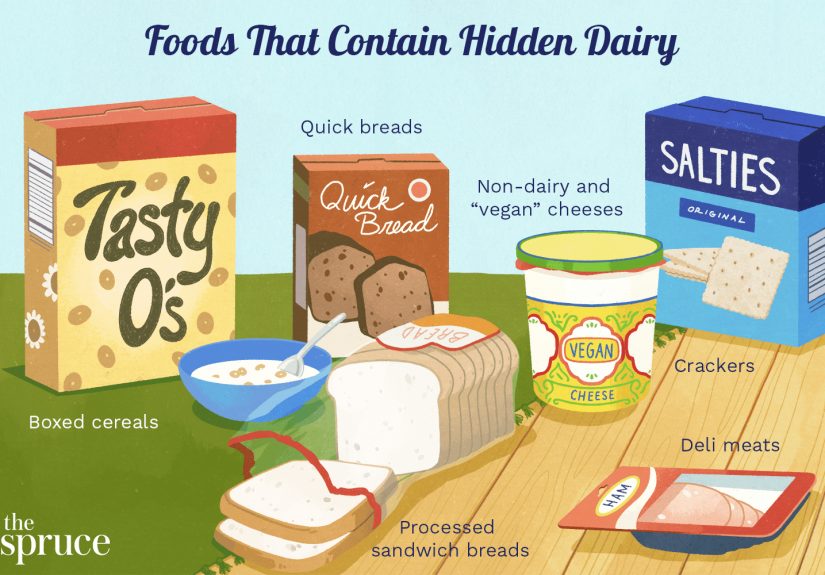
Many breads and baked items rely on milk powder, whey, or butter for flavor and softness.
- Sliced bread and rolls: Even plain sandwich bread may include whey or nonfat milk solids.
- Biscuits, pancakes, waffles, muffins, sweet rolls: Frequently made with milk, buttermilk, butter, or yogurt.
- Baking mixes: Pancake, cake, brownie, and biscuit mixes often contain milk powder or whey.
- Breakfast bars and granola: Some brands use butter, milk powder, or yogurt-coated bits.
Tip: Some bakery items don’t come with full ingredient labels, so if you’re highly sensitive, ask directly or choose pre-packaged items with a clear list.
2. Snack Foods and Chips
Many savory snacks rely on milk-based seasonings for flavor:
- Flavored potato chips and corn chips: Cheese powders, whey, and buttermilk are common in sour cream & onion, cheese, barbecue, and even some salt & vinegar flavors.
- Crackers: Butter, cheese powder, and milk fat are frequent ingredients in both “fancy” and budget crackers.
- Popcorn (microwave or bagged): “Butter” flavor often relies on real milk ingredients or whey.
- Pretzels and snack mixes: Coatings and seasonings may include whey or cheese powders.
3. Chocolate, Candy, and Desserts
Chocolate is one of the most misunderstood foods for dairy-free eaters. While milk chocolate is obviously off the table, many semi-sweet and even some dark chocolates contain milk solids or are processed with milk.
- Chocolate bars and chips: Look for “milk fat,” “milk solids,” or “whey” in the ingredient list.
- Caramel, nougat, truffles, and soft candies: Frequently made with cream, condensed milk, or butter.
- Ice cream alternatives: Some “frozen desserts” marketed as low-lactose or with whey protein may still contain dairy.
- Sherbet vs. sorbet: Sherbet usually contains milk; sorbet is often dairy-free but check for add-ins like chocolate or cream.
4. Sauces, Dressings, Soups, and Sides
Creaminess often equals hidden dairy. Watch out for:
- Salad dressings: Ranch, Caesar, blue cheese, creamy Italian, and some “creamy” vinaigrettes commonly use buttermilk, cheese, or sour cream.
- Gravies and sauces: Alfredo, cheese sauces, creamy gravies, and many pan sauces rely on butter, cream, or milk.
- Broths and stocks: Some brands add milk proteins for flavor or body.
- Instant mashed potatoes and boxed sides: Often contain milk powder, butter, or whey.
- Battered and breaded foods: Chicken nuggets, fish sticks, onion rings, and other fried foods may include milk in the batter or seasoning blend.
5. Processed Meats and “All-Beef” Hot Dogs
Yes, even meat can contain milk. Dairy proteins like casein are sometimes added as binders or to improve texture in:
- Hot dogs and sausages
- Deli meats and luncheon meats
- Meatballs and meatloaf mixes
- Breaded chicken patties or nuggets
To make things more complicated, the deli slicer might cut both cheese and meat, which means higher risk of cross-contact for people with severe allergies.
6. “Non-Dairy” and “Dairy-Free” Traps
Labels like “non-dairy” or “lactose-free” don’t always mean the product is milk-protein-free:
- Non-dairy creamers: Many contain casein, a milk protein, even if they’re lactose-free.
- Margarine: Some brands include whey or milk solids; others are fully dairy-freecheck the label carefully.
- Whipped toppings: “Whipped topping” may sound plant-based, but many contain milk derivatives.
- Protein powders and bars: Whey protein is a very common base; look for clearly labeled plant-based or “vegan” options if you avoid dairy entirely.
7. Medicines, Supplements, and Gum
Outside the grocery aisles, lactose is often used as a filler or carrier in:
- Prescription and over-the-counter medications
- Vitamins and supplements
- Chewing gum and mints (occasionally)
Most people with lactose intolerance tolerate the tiny amounts in medication, but individuals with severe milk allergy may need lactose-free formulations. Pharmacists can usually help you identify dairy-free options.
How to Read Labels Like a Dairy-Detective
Once you know where dairy hides, the next step is learning how to spot it fast. Here’s a simple approach you can use every time you pick up a package.
1. Look for the “Contains” Statement
Most packaged foods regulated by the FDA will declare major allergens, including milk, in a separate statement near the ingredient list, such as:
Contains: Milk
If you see “Contains: Milk,” that’s your cue to put the product back if you’re avoiding dairy completely.
2. Scan the Ingredient List for Key Terms
Don’t stop at the “Contains” lineget in the habit of scanning for words like casein, whey, milk solids, lactose, butterfat, cream, and cheese. Manufacturers can change recipes without warning, so you really do need to read the label every time, even for “safe” products you’ve bought before.
3. Treat Advisory Statements as Red Flags
You might also see advisory warnings such as:
- “May contain milk”
- “Made in a facility that also processes milk”
- “Produced on shared equipment with products that contain milk”
These statements are about cross-contact. For someone with lactose intolerance, they’re usually not a big issue. For people with a history of serious allergic reactions, they may be reason enough to avoid the product.
4. Use Kosher Labels as a Shortcut (With Limits)
For some people, kosher symbols can be helpful:
- “D” or “Dairy” near the kosher symbol usually indicates milk.
- “Pareve” or “Parve” typically means the product is free of meat and dairy, which can be helpful if you’re strictly avoiding milk proteins.
However, always double-check the ingredient listrecipes and certification standards can vary.
Smart Strategies and Dairy-Free Swaps
Managing hidden dairy doesn’t mean giving up everything delicious. It just means being more intentional about what you buy and how you cook.
Cook More at Home
The more you cook from scratch, the more control you have. When you make your own soups, casseroles, sauces, and baked goods, you can choose truly dairy-free ingredients and avoid the surprise whey protein that somehow ended up in your crackers.
Lean on Plant-Based Alternatives
- Milk: Oat, almond, soy, pea, or coconut milk can replace cow’s milk in most recipes. Choose unsweetened versions for cooking.
- Butter: Use dairy-free margarine (check for “vegan” on the label), coconut oil, or olive oil, depending on the dish.
- Cheese: Plant-based cheeses have improved a lot. Some melt well on pizza or in grilled cheese; just read the label to make sure they’re truly dairy-free.
- Cream and yogurt: Coconut, oat, and soy-based products can stand in for cream and yogurt in both savory and sweet recipes.
Choose Certified “Vegan” When You’re Unsure
Products labeled “vegan” should be free of all animal-derived ingredients, including milk, casein, whey, and lactose. This can be an easier shortcut than decoding every single chemical-sounding word on the label.
Ask Questions When Eating Out
Restaurant menus don’t always tell the whole story. It’s very common for:
- Mashed potatoes to contain butter and cream.
- Vegetable sides to be sautéed in butter.
- Grilled meats to be marinated in yogurt or buttermilk.
- “Non-dairy” coffee creamers in cafés to include casein.
Don’t hesitate to ask how a dish is prepared, whether butter is used, and if there’s a truly dairy-free option. You’re not being “difficult”you’re preventing a miserable (or dangerous) reaction later.
Real-Life Experiences With Hidden Dairy
The best tips often come from people who’ve been burnedsometimes literallywith surprise dairy. While everyone’s story is different, there are some patterns you start to notice once you talk to enough folks living a dairy-free life.
One common experience is the “trust fall” with familiar foods. Someone finds a brand of crackers that seems safe, checks the label carefully, and eats it for months without issue. Then one day, suddenly, they start reacting again. A closer look shows that the ingredient list has quietly changednow it includes whey or “milk solids.” Companies reformulate recipes all the time, so one of the most repeated lessons is: never assume a product is still safe just because it used to be.
Another big theme is how often hidden dairy shows up in situations where you’re rushed or distracted. Think office birthday cake where you only eat the “non-frosting” part, a handful of chips at a party, or that quick stop for fries while running errands. It’s easy to slip when you don’t have time to read labels or ask questions. Many people find it helpful to keep a “safe stash” of snacksthings they’ve already vetted for ingredientsso they’re less tempted to gamble on mystery foods when hunger hits.
Eating out adds another layer of complexity. Plenty of people report that their most surprising exposures came from restaurants where the staff didn’t realize dairy was in a particular ingredient. A soup that seems like it’s just broth and vegetables turns out to be finished with cream. A grilled chicken dish has been marinated in yogurt. Even steamed vegetables might be tossed in butter before serving. Over time, people get more comfortable asking very specific questions, like “Is there any butter, cream, cheese, or milk in this dish, or in the pan it’s cooked in?” or “Is there any buttermilk or yogurt in the marinade?” The more specific you are, the less likely you’ll hear “Oh, I didn’t think of that” after you’ve already eaten.
Medications and supplements are another surprising area. Many folks with severe milk allergy eventually discover that their pill or chewable vitamin uses lactose as a filler. Some can tolerate the tiny amount; others can’t. After a couple of mysterious reactions, it’s common for people to start checking with their pharmacist about every new prescription and asking for lactose-free or dairy-free versions when available. It might feel overly cautious at first, but once you’ve connected the dots between a new medication and an unexpected flare-up, label-checking becomes second nature.
Over time, people often describe shifting from feeling overwhelmed to feeling empowered. At first, every grocery trip feels like a scavenger hunt with way too many rules. But as you learn your safe brands, figure out your favorite plant-based swaps, and get comfortable reading labels, things calm down. You start to recognize patternslike the fact that creamy dressings almost always have dairy, that “vegan” or “pareve” labels are strong allies, and that simple, minimally processed foods tend to be easier to manage.
Many also talk about the emotional side of living dairy-free. It can feel isolating to skip dessert at a party or to say no to homemade food. Having a plan helps: bringing your own dessert, suggesting restaurants with clearly marked allergy-friendly menus, or even sharing some of your favorite dairy-free recipes with friends and family. Instead of being “the difficult one,” you become the person who introduces everyone to a surprisingly delicious dairy-free brownie or an oat-milk latte that tastes just as good as the original.
In short, hidden dairy is everywherebut so are strategies, workarounds, and supportive communities. With practice, what feels complicated today turns into an almost automatic routine: read, question, choose, enjoy, repeat.
The Bottom Line
Hidden dairy likes to hide in processed foods, snacks, sauces, meats, desserts, and even medicine. For anyone with a milk allergy, lactose intolerance, or dairy sensitivity, learning to spot dairy ingredientsand understanding how labeling worksis essential. Start by reading every label, every time, getting familiar with the “code words” for milk, and leaning on clearly dairy-free or vegan options when in doubt.
It might feel like a lot at first, but you don’t have to memorize everything overnight. Pick one or two categories to tackle at a time, like snack foods or sauces, and build your list of trusted products. Over time, you’ll become the person who can glance at a label, spot “sodium caseinate” from a mile away, and confidently choose foods that actually match your dairy-free goals.