Table of Contents >> Show >> Hide
- The Desert Airfield That Became a Big Deal
- Why “Try It On for Size” Wasn’t a Joke
- Inside Wendover’s Most Haunting Feature: The Loading Pits
- Training, Testing, and the Bigger Web of Manhattan Project Logistics
- Is the Base Really “Abandoned”?
- What You’ll See When You Visit (Legally and Smartly)
- The Story You Can’t Ignore: Legacy and Human Cost
- FAQ
- How to Explore Without Being “That Person”
- Conclusion: A Place Where History Still Feels Close
- Experiences: What It Feels Like to Visit the Abandoned-But-Not-Gone Wendover Airfield
Out on the Utah–Nevada line, where the horizon looks like it was copy-pasted and the Bonneville Salt Flats make reality feel slightly optional, there’s an airfield that once played a very specific role in world history: it helped prove that the first atomic bombs could actually fit inside an airplane.
The place is Wendoverknown historically as Wendover Army Air Field and later Wendover Air Force Basewhere secretive crews practiced with specially modified B-29 Superfortresses, tested bomb shapes and handling, and rehearsed an unprecedented mission. Today, parts of the base are preserved as the Historic Wendover Airfield museum, while other buildings sit weathered, quiet, and photogenic in a “post-apocalyptic movie set but make it desert” kind of way.
This article is about the site, the aviation problem it solved (“Will this enormous, complicated thing fit in the bomb bay without everyone having a very bad day?”), and how you can explore it responsiblywithout trespassing, without glamorizing the weapon, and with a full appreciation for the human cost tied to its history.
The Desert Airfield That Became a Big Deal
Wendover’s location was its superpower. During World War II, the U.S. needed places that were remote enough for secrecy, spacious enough for heavy bombers, and far from the kind of curious passersby who ask questions like “Why is that bomb shaped like a science project from the future?”
Wendover checked all the boxes: wide-open space, plenty of runway, and enough isolation that you could keep a major operation quiet. It became a training home for the 509th Composite Groupthe unit that would eventually carry out the atomic missions in 1945. The base also supported technical work tied to delivering these weapons by air, which required something surprisingly unromantic: careful measurement.
If you’ve ever tried to pack for a trip and realized your suitcase is a liar, you already understand the core issue. A bomb can be brilliant (or terrifying) on paper, but it still has to fit in the aircraft, clear the bay doors, ride safely, and release cleanlyevery single time.
Why “Try It On for Size” Wasn’t a Joke
Early atomic bomb designs weren’t a single “standard model.” They differed in shape and internal structure based on how the physics worked. The “Little Boy” design was long and relatively narrow compared with the rounder, bulkier “Fat Man” shape. Both were heavy, complex, and absolutely not something you wanted to discover was “almost compatible” after you’d already committed the airplane and crew.
So Wendover became part of a practical engineering pipeline: build or mock up components, test handling and fit, refine aircraft modifications, and rehearse the proceduresloading, taxiing, takeoff, flight, and bomb release. That “dry fit” mindset is why Wendover’s story is so gripping. The base wasn’t just an airfield; it was a place where a world-changing concept got forced into the real-world constraints of aluminum, hydraulics, and timing.
The Silverplate B-29: A Plane Rebuilt for One Mission
The B-29 Superfortress was already advanced for its era, but the atomic mission required specialized versions often referred to as “Silverplate” aircraft. These weren’t cosmetic changes. The modifications focused on carrying and releasing a single large weapon safely and effectively, which meant reworking bomb bay configurations and other systems.
In plain language: they took an elite long-range bomber and tailored it for a very specific payload. It’s the aviation equivalent of modifying a pickup truck to haul one particular oversized object across the countryexcept the stakes were incomprehensibly higher.
Inside Wendover’s Most Haunting Feature: The Loading Pits
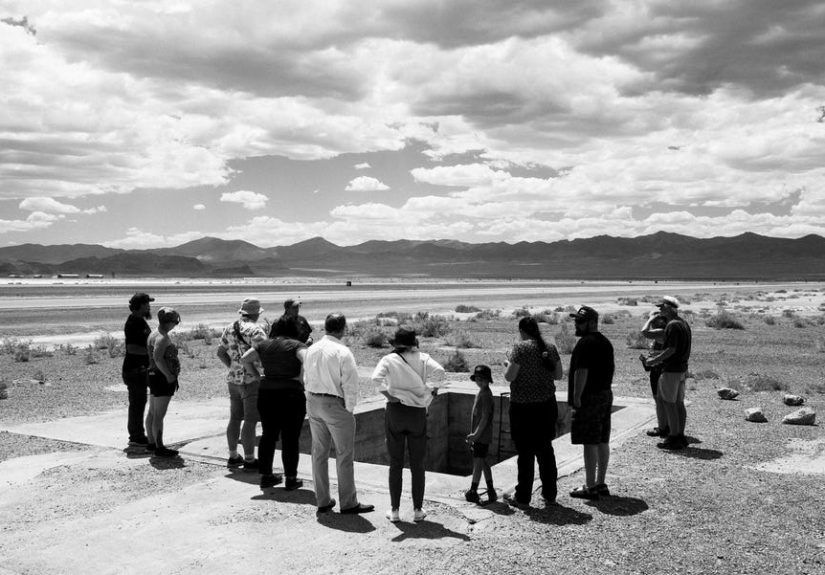
One of the most memorable remnants at Wendover isn’t a plane at allit’s the infrastructure that made loading massive bomb prototypes possible. The base still has bomb loading pits: recessed areas that allowed crews to roll and lift large devices up into a bomber’s bay from below.
Standing near these pits today (on a tour or with museum guidance) lands differently than reading about aircraft specs. It’s not abstract. It’s physical. You can see how the system worked and how much planning was required just to move, position, and secure something of that size. It’s also a reminder that history isn’t only decided by leaders and scientistsit’s executed by mechanics, loaders, drivers, and crews doing painstaking work with exacting rules.
Training, Testing, and the Bigger Web of Manhattan Project Logistics
Wendover didn’t exist in a vacuum. The Manhattan Project involved multiple sites across the United States, and aviation delivery required its own network: aircraft modifications, crew training, ballistics data, and non-nuclear mechanical testing.
For example, testing and calculations for bomb delivery drew on locations in the American Southwest and beyond, including areas used for flight and drop tests and for refining bombing tables. Wendover’s advantage was that it was remote but still within workable reach of the broader system that supported the air-delivery mission.
Think of Wendover as a highly specialized rehearsal stage. It’s where crews practiced procedures and where the aircraft–weapon relationship could be evaluated in realistic conditions. The desert wasn’t just scenery; it was a buffer for secrecy and safety.
Is the Base Really “Abandoned”?
“Abandoned” is a convenient word, but Wendover is more accurately described as partly preserved and partly deteriorated. The airfield still exists as an airport, and the Historic Wendover Airfield museum offers ways to visit remaining buildings with guidance. At the same time, many structures show the wear of decades: sun-bleached exteriors, empty interiors, and that unmistakable hush you only get in places where time has been left alone to do what it does best.
This is important: the compelling “ruins” vibe can tempt people into unsafe or illegal exploration. Don’t do that. A site with historical significanceand real hazards like unstable floors, sharp debris, and desert heatis not the place for improvisation. The best experience is the responsible one: visit through official access and learn the story the right way.
What You’ll See When You Visit (Legally and Smartly)
Hangars and Operational Buildings
Wendover’s surviving hangars and support buildings help you picture the scale of the operation. Even if you’re not an aviation nerd (no judgmentsome people have hobbies like “sleep”), you’ll notice how big everything had to be for B-29 training: the runways, the ramps, the maintenance areas, and the space needed to handle large, heavy equipment.
Museum Exhibits That Put the Story in Context
The museum experience matters because it frames what you’re seeing. Wendover’s story touches one of the most debated moments in modern history. A responsible visit should acknowledge two realities at once: the technical achievement of the aviation effort, and the devastating human consequences of nuclear warfare.
If you’ve seen discussions around the Enola Gay as a museum objecthow it’s displayed, what context is included, and how different groups interpret its legacyyou’ll recognize why context is essential at any related site. Wendover is not just “cool abandoned buildings.” It’s a place where history got physically prepared to happen.
The Story You Can’t Ignore: Legacy and Human Cost
A site like Wendover can trigger two very different reactions: fascination with the engineering, and discomfort with what that engineering enabled. It’s okay to feel both. In fact, it’s probably the most honest response.
Aviation history is full of moments where ingenuity changed the world. Wendover represents a moment where ingenuity also expanded humanity’s capacity for destruction. Visiting responsibly means keeping the full picture in mindespecially when the setting is so cinematic it’s easy to slip into “wow, what a vibe” mode.
FAQ
Where is the base?
Wendover sits near the Utah–Nevada border, close to the Bonneville Salt Flats and the town of West Wendover, Nevada. It’s a classic desert-road-trip area: long straight highways, big sky, and very little shadeplan accordingly.
Can you walk around freely?
Treat it like a historic site with restricted areas, not a playground. Use official tours or museum guidance. Trespassing is unsafe, disrespectful, and the fastest way to turn your “cool history day” into a “why are we talking to an officer” afternoon.
Is this part of the Manhattan Project National Historical Park?
The official national historical park focuses on key Manhattan Project locations (such as Los Alamos, Hanford, and Oak Ridge). Wendover is strongly connected to the project’s delivery and training story and is often discussed as an important related location, even if it’s not one of the primary park units.
How to Explore Without Being “That Person”
- Use official access. Tours and museum guidance exist for a reason: safety and preservation.
- Bring desert basics. Water, sun protection, and a charged phone aren’t optional in this environment.
- Respect the history. This site is connected to real loss of life and lasting trauma for survivors.
- Leave no trace. Don’t take “souvenirs.” Don’t move objects. Don’t “improve” anything with graffiti.
- Let learning lead. The goal is understanding, not just photos.
Conclusion: A Place Where History Still Feels Close
Wendover is one of those rare sites where you can feel the overlap of the ordinary and the world-altering. Ordinary: a dusty airfield, hangars, loading equipment, men and women doing technical work. World-altering: a mission that changed warfare, politics, and the future of the planet.
If you explore it thoughtfully, Wendover becomes more than an “abandoned base.” It becomes a lesson in how big events are built from practical stepsand why remembering the full story matters.
Experiences: What It Feels Like to Visit the Abandoned-But-Not-Gone Wendover Airfield
The best way to understand Wendover is to approach it the way the desert demands: slowly, prepared, and with a healthy respect for what you can’t control. The drive itself sets the tone. Highways stretch out like someone drew them with a ruler, and the landscape gives you the kind of quiet that makes your own thoughts sound louder. Somewhere along the way, modern life feels like it gets turned down a notchfewer billboards, fewer exits, more sky. It’s the perfect prelude to a place that once thrived on secrecy.
When you arrive, the first impression is scale. Even before you learn a single historical detail, you can tell this wasn’t a small operation. Runways and open spaces feel oversized in a way that makes you picture big aircraft moving through them like whales through a harbor. The buildings don’t announce themselves with neon or fanfare. They just sit theresome maintained, some weatheredlike they’re waiting for the past to show up and clock in for work.
On a guided visit, the “abandoned base” vibe becomes something more layered. Yes, you’ll notice peeling paint, sun-faded surfaces, and the kind of emptiness that photographers love. But you’ll also notice the deliberate details that remain: how the hangars were positioned, how the spaces were organized for efficiency, and how the base had to function like a machine. It’s not hard to imagine crews moving with purposebecause the layout still makes that motion feel plausible.
The loading pits are the moment the experience gets real in a different way. Standing near them, you’re no longer thinking about history as a timeline. You’re thinking about history as a set of actions that required tools, muscle, procedures, and rehearsal. You can picture the careful choreography: positioning equipment, checking clearances, securing hardware, and triple-checking everything because “oops” is not an acceptable outcome. It’s one thing to read that these bombs were enormous. It’s another thing to see the physical infrastructure built to get them under a plane and into the air.
The emotional weight tends to arrive quietly. It doesn’t have to be dramatic. Sometimes it’s a simple moment: looking at a runway and realizing that the training here connected directly to events that still shape global politics and human memory. That’s why the museum context matters. Without it, it’s easy to treat the site like a cool relic. With it, you’re reminded that this place is tied to real cities, real families, and real suffering, alongside the technical story.
After the tour, you might find yourself noticing the “in-between” character of Wendoverpart preserved, part fading. That mix can feel poetic, but it’s also practical: preservation takes money and effort, and desert weather is relentless. The experience can motivate you to value historic sites that do the hard work of telling complicated stories. Because Wendover is complicated. It’s a site of innovation, secrecy, training, and logisticswrapped around one of the most morally debated turning points of the 20th century.
And then there’s the desert again as you leave. The same vastness that made Wendover useful for secrecy now functions as a kind of reflective space. You drive out past the salt flats and the wide horizon, and you’re left with a strange mix of feelings: awe at the engineering, gratitude for the opportunity to learn, and a sober awareness of what that engineering ultimately made possible. It’s not a “fun day out” in the usual sense. It’s a meaningful dayone that sticks with you, precisely because it doesn’t let you simplify the story.