Table of Contents >> Show >> Hide
- How we ranked Victor Salva’s movies
- 10. Jeepers Creepers 3 (2017)
- 9. Dark House (2014)
- 8. Rosewood Lane (2011)
- 7. Rites of Passage (1999)
- 6. The Nature of the Beast (1995)
- 5. Peaceful Warrior (2006)
- 4. Clownhouse (1989)
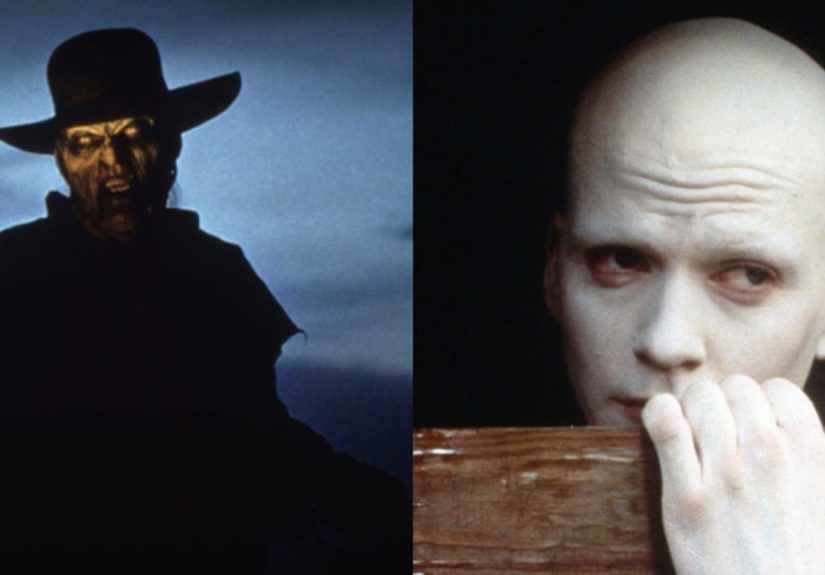
- 3. Jeepers Creepers 2 (2003)
- 2. Powder (1995)
- 1. Jeepers Creepers (2001)
- Watching Victor Salva’s movies today: a complicated experience
Few directors inspire as much debate in horror circles as Victor Salva. On one hand, he’s responsible for cult favorites like
Jeepers Creepers and the philosophical sports drama Peaceful Warrior. On the other, his conviction for the sexual abuse of a 12-year-old actor during the production of Clownhouse and possession of child sexual abuse material permanently changed how audiences view his work.
This ranking looks at every feature film directed by Victor Salva, combining critic and audience scores, long-term influence, and basic filmmaking craft. We’ll talk about how the movies work on their own terms while never ignoring the real-world harm attached to his name. If you decide to skip his films entirely, that’s understandable. If you’re here to understand how they stack up artistically, this list will walk you through his filmography from worst to best.
How we ranked Victor Salva’s movies
To build a fair(ish) ranking, we pulled from several sources:
- Critic and audience scores from Rotten Tomatoes and other aggregators
- Fan rankings and voting-based lists such as Ranker and Flickchart
- Individual review sites and genre critics including Moria Reviews and horror forums
- Basic film craft: storytelling, pacing, performances, and how well the movie does what it’s trying to do
The result reflects a blend of critical consensus and fan culture rather than a purely personal “hot take.” Think of this as a guide for film history nerds and horror completionists, not a blanket endorsement to support Salva’s work.
10. Jeepers Creepers 3 (2017)
What it’s about
Set between the first two Jeepers Creepers movies, this late sequel follows a sheriff and a small town trying to stop the Creeper during its 23-day feeding cycle. It dives deeper into the creature’s truck, its arsenal of booby traps, and a group of locals determined to fight back.
Why it’s at the bottom
Jeepers Creepers 3 is the franchise at its thinnest. Budget constraints are obvious, the digital effects look cheap, and the script feels like a collection of ideas rather than a coherent story. Critics and audiences widely panned it, with low scores on Rotten Tomatoes confirming that it failed to recapture the original’s energy or the sequel’s mean-spirited tension.
The film also generated fresh backlash when it emerged that an early cut included dialogue that appeared to minimize child sexual abuse, a shock given Salva’s own history; that line was later removed, but the damage was done.
9. Dark House (2014)
What it’s about
A man who can foresee how people will die discovers that a mysterious house from his visions is real. He and a small group travel there, only to find a creepy property, an even creepier caretaker, and a lot of axe-wielding “mud men.”
Why it ranks low
Dark House has a solid concept and a few eerie images, but the story never quite locks into place. Tonally, it wobbles between supernatural horror, slasher, and pseudo-mythology without fully committing to any of them. The film’s very low critic and audience scores reflect that lack of focus.
If you’re determined to watch everything Salva directed, this one’s strictly for completists. Otherwise, you’re not missing much beyond some inventive production design and Lance Henriksen doing his best with limited material.
8. Rosewood Lane (2011)
What it’s about
A radio psychologist moves back into her childhood home and becomes convinced that the local paperboy is stalking herand may be a serial killer. As the harassment escalates, she tries to convince the police and her neighbors that something is deeply wrong on her quiet suburban street.
What worksand what doesn’t
The idea of a sinister paperboy is effectively uncanny, and there are stretches where the film leans into urban-legend paranoia with real promise. But the execution is uneven: supporting characters behave in baffling ways, the third act goes off the rails, and the movie never quite makes good on its pitch.
With very low audience ratings and no strong critical defenders, Rosewood Lane tends to hover near the bottom of most Salva rankings.
7. Rites of Passage (1999)
What it’s about
A father and his two sons head to a remote cabin, where long-simmering resentment, homophobia, and family secrets collide with a violent drifter. It’s a tense chamber piece that mixes thriller elements with family drama and LGBTQ+ themes.
Why it’s mid-tier
Rites of Passage is more interesting on paper than it is on screen. The stripped-down setting and character conflicts hint at a powerful psychological thriller, but pacing issues and some stilted dialogue keep it from hitting as hard as it could.
Still, compared to Salva’s weakest titles, this one at least has something on its mind. If you’re curious about his non-franchise work, it’s a watchable curiosity.
6. The Nature of the Beast (1995)
What it’s about
Starring Lance Henriksen and Eric Roberts, this road-movie thriller follows two very different men whose paths collide in the desert against the backdrop of a mysterious serial killer dubbed the “Hatchet Man.” Trust, identity, and manipulation drive the story as they play a dangerous psychological game.
Why fans like it
The Nature of the Beast has a low-budget, direct-to-video feel, but Henriksen and Roberts give committed performances that elevate the material. The movie leans heavily on twisty, “who’s really the monster?” tension and desert noir atmosphere. It’s not a classic, but genre fans often rate it higher than its modest critical profile suggests.
5. Peaceful Warrior (2006)
What it’s about
Based on Dan Millman’s book Way of the Peaceful Warrior, this film follows a talented but arrogant college gymnast whose life is changed by a mysterious gas-station attendant nicknamed Socrates. The story centers on mindfulness, presence, and personal transformation rather than monsters or gore.
Why it sits in the middle
For many viewers, Peaceful Warrior is their only Salva film outside the horror realm. Critics were lukewarm, but audiences were notably more positive, giving it one of his highest audience scores on Rotten Tomatoes.
The movie sometimes feels like a two-hour motivational poster, filled with earnest monologues and life lessons. If you’re in the right mood, though, its spiritual sports-drama vibes can be oddly comforting. It lands squarely in the “flawed but sincere” category.
4. Clownhouse (1989)
What it’s about
Three brothers are left home alone when escaped mental patients kill clowns at a traveling circus, steal their costumes, and terrorize the boys’ house. It’s a straightforward, low-budget home-invasion horror movie with creepy clown imagery and a focus on childhood fear.
The unavoidable problem
Any ranking of Clownhouse has to deal with the fact that this is the film during whose production Salva sexually abused its 12-year-old star, Nathan Forrest Wintersa crime he later went to prison for. The victim has since campaigned against Salva’s work, and many viewers choose to boycott the movie entirely.
From a purely cinematic standpoint, horror fans note that Clownhouse shows early evidence of Salva’s knack for atmosphere and visual dread. But the behind-the-scenes harm is inseparable from what’s on screen. If you skip this one on principle, that’s a completely valid choiceand for many, the only choice.
3. Jeepers Creepers 2 (2003)
What it’s about
Set a few days after the events of the first film, Jeepers Creepers 2 traps a bus full of high-school athletes and cheerleaders on a lonely highway while the Creeper hunts them from the sky. At the same time, a grieving father seeks revenge after the creature killed his young son.
Why it ranks high
This sequel trades the slow-burn mystery of the original for a siege-movie structure that plays like a slasher crossed with a monster flick. The suspended-in-nowhere bus setting is perfect for escalating panic, and the practical creature effects remain a highlight.
While critics were mixed, horror fans often place this comfortably near the top of Salva rankings. Its focus on teen bodies and locker-room tension has drawn criticism in the context of Salva’s history, but as a piece of horror craft, it’s lean, relentless, and often effective.
2. Powder (1995)
What it’s about
Powder is a melancholy fantasy drama about an albino boy with extraordinary intellect and electromagnetic powers who has grown up in isolation. When he’s brought into a small-town school, his presence challenges the community’s fear, prejudice, and understanding of connection.
Why it’s so controversialand still widely discussed
On release, Powder sparked protests and calls for a boycott once Salva’s conviction became widely known. The film itself, however, struck a chord with many viewers who connected with its themes of otherness and empathy. Visually, it’s one of Salva’s most polished works, and its emotional beats helped it earn a stronger audience response than its modest critical score might suggest.
Whether you see it as a moving outsider parable or find it impossible to separate from its director’s past, there’s no denying Powder is one of his most enduring and widely debated films.
1. Jeepers Creepers (2001)
What it’s about
Siblings Trish and Darry are driving home from college when they encounter a menacing truck on an empty country road. After witnessing its driver dumping what looks disturbingly like a body, they investigateand stumble into the path of an ancient, flesh-eating creature known as the Creeper.
Why it’s ranked first
Setting Salva’s crimes aside for a moment and focusing purely on the movie, Jeepers Creepers is his tightest and most influential work. The first half, in particular, is a masterclass in roadside dread: the empty highways, the rust-bucket truck, the sense that something is very wrong long before we see the monster.
The film was a box office hit, spawned a franchise, and remains a staple of early-2000s horror. Fan rankings almost always put it at or near the top of Salva’s filmography, and it regularly tops lists of his best movies.
At the same time, many critics and creators in the horror community have publicly explained why they refuse to promote or revisit the franchise because of Salva’s history. That tensionbetween cinematic impact and ethical discomfortdefines how Jeepers Creepers is discussed today.
Watching Victor Salva’s movies today: a complicated experience
Ranking Victor Salva’s films isn’t the same thing as recommending them. For a lot of viewers, the knowledge that he abused a child on his own set and later went on to make more movies is a hard and permanent line. Some horror fans refuse to purchase or stream anything he’s connected to, arguing that supporting the workeven indirectlyfeels like minimizing the harm.
Others take a more compartmentalized approach. They might watch Jeepers Creepers or Powder because those films were formative, or because they’re interested in the history of 1990s and 2000s genre cinema. In those circles, the conversation tends to shift from “Is this good?” to “How do we ethically engage with art when the artist has caused real-world damage?”
That debate shows up in fan forums, horror subreddits, and podcast episodes where creators explain why they won’t cover the franchise at all. Some point out that the Jeepers Creepers rights have changed hands and new entries can be made without Salva’s involvement, which complicates the question of whether watching a reboot is the same as supporting him personally.
There’s also the matter of victims and survivors. Nathan Forrest Winters, the child actor Salva abused, later protested his films and spoke publicly about the experience. For many viewers, centering his perspective makes the decision simple: if watching or boosting Salva’s work feels like stepping over the voice of the person he harmed, the movies go into the “do not watch” pile.
On a more practical level, rewatching these films today can be jarring. Scenes that might once have read as typical horror tropeslingering shots on young male bodies, a fixation on vulnerable characters, or the way fear is framednow carry extra weight when you know who was behind the camera. Some horror fans describe this as a constant “static” in the background: they can’t fully lose themselves in the story because the director’s history is always there, coloring every shot.
At the same time, studying these movies can be instructive if you’re interested in film craft. Jeepers Creepers shows how minimal locations and a simple premise can build intense suspense. Peaceful Warrior demonstrates how earnest, aspirational storytelling can connect with a niche but loyal audience even when critics shrug. Powder illustrates how a single film can become a flashpoint for larger conversations about studio responsibility and due diligence.
Ultimately, your own line is personal. Some viewers separate art from artist, some don’t, and many fall somewhere in the messy middle, acknowledging both the power of the films and the pain behind them. This ranking is meant as a map of the filmography, not a moral directive. If you choose to engage with these movies at all, doing so with full contextand with empathy for survivorsis the most important “viewing guideline” of all.