Table of Contents >> Show >> Hide
- Quick Definitions (So We’re Arguing About the Same Tools)
- The Core Differences That Actually Matter
- 1) Primary job: fastening control vs. hole-making versatility
- 2) Torque: how hard the tool twists
- 3) Speed (RPM): fast cutting vs. careful seating
- 4) Chuck vs. hex drive: what bits you can use
- 5) Clutch and depth control: preventing over-driving
- 6) Size, weight, and ergonomics: where you’re working matters
- Which Tool Should You Use? A Simple Decision Guide
- Real Examples: Same Project, Different Tool Choice
- How to Get Better Results With Either Tool
- Buying Tips: What to Look For
- Bottom Line
- Real-World Experiences (): What People Notice After Using Both
Walk into any garage (or that one kitchen drawer that somehow holds batteries, tape, and three mystery allen keys),
and you’ll find at least one “spins-things” tool. But the confusion is real:
Is an electric screwdriver basically a drill? Or is a drill just an electric screwdriver that drank two energy drinks?
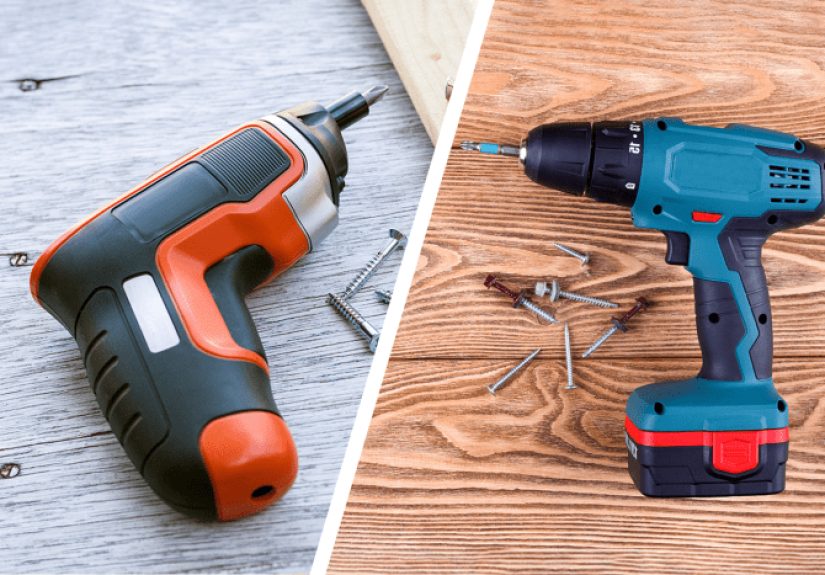
They look related because they are. They both rotate a bit to drive fasteners. But they’re built for different jobs,
and those differences show up the moment you try to:
(1) assemble furniture without stripping a screw, or
(2) drill a clean hole without smoking a tiny driver bit.
This guide breaks down the real-world differencespower, speed, chucks, torque control, and best-use scenariosso you can
pick the right tool (and stop negotiating with stubborn screws like they’re customer service robots).
Quick Definitions (So We’re Arguing About the Same Tools)
What is an electric screwdriver?
An electric screwdriver (often called a cordless screwdriver or power screwdriver)
is designed primarily for driving screwsespecially lots of themwithout the wrist-twisting workout of a manual driver.
Most use a 1/4-inch hex bit interface for quick changes and prioritize control over raw force.
Many consumer models run lower voltage and lower speed for safer screwdrivingthink furniture assembly, outlet plates,
cabinet hinges, and light-duty hardware. Some “bigger” versions exist (often 12V-class) that still focus on fastening
but add better torque and clutch control.
What is a drill (or drill/driver)?
A cordless drill (often a drill/driver) is built to do two main jobs:
drill holes and drive fasteners. The key difference is versatility:
a drill typically uses an adjustable 3-jaw chuck (commonly 3/8-inch or 1/2-inch) that can grip
round-shank drill bits and many driver bits.
Drills usually provide higher speed, more torque, and more options (like two-speed gearboxes,
clutch settings, and sometimes hammer mode on specific models).
The Core Differences That Actually Matter
1) Primary job: fastening control vs. hole-making versatility
If you remember only one thing, remember this:
Electric screwdrivers are optimized for screws.
Drills are optimized for holes (and can also drive screws).
Yes, both can drive screws. But an electric screwdriver is typically tuned to reduce over-driving and stripping,
while a drill is tuned to push a bit through wood, metal, plastic, and morewith enough speed to cut cleanly.
2) Torque: how hard the tool twists
Torque is the twisting force that determines whether your tool gently seats a screw… or aggressively
buries it like it owes the tool money.
In general, drills deliver more torque than typical compact electric screwdrivers. To make this concrete,
here are a few real-world spec examples from mainstream tools:
- A compact 8V-class gyroscopic screwdriver can offer controlled fastening with variable speed up to 430 rpm
(great for light fastening where finesse matters). - A 12V-class “pocket driver” style tool can deliver around a few hundred inch-pounds of torque in a compact body
(useful for installers working in tight spaces). - Modern 18V/20V drills can be dramatically more powerfulsome tested models reach torque figures well above
1,000 inch-pounds, intended for demanding drilling and driving tasks.
Translation: if your project involves long screws into dense lumber, big hole saws, or frequent drilling into tougher materials,
the drill is usually the correct tool. If your project involves lots of smaller screws and you care about not chewing up heads
or cracking plastics, an electric screwdriver often feels “safer” and smoother.
3) Speed (RPM): fast cutting vs. careful seating
Drills are built to spin fast because drilling is a cutting process. Many drills reach high RPM ranges suitable for clean holes,
and two-speed gearboxes help balance torque and speed.
Electric screwdrivers typically run slower because screwdriving is a control process. Lower RPM makes it easier to stop at flush
without over-drivingespecially in soft materials, plastic parts, or furniture hardware.
4) Chuck vs. hex drive: what bits you can use
This is a surprisingly big deal in day-to-day DIY:
- Most drills use a 3-jaw chuck that grips round-shank bits (twist bits, spade bits, hole saw arbors,
masonry bitsdepending on the drill type) and can also hold hex-shank driver bits. - Most electric screwdrivers use a 1/4-inch hex interface designed for driver bits and quick changes.
Some can accept hex-shank drill bits, but they’re not built to replace a drill for serious hole-making.
If your life includes “I need to drill a pilot hole, then drive a screw,” a drill handles both without complaint.
An electric screwdriver may handle the second step beautifullybut the first step can be limited.
5) Clutch and depth control: preventing over-driving
A clutch helps stop the tool from applying unlimited torque once the screw is seated.
Many drills include adjustable clutch settings specifically for controlled screwdriving, and learning to use the clutch
is one of the fastest ways to get cleaner results (and fewer stripped heads).
Many electric screwdrivers also include clutch settings or are naturally torque-limited by design.
That makes them feel “friendlier” for light-duty fasteningespecially when you’re working with inexpensive hardware,
soft particleboard, or plastic parts that can crack if over-tightened.
6) Size, weight, and ergonomics: where you’re working matters
Electric screwdrivers tend to be smaller and lighter, which matters when you’re:
- working overhead (installing lights, vents, or hardware under cabinets)
- operating in tight corners (behind appliances, inside cabinets)
- doing repetitive fastening (furniture builds, shelving brackets, shop fixtures)
Drills can absolutely do these jobs, but they’re often bulkier. When you’re balancing on a step stool trying to hit
the last two screws, “lighter and more controlled” starts to feel like a personality trait you want in a tool.
Which Tool Should You Use? A Simple Decision Guide
Pick an electric screwdriver when…
- You’re assembling furniture, cabinets, or shelving with lots of medium/small screws
- You’re working with delicate materials (plastic, thin metal, particleboard) where stripping is common
- You want something compact for quick household fixes (hinges, drawer pulls, outlet covers)
- You value speed + control more than brute strength
Pick a drill (drill/driver) when…
- You need to drill holes (pilot holes, mounting holes, hardware holesany holes)
- You’re working in tougher material (hardwood, thick lumber, metal) or using larger fasteners
- You want one tool that can handle a wide range of bits and accessories
- You’re doing “build” projects (studs, decks, framing, heavy shelving, larger anchors)
What about an impact driver?
You didn’t ask, but your future self might: an impact driver is another cousin in the family,
built for high-torque driving with a hammering action. It’s great for long screws and lag bolts,
but it’s not the same as a drilland it often isn’t the best choice for delicate screwdriving.
If your projects are heavy-duty, a drill + impact driver combo is common.
Real Examples: Same Project, Different Tool Choice
1) Hanging curtain rods
You usually want pilot holes (especially into studs), and you may need anchors in drywall.
A drill handles pilot holes and driving screws. An electric screwdriver can help for the final fastening,
but it can’t reliably replace the drilling step.
2) IKEA-style furniture assembly
This is electric screwdriver territory. You’re driving many screws into particleboard with hardware that strips easily.
A compact electric screwdriver with clutch control reduces the odds of over-tightening and cam-out.
A drill can do it toojust use a low clutch setting and a gentle trigger finger.
3) Building a basic shelf in a garage
If you’re drilling pilot holes and driving wood screws into 2x lumber, a drill is the main tool.
If you’re sinking a lot of longer screws, an impact driver can speed things up,
but the drill remains your hole-making workhorse.
4) Swapping outlet covers or tightening loose hinges
A compact electric screwdriver is perfect. It’s quick, controlled, and less likely to over-drive into a plastic plate
or strip small screws. (Also: it’s a lot less dramatic than firing up a full-size drill to remove two tiny screws.)
How to Get Better Results With Either Tool
Use the right bitand replace it when it’s tired
Many “tool problems” are actually “bit problems.” If the bit is worn, it won’t seat fully,
and it will cam-out (slip) and damage the screw head. Fresh bits are cheap insurance.
Let the clutch do its job
On a drill/driver, start with a lower clutch number and increase until the screw seats properly.
This helps prevent over-driving and strippingespecially in softer materials.
Drill pilot holes for hardwood and long screws
If you’re driving into hardwood, thick lumber, or near the end of a board, pilot holes reduce splitting
and make driving smoother. It also reduces stress on the tool and your hands.
Match speed to the task
Drilling generally wants higher RPM (with appropriate pressure and the right bit),
while screwdriving often benefits from slower speed and more control near the end.
Buying Tips: What to Look For
For an electric screwdriver
- Bit system: 1/4-inch hex with quick-change is the convenience sweet spot
- Clutch settings: helpful for preventing over-driving on furniture and hardware
- Speed control: variable speed is more useful than you think
- Ergonomics: inline vs pistol grip, weight, and balance
- Use case fit: electronics and delicate work may need a smaller precision tool
For a drill/driver
- Chuck size: 3/8-inch is common for compact drills; 1/2-inch supports larger bits
- Two-speed gearbox: low for torque (driving), high for speed (drilling)
- Clutch settings: essential for screwdriving control
- Battery platform: 12V is compact; 18V/20V is typical for heavier work
- Comfort: grip, weight, LED light, and balance matter more than marketing hype
Bottom Line
If you want one tool that does the most things, buy (or keep) a drill/driver.
If you do lots of everyday fasteningfurniture, fixtures, hardware, quick repairsan electric screwdriver
is a surprisingly satisfying upgrade that saves time and reduces stripped screws.
The best choice isn’t “which tool is better?” It’s “which tool makes this specific job easier?”
And if your job involves drilling holes, the drill wins by definition. If your job involves driving a dozen small screws neatly,
the electric screwdriver feels like cheating in the best way.
Real-World Experiences (): What People Notice After Using Both
In real households and job sites, the difference between an electric screwdriver and a drill shows up less in spec sheets
and more in the small “aha” moments. For example, lots of DIYers discover that a drill is almost too capable for certain tasks.
When you’re installing cabinet pulls, tightening a hinge, or assembling flat-pack furniture, a drill can feel like using a sledgehammer
to hang a picture frame. It worksbut the margin for error gets thin fast. A little extra trigger squeeze, and suddenly you’ve
stripped the screw head, cratered the surface, or driven the fastener deeper than you wanted.
That’s where electric screwdrivers earn their keep. People often describe them as “calmer.” The slower speed and lighter torque
make it easier to stop right at flush, especially on inexpensive furniture hardware. Another common experience is how much less tiring
repetitive work becomes. Driving 40 screws by hand can make your wrist feel like it’s filing a complaint. Driving those same screws
with a compact electric screwdriver turns the job into something you finish before your coffee gets cold.
On the flip side, many people also learn the limits of electric screwdrivers quicklyusually the first time they try to do a “drill job”
with a “screw tool.” Maybe it’s a pilot hole into a stud, a mounting hole in thicker wood, or anything that needs a real cutting action.
The screwdriver might spin, but it doesn’t cut efficiently, and you end up pushing harder, heating the bit, and taking longer than you should.
That’s when a drill stops being optional and starts being the correct answer.
Another frequent lesson: the clutch is not a decoration. New drill owners sometimes ignore it, set the drill to “maximum everything,”
and then wonder why screws strip or sink too deep. Once people start using the clutch properlyespecially for drywall, softwood, and furniture
the quality of the work improves immediately. It’s also common to realize you don’t need the highest power tool for every task; you need the
right control. For delicate jobs, lower torque and slower speed can actually be the “pro move.”
Finally, there’s a practical workflow experience many people adopt: drill first, drive second. Use a drill to make clean pilot holes
(and countersinks when needed), then use an electric screwdriver for consistent, controlled fastening. This two-tool approach can feel
oddly luxurious, like owning both a chef’s knife and a paring knife. Could you cut everything with one? Sure. Is it nicer when each tool
does what it was built to do? Absolutelyand your screw heads will look a lot better, too.