Table of Contents >> Show >> Hide
- Why Growing Herbs in Containers Is Such a Smart Move
- Choosing the Right Containers for Herbs
- Potting Mix: Skip the Garden Soil
- Sunlight and Placement: Let There Be (Enough) Light
- Which Herbs Grow Best in Containers?
- How to Combine Herbs in the Same Container
- Planting and Spacing Herbs in Containers
- Watering and Fertilizing: The Simple System
- Pruning, Harvesting, and Keeping Herbs Bushy
- Common Mistakes to Avoid with Container Herbs
- Overwintering and Extending Your Herb Season
- Real-Life Lessons from Growing Herbs in Containers
- 1. Start with Fewer Herbs (and Learn Their Personalities)
- 2. Bigger Pots Really Do Make Life Easier
- 3. Group Pots by Thirst Level
- 4. Don’t Be Afraid to Cut Aggressively
- 5. Rotate Pots Like You Rotate Your Phone Charger
- 6. Accept That Some Herbs Are Seasonal Flirts
- 7. Put the Herb Garden Where You Actually Cook
- 8. Give Yourself Permission to Experiment (and Fail)
Imagine stepping outside (or over to your kitchen window), snipping a few sprigs of basil, and dropping them straight into your pasta. No sad, wilted clamshells from the grocery store. No mystery “herb blend” that tastes like disappointment. Just fresh, fragrant, homegrown herbs all from a few pots.
The good news? A thriving container herb garden is way easier than it looks. You don’t need a big yard, fancy tools, or a degree in horticulture. You just need the right containers, good potting mix, decent light, and a few smart habits. Let’s walk through exactly how to grow herbs in containers so they don’t just survive they actually earn their keep in your kitchen.
Why Growing Herbs in Containers Is Such a Smart Move
Container herb gardening is perfect if you’re working with a balcony, patio, stoop, or even just a sunny window. You can pull pots closer to the door for easy harvesting, shift them to chase the sun, or move them under cover in bad weather. Less weeding, less bending, more flavor what’s not to love?
Some key perks of a container herb garden:
- Space-saving: Herbs don’t need huge root zones, so they’re happy in compact containers.
- Flexible light: You can rotate pots to the sunniest spots and bring them indoors when needed.
- Pest control: It’s easier to spot and manage pests on a few pots than in a huge garden bed.
- Better drainage: Good potting mix in containers drains faster than heavy garden soil.
- Control freak–friendly: You choose the soil, fertilizer, and watering schedule, so fewer unpleasant surprises.
Choosing the Right Containers for Herbs
Size and Depth: Give Roots Room to Breathe
Herbs don’t need enormous pots, but cramped quarters stunt growth and dry out too fast. As a general rule:
- For single herbs (basil, parsley, thyme, chives), use a pot at least 8–10 inches in diameter and about as deep.
- For mixed herb planters, choose a wide container 12–16 inches across so each plant has space.
- Shallow-rooted herbs like thyme and oregano are fine in slightly shallower containers, while larger plants like rosemary appreciate more depth.
If the roots circle the pot or poke out from the drainage holes, it’s time to repot into something larger.
Material: Plastic, Terracotta, and Grow Bags
You can grow herbs in almost anything with drainage holes, but each material behaves differently:
- Plastic pots: Lightweight, inexpensive, and slow to dry out great if you tend to forget watering.
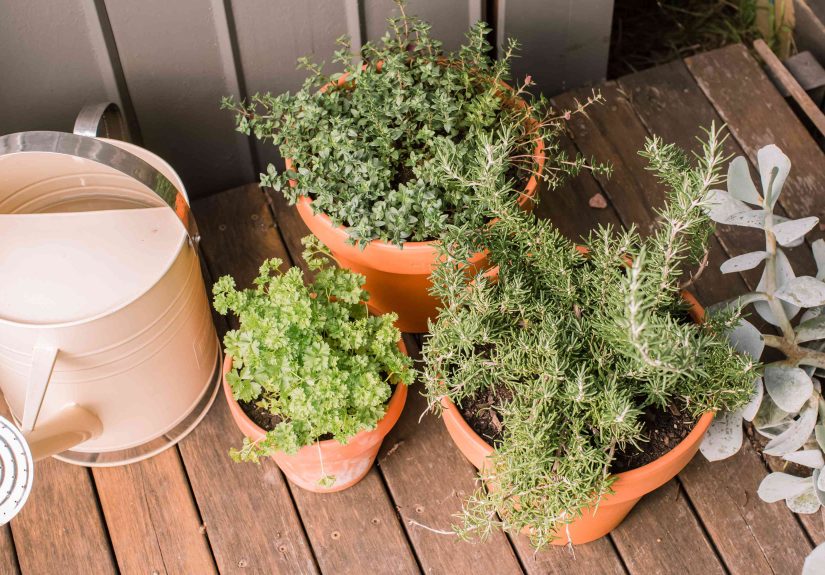
- Terracotta (clay) pots: Beautiful and breathable, but they dry out quickly. Perfect for Mediterranean herbs like rosemary, thyme, and oregano that prefer drier roots.
- Fabric grow bags: Excellent drainage and airflow, ideal for patios and decks, but you’ll likely water more often.
- Upcycled containers: Buckets, metal tubs, and even old kitchen colanders can work just drill holes in the bottom.
Drainage: The Non-Negotiable Rule
If there’s one thing herbs hate, it’s wet, soggy roots. Your containers must have drainage holes not “tiny dot in the corner” holes, but proper, let-the-water-out holes. To help even more:
- Cover holes with a small piece of mesh, coffee filter, or a shard of broken pot to keep soil from washing out.
- Use saucers under indoor pots, but empty standing water instead of letting roots sit in it.
Potting Mix: Skip the Garden Soil
Garden soil is dense, heavy, and compacts in pots. That spells root rot and sad, yellowing herbs. Instead, use a high-quality potting mix labeled for containers.
What to Look for in a Potting Mix
- Lightweight and fluffy, not clumpy or brick-like.
- Includes peat moss or coco coir for moisture retention.
- Contains perlite or vermiculite to improve drainage and aeration.
- May include a small amount of slow-release fertilizer (fine, but you’ll still feed occasionally).
DIY Potting Mix for Herbs
If you like to tinker, you can blend your own mix. A simple recipe:
- 2 parts potting soil or composted bark mix
- 1 part peat moss or coco coir
- 1 part perlite
Mix thoroughly before filling containers. Don’t pack it down too hard your herbs enjoy air pockets around their roots.
Sunlight and Placement: Let There Be (Enough) Light
Most culinary herbs are sun lovers. Aim for at least 6 hours of direct sunlight per day for basil, rosemary, thyme, oregano, and sage. Parsley, chives, and mint are a bit more forgiving and can handle part sun.
Best Spots Outdoors
- South- or west-facing patios, balconies, or steps.
- Along railings or ledges that catch plenty of sun.
- Clustered near your kitchen door so you’ll actually harvest them.
Growing Herbs Indoors
No outdoor space? You can still grow herbs inside:
- Place them near a bright south- or southwest-facing window.
- Rotate pots weekly so plants grow evenly.
- If light is limited, add an LED grow light and run it 12–14 hours a day.
Indoors, herbs may grow a little leggier, but they’ll still deliver plenty of flavor if they get enough light and are regularly pruned.
Which Herbs Grow Best in Containers?
Almost all common kitchen herbs do well in pots, but some are especially container-friendly and forgiving for beginners:
- Basil: Loves warmth, sun, and consistent moisture. Great in its own pot or with other thirsty herbs.
- Parsley: Curly or flat-leaf; handles partial shade and cooler temps better than basil.
- Chives: Very easy, perennial in many areas, and perfect for snipping on eggs and potatoes.
- Thyme: Low-growing, drought-tolerant, and ideal for the edges of pots.
- Oregano: Spreads nicely and enjoys similar conditions to thyme.
- Sage: A bit woody as it matures, but beautiful and flavorful in a larger container.
- Rosemary: Likes sun and excellent drainage; treat it almost like a tiny shrub in a pot.
- Mint: Delicious… and invasive. Always give mint its own container or risk it taking over everything.
- Cilantro: Cool-weather herb that tends to bolt in heat. Best in spring and fall, or in a cooler, lightly shaded spot.
How to Combine Herbs in the Same Container
You can absolutely grow several herbs in one pot just group plants with similar needs:
- Dry, sunny team: Rosemary, thyme, oregano, and sage. They like bright sun and slightly drier soil.
- Moisture-loving team: Basil, parsley, cilantro, and chives appreciate more regular watering.
- Mint: Repeat after me: Mint gets its own pot. It’s happier, and so is everything else.
When planting, place taller herbs like rosemary or sage toward the back of the container, mid-sized herbs like basil and parsley in the middle, and trailing or low herbs like thyme along the edges to spill over.
Planting and Spacing Herbs in Containers
Start with healthy seedlings or sow seeds directly into the potting mix. For seedlings:
- Fill the container with moistened potting mix, leaving about an inch below the rim.
- Gently remove the herb from its nursery pot, teasing apart any circling roots.
- Set plants so the top of the root ball is level with (or slightly below) the soil surface.
- Space plants a few inches apart so they have room to grow and air can circulate.
- Firm the soil lightly and water thoroughly until water drains from the bottom.
Don’t overpack the container. Young plants might look small and lonely, but herbs fill in quickly. Too many in one pot leads to competition, faster drying, and more disease problems.
Watering and Fertilizing: The Simple System
How Often Should You Water Herbs in Containers?
There’s no one-size-fits-all schedule because weather, pot size, and material all matter. Instead, use the finger test:
- Stick your finger about an inch into the soil.
- If it feels dry at that depth, water thoroughly.
- If it’s still damp, wait another day.
In hot weather, you may water once a day. In cooler or rainy periods, it might be every few days. Indoors, pots may dry out more slowly.
Feeding Your Herbs (Without Overdoing It)
Herbs don’t need as much fertilizer as vegetables or flowers. Too much nitrogen can make them lush but less flavorful. Aim for:
- A slow-release fertilizer mixed into the potting soil at planting, or
- A diluted liquid fertilizer (about half strength) every 3–4 weeks during the growing season.
Always water before applying liquid fertilizer to avoid burning roots. And if your potting mix already contains fertilizer, go easy for the first month or two.
Pruning, Harvesting, and Keeping Herbs Bushy
The more you harvest correctly, the better your herbs grow. Many people treat herbs like fragile decorations then wonder why they get tall, floppy, and start flowering.
General Harvesting Rules
- Start harvesting once plants are well established and at least 4–6 inches tall.
- Never remove more than one-third of the plant at a time.
- Clip stems just above a pair of leaves to encourage branching.
Specific Pruning Tips
- Basil: Pinch off the top sets of leaves regularly. Remove flower buds as they appear to keep flavor strong.
- Thyme and oregano: Trim stems lightly and often. They respond well to frequent cutting.
- Chives: Snip leaves about an inch above the soil; they’ll regrow quickly.
- Mint: Cut whole stems, not just individual leaves it helps keep the plant compact.
Common Mistakes to Avoid with Container Herbs
- Using garden soil: It compacts and suffocates roots in containers.
- Overwatering: Constantly wet soil leads to root rot and yellow leaves.
- Underpotting: Tiny containers dry too fast and stunt growth.
- Too little light: Herbs get leggy, pale, and weak without enough sun.
- Neglecting pruning: Unpruned herbs go to flower and lose flavor.
- Planting mint with everything else: Mint will politely (and then not so politely) try to take over.
Overwintering and Extending Your Herb Season
Not all herbs are hardy in every climate, but you can stretch the season:
- Bring potted herbs like rosemary, thyme, and chives indoors before the first hard frost.
- Place them in a cool, bright spot and reduce watering.
- For annuals like basil, plan to replant each spring or grow small plants indoors under lights in winter.
Perennial herbs in larger containers can sometimes overwinter outdoors in milder climates if the pots are insulated and kept out of harsh winds.
Real-Life Lessons from Growing Herbs in Containers
After a few seasons of growing herbs in pots, certain patterns become obvious usually after we’ve killed a plant or two (or five). Here are some hard-earned, experience-based tips that make container herb gardening smoother.
1. Start with Fewer Herbs (and Learn Their Personalities)
It’s tempting to buy every herb in the nursery because they all smell amazing. But starting with three to five core herbs say basil, parsley, chives, and thyme lets you actually learn what each plant likes. Basil will sulk if it gets cold or dries out; thyme shrugs off your missed watering; chives forgive almost anything. Once you understand those rhythms, adding more herbs is much easier.
2. Bigger Pots Really Do Make Life Easier
Tiny “cute” pots look great in photos, but in real life they dry out multiple times a day in summer. Upgrading to slightly larger containers dramatically reduces stress. A 10–12-inch pot holds more soil, which means steadier moisture, less root crowding, and fewer emergencies where you discover drooping basil five minutes before dinner.
3. Group Pots by Thirst Level
One of the most practical tricks: cluster your thirsty herbs together and your drought-tolerant ones together. Keep basil, parsley, cilantro, and chives in one watering “zone” and rosemary, thyme, oregano, and sage in another. When you do a quick finger test, you’ll usually find the moist group needs water first. This prevents overwatering your dry-loving herbs just because basil is thirsty again.
4. Don’t Be Afraid to Cut Aggressively
New gardeners often nibble at herbs a leaf here, a leaf there. But herbs actually want you to take decent-sized cuttings. When you snip stems just above a pair of leaves, the plant responds by branching and becoming fuller. The first time you give basil a good haircut, it feels a little scary. A week later, it looks like a small bush and you realize: “Oh, this plant is tougher than I thought.”
5. Rotate Pots Like You Rotate Your Phone Charger
Light changes throughout the season, and buildings, railings, or even larger plants can start casting new shadows. Turn pots every week or two and occasionally rearrange their positions. The plant that was in the sunniest spot in May might be shaded by July. A simple rotation habit keeps herbs growing upright and evenly instead of leaning hard toward one direction.
6. Accept That Some Herbs Are Seasonal Flirts
Basil and cilantro, especially, are not lifelong companions. Basil loves warmth and resents cold nights; cilantro prefers cool weather and bolts in heat. Instead of fighting their natural tendencies, treat them like seasonal crops. Enjoy basil in summer and cilantro in spring and fall. Succession-planting (sowing new seeds every few weeks) keeps a steady supply and reduces the frustration of watching one plant suddenly shoot up flowers.
7. Put the Herb Garden Where You Actually Cook
One of the biggest game-changers is simple: put your herb containers as close as possible to your kitchen. A pot of basil on the far end of the yard will rarely get used when you’re stirring sauce with one hand and trying not to burn the garlic with the other. A pot on the deck or outside the back door? You’ll grab a handful of parsley without even thinking twice.
8. Give Yourself Permission to Experiment (and Fail)
Herbs are relatively inexpensive compared to many ornamental plants, and they grow quickly. If something doesn’t work maybe your rosemary hated being indoors, or your mint crisped up in too much sun consider it a low-cost lesson. Adjust the container size, light, or watering next season. Over time, you’ll build your own personal playbook of what thrives in your exact conditions.
The real secret to growing herbs in containers is less about perfection and more about consistency. Check the soil regularly, give them decent light, trim generously, and don’t stress over the occasional droopy day. Do that, and your pots will reward you with fresh flavor, gorgeous scents, and the minor but real thrill of saying, “Oh, this? I grew it.”