Table of Contents >> Show >> Hide
- Why This Strange DIY Cooling Idea Grabs Attention
- How a DIY Air Conditioner Actually Works
- The “Weird Donor Appliance” Part Is Not the Crazy Part
- Where Homemade Air Conditioner Builds Usually Go Wrong
- Safety Is the Least Funny Part of the Joke
- Can a DIY Air Conditioner Be Worth It?
- Smarter Alternatives for the Curious DIY Crowd
- Final Verdict: Brilliant, Bonkers, and Harder Than It Looks
- Extended Real-World Experience: What DIY Cooling Actually Feels Like
There are two kinds of summer people: the ones who calmly sip iced tea in a perfectly cooled living room, and the ones who look at a pile of spare parts and whisper, “I can make that colder.” This article is for the second groupthe brave, curious, slightly overconfident crowd who see an oddball donor appliance and imagine a homemade air conditioner roaring to life in a sweaty apartment.
The phrase DIY air conditioner built from weird donor appliance sounds like the title of a science-fair project run by a very talented raccoon, but the idea is real enough. Makers and tinkerers have long tried to build cooling systems from salvaged refrigerators, dehumidifiers, water heaters, radiators, fans, pumps, and whatever else is sitting quietly in the garage waiting to become “part of a bigger vision.” Sometimes that vision is genius. Sometimes it is a bucket of condensation and regret. Most of the time, it is both.
Still, these projects are fascinating because they sit at the intersection of DIY culture, heat-wave survival, thriftiness, and engineering stubbornness. They also reveal an important truth: building something that feels cold is easy, but building something that cools a room efficiently, safely, and reliably is much harder than the internet sometimes makes it look.
Why This Strange DIY Cooling Idea Grabs Attention
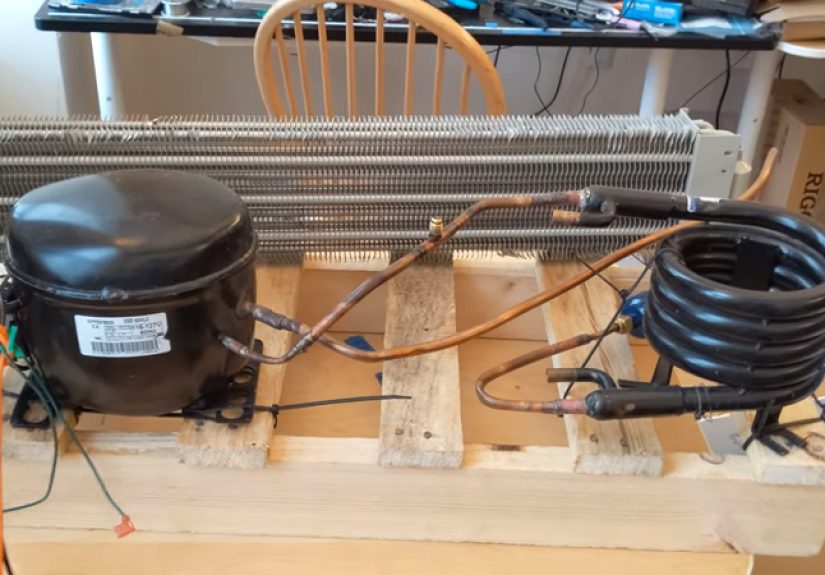
The appeal is obvious. A homemade air conditioner promises three seductive things: lower cost, creative problem-solving, and the glory of telling friends your bedroom is cooled by a machine that used to live a completely different life. In the most memorable version of this idea, a DIY builder experimented with donor parts and eventually made a more successful unit from a repurposed hot water heater, while an earlier attempt using other salvaged components struggled with poor cooling and icing on the evaporator coil.
That detail matters because it explains why these builds go viral. They are not just “cheap air conditioner hacks.” They are mechanical plot twists. A water heater becomes part of a cooling system. A radiator becomes a cold-air delivery device. A fan becomes the heroic sidekick. It is half HVAC experiment, half mad-scientist comedy, and the internet loves a project that looks equal parts clever and mildly illegal.
But the project is also a reminder that air conditioning is not magic. It is heat transfer. A true air conditioner does not create cold so much as it moves heat somewhere else. The more efficiently it moves that heat, the better the system works. The moment your improvised unit cannot manage airflow, coil temperature, refrigerant flow, moisture, or heat rejection, the whole thing starts acting less like a clever climate-control solution and more like a sweaty apology.
How a DIY Air Conditioner Actually Works
At the simplest level, there are two broad categories of “DIY air conditioner” projects online.
1. The Ice-and-Fan Crowd
These are the classic homemade air conditioner builds made from a cooler, ice, a fan, and some ducting. They can absolutely blow colder air than the surrounding room. They can also make you feel better if you are sitting nearby. What they cannot do very well is cool a full room for long periods without constant refills of ice. In other words, they are more like personal comfort hacks than true air conditioning.
Think of them as the smoothie version of cooling: refreshing, temporary, and gone faster than expected.
2. The Real Refrigeration Crowd
This is where things get serious. These builds use refrigeration hardwarecompressors, evaporator coils, condensers, expansion devices, and sometimes water loops or heat exchangers. In theory, this kind of setup can behave like a real AC system because it is based on the same refrigeration principles used in window units, portable air conditioners, dehumidifiers, and mini-splits.
In practice, this is where DIY dreams meet thermodynamics with a folding chair.
A real vapor-compression cooling system needs proper refrigerant charge, correct coil sizing, good airflow across the evaporator, effective heat removal at the condenser, and a plan for condensation. If any of those pieces are off, the unit may cool poorly, ice up, short-cycle, rattle loudly, waste electricity, or simply refuse to behave like the cool mechanical masterpiece you imagined at 1:00 a.m.
The “Weird Donor Appliance” Part Is Not the Crazy Part
Oddly enough, repurposing an appliance is not the dumbest idea in the room. Many household appliances already contain useful cooling components. A dehumidifier, for example, is basically a refrigeration machine that removes moisture from the air. A refrigerator has a compressor and heat-exchange hardware. A portable AC already bundles many of the needed parts into one movable box. A water heater can contribute as a vessel or heat-exchange element in experimental systems. So yes, scavenging parts can make engineering sense.
The problem is not that these appliances contain useful hardware. The problem is that they were designed for specific operating conditions, airflow patterns, loads, pressures, and safety controls. When you transplant those parts into a homemade build, you are also inheriting their limitations. Suddenly, you are not just reusing a compressoryou are redesigning the environment around that compressor.
That is a big leap. It is the difference between repurposing a bookshelf and repurposing a sealed refrigeration system full of pressure, moisture concerns, electrical demands, and legal restrictions around refrigerants. One project gives you rustic charm. The other gives you a crash course in why HVAC technicians are not paid in pizza alone.
Where Homemade Air Conditioner Builds Usually Go Wrong
Airflow Is Never as Simple as “Just Add a Bigger Fan”
One of the most common problems in DIY AC projects is evaporator freeze-up. When the coil gets too cold and does not receive enough warm air across its surface, moisture in the air freezes onto the coil. That ice then blocks airflow, which makes the coil even colder, which creates even more ice. Congratulations: your air conditioner has turned into a hobby freezer.
That is why proper airflow matters so much. Cooling performance is not just about having a cold coil; it is about exposing enough room air to that coil in a controlled, repeatable way. Professional AC units are engineered around this balance. A homemade setup often is not.
Humidity Is the Sneaky Villain
People often think cooling is only about temperature, but comfort is heavily tied to humidity. A right-sized air conditioner lowers temperature and removes moisture. An oversized or poorly balanced system can leave a room feeling cool but clammy. A DIY build that produces cold air without managing moisture well may still leave you feeling sticky and annoyedlike you are living inside a refrigerated sandwich bag.
This is also why evaporative coolers, sometimes called swamp coolers, are not universal solutions. They work best in hot, dry climates. In humid regions, they can make the air feel worse by adding even more moisture. So if your homemade cooling plan depends on water evaporation, location matters. Arizona may applaud. Florida may laugh.
Heat Has to Go Somewhere
Every true air conditioner removes heat from one place and rejects it somewhere else. If your homemade unit cools the air but dumps the heat right back into the same room, you are not winning the battle. You are staging a family argument between different corners of the same apartment.
This is one reason window units remain so effective: the hot side stays outside. Portable ACs work too, but they generally need proper venting and often give up efficiency compared with window units. A DIY build that does not solve the hot-side problem will always feel like it is chasing its own tail.
Noise and Vibration Turn Cool Ideas Into Bad Roommates
A lot of homemade air conditioners are loud. Compressors vibrate. Fans hum. Pumps buzz. Improvised mounts transfer noise into floors, walls, and furniture. A machine that looks clever in the workshop can sound like a shopping cart full of socket wrenches once it is moved into a bedroom.
This is one of those reality checks that separates “it works” from “I want to live with this.” A successful DIY cooling project is not just cold. It is tolerable at 2:00 a.m.
Safety Is the Least Funny Part of the Joke
If your project involves refrigerant, the stakes go up fast. Refrigerant handling is not a casual arts-and-crafts situation. There are legal rules around venting refrigerants, and intentionally releasing them is prohibited. Recovery, recycling, and safe disposal matter. So does the fact that refrigeration systems operate under pressure and combine electrical components, sharp metal edges, and moisture in a package that can go from “ingenious” to “terrible idea” surprisingly quickly.
Then there is condensation. Any device that cools warm humid air will collect water. That means you need drainage, moisture management, mold awareness, and a plan for what happens when the pan overflows on your floor at midnight. Indoor humidity should be kept in a healthy range, not encouraged to go rogue just because your homemade coil started acting ambitious.
In other words, a DIY AC build can be a neat engineering exercise, but it should never be treated like a casual weekend craft project. It is not a birdhouse. It is a box full of pressure, wiring, water, and consequences.
Can a DIY Air Conditioner Be Worth It?
Yesbut usually in a very specific way.
If your goal is to learn, experiment, or make a small personal cooling device, a DIY air conditioner can be a satisfying project. If your goal is to cool a bedroom cheaply with parts on hand, you may get something useful enough to justify the effort. And if your goal is to enjoy the sheer weirdness of telling people your cooling system began life as a donor appliance from another category entirely, then honestly, mission accomplished.
But if your goal is to beat a modern window AC on efficiency, convenience, and reliability, that is a much tougher sell. Standard room air conditioners are sized for spaces, designed to manage humidity, built to reject heat properly, and often more energy-efficient than improvised solutions. In many cases, a decent window unit or a well-chosen ductless system will outperform the homemade alternative with less drama and fewer surprise puddles.
The romantic version of DIY says, “Why buy it when I can build it?” The practical version of summer says, “Because it is 96 degrees and I would like to sleep tonight.” Both voices deserve respect.
Smarter Alternatives for the Curious DIY Crowd
If the weird donor-appliance route feels too risky, there are safer ways to chase the same spirit of hands-on cooling:
- Build a personal ice-and-fan cooler for desk or bedside use.
- Use fans strategically to circulate cooled air more effectively; fans do not cool the room itself, but they can improve comfort.
- Improve shading and insulation so your room gains less heat in the first place.
- Choose a right-sized window unit instead of an oversized one that short-cools the room and leaves humidity behind.
- Consider a portable AC only when needed, especially where window installation is difficult.
- Use a dehumidifier thoughtfully in damp spaces, remembering that it helps moisture more than true whole-room cooling.
These approaches may not earn you “mad scientist of the month,” but they can make a real difference without inviting a fight with refrigerant law, coil icing, and the physics of heat rejection.
Final Verdict: Brilliant, Bonkers, and Harder Than It Looks
A DIY air conditioner built from a weird donor appliance is one of those ideas that perfectly captures the internet’s favorite energy: equal parts cleverness, chaos, thrift, and confidence. It is fun because it feels rebellious. It is memorable because it turns ordinary junk into a machine with a mission. And it is educational because it exposes what real air conditioning actually requires: balance, airflow, moisture control, heat rejection, safety, and a lot of engineering discipline.
So is the concept ridiculous? Not exactly. Is it harder than the viral headline suggests? Absolutely. A homemade air conditioner can teach you a lot, cool a little, and humble you completely. Which, if we are being honest, is the full DIY experience anyway.
If you want a fun project, build one carefully. If you want reliable sleep in August, buy the right unit and call it a win. There is no shame in admitting that professional HVAC engineers have already had several excellent ideas on your behalf.
Extended Real-World Experience: What DIY Cooling Actually Feels Like
Anyone who has lived through summer in a stuffy apartment knows why these projects keep showing up. The experience usually starts with optimism. You open a closet, spot an old fan, a length of tubing, maybe a retired appliance that seems too interesting to throw away, and suddenly you are not cleaningyou are inventing. The fantasy is powerful: by nightfall, you will have a homemade air conditioner and the kind of satisfaction that only comes from beating heat with your own hands.
Then the real experience begins.
First comes the setup phase, which is a mix of engineering and bargaining. You tell yourself the compressor noise “probably won’t be that bad.” You decide the temporary hose routing is “good enough for testing.” You balance the fan on something that definitely was not designed to support a fan. For a brief moment, the machine looks like a breakthrough. Then it powers on and immediately introduces a new category of household soundsomewhere between “determined appliance” and “washing machine full of marbles.”
Still, there is a thrill to that first burst of cold air. It feels like victory. You put your hand in front of the vent and grin like a cartoon genius. The room may still be warm, but that stream of cooler air is proof of life. For five glorious minutes, you are certain the experts have been overcomplicating this stuff for decades.
After that, the details start collecting their payment. Condensation appears where you forgot it would. A coil begins frosting over. Airflow weakens. The room temperature drops a little, but the humidity makes everything feel weirdly sticky. You realize your machine is cooling something, but not necessarily the room in the smooth, stable way you hoped. Instead of one big problemheatyou now have six smaller problems wearing tool belts.
And yet, that is also where the experience gets surprisingly rewarding. DIY cooling teaches you to notice things most people never think about: how warm air moves, how humidity changes comfort, how vibration travels through wood floors, why a professional unit drains water so neatly, and why real air conditioners are carefully sized rather than chosen by pure wishful thinking. Even a flawed homemade air conditioner can make you much smarter about your home.
It also changes the way you see store-bought machines. After wrestling with airflow, drainage, noise, and heat rejection, a decent window unit starts to look less like a boring appliance and more like a beautifully organized peace treaty between physics and comfort. You stop asking, “Why does this thing cost so much?” and start asking, “How are they selling this miracle in a box for that little?”
That is the secret charm of the weird donor-appliance air conditioner. Even when it is imperfect, it gives you a front-row seat to the logic of cooling. It turns summer misery into a mechanical puzzle. And on the best days, when the airflow is decent, the noise is manageable, and the room feels a little less like a toaster oven, it delivers something store-bought products rarely can: the deeply satisfying sense that comfort was not just purchasedit was invented, argued with, adjusted, and earned.