
Table of Contents >> Show >> Hide
- Why Exercise Helps When You Have COPD (Even If It Feels Backwards)
- Before You Start: The COPD Safety Checklist
- Breathing Exercises That Make Everything Else Easier
- Best Aerobic Exercises for COPD (Cardio Without the Drama)
- Best Strength Exercises for COPD (Because Strong Muscles Need Less Oxygen)
- Flexibility and Balance (Small Effort, Big Payoff)
- Putting It All Together: A COPD-Friendly Weekly Starter Plan
- Pro Tips to Make COPD Exercise Easier (and More Likely to Happen)
- FAQ: Common COPD Exercise Questions
- Conclusion
If you live with COPD, exercise can feel like an unfair prank: “Sure, go move your body… while your lungs file a formal complaint.”
But here’s the twistdone the right way, exercise is one of the best tools you have to breathe easier, do more with less puffing, and feel more like yourself again.
Not because it magically “fixes” COPD (it doesn’t), but because it trains the parts you can train: muscles, stamina, breathing efficiency, confidence, and the ability to recover after activity.
This guide walks through the best COPD-friendly exercises (aerobic, strength, flexibility, and breathing techniques), how hard to go, and how to build a routine you’ll actually keep.
You’ll also get a practical starter plan and real-world “what this feels like” experience notes at the endbecause the treadmill is one thing, but the grocery store is where legends are made.
Why Exercise Helps When You Have COPD (Even If It Feels Backwards)
COPD can make breathing harder, which makes activity harder, which can make you avoid activity… which weakens muscles… which makes you get winded faster.
That cycle is rude. Exercise is how you break it.
When you train your body regularly:
- Your muscles become more efficient and need less oxygen for the same task (so you feel less breathless doing normal stuff).
- Your legs and core get stronger, making walking, stairs, and standing up easier.
- Your breathing pattern improves (especially when you practice techniques like pursed-lip and diaphragmatic breathing).
- Your stamina increases, which means more independence and fewer “I can’t” days.
- Your anxiety around shortness of breath often decreases, because you learn what’s “work” vs. what’s “warning.”
And yespulmonary rehabilitation (a structured program that combines exercise training with education and coaching) is widely recommended for COPD because it helps you exercise safely and get more benefit with less fear.
If you can access pulmonary rehab, it’s like having a personal trainer who speaks fluent lung.
Before You Start: The COPD Safety Checklist
COPD-friendly exercise should feel like challenging but controllable, not like a panic scene in an action movie.
Use this checklist to keep things safe and sustainable.
1) Get the green light (and a plan)
Ask your clinician about your safest intensity range, whether you should use oxygen during activity, and how to use rescue inhalers around exercise.
If you have heart disease, pulmonary hypertension, frequent COPD flare-ups, or you’ve been hospitalized recently, medical guidance matters even more.
2) Know what “good effort” feels like
Two simple ways to gauge intensity without turning your workout into a math exam:
- The Talk Test: You should be able to talk in short sentences. If you can sing, it’s probably too easy. If you can’t speak, it’s too hard.
- Perceived Effort (Borg-style thinking): Aim for “moderate” most dayslike you’re working, but you could keep going.
3) Warm up and cool down (non-negotiable)
Give your lungs a polite introduction to movement. A 5–10 minute warm-up (easy walking, gentle marching, slow arm circles) helps prevent sudden breathlessness.
Cool down the same way to avoid dizziness or a “why is my heart doing jazz?” feeling.
4) Time your meals and meds
Many pulmonary rehab programs advise avoiding a heavy meal right before exercise and taking medications on your normal schedule.
Translation: don’t eat a Thanksgiving plate and then expect your lungs to applaud your brisk walk.
5) Learn your “stop signs”
Stop exercising and contact a medical professional if you have chest pain/pressure, severe dizziness, confusion, fainting, new wheezing that doesn’t settle, or breathlessness that’s unusually intense or doesn’t improve with rest and your usual plan.
If your lips or fingertips turn bluish, that’s an urgent signget help.
Breathing Exercises That Make Everything Else Easier
Breathing exercises aren’t just “relaxation.” For COPD, they’re practical tools for managing air trapping, slowing your breathing rate, and staying in control during effort.
Practice them when you’re calm so they’re available when you’re not.
Pursed-Lip Breathing (your emergency brake for breathlessness)
- Inhale through your nose for about 2 seconds (normal breath is fine).
- Purse your lips like you’re going to whistle or blow out a candle.
- Exhale slowly and gently for about 4–5 seconds (or longer), keeping the exhale longer than the inhale.
- Use it during activityespecially when you feel your breathing speeding up.
Why it helps: A slower, longer exhale can help keep airways open longer and reduce the “trapped air” feeling.
Diaphragmatic (Belly) Breathing (training the main breathing muscle)
- Relax your shoulders. Place one hand on your chest and one on your belly.
- Inhale gently so your belly rises more than your chest.
- Pause briefly (1–2 seconds if comfortable).
- Exhale slowly (pursed lips can help) and feel the belly fall.
- Start with 5–10 breaths, multiple times per day.
Tip: If it’s tough at first, practice lying down or reclined. Gravity can be… opinionated.
Huff Coughing (gentler airway clearance)
If mucus is part of your COPD story, huff coughing can help move secretions without exhausting you.
- Inhale for 1–2 seconds.
- With your mouth open, exhale as if you’re fogging up a mirror (“huff”).
- Repeat 2–3 times, then cough once to clear what’s loosened.
- Rest and repeat as needed.
Best Aerobic Exercises for COPD (Cardio Without the Drama)
Aerobic exercise improves endurance and helps your body use oxygen more efficiently. The best cardio for COPD is usually low-impact, steady, and adaptable.
Think “consistent” over “crushing it.”
1) Walking (the classic for a reason)
Walking is accessible, scalable, and extremely practical (because life is basically one long walking assignment).
If steady walking is hard, use intervals.
Example: Interval Walking Plan (15–25 minutes)
- Warm up: 5 minutes easy pace
- Then repeat 6–10 times: 1 minute “brisk-ish” + 1–2 minutes easy
- Cool down: 5 minutes easy
Use pursed-lip breathing during the brisk parts. If you can’t talk at all, reduce speed or lengthen the easy intervals.
2) Stationary Cycling (joint-friendly and easy to control)
A stationary bike lets you control resistance and pace preciselygreat for days when weather, pollen, or sidewalks are feeling personally offensive.
Start with short sessions (5–10 minutes) and build gradually.
3) Water Aerobics or Pool Walking (if you have access)
Water supports body weight, which can make movement easier on joints. Many people find pool-based exercise less intimidating.
Keep intensity moderate and avoid very hot pool environments if heat worsens your breathing.
4) Low-Impact Dance (yes, really)
If “exercise” makes you sigh, call it “moving to music.” Choose simple steps, stay near a stable surface, and treat it like intervals:
move for 1–2 songs, rest for one, repeat.
How much cardio should you aim for?
Many COPD resources suggest building toward about 20–30 minutes of moderate activity, 3–4 days per week, adjusting based on your symptoms and baseline fitness.
If you can do more, greatbut the goal is consistency, not punishment.
If you can only do 5 minutes at a time, that still counts. Your lungs don’t have a stopwatch; they have opinions.
Best Strength Exercises for COPD (Because Strong Muscles Need Less Oxygen)
Strength training is a secret weapon for COPD. Stronger muscles work more efficiently, so everyday tasks cost less energy and less breath.
Upper body strength can also support posture and make breathing feel less restricted.
Aim for 2–3 days per week, leaving a day between sessions if you’re sore.
Start lightyour first goal is “I could do that again tomorrow,” not “I have become a statue.”
Lower-body staples (the “get up and go” muscles)
- Sit-to-Stand (chair squats): Stand up from a chair and sit back down slowly. Start with 1 set of 6–10 reps.
- Step-ups: Use a low step. Step up, step down. Hold a railing. 1–2 sets of 6–10 per leg.
- Leg extensions (seated): Straighten one leg, pause, lower. 1–2 sets of 8–12 per leg.
Upper-body strength (helps daily tasks feel less brutal)
- Wall push-ups: Hands on a wall, body straight, bend elbows and press back. 1–2 sets of 6–12.
- Resistance band rows: Pull elbows back, squeeze shoulder blades gently. 1–2 sets of 8–12.
- Light biceps curls: Dumbbells or water bottles. 1–2 sets of 8–12.
How hard should strength training feel?
You want the last few reps to feel challenging but doable with good form. If you’re holding your breath, the weight is too heavy or you need to slow down.
Use exhale on effort (e.g., exhale as you stand up) and feel free to sprinkle in pursed-lip breathing between sets.
Flexibility and Balance (Small Effort, Big Payoff)
Flexibility helps posture, and posture helps breathing mechanics. Balance training reduces fall riskimportant because breathlessness can make people rush, and rushing is how socks become enemies.
Simple daily flexibility routine (5–10 minutes)
- Chest opener stretch: Hands behind back or on a doorway, gentle stretch.
- Shoulder rolls: Slow circles to release tension.
- Calf stretch: Against a wall to support walking stamina.
- Thoracic rotation: Gentle seated twists (no aggressive “wringing out”).
Balance ideas (2–3 days/week)
- Tandem stand: One foot in front of the other near a counter for support.
- Single-leg stand: Hold the counter, lift one foot slightly. Start with 5–10 seconds.
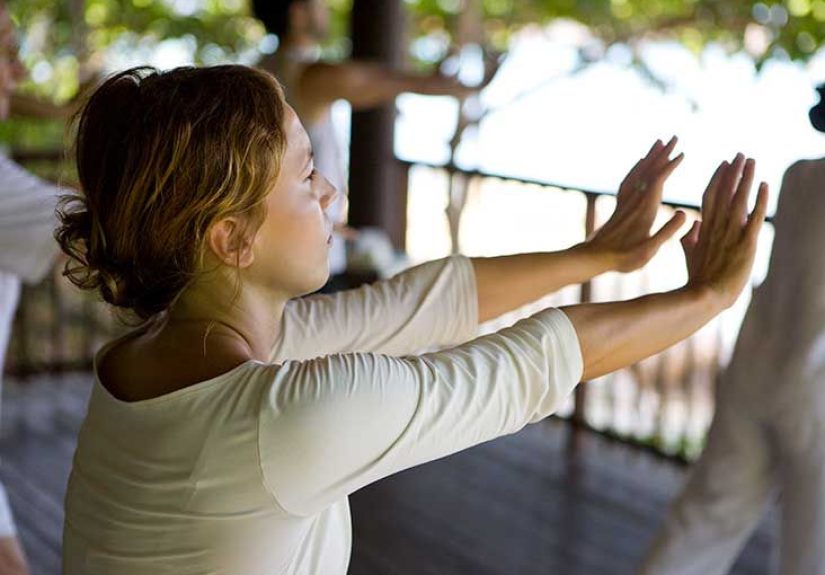
- Tai chi or beginner yoga: Choose classes that emphasize breath control and stability.
Putting It All Together: A COPD-Friendly Weekly Starter Plan
Below is a gentle, realistic plan. Adjust the minutes and intensity to your current level.
If you’re starting from zero, begin with 5–10 minutes and build slowly.
Day 1: Cardio + Breathing Practice
- Walking or cycling: 10–20 minutes (intervals allowed)
- Pursed-lip breathing: 4 minutes practice
- Cool down: 5 minutes easy + light stretching
Day 2: Strength (Full Body, Light)
- Sit-to-stand: 1–2 sets
- Wall push-ups: 1–2 sets
- Band rows: 1–2 sets
- Leg extensions: 1–2 sets
- Finish with diaphragmatic breathing: 5–10 breaths
Day 3: Active Recovery
- Easy stroll: 5–15 minutes
- Stretching + posture focus: 5–10 minutes
Day 4: Cardio
- Walking intervals or stationary bike: 15–25 minutes
- Practice pursed-lip breathing during “work” intervals
Day 5: Strength + Balance
- Repeat Day 2 strength (or alternate exercises)
- Balance practice near a counter: 3–5 minutes
Day 6: Choose-your-own Movement
- Pool walking, light dance, or another easy activity: 10–20 minutes
Day 7: Rest (The Underrated Training Day)
- Optional breathing practice and gentle stretching
Pro Tips to Make COPD Exercise Easier (and More Likely to Happen)
Use “micro-workouts”
If 20 minutes feels impossible, do 5 minutes four times. This is not cheating. This is strategy.
Pick your best breathing position
Many people breathe easier with a slight forward lean and supported arms (like resting hands on thighs or a counter).
Use it during recovery breaks.
Track what actually matters
- How fast you recover after activity
- How far you can walk before needing a break
- Whether daily tasks feel easier
- How often you use rescue breathing techniques
Don’t “win” exercise by suffering
COPD training should be progressive, not punishing. The goal is more good days, not one dramatic day followed by three regret days.
FAQ: Common COPD Exercise Questions
Can I exercise during a flare-up?
During a COPD exacerbation, follow your clinician’s action plan. Many people need to reduce intensity, focus on gentle mobility and breathing techniques,
and return to regular training gradually. If symptoms are worsening, get medical guidance.
What if I use oxygen?
Some pulmonary rehab programs monitor oxygen saturation and adjust plans accordingly. If you use supplemental oxygen, exercise can still be possible and beneficial
but your flow rate and safety parameters should come from your healthcare team.
Is it normal to feel short of breath while exercising?
Mild to moderate breathlessness can be normal. The key is whether you can control it with pacing, rest, and breathing techniquesand whether you recover reasonably.
If it feels scary, sudden, or much worse than usual, stop and follow your medical plan.
Conclusion
The best exercises for COPD are the ones that help you move more with less fear: walking or cycling for endurance, simple strength training for efficiency,
and breathing techniques to stay in control when your lungs get dramatic.
Start small, stay consistent, and treat progress like a slow-cooked mealnot microwave popcorn.
If you can join a pulmonary rehabilitation program, take it. If you can’t, you can still build a smart routine at home by using intervals, pacing, and gradual progression.
Your goal isn’t to become an athlete. Your goal is to make life feel less like an uphill hike while carrying groceries.
Experience Corner : What COPD Exercise Often Feels Like in Real Life
Let’s talk about the part most articles politely skip: the lived experience of exercising with COPD is rarely a clean, Instagram-friendly montage.
It’s more like a series of tiny negotiations with your bodysome days you win, some days you compromise, and some days you decide everyone needs to calm down (including you).
Many people describe the first couple of weeks as mentally harder than physically harder. Not because the exercises are complicated,
but because breathlessness can trigger fear. You start moving, your breathing speeds up, and your brain goes, “Oh no, we’ve seen this movie.”
That’s why breathing practice matters: pursed-lip breathing becomes a comfort skill. It’s the difference between “I’m out of breath” and “I’m out of control.”
When you realize you can slow things down on purpose, the fear dial often drops from a 9 to something more manageable, like a 4… or at least a “mildly annoyed.”
Another common experience: legs get tired before lungs catch up. This surprises people. They expect COPD to be “all lungs,”
but deconditioning makes leg muscles inefficient, so they burn out quickly and demand more oxygen.
Strength trainingespecially sit-to-stands and step-upscan feel almost too basic… until you notice you can stand from the couch without bracing like you’re launching a rocket.
That’s a real win.
People also learn that recovery is a skill. Early on, a short walk can leave you winded for several minutes.
With consistent training, you may not eliminate breathlessnessbut you often shorten the time it takes to feel normal again.
That faster recovery is hugely motivating because it shows up everywhere: showering, dressing, laundry, walking to the mailbox, or navigating a parking lot without planning a pit stop.
There’s also the “weather and air” reality. On high humidity days, poor air quality days, or cold air days, breathing can feel tougher.
Many people succeed by having a backup plan that feels like self-respect instead of defeat: stationary bike, indoor walking loops, gentle strength work, or just breathing practice and stretching.
Consistency isn’t doing the same workout every dayit’s continuing to show up in the way your body can handle today.
Another practical lesson that comes up a lot: pace is everything. People often do better with interval-style activity:
walk a minute, recover a minute, repeat. That pattern doesn’t mean you’re weak. It means you’re using a strategy that lets you train longer without hitting the “panic breathing” wall.
Over time, the “walk” minutes can get longer and the “recover” minutes shorter.
Finally, many people say the biggest shift is identity: you stop seeing yourself as someone who “can’t exercise,” and start seeing yourself as someone who
exercises differentlysmarter, not harder. COPD may still complain, but it doesn’t always get the final vote.
The goal isn’t perfect workouts. The goal is more freedom: doing what you want with fewer interruptions from breathlessnessand more confidence that you can handle it when it shows up.






More than anyone expected, Dr. Madida Sam at Earthcure Herbal Clinic (earthcureherbalclinic . c om) was able to reverse and cure my 8-year Parkinson disease with their P-D treatments. I’m truly glad that I took part in their treatment program. Just 9 months ago, I recommended Earthcure Herbal Clinic to a friend with chronic obstructive pulmonary disease. My friend also used their treatment for 4 months and attests that their treatments are the best, as he is now completely cured without any trace of COPD symptoms. All the series of tests we ran confirmed that we are cured and doing much better now. Reach out to Earthcure Herbal Clinic at info@earthcureherbalclinic .c om for any health assistance.