Table of Contents >> Show >> Hide
- First, the “Can It Be Prevented?” Question (Answered Like an Adult)
- What Increases Alzheimer’s Risk (And What You Can Actually Change)
- Steps to Take: What Actually Helps Reduce Risk
- 1) Treat your brain like an organ connected to your heart (because it is)
- 2) Move your body (and not just from chair to fridge)
- 3) Eat in a way that supports brain health (without turning meals into math)
- 4) Protect your sleep like it’s a meeting with your future (because it is)
- 5) Check your hearing and vision (seriously this is underrated)
- 6) Keep your brain socially and mentally engaged (without becoming a chess monk)
- 7) Manage depression, stress, and loneliness (this is brain care, not a luxury)
- 8) Avoid head injuries and prevent falls
- What About Supplements, Brain Games, and “One Weird Trick” Videos?
- If You’re at Higher Risk: What to Do Next
- A 30-Day Brain-Health Starter Plan (No Perfection Required)
- Bottom Line
- Real-World Experiences (500+ Words): What Prevention Looks Like in Actual Life
If you’ve ever walked into a room and forgotten why you’re there, congratulations: you’re human. If you’ve ever
worried that normal forgetfulness might be something bigger, you’re also human and not alone.
Alzheimer’s disease is the most common cause of dementia, and it can feel scary precisely because it affects the
thing you use to feel un-scary: your brain.
Here’s the hopeful (and honest) headline: there’s no guaranteed way to prevent Alzheimer’s disease, but many
evidence-backed steps can help reduce risk and support brain health sometimes significantly.
Think of it like sunscreen. It doesn’t make you immortal, but it sure beats raw-dogging the sun at noon.
This article breaks down what “prevention” really means, what factors influence risk, and practical steps you can
start today plus a longer set of real-world experiences at the end to make all of this feel less like a checklist
and more like life.
First, the “Can It Be Prevented?” Question (Answered Like an Adult)
Alzheimer’s disease isn’t like a light switch where you either “have it” or “don’t.” Changes in the brain can begin
many years before symptoms show up. That long runway is why researchers focus on prevention and risk reduction:
if we can improve the conditions that help the brain stay resilient and reduce stressors that harm brain cells
we may be able to delay cognitive decline and lower overall risk.
The key word is may. Some strategies have stronger evidence than others. Some help most because they
protect the heart and blood vessels (which feed the brain). Others help by building “cognitive reserve” the brain’s
ability to keep functioning even when it’s under pressure.
So instead of “a cure” or “a magic hack,” the most useful approach is: stack the odds in your favor.
Small changes, combined, tend to beat heroic one-time efforts. (Also, heroic one-time efforts tend to end on a Tuesday
with a donut.)
What Increases Alzheimer’s Risk (And What You Can Actually Change)
Non-modifiable factors: the stuff you can’t negotiate with
- Age: risk increases as you get older.
- Genetics and family history: some genes raise risk (like APOE ε4), but they don’t decide your destiny.
- Biological sex: women are affected more often, partly due to living longer and possibly other factors.
Modifiable factors: the “you have leverage here” list
Large research efforts suggest a meaningful share of dementia cases is linked to risk factors that people and
communities can address (like blood pressure, smoking, hearing loss, diabetes, physical inactivity, depression,
social isolation, and more). You can’t change everything but you can often change something.
Important note: “modifiable” doesn’t mean “your fault.” It means “a target for action,” including healthcare access,
safe neighborhoods for walking, affordable healthy food, hearing care, and clean air. Personal choices matter, and so
do systems.
Steps to Take: What Actually Helps Reduce Risk
Below are the most practical, evidence-informed steps for Alzheimer’s disease risk reduction. You don’t need to do
all of them perfectly. You just need to start somewhere and keep going.
1) Treat your brain like an organ connected to your heart (because it is)
One of the strongest and most consistent themes in dementia research is this: what’s good for the heart tends to be
good for the brain. Why? Your brain needs a steady, healthy blood supply. High blood pressure, diabetes, high LDL
cholesterol, and smoking can damage blood vessels over time, increasing the risk of strokes and “silent” vascular
injury that can worsen cognitive decline.
Practical moves:
- Know your blood pressure and work with your clinician on a plan if it’s high.
- Manage diabetes carefully if you have it (or take prevention seriously if you’re at risk).
- Ask about cholesterol and cardiovascular risk and follow treatment plans you and your clinician choose together.
- If you smoke, get support to quit. If you don’t, don’t start (your future self says thank you).
Bonus: blood pressure control has been shown to reduce the risk of mild cognitive impairment (MCI), which can be a
precursor to dementia. That’s one of the clearest “this intervention helps” signals we have right now.
2) Move your body (and not just from chair to fridge)
Regular physical activity supports blood flow, reduces cardiovascular risk, improves mood, helps sleep, and may
directly support brain function. You don’t need to train for a triathlon. You do need a rhythm.
A simple target that works for most adults:
- 150 minutes per week of moderate-intensity activity (like brisk walking), or
- 75 minutes per week of vigorous activity, and
- Strength training at least 2 days per week.
Make it easier than you think:
- Walk while you take phone calls.
- Put “exercise snacks” on your calendar: 10 minutes, 3 times a day.
- Do strength training at home: squats to a chair, wall push-ups, resistance bands.
3) Eat in a way that supports brain health (without turning meals into math)
Diet isn’t just about weight it’s also about inflammation, vascular health, and nutrients that support brain cell
function. The most studied “brain-friendly” patterns are Mediterranean-style eating and the MIND diet
(Mediterranean-DASH Intervention for Neurodegenerative Delay).
What the MIND-style approach emphasizes:
- Leafy greens (spinach, kale), plus other vegetables
- Berries (especially blueberries and strawberries)
- Nuts and beans
- Whole grains
- Fish and poultry
- Olive oil as a primary fat
- Limiting ultra-processed snacks, fried foods, sweets, and heavy saturated fats
You don’t have to “eat perfectly” to benefit. In real life, the most powerful diet is the one you can stick with.
If you want a starting point, aim for: 2 vegetables at lunch and dinner, berries a few times a week,
and fish once a week then build from there.
Example day (no weird powders required):
- Breakfast: oatmeal with berries + walnuts
- Lunch: big salad with beans + olive oil vinaigrette + whole-grain bread
- Snack: yogurt or hummus with veggies
- Dinner: salmon (or tofu) + roasted vegetables + brown rice
4) Protect your sleep like it’s a meeting with your future (because it is)
Sleep is when the brain does maintenance: consolidating memory, regulating hormones, and clearing metabolic waste.
Chronic poor sleep is linked to worse cognition and worse cardiovascular health and those two often team up in the
least fun way possible.
Sleep upgrades that actually help:
- Keep a consistent sleep/wake time most days (yes, even weekends… mostly).
- Get bright light in the morning; dim lights at night.
- Avoid heavy meals and alcohol close to bedtime.
- If you snore loudly, gasp at night, or feel exhausted despite “enough” sleep, ask about sleep apnea evaluation.
5) Check your hearing and vision (seriously this is underrated)
Hearing loss and vision problems can increase cognitive load (“your brain working overtime to decode the world”) and
can lead to social withdrawal. Social isolation is its own risk factor. So if you need hearing aids or updated
glasses, getting them isn’t “vanity” it can be part of brain-healthy living.
Easy wins:
- Get hearing screened if conversations feel muffled or you’re turning up the TV a lot.
- Update vision prescriptions and treat cataracts or other issues when recommended.
- If you do get hearing devices, wear them consistently not just at weddings and family drama.
6) Keep your brain socially and mentally engaged (without becoming a chess monk)
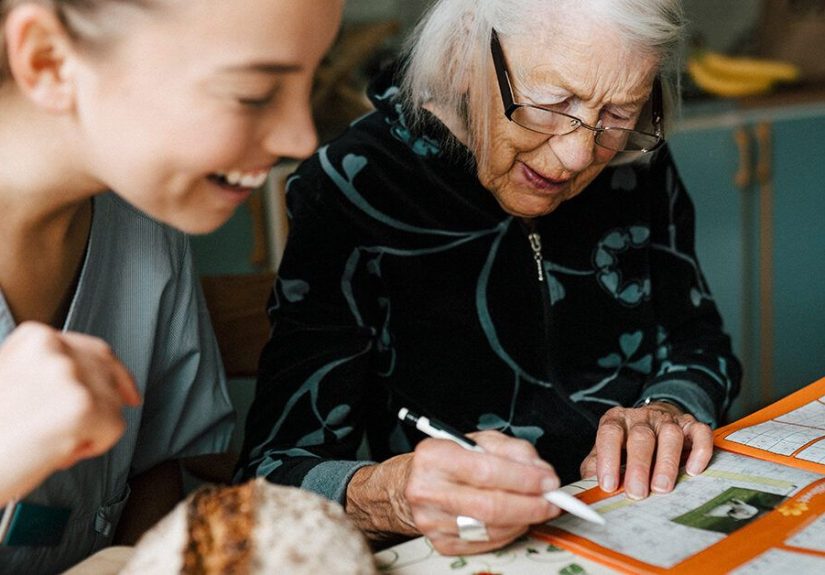
Mental stimulation and social connection are associated with lower risk of cognitive decline. This isn’t about doing
crossword puzzles until your eyes twitch. It’s about giving your brain a reason to stay adaptable.
Better-than-a-puzzle options:
- Take a class (language, music, cooking anything with novelty and effort).
- Volunteer regularly (purpose is powerful).
- Join a walking group or hobby club.
- Pick one “stretch” activity a week: a new recipe, a new route, a new skill.
7) Manage depression, stress, and loneliness (this is brain care, not a luxury)
Depression is linked with increased dementia risk, and chronic stress can affect sleep, inflammation, and heart
health. The goal isn’t to be cheerful 24/7 (that’s a cartoon character). The goal is to treat what’s treatable and
build support where it’s thin.
What helps in real life:
- Talk therapy (especially CBT) and/or medication when appropriate.
- Regular exercise (yes, it shows up again it’s annoyingly effective).
- Mindfulness, journaling, prayer, or breath practices you can actually stick with.
- Social “appointments” on the calendar not just vague intentions.
8) Avoid head injuries and prevent falls
Traumatic brain injury (especially severe or repeated injuries) is associated with higher dementia risk. Protecting
your head is one of the most straightforward risk-reduction steps and it also helps you keep doing all the other
healthy stuff without a cast.
- Wear seat belts and helmets.
- Fall-proof your home: good lighting, remove loose rugs, add grab bars if needed.
- Do balance and strength work (tai chi counts and is secretly hardcore).
What About Supplements, Brain Games, and “One Weird Trick” Videos?
If a supplement truly prevented Alzheimer’s disease, it would not be hiding in an ad between “miracle keto gummies”
and a video of a guy pressure-washing a driveway. Some nutrients matter if you’re deficient (like vitamin B12 in
certain situations), but for most people, the strongest evidence supports lifestyle patterns and management of
cardiovascular and metabolic health not a single pill.
As for brain games: they can improve performance on the tasks you practice. That doesn’t always translate to
real-world memory and function. If you enjoy them, great just don’t let them replace movement, sleep, and
social connection, which have broader benefits.
If You’re at Higher Risk: What to Do Next
If Alzheimer’s runs in your family, or you’re noticing changes in thinking, focus, or memory, start with your primary
care clinician. Many issues that affect memory are treatable: sleep problems, depression, medication side effects,
thyroid issues, vitamin deficiencies, hearing loss, and more.
If you’re interested in prevention research, ask about clinical trials and lifestyle programs. Large studies have
tested “multidomain” interventions combining exercise, nutrition, cognitive/social engagement, and health
monitoring and have shown improved cognitive outcomes in at-risk groups. Translation: a coordinated lifestyle
program can be more powerful than a single change.
A 30-Day Brain-Health Starter Plan (No Perfection Required)
Week 1: Set your baseline
- Schedule or complete: blood pressure check, a walk test (how far you comfortably go), and a sleep reality check.
- Pick one simple movement goal: 20 minutes of walking, 5 days this week.
- Add one brain-friendly food: berries or leafy greens 3 times this week.
Week 2: Add structure
- Increase walking to 25–30 minutes, 5 days.
- Add 2 short strength sessions (15 minutes each).
- Swap one ultra-processed snack for nuts, yogurt, fruit, or hummus.
Week 3: Sleep and social upgrades
- Set a consistent bedtime and wake time.
- Plan one social activity (coffee, walk, class, volunteer shift).
- If snoring or daytime sleepiness is an issue, start the conversation about sleep apnea screening.
Week 4: Make it “you-shaped”
- Choose one enjoyable exercise you’ll keep (dancing counts).
- Choose one “stretch” brain activity (new recipe, class, instrument, language).
- Review your biggest obstacle and remove friction (shoes by the door, groceries planned, calendar reminders).
Bottom Line
Can Alzheimer’s disease be prevented with certainty? Not today. But can you lower your risk and support your brain’s
resilience with evidence-informed steps? Absolutely.
The most powerful strategy isn’t a single heroic change. It’s a set of realistic habits that protect vascular health,
improve sleep, keep you moving, and keep you connected. Start small, stack wins, and remember: your brain likes
consistency more than intensity.
Medical note: This article is for general education and isn’t a substitute for medical advice. If you’re concerned about memory or thinking changes, talk with a healthcare professional.
Real-World Experiences (500+ Words): What Prevention Looks Like in Actual Life
The internet loves dramatic transformations: “I changed my life in 48 hours and now I’m basically a lighthouse of
wellness.” Real prevention work is quieter. It’s often done by regular people who are busy, tired, and still trying.
Below are composite, realistic experiences based on patterns many clinicians, caregivers, and older adults commonly
describe not one person’s story, but the kind of “this is how it plays out” reality that makes the steps feel doable.
Experience 1: The blood-pressure wake-up call. A 58-year-old office manager discovers her blood pressure
has been creeping up for years. She feels fine, so it’s easy to ignore until her clinician explains that high blood
pressure can quietly damage blood vessels that feed the brain. Instead of going all-in on a complicated routine, she
makes two changes she can actually keep: a 25-minute brisk walk after lunch (before she has time to talk herself out
of it) and a “half-plate vegetables” rule at dinner. After a few months, her readings improve, and she notices an
unexpected bonus: she sleeps better and feels less “wired” at night. The most important moment isn’t the perfect
salad. It’s the decision to treat blood pressure like brain protection, not just a number.
Experience 2: The hearing aid that brought someone back to the room. A retired teacher in his early 70s
starts avoiding noisy restaurants because conversations feel exhausting. His family thinks he’s becoming withdrawn;
he thinks everyone is mumbling (classic). When he finally gets a hearing evaluation, he’s surprised by how much
effort he was spending just decoding sound. After getting hearing aids and wearing them consistently, he’s more
likely to join group dinners, church events, and volunteer activities. His memory doesn’t turn into a superhero
montage overnight, but his social life returns and with it, more daily mental stimulation, movement, and purpose.
The “prevention” win is not magical cognition. It’s re-entering life.
Experience 3: The “exercise is boring” workaround. A 45-year-old parent hears the advice to exercise
and immediately thinks, “Great, another thing I’m failing at.” Instead of the gym, he chooses a version he doesn’t
hate: weekend hikes with a friend and two 12-minute strength sessions at home while dinner cooks. The routine sticks
because it fits his identity he’s not “a gym person,” but he is a “get outside and complain about hills”
person. Six months later, he’s not only moving more; he’s also drinking less and snacking less at night because
his sleep improves. That’s how prevention often works: one change pulls another into place.
Experience 4: The caregiver’s perspective. A woman caring for her mother with dementia realizes the
stress is eating her alive and stress is not great for anyone’s brain, including hers. She starts small: one weekly
support group, one “no phone” bedtime routine, and a daily 15-minute walk with a neighbor. She also schedules her own
medical checkups (which many caregivers skip). Her life is still hard, but she’s less isolated and more resourced.
The lesson here is blunt and kind: prevention isn’t only about what you eat. It’s about whether you have support,
rest, and sustainable routines.
The common thread in these experiences is not perfection. It’s momentum and a shift in mindset. Instead of asking,
“Can I control everything?” the better question becomes, “What’s the next small step that protects my brain and I can
repeat next week?” That’s how risk reduction becomes real life: one repeatable choice at a time.