Table of Contents >> Show >> Hide
- Before You Bake: The 3 Rules That Make Any Cake Better
- The Cake Pantry: What Each Ingredient Actually Does
- Core Cake Recipes (With Variations You’ll Actually Use)
- 1) Classic Vanilla Layer Cake (Reverse Creaming)
- 2) One-Bowl Chocolate Cake (Deep Flavor, Low Drama)
- 3) Moist Carrot Cake (The “Vegetable” Cake Everyone Loves)
- 4) Lemon Pound Cake (Simple, Bold, Sliceable)
- 5) Olive Oil Chocolate Snack Cake (No Mixer, Big Payoff)
- 6) Vanilla Sheet Cake (Party-Size, Potluck-Proof)
- Frostings & Fillings: The Greatest Hits
- Troubleshooting: When Cake Gets Weird
- Choose-Your-Cake Cheat Sheet
- Kitchen Stories: The Real-Life Experience of Cake Recipes (About )
- Conclusion
“Cake recipes” sounds like a single category until you’re staring at your pantry like it personally betrayed you:
Do I want fluffy birthday cake? Fudgy chocolate? Something that survives a road trip? Something that doesn’t require
three bowls and an emotional support spatula?
This guide is your friendly, from-scratch roadmap to the cakes Americans bake mostplus the techniques that separate
“pretty good” from “people asking for the recipe.” You’ll get reliable base recipes, smart variations, and
frosting options that won’t melt the second someone opens a window.
Before You Bake: The 3 Rules That Make Any Cake Better
1) Measure like you mean it
Cakes punish “eh, looks right.” If you can, use a kitchen scale. If you can’t, spoon flour into the measuring cup
and level itdon’t scoop and pack like you’re building a sandcastle. Accurate measuring keeps your crumb tender,
your layers level-ish, and your confidence intact.
2) Temperature is not a vibeit’s a structure
Room-temperature butter, eggs, and dairy emulsify better, mix more evenly, and help cakes rise correctly. Most “room temp”
guidance assumes ingredients around the low 70s °F, not “I held the egg near the oven for 12 seconds.” If you forgot
to set things out, warm eggs in hot tap water for a few minutes and soften butter in quick, careful bursts.
3) Pick the right mixing method for the job
Cakes aren’t just ingredientsthey’re engineering. The method you use affects crumb, height, and tenderness:
- Creaming method: butter + sugar first for aeration (classic, fluffy).
- Reverse creaming (paste method): butter mixed into dry ingredients first (fine, even crumb; flatter tops).
- One-bowl / oil-based: fast, moist, forgiving (great for chocolate and snacking cakes).
The Cake Pantry: What Each Ingredient Actually Does
Flour
Cake flour makes a softer crumb; all-purpose gives a bit more structure. Don’t swap casually unless the recipe
says you canflour choice changes how tender (or tough) your cake becomes.
Fat (butter vs. oil)
Butter brings flavor and helps with aeration when creamed. Oil stays liquid at room temperature and even in the fridge,
which often means cakes stay moister longer. Many modern “best-ever” chocolate cakes use oil for that reason.
Dairy (milk, buttermilk, sour cream, yogurt)
Buttermilk and sour cream add moisture, tenderness, and a subtle tang. They also play nicely with baking soda,
helping cakes rise with a soft, plush crumbespecially in classics like red velvet-style or tender layer cakes.
Leaveners (baking powder & baking soda)
These are your lift. Old leaveners = sad cake. If yours have been living in the pantry since the last solar eclipse,
replace them. (Your cake deserves fresh friends.)
Core Cake Recipes (With Variations You’ll Actually Use)
1) Classic Vanilla Layer Cake (Reverse Creaming)
This is the “birthday cake” baseline: tender, fine-crumbed, and stable enough for layering. Reverse creaming also
helps you avoid the dreaded dome that turns frosting into a slip-and-slide.
Ingredients (2 nine-inch layers)
- 3 cups cake flour (or a cake-flour-based recipe; see note below)
- 1 3/4 cups granulated sugar
- 1 tbsp baking powder
- 1/2 tsp baking soda
- 1 tsp fine salt
- 1 cup unsalted butter, softened
- 1 1/4 cups buttermilk (or whole milk)
- 3 large eggs + 1 yolk, room temperature
- 2 tsp vanilla extract
Method
- Heat oven to 350°F. Grease pans, line with parchment, and grease again.
- Whisk dry ingredients in a large bowl.
- Add softened butter to dry ingredients. Mix until sandy/crumbly and evenly coated.
- Whisk buttermilk, eggs, yolk, and vanilla. Add in 2–3 additions, mixing just until smooth each time.
- Divide batter evenly. Bake 25–32 minutes, until the center springs back and the cake pulls slightly from the pan.
- Cool 10 minutes in pan, then turn out to cool completely.
Vanilla upgrades: add lemon zest, almond extract (tiny amount), or fold in sprinkles for a real funfetti moment.
Pan note: dark pans bake fasterstart checking early.
2) One-Bowl Chocolate Cake (Deep Flavor, Low Drama)
Chocolate cake loves a little heat and bold liquids. Blooming cocoa with hot water or coffee wakes up the chocolate
flavor and makes the cake taste richer than the ingredient list suggests.
Ingredients (1 nine-by-thirteen-inch sheet or 2 eight-inch rounds)
- 2 cups all-purpose flour
- 2 cups sugar
- 3/4 cup cocoa powder (Dutch-process if you want extra dark color)
- 2 tsp baking powder
- 1 1/2 tsp baking soda
- 1 tsp salt
- 2 large eggs
- 1 cup buttermilk
- 1/2 cup neutral oil
- 2 tsp vanilla
- 1 cup hot coffee (or hot water)
Method
- Heat oven to 350°F. Grease and line your pan if you want easy lift-out.
- Whisk dry ingredients. Add eggs, buttermilk, oil, and vanilla; mix until combined.
- Pour in hot coffee last and whisk until smooth (batter will be thinthis is correct and not a personal attack).
- Bake: 30–40 minutes for a 9×13; 28–35 for rounds. Cool completely before frosting.
Chocolate variation ideas: add espresso powder, swap in sour cream for part of the buttermilk, or fold in chocolate chips.
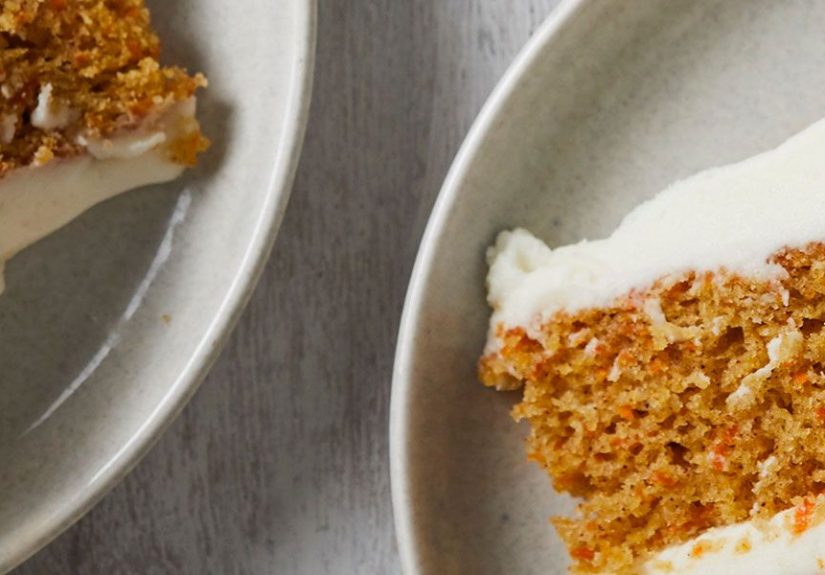
3) Moist Carrot Cake (The “Vegetable” Cake Everyone Loves)
Carrot cake is basically a cozy sweater in dessert form: warm spices, big moisture insurance, and an excuse to use
cream cheese frosting. Oil keeps it tender, and shredded carrots do the heavy lifting.
Ingredients (2 nine-inch layers)
- 2 cups all-purpose flour
- 2 tsp baking powder
- 1 tsp baking soda
- 1 tsp salt
- 2 tsp cinnamon + pinch of nutmeg
- 1 1/4 cups neutral oil
- 1 cup granulated sugar + 1/2 cup brown sugar
- 4 large eggs
- 3 cups finely grated carrots
- 1 cup chopped toasted pecans or walnuts (optional)
- 1/2 cup crushed pineapple, well-drained (optional but very “moist cake” energy)
Method
- Heat oven to 350°F. Prep pans with parchment.
- Whisk dry ingredients.
- Whisk oil + sugars + eggs until glossy. Fold in dry ingredients just until combined.
- Fold in carrots (and nuts/pineapple if using).
- Bake 28–35 minutes. Cool completely before frosting.
4) Lemon Pound Cake (Simple, Bold, Sliceable)
Pound cake is the loaf-cake hero: great with coffee, sturdy enough for gifting, and perfect for “I need dessert but
not a five-layer situation.”
Ingredients (1 loaf or bundt)
- 1 cup butter, softened
- 1 3/4 cups sugar
- 4 large eggs, room temperature
- 2 cups all-purpose flour
- 1/2 tsp baking powder
- 1/2 tsp salt
- 3/4 cup sour cream
- Zest of 2 lemons + 2 tbsp lemon juice
- 1 tsp vanilla
Method
- Heat oven to 325°F (pound cakes like a slower bake). Grease and flour pan well.
- Cream butter + sugar until pale and fluffy. Add eggs one at a time.
- Whisk dry ingredients; add alternately with sour cream. Stir in lemon + vanilla.
- Bake until deeply golden and set in the center, 55–75 minutes depending on pan.
Glaze option: whisk powdered sugar + lemon juice + a splash of milk, then pour over cooled cake.
5) Olive Oil Chocolate Snack Cake (No Mixer, Big Payoff)
Olive oil cakes stay soft for days and feel fancy without acting fancy. Use a mild extra-virgin olive oil if you want
chocolate to lead; use a fruitier oil if you like a little “grown-up” complexity.
Quick method
- Whisk dry ingredients (flour, cocoa, leaveners, salt, sugar).
- Whisk wet ingredients (olive oil, eggs, buttermilk or yogurt, vanilla).
- Combine, pour into an 8×8 or 9-inch round, bake at 350°F until set.
6) Vanilla Sheet Cake (Party-Size, Potluck-Proof)
When you need maximum servings with minimum stress, sheet cake is the move. Bonus: it’s easier to frost than a
layer cake and travels better than your friend who “just needs five minutes” to get ready.
Tips for success
- Spread batter evenly to the corners; an offset spatula helps.
- Don’t overbakestart checking early and trust your oven thermometer if you have one.
- Cool completely before frosting, unless you enjoy “melted frosting as abstract art.”
Frostings & Fillings: The Greatest Hits
American Buttercream (Sweet, Easy, Classic)
- 1 cup butter, softened
- 3–4 cups powdered sugar
- 1–3 tbsp milk or cream
- Vanilla + pinch of salt
Beat butter, add sugar gradually, then loosen with milk. Add salt so it tastes like dessert, not like a sugar
audition.
Swiss Meringue Buttercream (Silky, Less Sweet)
If you want a smooth, not-too-sugary frosting that pipes beautifully, Swiss meringue buttercream is the glow-up.
The base is simple: egg whites + sugar warmed, whipped, then finished with butter and flavoring.
Chocolate Ganache (Two Ingredients, Infinite Confidence)
Heat cream, pour over chopped chocolate, rest, then stir until glossy. Pour for a drip, chill and whip for frosting,
or use as a filling.
Quick Fillings That Make Cakes Feel Bakery-Made
- Raspberry jam + a thin buttercream “dam”
- Peanut butter frosting + chocolate cake (iconic)
- Lemon curd + vanilla cake (bright, not boring)
- Salted caramel + chocolate or banana cake (dangerously good)
Troubleshooting: When Cake Gets Weird
Dry cake
- Prevention: don’t overbake; know your oven; measure accurately.
- Save it: brush layers with simple syrup (equal parts sugar and water, warmed until dissolved).
- Strategic frosting: generous filling and frosting can bring moisture back into the party.
Dense or gummy texture
- Overmixing after adding flour can build too much gluten.
- Old leaveners or too-cold ingredients can sabotage rise.
- Use the correct pan sizetoo small = underbaked center; too large = dry edges.
Sunken middle
- Underbaked center (start checking earlier, but bake until truly set).
- Oven door opened too often (use the oven light; be strong).
- Too much leavener can cause a rise-and-collapse situation.
Choose-Your-Cake Cheat Sheet
- Best for birthdays: vanilla reverse-cream layers + Swiss or American buttercream
- Best for chocolate lovers: one-bowl chocolate cake + ganache
- Best “make-ahead”: olive oil cake or carrot cake
- Best for slicing & gifting: pound cake
- Best for crowds: sheet cake
Kitchen Stories: The Real-Life Experience of Cake Recipes (About )
The first time you bake a cake “from scratch,” it feels a little like moving out of your parents’ house:
exciting, empowering, and full of brand-new ways to discover you don’t actually know where anything is.
You’ll read “cream butter and sugar until light and fluffy” and think, How fluffy? Like a cloud? Like a
golden retriever’s tail? Then you’ll stop too early, your cake will be fine, and you’ll learn the baking
lesson everyone learns: “fine” is still progress, and the next one gets better.
Cake experience is mostly pattern recognition. After a few bakes, you start to feel the moment a batter turns from
gritty to satiny, and you notice how it changes when eggs are cold (a little curdly, a little stubborn). You learn
that “just until combined” is not a suggestionit’s a protective spell against dense cake. You also learn that
the oven is both your greatest tool and a chaotic roommate who sometimes lies about the temperature. That’s why so
many bakers eventually buy an oven thermometer: not because they’re fancy, but because they’re tired of being gaslit
by a dial.
Frosting teaches its own set of life skills. The first time you try to frost a layer cake, crumbs will happen.
You’ll consider starting a new hobby, like pottery, where at least the mess is expected. Then someone tells you about
a crumb coatan ultra-thin first layer of frosting that traps the crumbsand suddenly you feel like you’ve been handed
a secret handshake. The second experience upgrade is realizing that chilling the cake layers for a bit makes them
sturdier and easier to stack. Cold cake is calmer cake. That’s science. (Okay, it’s physics. But still.)
The most oddly satisfying cake moment is leveling a domed layer. It feels like giving your cake a haircut. The
baker’s bonus: you get to snack on the scraps, which is basically quality control. Then you discover fillings, and
cakes become customizable: jam for brightness, ganache for drama, peanut butter for chaos, lemon curd for
sunshine-in-winter energy. You learn to pipe a “buttercream dam” so fillings don’t ooze out the sides, and suddenly
your cake slices look like they belong in a cookbook instead of a group chat captioned “nailed it??”
Eventually, cake becomes less about perfection and more about rhythm. You know which cake you bake when you’re
celebrating (layers), which cake you bake when you’re stressed (one-bowl chocolate), and which cake you bake when you
want something quietly excellent with coffee (pound cake). And you start noticing the best part: cake is a reliable
way to show up for people. It’s hard to feel unseen when someone hands you a slice made with actual effort, actual
butter (or oil), and actual loveeven if the frosting is a little swirly in a “modern art” way.
Conclusion
Great cake recipes aren’t about complicated stepsthey’re about choosing the right method, respecting temperature,
and baking just until done. Start with a dependable vanilla or chocolate base, then personalize with fillings and
frostings that match the occasion. The best cake is the one you’ll actually bake again.